Wild Yam Medicinal Uses: Herbal Context and Uses
When people search for wild yam medicinal uses, they are often looking for a clear bridge between old herbal traditions and the way modern herbalists actually work with roots in a practical setting. Wild yam has a long, earthy reputation in North American herbal practice, where the root was traditionally prepared as decoctions, tinctures, and compound formulas rather than treated as a delicate showpiece herb. Its character is grounding, slightly bitter, and deeply root-like, which makes it interesting not only from a traditional wellness perspective but also from a formulation standpoint for tea makers who want more depth and structure in a blend.
In traditional herb books, wild yam appears less as a flashy standalone and more as part of a broader herbal conversation involving roots, circulatory herbs, and supportive blending partners. That is one reason it remains relevant today. For small-batch makers, the appeal lies in how wild yam can bring body, backbone, and a sense of old apothecary seriousness to a formula. It is not a bright, fruity herb. It is measured, earthy, and best understood in context. Once you learn how to handle the texture, extraction time, and supporting ingredients, wild yam becomes much easier to appreciate in a modern herbal tea format.
What herbalists usually mean by wild yam medicinal uses
The phrase wild yam medicinal uses usually refers to the traditional herbal role of the root rather than a modern pharmaceutical effect. In older North American herbal systems, wild yam was often discussed as a classic root for comfort, balance, and formula-building. Herbalists frequently used it in compound preparations where the goal was not an instant dramatic flavor but a steady, supportive presence in the background.
That context matters. Wild yam is usually not chosen because it tastes beautiful on its own. It is chosen because it rounds out a formula with earthy weight and because it has a long-standing place in traditional herbal practice. A tea maker reading old materia medica texts will notice that roots like wild yam were often paired with blossoms, aromatic leaves, or gently sweet herbs to improve drinkability without losing the formula’s traditional character.
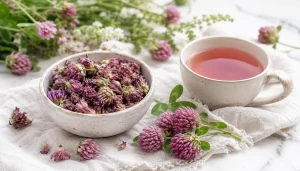
This is also why it helps to think in terms of formulation rather than single-herb hype. A root like this performs better when given structure. Try adding red clover blossoms when you want to soften the earthy edge and give a blend a lighter floral lift.
Traditional herbal context from older root-based preparations
Older herbal traditions rarely treated roots as quick infusions. They were usually simmered, extracted patiently, and blended with purpose. Wild yam belonged to that world. Traditional herbalists often worked from the idea that dense roots need time, heat, and supporting herbs to fully express their character.
In historical herbal practice, wild yam was commonly associated with warming kitchens, enamel pots, and long decoctions rather than fast tea bags. That old preparation style still makes sense. If you want a cup that feels balanced, a brief steep is usually not enough. A simmered extraction gives the root a fuller expression and makes the finished tea less thin.
For a classic small-batch decoction base, use 10 grams of wild yam root cut and sifted plus 5 grams of red clover blossoms per 500 grams of water. In kitchen spoon terms, that is about 2 teaspoons wild yam root plus 2 teaspoons red clover blossoms for roughly 2 cups water. Simmer the root alone for 15 to 20 minutes, turn off the heat, then add the blossoms and steep covered for 8 minutes. This gives you a more complete cup than steeping everything together from the start.
For a brighter finish, try adding dried chamomile flowers after the simmer. The floral softness helps make root-heavy formulas more inviting.
Why wild yam works better in blends than alone
One of the most practical truths about wild yam medicinal uses is that the herb often shows its best side in a blend. Alone, it can come across as plain, woody, or somewhat stubborn. In a thoughtful formula, that same sturdiness becomes an asset. It gives shape to the cup and acts as a base note under lighter herbs.
Think of it like the bass line in music. You may not always focus on it first, but the whole piece feels incomplete without it. That is especially useful for tea makers creating traditional-style herbal blends that need more than aroma alone. Wild yam adds seriousness and root depth, while partner herbs can add softness, lift, brightness, or gentle sweetness.
Red clover blossoms are a natural companion because they lighten the overall profile and make the blend feel less dense. Burdock root is another useful partner when you want a fuller root profile. Try adding burdock root cut and sifted for a deeper, rounder decoction base that still feels traditional and grounded.
For a more aromatic expression, a small amount of cinnamon chips can warm the finish without overwhelming the root character.
How to formulate a balanced tea with wild yam root
If you are building a tea meant to feel traditional, drinkable, and easy to repeat, start by accepting that wild yam is the structural herb, not the showy one. Build around that. A practical formula often works best with one structural root, one softening floral herb, one aromatic accent, and sometimes one leaf herb for lift.
A balanced starting blend for tea makers could look like this:
12 grams Wild Yam Root C/S
8 grams Red Clover Blossoms
4 grams chamomile
3 grams cinnamon chips
3 grams nettle leaf
That gives you a 30-gram test batch. For one strong pot, use 12 grams of the blend in 750 grams of water. Simmer the wild yam and cinnamon-containing portion for 15 minutes, then add the blossoms and leaves off heat for another 7 to 10 minutes. Strain well.
This kind of layered extraction matters. If you boil delicate blossoms or leafy herbs too long, the cup can flatten and lose its nicer top notes. If you do not simmer the root long enough, the body may feel incomplete. Wild yam medicinal uses make more sense when the preparation method respects the density of the herb.
Try adding nettle leaf when you want to bring a greener, more alive note to a root-based blend. Try adding ginger root cut and sifted in colder-weather formulations for a warmer, livelier finish.
Taste, aroma, and practical beverage character
Wild yam is not a perfumed herb. Its appeal is subtle. The aroma is dry, rooty, and somewhat muted compared with flower-forward botanicals. In the cup, it tends toward earthy, slightly bitter, softly woody notes. That means the tea maker’s job is often not to amplify the wild yam itself but to frame it well.
A good wild yam blend should smell grounded first, then open into softer notes from companion herbs. Red clover can add a meadow-like softness. Chamomile can make the whole blend feel more rounded. Cinnamon or ginger can bring warmth. Nettle can add a fresh green edge. Licorice root, used carefully, can smooth bitterness and improve drinkability for broader audiences.
For tea makers testing commercial-style prototypes, it helps to brew three versions side by side: one root-heavy, one balanced, and one blossom-forward. The balanced version is often the winner because it keeps the old-fashioned herbal identity while still being pleasant enough to drink again.
Try adding licorice root cut and sifted in small amounts when you want to soften bitterness and create a fuller mouthfeel.
Wild yam medicinal uses in modern herbal interest
Modern interest in wild yam often mixes traditional herbal curiosity with broader wellness conversations, but the safest and most useful approach is to stay rooted in traditional herbal context. Wild yam medicinal uses are best described in terms of how herbalists have historically prepared and combined the root, and why modern makers still find it meaningful in teas, tincture bases, and old-style apothecary formulas.
For today’s small-batch herbal business, wild yam offers something valuable: authenticity. It feels like a real herb with a real history, not just a trendy flavor. That matters for brands that want depth and story in their teas. When handled well, wild yam can make a blend feel intentional, archival, and connected to longstanding herbal traditions.
It also pairs beautifully with other classic herbs that fit a rustic, grounded profile. Try adding dandelion root roasted when you want a darker, toastier base for an evening-style herbal cup. That kind of pairing can make a root blend feel richer and more familiar to customers who enjoy earthy beverages.
Troubleshooting
Working with roots requires adjustment. Here is how to solve the most common problems in wild-yam-based herbal tea blends.
Flat flavor
Usually this means the formula has enough root but not enough lift. Add a small percentage of chamomile, nettle, or ginger. Another cause is under-extraction. Simmer the root portion longer before adding delicate herbs.
Too tart
This often happens when the floral herbs are overemphasized or steeped too long. Reduce blossom content slightly and shorten the covered steep after simmering. Red clover should soften a blend, not dominate it.
Over-carbonation
If you are experimenting with herbal secondary fermentation in kombucha-style applications, root-heavy blends can still ferment actively if sugars are present. Bottle only when fermentation is stable, use pressure-safe bottles, and chill promptly once the flavor is where you want it.
Sediment
Cut-and-sifted roots can shed small particles. Use a fine mesh filter or double strain through muslin. Let the decoction settle for a minute before pouring into the final vessel.
Aroma loss
This usually happens when blossoms or leaf herbs are simmered too aggressively. Add delicate ingredients after the heat is off and keep the pot covered while steeping.
Storage + Quality
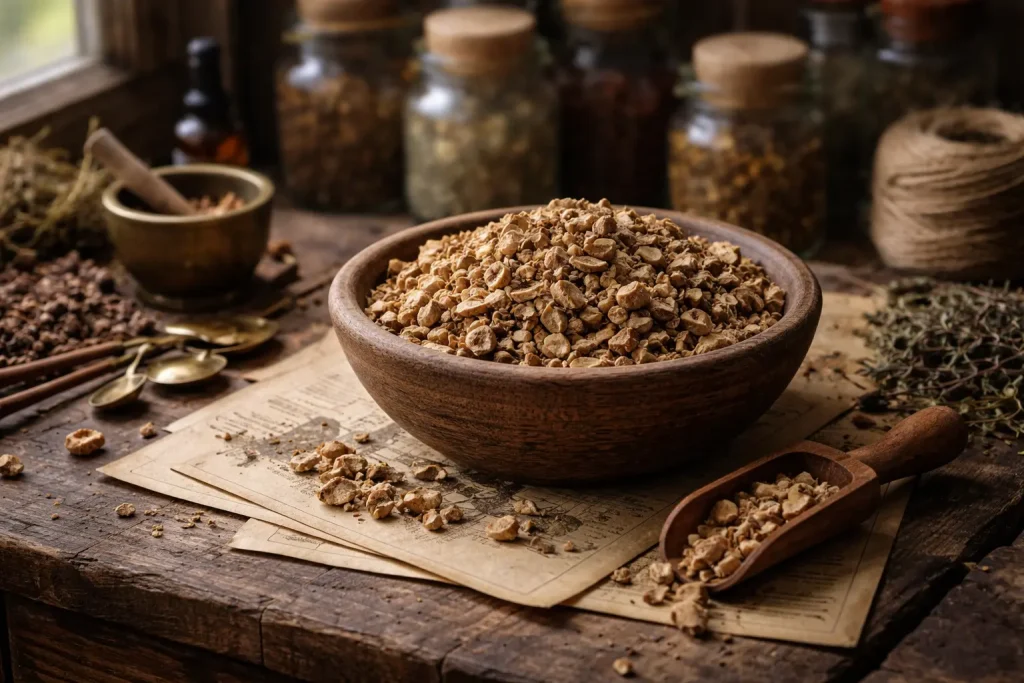
Wild yam root holds well when stored correctly, but root herbs are not indestructible. Keep the herb in an airtight container away from humidity, direct sun, and heat. A cool pantry shelf is usually better than a warm open kitchen rack. If the environment is damp, quality declines faster and the aroma becomes dull.
Look at the cut pieces before blending. Good-quality wild yam root should appear dry, clean, and consistent in color, with an earthy scent that is noticeable when the container is opened. If the aroma feels faded, dusty, or musty, the herb is past its best. Red clover blossoms should still show gentle color and a soft floral scent rather than a stale hay-like flatness.
For production-minded tea makers, it helps to label every jar with the purchase date, first-opened date, and a simple internal quality note. Roots often keep longer than blossoms, so rotating stock by herb type is smarter than giving every botanical the same shelf rule.
Safety
Wild yam is best discussed responsibly. Traditional herbal texts and modern herbalists may describe many historical uses, but that does not make every claim appropriate for product copy or general health advice. Keep language careful and compliant. Say that herbalists have traditionally used wild yam in old-style root formulas. Say that it may support a grounding, traditional herbal tea experience. Avoid claiming that it treats, cures, or prevents disease.
This is especially important for brands, bloggers, and tea makers writing public-facing educational content. Wild yam medicinal uses can be discussed as part of traditional herbal context, sensory evaluation, and preparation methods without drifting into medical claims. As always, people who are pregnant, nursing, taking medications, or managing a health condition should consult a qualified healthcare professional before using herbs regularly.
Conclusion
The most useful way to understand wild yam medicinal uses is through tradition, preparation, and formulation rather than hype. Wild yam is a root with an old herbal reputation, a quiet flavor profile, and a strong role in grounded, compound blends. It asks for patience, thoughtful extraction, and supportive herbs that bring lift and softness to the cup.
For tea makers and herbal enthusiasts, that is exactly where the interest lies. Wild yam becomes far more appealing once it is treated as a structural botanical with a story, not a flashy standalone ingredient. Simmer it properly, pair it wisely, store it well, and it can bring authentic old-apothecary depth to modern herbal blends.
FAQ
What are wild yam medicinal uses in traditional herbalism?
Wild yam medicinal uses usually refer to its traditional role in old-style herbal preparations, especially as part of root-based compound formulas.
Is wild yam usually taken alone as a tea?
It can be, but many herbalists prefer blending it with softer or more aromatic herbs because the root tastes better in company.
How long should wild yam root simmer?
A practical range is 15 to 20 minutes for the root portion, followed by a shorter covered steep for delicate herbs.
What pairs well with wild yam in tea?
Red clover blossoms, chamomile, nettle, burdock root, ginger root, cinnamon chips, and a little licorice root all pair well depending on the style you want.
Why does my wild yam tea taste flat?
It may need more extraction time or a better balance of aromatic and floral herbs to lift the root base.
Can wild yam be used in kombucha or herbal secondary fermentation?
Yes, carefully. It works better as part of an herbal blend, but watch pressure and sediment if bottling.
How should I store wild yam root?
Keep it airtight, dry, and away from heat and light. Check regularly for aroma strength and signs of moisture exposure.
Is wild yam tea a medicine?
It is better described as a traditional herbal preparation. Public-facing content should avoid disease claims and stick to careful, compliant wording.