Red Clover Benefits: A Traditional Herb
Red clover benefits have been recognized by herbalists and healers for centuries, making this delicate flowering plant one of the most enduring botanicals in the Western herbal tradition. Trifolium pratense, commonly known as red clover, produces vivid magenta-pink blossoms that have been gathered from meadows and roadsides since long before modern herbalism took shape. Today, these blossoms remain a popular ingredient in herbal teas, tinctures, and botanical blends.
What Is Red Clover?
Red clover is a perennial legume native to Europe, Western Asia, and northwest Africa. It has naturalized widely across North America, where it grows freely in fields, meadows, and along roadsides. The plant produces trifoliate leaves and rounded flower heads with tubular florets ranging from deep pink to reddish purple.
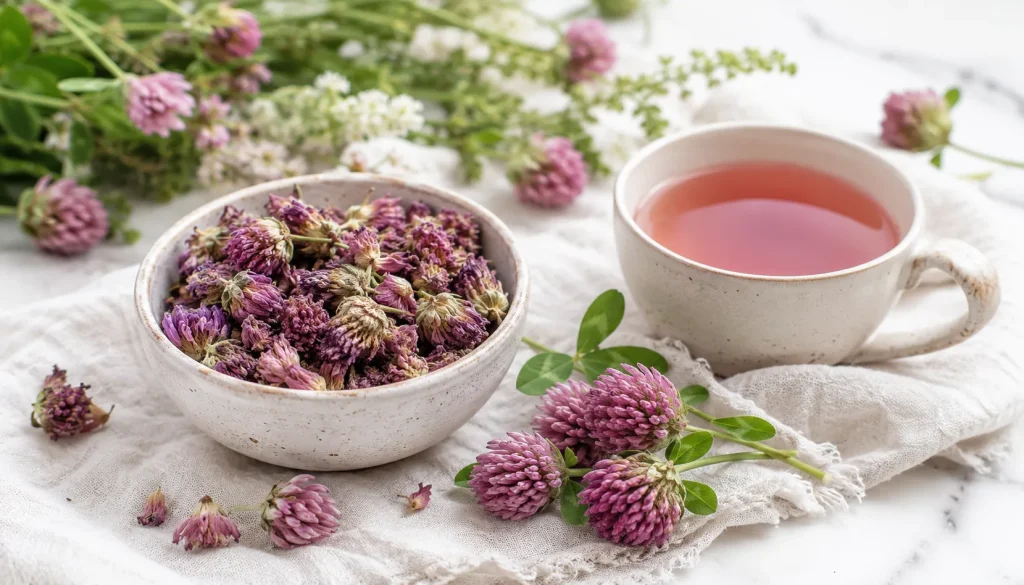
Herbalists primarily use the dried blossoms, though the leaves are sometimes included as well. The flowering tops carry most of the botanical interest, and they dry beautifully, retaining their color and aroma. Furthermore, red clover has a long history as a forage crop, providing nutrition to livestock and enriching soil with nitrogen.
In traditional herbalism, red clover whole blossoms are valued for their mild, slightly sweet flavor that makes them pleasant in teas and infusions.
Red Clover Benefits in Folk Herbalism
Folk herbalists across Europe and North America traditionally valued red clover as a cleansing and supportive herb. In 19th-century American herbalism, it featured prominently in several well-known compound formulas. European herbalists traditionally used it to support respiratory comfort and overall vitality.
The plant contains isoflavones — plant-based compounds that have attracted significant interest from modern researchers. Additionally, it provides flavonoids, coumarins, and a range of minerals that contribute to its botanical profile. Herbalists today often describe red clover benefits in terms of its gentle, nourishing character rather than any single dramatic action.
In folk herbalism, red clover was traditionally recommended as a long-term tonic rather than an acute remedy — something to drink regularly over weeks or months as part of a broader wellness practice.
How to Brew Red Clover Tea
Brewing red clover tea is straightforward. Use one to two teaspoons of dried blossoms per eight ounces of hot water. Pour water just off the boil — around 200°F — over the flowers and steep for ten to fifteen minutes. Longer steeping yields a deeper, more pronounced flavor.
The resulting tea is light golden-pink in color with a mild, subtly sweet, slightly grassy taste. Many people enjoy it plain, though a drizzle of honey complements the natural sweetness of the blossoms. Moreover, red clover blends well with other herbs such as nettle leaf for a more robust mineral-rich infusion.
For a stronger infusion, you can cold-steep the blossoms overnight in room-temperature water. This method extracts a broader spectrum of water-soluble constituents and produces a particularly smooth, refreshing drink.
Selecting and Storing Red Clover
Quality matters when choosing dried red clover. Look for blossoms that retain their pink-to-red color — dull brown flowers have been over-dried or stored too long. The aroma should be faintly sweet and hay-like, not musty or absent.
You can choose between whole blossoms and red clover cut and sifted, which offers a more uniform texture that works well in tea infusers and blends. Both forms offer equivalent botanical value; the choice often comes down to personal preference and intended use.
Store dried red clover in an airtight container away from direct light and heat. Under these conditions, the dried blossoms maintain their quality for up to two years. Consequently, buying in modest bulk quantities can be economical without sacrificing freshness.
Red Clover in Herbal Blends
One of the most appealing aspects of red clover is its versatility in blending. Its mild, slightly sweet flavor pairs well with a wide range of herbs without overpowering them. In fact, many commercial “women’s wellness” tea blends feature red clover prominently.
Traditional blending partners include nettle leaf, oat straw, raspberry leaf, and lemon balm. Each of these herbs brings its own profile to the cup, and red clover provides a gentle, mellow backbone. Similarly, it pairs nicely with floral herbs like chamomile and lavender for a calming evening blend.
For a simple tonic tea, try equal parts red clover blossoms and nettle leaf. This combination produces a pale greenish-gold infusion that many herbalists describe as one of the most nourishing everyday teas available.
Growing and Harvesting Red Clover
Red clover is easy to grow in temperate gardens. It tolerates a wide range of soils and requires little maintenance once established. The plant blooms from late spring through early fall, providing a long harvest window. Collect blossoms when they are fully open and at peak color — this is when the botanical compounds are most concentrated.
Dry harvested blossoms in a single layer on a mesh screen or paper-lined tray away from direct sunlight. Good airflow is important to prevent mold. Properly dried blossoms will feel papery and crumble easily when pressed. For this reason, many home herbalists dry small batches regularly to ensure a fresh supply throughout the year.
If growing your own is not practical, sourcing from a reputable supplier ensures consistent quality and correct botanical identification — an important consideration with any herb.
Safety and Considerations
Red clover is generally considered a safe herb for most adults when used in typical culinary and tea quantities. However, because it contains isoflavones — phytoestrogens — individuals with hormone-sensitive conditions or those taking blood-thinning medications should consult a qualified healthcare provider before using red clover regularly. Pregnant or breastfeeding individuals should also seek professional guidance. As with any botanical, introduce it gradually and pay attention to how your body responds. This content is for educational purposes only and does not constitute medical advice.
Frequently Asked Questions
What does red clover tea taste like?
Red clover tea has a mild, lightly sweet, slightly grassy flavor. It is considerably more delicate than many herbal teas and lacks the strong bitterness or astringency associated with herbs like green tea or yarrow. Many people describe it as pleasant and easy to drink, making it a good base for blends.
Can you use red clover leaves as well as the flowers?
Yes. While the blossoms are the most commonly used part of the plant, the leaves are also edible and have been used in folk herbalism. However, the flowers carry more of the characteristic isoflavones and flavor compounds, so most herbalists focus on the flowering tops.
How often can you drink red clover tea to enjoy their benefits?
Many herbalists traditionally recommend red clover as a daily tonic tea, drinking one to three cups per day over an extended period. However, if you are taking medications or have a hormone-sensitive condition, consult your healthcare provider about appropriate use before making it a daily habit.
Is wild-harvested better than cultivated?
Both wild-harvested and cultivated red clover can be high quality. Wild-harvested herbs are often praised for their vigorous growing conditions, but cultivated sources offer more consistent botanical identity and controlled growing environments. The most important factor is sourcing from a reputable supplier who tests for purity and potency.
Red clover has earned its place in the herbal tradition through centuries of use and a genuinely pleasant character in the cup. Explore our full selection of wild-harvested red clover and botanical blending herbs at the Hatton Naturals shop.