Wild Cherry Bark Benefits for Tea Blends
When herbalists talk about wild cherry bark benefits, they are usually speaking about tradition, taste, and the way one ingredient can quietly shape an entire cup. Wild cherry bark has a long place in North American herbal practice, where it has been valued not only for its historical uses but also for its distinctive flavor profile. In the jar, it looks modest. In hot water, it becomes something more layered: gently woody, faintly fruity, slightly bitter, and surprisingly elegant when balanced well. For tea makers, that matters. Some botanicals dominate a blend in seconds, while others build structure. Wild cherry bark belongs to the second group.
This is one of those herbs that rewards patience and proportion. It is not flashy, yet it adds depth, warmth, and a rounded backbone to traditional loose-leaf formulas. It also pairs especially well with softer leaves and roots that mellow its edges. In practical formulation, that means it can bridge airy ingredients and heavier ones without making a blend feel muddled. Whether you are building a rustic evening tea, a syrup-style decoction base, or a more classic herbal apothecary blend, understanding wild cherry bark benefits gives you a useful tool for both flavor and tradition.
What makes wild cherry bark stand out in herbal practice
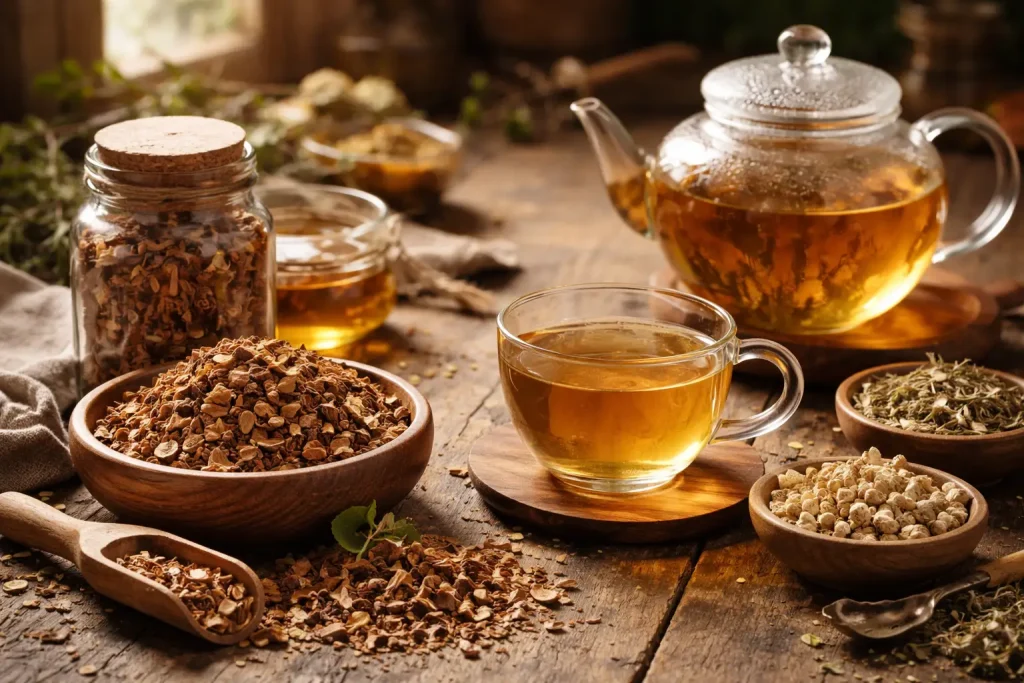
Wild cherry bark is traditionally prepared more like a bark than a leaf, which already tells you something about how it behaves in the cup. It carries a denser extraction style, a deeper color, and a slower unfolding aroma. Herbalists often use bark ingredients when they want body, steadiness, and a more grounded cup. While flowers may lift and leaves may soften, bark often gives shape.
Part of the appeal is sensory. The aroma is mild but interesting, with notes that can feel somewhere between orchard wood, almond-like nuance, and earthy sweetness. The taste is not sugary, but it does hint at a fruit-adjacent warmth that makes it easy to pair with softer herbs.
For many tea makers, wild cherry bark benefits are not only about history. They are also about design. A blend with too many leafy ingredients can taste thin. A blend with too many roots can feel heavy. Wild cherry bark often sits in the middle, bringing enough presence to anchor the cup without making it feel dense or muddy.
A good place to begin is with wild cherry bark cut and sifted when you want a traditional bark base with a refined, woodsy profile.
Wild cherry bark benefits in tea flavor and aroma
One of the most useful ways to understand wild cherry bark benefits is through the cup itself. Flavor tells you what a plant can do in a formula. Wild cherry bark is usually mild to medium in intensity, depending on steep time and particle size. It contributes a dry wood note, a subtle fruit-kernel character, and a pleasant bitterness when used with restraint.
That bitterness is important. In a well-made herbal tea, a small amount of bitterness creates shape and contrast. Without contrast, a blend can taste flat, dusty, or vaguely sweet with no clear finish. Wild cherry bark helps create a cleaner ending on the palate. It can also keep mucilaginous or soft herbs from feeling too round.
Tea makers often find that wild cherry bark works especially well with leafy botanicals that need structure. It also pairs beautifully with ingredients that soften texture and extend aroma. This is why mullein leaf cut and sifted makes such a practical companion in classic loose herbal blends with a lighter leaf character.
For a more rounded cup, try layering in marshmallow root cut and sifted to bring softness and body alongside the dry wood notes of bark.
Traditional pairing logic for a balanced loose herbal blend
Good herbal blending is less about throwing pleasant ingredients together and more about assigning roles. One herb carries the frame. Another softens. Another lifts the aroma. Another lingers in the aftertaste. This is where wild cherry bark benefits become especially clear for formulators.
A simple traditional pairing logic looks like this:
Wild cherry bark for structure and depth.
Mullein leaf for a light, airy middle.
Marshmallow root for roundness and mouthfeel.
Licorice root for sweetness and length.
Linden flower or elder flower for gentle aromatic lift.
This kind of composition makes sense because every ingredient does something different. If everything is woody, the tea becomes stern. If everything is soft and floral, it loses shape. Bark creates the line the other herbs can follow.
When you want a smoother finish, licorice root cut and sifted can help round out the sharper edges in small amounts. For a gentler floral top note, linden flower whole adds softness without overwhelming the bark.
Exact blend ratios in grams and teaspoons
 If you are building a small home blend, precision helps. Bark ingredients can easily become too dominant when measured casually. A reliable starting formula for a balanced daily loose herbal tea is:
- 12 grams wild cherry bark C/S (about 6 teaspoons)
- 8 grams mullein leaf C/S (about 8 teaspoons, loosely measured)
- 6 grams marshmallow root C/S (about 3 teaspoons)
- 4 grams licorice root C/S (about 2 teaspoons)
- 3 grams linden flower whole (about 3 teaspoons)
Total blend: 33 grams
This formula yields a soft, woody, rounded cup with a light aromatic top note. Because cut and sifted herbs vary in density, grams are more dependable than spoon measures, but both are useful for small-batch work.
For one serving, use 4 to 5 grams of the blend in 250 to 300 ml of water. If you want a lighter cup, use 1 heaping tablespoon. If you want more extraction from the bark and root components, simmer the blend very gently for 8 to 10 minutes, then cover and steep another 5 minutes off the heat.
This is one of the most practical expressions of wild cherry bark benefits: it gives you enough structure that a small serving still tastes complete.
For deeper fruit-toned complexity in a winter-style blend, try a small amount of elderberries whole alongside bark and leaf ingredients.
Brewing methods that bring out the best character
Because it is bark, wild cherry bark responds well to methods that give it time. A quick leaf-style steep can work, but it may underplay the fuller character of the herb. Tea makers usually get better results from one of three methods.
Covered infusion
Best when wild cherry bark is a minor part of a blend. Use near-simmering water rather than a violent boil. Cover immediately to hold aroma. Steep 12 to 15 minutes.
Gentle decoction
Best when the bark is the main structural herb. Add the blend to cool water, bring slowly to a very light simmer, and keep it there for 8 to 12 minutes. Cover, rest, then strain.
Split extraction
This is often the cleanest method for premium loose blends. Simmer the bark and roots first for 10 minutes. Turn off the heat. Add delicate leaves and flowers. Cover and steep another 5 to 7 minutes. This keeps the leafy herbs from tasting dull while still extracting the denser material well.
If you want a warmer kitchen-spice finish without overpowering the bark, cinnamon chips cut and sifted can add a dry sweet note that feels especially good in cooler seasons.
Troubleshooting: flat flavor, too tart, over-carbonation, sediment, aroma loss
Even a simple herbal blend can miss the mark if the extraction is off. This matters whether you are making tea for direct drinking or building a stronger base for syrups and herbal beverage projects.
Flat flavor
Usually caused by too little bark, too little steep time, or water that never got hot enough. Increase bark slightly or move from infusion to a gentle decoction.
Too tart
Wild cherry bark itself is not usually very tart. This often comes from adding too many berries or sharp florals. Reduce fruit-heavy ingredients and let the bark remain the structural note rather than forcing brightness.
Over-carbonation
If you use the tea as a base for secondary fermented beverages, bottling too early or adding too much sweetener can create aggressive fizz. Keep the bark infusion moderate in strength and monitor fermentation closely. Dense botanical teas can mask sugar levels more than people expect.
Sediment
Cut and sifted bark and roots naturally shed fine particles. Use a fine mesh filter or let the tea settle before bottling. When blending commercially or in larger test batches, sift the dry mix once before packaging.
Aroma loss
Long boiling and loose storage are the common causes. Bark can tolerate heat, but floral and leafy companions lose character quickly. Use a split extraction when possible and store blends airtight.
These issues do not erase wild cherry bark benefits. They usually just point to formulation or process adjustments.
Storage + Quality
Like most dried botanicals, wild cherry bark holds up best when kept away from humidity, direct light, and repeated air exposure. Airtight glass jars or well-sealed pouches are ideal. A cool cupboard is better than an open shelf near a stove.
Quality starts with the dry material. Good bark pieces should look clean, dry, and reasonably consistent in color. The scent should be mild but present. If the herb smells dusty, stale, or blank, the resulting tea will probably taste the same. Leaves and flowers in your blend should also keep their color and identity. When the whole mixture turns uniformly dull, it often means aroma and freshness have already faded.
For an elegant floral accent in small amounts, elder flower whole can brighten the nose of a blend, but it should be added only when the base herbs are still fresh enough to support it.
Safety
When discussing wild cherry bark benefits, it is important to stay grounded and accurate. This herb has a traditional place in herbal practice, but tradition is not the same as medical advice. Herbalists often use historical language such as “traditionally used” or “valued in classic preparations,” and that is the right tone to keep.
Do not market herbal teas as treating, curing, or preventing disease. Do not overstate effects. Focus instead on flavor, traditional use, and the craftsmanship of the blend. For general retail and compliant educational writing, it is safer to describe sensory qualities, beverage uses, and historical herbal interest.
If someone is pregnant, nursing, taking medication, or managing a health condition, it is sensible for them to consult a qualified healthcare professional before using specialty herbs. In a product setting, clean and moderate wording protects both the customer and the brand.
Conclusion: why tea makers still care about wild cherry bark benefits
The reason people still care about wild cherry bark benefits is simple. It is a heritage herb with practical value in the cup. It brings depth without heaviness, structure without harshness, and enough character to make a blend feel intentional. In a world full of loud botanical ingredients, it is a quieter material, but often a more useful one.
For tea makers, that usefulness matters. Wild cherry bark can support a classic loose blend, add realism to an old-fashioned formula, and help round out a cup that would otherwise feel too thin or too sweet. Once you understand how it behaves with leaves, roots, berries, and flowers, it becomes much easier to use well. The most convincing case for wild cherry bark benefits is not hype. It is a balanced cup, made carefully, with good herbs and clear proportions.
FAQ
What are wild cherry bark benefits in herbal tea?
Wild cherry bark benefits in herbal tea usually refer to its traditional herbal use, mild woodsy flavor, and ability to add structure and depth to loose blends.
What does wild cherry bark taste like?
It is usually mildly woody, slightly bitter, and gently fruit-toned, with a dry finish that works well in traditional herbal formulas.
Can wild cherry bark be blended with mullein leaf?
Yes. It pairs very naturally with mullein leaf because the bark adds structure while the leaf softens the middle of the cup.
Is wild cherry bark better as an infusion or decoction?
A gentle decoction usually gives fuller extraction, especially when bark is the main ingredient. A covered infusion works well when it is only one part of a broader blend.
How much wild cherry bark should I use per cup?
A practical starting point is about 1 to 1.5 teaspoons of bark-based blend per 250 to 300 ml of water, depending on the other herbs included.
How should wild cherry bark be stored?
Keep it airtight, dry, and away from light and humidity. Fresh scent and clean color are good quality cues.
Can wild cherry bark be used in beverage development?
Yes. Tea makers may use it in loose blends, syrup-style decoctions, and structured herbal bases where a woodsy backbone is useful.