Great Value Organic Vanilla Beans Buying Guide
When people search for great value organic vanilla beans, they are usually looking for more than the cheapest tube on a shelf. They want beans that smell alive, feel supple, and actually deliver flavor when split into tea blends, infused syrups, or culinary projects. For herbalists and small-batch beverage makers, vanilla is not just a sweet note. It is a bridge ingredient. It softens tannic edges, rounds earthy roots, and gives floral or leafy blends a more finished, comforting profile. A good bean can make a simple formula feel elegant. A poor one can disappear almost completely.
That is why buying vanilla well matters. In traditional kitchen herbalism, vanilla has long been prized for its deep aroma and its ability to make other botanicals feel warmer and more complete. For tea makers, it helps create a fuller nose without adding sugar. For syrup makers, it contributes body and a familiar bakery-like softness. For anyone comparing great value organic vanilla beans, the real question is not only price per bean. It is moisture, scent, seed density, origin transparency, and how the bean behaves once it is cut, scraped, steeped, or stored. The best value is the bean that performs well, wastes little, and keeps its fragrance over time.
Why Great Value Organic Vanilla Beans Matter for Herbalists
In herbal practice, vanilla often plays a supporting role, but it is one of the most influential ingredients in a blend. A small amount can soften bitter roots, calm sharp spice edges, and lend a creamy impression even when there is no dairy at all. This is especially useful in caffeine-free evening teas, dessert-style tisanes, and botanical syrups for sparkling drinks or kombucha second fermentation.
The reason great value organic vanilla beans deserve attention is simple: whole beans offer complexity that powders and extracts cannot always match on their own. You get the pod, the oils, the seeds, and the layered aroma that unfolds gradually in warm liquid. For a tea maker, that means more flexibility. You can split the bean for infusion, scrape the seeds into a syrup, or dry the used pod further and tuck it into sugar or honey for another round of gentle fragrance.
If you want a faster option for dry mix applications, organic vanilla powder is useful in tea blends where even distribution matters. If you want the full sensory character of the pod, organic vanilla beans are the better starting point.
How to Judge Quality Before You Buy
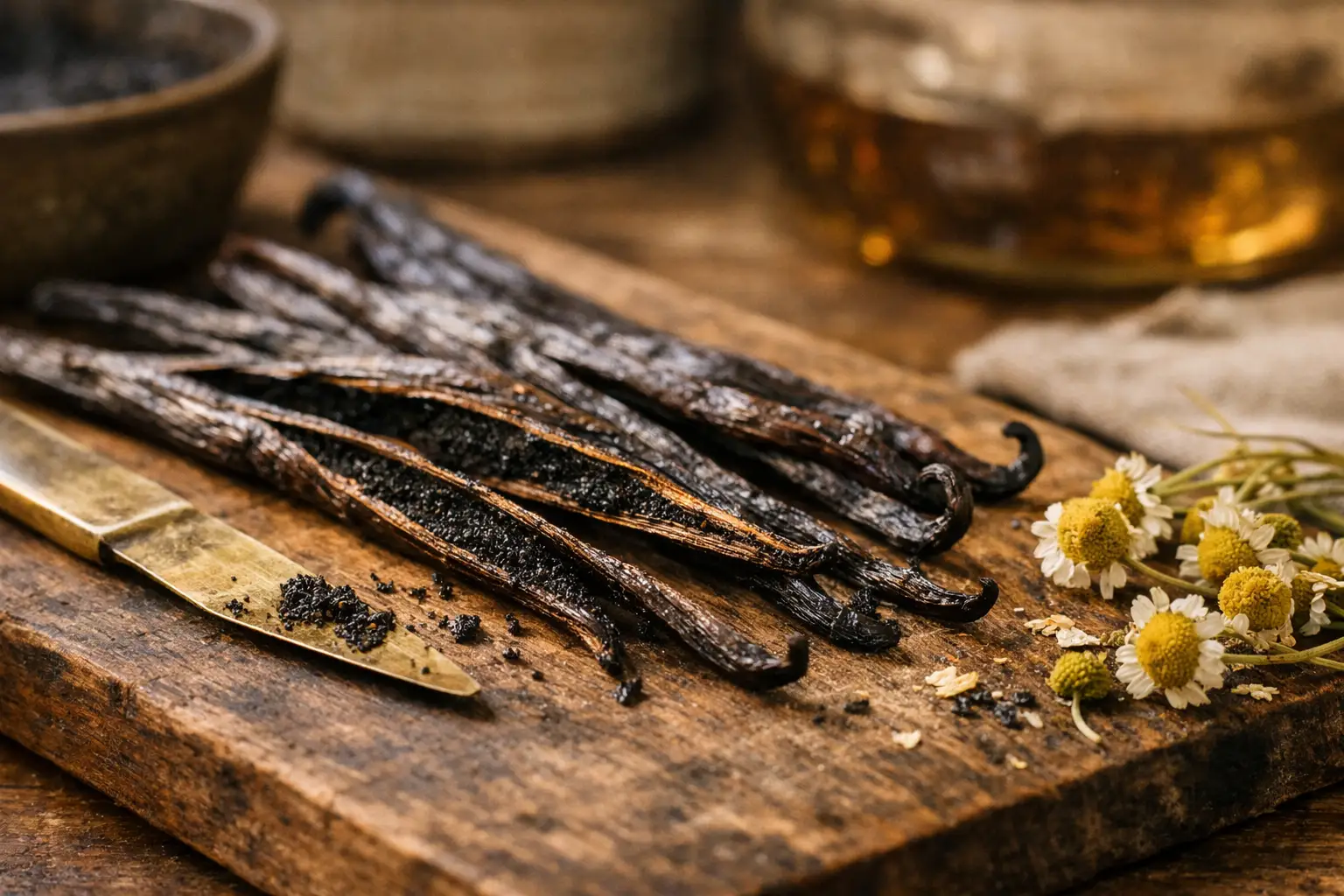
The first sign of quality is aroma. A good bean should smell deep, warm, creamy, and slightly woody, with notes that may lean toward cocoa, dried fruit, or soft spice depending on origin and cure. If the scent is faint, dusty, or oddly flat, the bean may be old or over-dried.
The second sign is texture. Many buyers assume drier means better preserved, but for working vanilla, flexibility matters. A bean should bend without snapping. It should feel leathery to pliable, not brittle like a twig. Over-dried beans are harder to split cleanly and often give less aromatic payoff in infusion.
Then look at appearance. Good beans are generally dark brown to almost black. A little surface sheen is welcome. Light dryness at the ends can be normal, but widespread cracking is a bad sign. Frosty crystals can sometimes appear and are not always a defect, but they should not replace the bean’s natural perfume.
Length matters less than people think. A shorter, well-cured bean can outperform a long, dry one. What matters most is cure quality, moisture, and fragrance retention. When comparing great value organic vanilla beans, think in terms of usable flavor per gram, not cosmetic perfection.
For warm spice support in tea formulas, ceylon cinnamon chips pair beautifully with vanilla’s roundness.
Origin, Grade, and Moisture: What Actually Affects Value
Many buyers get distracted by labels like Grade A and Grade B without thinking about the final application. Grade A beans are usually moister, softer, and more attractive. They are excellent for recipes where the pod itself is featured, such as custards, infused milks, or premium gift blends. Grade B beans are often drier but more concentrated by weight and can be perfectly suitable for extraction, syrup making, or long steeping applications.
For tea makers, the right grade depends on process. If you are cutting beans into a loose herbal blend, slightly drier beans may actually be easier to work with. If you are making a vanilla-forward syrup or want a luxurious visual and aromatic experience, moister beans are often worth the extra cost.
Origin also shapes value. Some beans lean richer and darker, others brighter or more floral. A tea maker may prefer a deep, creamy style for rooibos-like blends or a lighter profile for delicate botanicals. What matters most is consistency. If you find a source that gives the same curing style and aromatic strength batch after batch, that reliability is part of the value.
For floral softness around vanilla, try chamomile flowers in calming evening blends or gentle dessert teas.
Best Uses for Vanilla in Tea, Syrup, and Botanical Blends
Vanilla works best when you let it support rather than dominate. In tea, it rounds edges and creates a sense of sweetness even without sweetener. In syrup, it binds spice, root, peel, or flower notes into something more cohesive. In kombucha or sparkling botanical beverages, it can tame acidity and create a pastry-like aroma when used carefully.
One useful method for loose tea is to split one bean, scrape the seeds, and finely mince the pod. Then blend it into a dry formula with other cut botanicals. This gives both visible specks and aromatic distribution. Another method is to steep the split pod separately in warm water, then use that concentrated liquid in your final formulation.
Vanilla is especially good with roots and soft florals. Ginger becomes more rounded. Calendula feels more golden and less sharp. Spearmint becomes smoother and less candy-like. Tulsi feels warmer and fuller.
Try adding ginger root c/s for a spicy backbone in warming vanilla tea blends.
Try adding calendula petals for color and a soft golden note in floral vanilla infusions.
Try adding spearmint leaf c/s when you want a fresher lift without losing vanilla’s creamy feel.
Try adding tulsi leaves c/s for an aromatic herbal layer that makes vanilla feel more complex.
Practical Ratios for Tea Makers and Small Batches
 Vanilla can disappear if underused, but too much can make a blend feel heavy or oddly perfumed. For dry tea blends, start with restraint and build up.
For a 100 gram loose herbal tea blend:
Use 1 whole vanilla bean, split, scraped, and finely minced pod included. This usually gives about 3 to 5 grams depending on size.
Add 95 to 97 grams of the rest of the botanicals.
A balanced dessert-style tea trial might look like this:
60 g base herbs or leaves
15 g chamomile flowers
8 g ginger root c/s
4 g calendula petals
3 g minced organic vanilla beans
For a smaller kitchen test, use:
2 teaspoons chamomile
1 teaspoon cinnamon chips
1 teaspoon ginger root
1 teaspoon calendula
1/2 teaspoon vanilla powder or seeds from about 1/4 bean
For vanilla syrup:
Use 250 g water, 200 g sugar, and 1 whole split bean, or 1 to 1 1/2 teaspoons organic vanilla powder. Heat gently, do not boil aggressively, then cover and steep 20 to 30 minutes before straining or bottling.
For hot tea service:
Use 8 to 10 grams loose blend per 500 g water, roughly 4 to 5 teaspoons depending on cut size. Steep at about 95°C for 7 to 10 minutes for roots and flowers, or 85°C to 90°C for lighter leaf-heavy blends.
This is where great value organic vanilla beans reveal themselves. A good bean still registers clearly at modest dosage.
Troubleshooting: Flat Flavor, Too Tart, Over-Carbonation, Sediment, Aroma Loss
Flat flavor usually means either the vanilla was weak to begin with or it was paired with ingredients that overshadowed it. Strong peels, intense spice, and highly acidic ferments can bury vanilla quickly. Increase vanilla slightly, or soften the formula with more chamomile or tulsi.
Too tart is common in fermented beverages. Vanilla can help, but only to a point. Pair it with round botanicals rather than simply adding more bean. Cinnamon, chamomile, and calendula often smooth the profile better than excess vanilla.
Over-carbonation matters mostly in second fermentation drinks. Vanilla itself does not create extra pressure, but sweet syrups made with vanilla can. Measure carefully, refrigerate promptly, and do not rely on vanilla aroma to judge sugar content.
Sediment is normal if you use scraped seeds, powdered vanilla, or finely cut botanicals. For a cleaner finish, strain through a very fine mesh or filter after steeping. If you want the visual charm of vanilla specks, keep them in syrups but warn customers or guests that settling is natural.
Aroma loss often comes from heat abuse or poor storage. Long boiling drives off the finer notes. Gentle covered steeping protects them better. If a bean smells rich when you open it but weak after blending, your supporting ingredients may be too coarse, too dominant, or too stale.
Storage + Quality
Vanilla rewards careful storage. Keep beans airtight, away from direct light, and protected from large humidity swings. A sealed glass jar in a cool cupboard works well. Do not refrigerate unless your environment is unusually hot and humid, and even then, moisture management becomes critical.
Watch for changes in flexibility and scent. Good beans remain fragrant and pliable. If they become stiff, dusty, or faint-smelling, quality is slipping. A healthy dark color and rich aroma are your best cues. Extremely dry beans can still be used in syrup or long infusions, but they are no longer prime.
Vanilla powder also needs protection from air and humidity. Keep the lid tightly closed and use a dry spoon every time. If the powder clumps lightly, that can be manageable. If it smells dull or stale, replace it.
When evaluating great value organic vanilla beans over time, think beyond purchase day. True value includes shelf life, stability, and how much aroma survives repeated opening.
Safety
Vanilla is beloved because it feels familiar and food-friendly, but good practice still matters. Use clean tools, clean jars, and measured formulas. In beverage work, especially with syrups and fermented drinks, sanitation affects quality as much as ingredient choice.
Avoid framing vanilla or companion herbs as cures or treatments. Herbalists often use vanilla for comfort, warmth, and sensory balance, but those are culinary and traditional contexts rather than medical claims. If you are selling products, keep wording compliant and descriptive. Focus on flavor, aroma, preparation style, and customer experience.
Also remember that some customers are sensitive to highly perfumed ingredients. Vanilla usually reads as gentle, but concentrated applications can feel heavy if overdone. Start modestly and document your ratios.
How to Build a Better Vanilla Blend
A strong vanilla blend has shape. Start with a purpose. Do you want a soft bedtime tisane, a bakery-style tea, a golden floral cup, or a syrup for sparkling drinks? Once the goal is clear, vanilla becomes easier to dose.
For a soft evening profile, combine vanilla with chamomile and tulsi. For a warmer kitchen profile, combine it with cinnamon and ginger. For a brighter but still rounded cup, use calendula and spearmint with a lighter hand on spice. The best blends do not force vanilla into the spotlight. They let it weave through the other ingredients.
This is why many people searching for great value organic vanilla beans are really searching for performance. They want a bean that can anchor a blend, not just decorate a label. Choose fragrance, flexibility, and practical compatibility over flashy packaging. In tea making, the best ingredient is the one that keeps showing up in the cup.
Conclusion: Choosing Great Value Organic Vanilla Beans with Confidence
The smartest way to buy great value organic vanilla beans is to focus on sensory quality, not just price. Look for deep aroma, flexible texture, dark well-cured pods, and a source that stays consistent from batch to batch. For tea makers, syrup makers, and herbal product formulators, vanilla earns its place when it rounds rough edges, supports florals and roots, and holds its character in real use.
If you want the classic pod experience, organic vanilla beans are the best place to start. If you need quick, even distribution in dry blends, organic vanilla powder is practical and efficient. Pair vanilla thoughtfully with roots, leaves, and flowers, store it well, and test in small measured batches. That is how great value organic vanilla beans become more than a shopping term. They become a reliable working ingredient.
FAQ
What are great value organic vanilla beans?
Great value organic vanilla beans are beans that offer strong aroma, good moisture, and reliable flavor for the price, rather than simply being the cheapest option.
How can I tell if vanilla beans are fresh?
Fresh beans usually smell rich and warm, feel flexible, and look dark and slightly glossy rather than pale, brittle, or scentless.
Are whole beans better than vanilla powder for tea?
Whole beans give more layered aroma and a traditional sensory experience, while powder is easier to distribute evenly in dry blends.
How many vanilla beans should I use in a tea blend?
For a 100 gram blend, 1 bean is often a good starting point, depending on bean size and the strength of the other botanicals.
Can I use vanilla in kombucha or sparkling herbal drinks?
Yes, but use it carefully. Vanilla can soften tartness and add roundness, especially in syrups used for second fermentation.
Why does my vanilla tea taste weak?
The bean may be old, over-dried, or overshadowed by stronger ingredients like spice or acidic components. Better beans and gentler pairing usually help.
How should I store vanilla beans?
Keep them in an airtight container in a cool, dark cupboard away from humidity and heat.
Is vanilla used for wellness claims?
It is better to describe vanilla in culinary and traditional herbal terms such as aroma, comfort, and flavor balance rather than making medical claims.