Passion Flower Calming: Brewing Tips
Passion flower calming properties have made Passiflora incarnata one of the most sought-after nervine herbs in both traditional and contemporary herbal practice. Native to the southeastern United States and widely naturalized throughout the Americas and Europe. This remarkable vine produces some of the most architecturally complex flowers in the plant kingdom. Intricate, alien-looking blooms with radiating filaments that inspired Spanish missionaries to see in them the symbols of the Passion of Christ, giving the plant its dramatic name.
What Is Passion Flower?
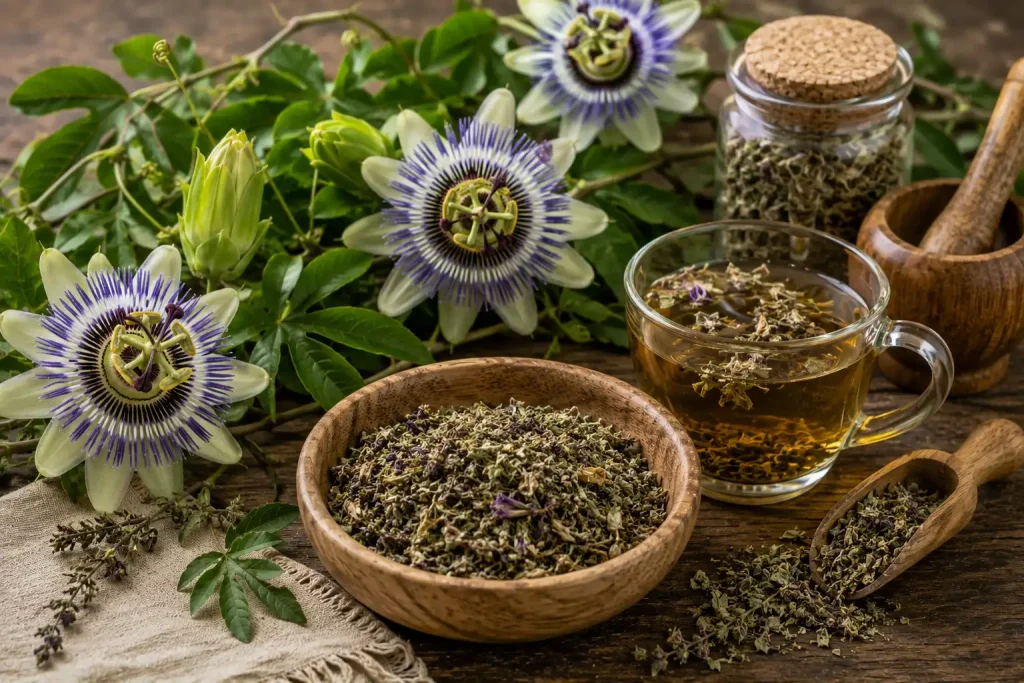
Passion flower refers most commonly to Passiflora incarnata, the maypop or wild passion flower, though many species within the large Passiflora genus are used herbally. The vine grows vigorously, climbing over fences and through shrubs with tendrils, producing large, lobed leaves, striking flowers, and edible green-to-yellow fruits. The aerial parts — leaves, stems, and tendrils — are the primary herb used in herbal medicine.
The chemistry of passion flower includes a range of active constituents: flavonoids (particularly chrysin, vitexin, and isovitexin), alkaloids including harmane and harmine, gamma-aminobutyric acid (GABA), and various glycosides. These compounds collectively contribute to passion flower’s well-documented sedative and anxiolytic properties.
Furthermore, passion flower is official in several European pharmacopeias as a sedative and anxiolytic herb, giving it a level of regulatory recognition that many nervine herbs lack. The German Commission E approves it for nervous restlessness. It is also widely used as a component in over-the-counter sleep and anxiety preparations across Europe.
Passion Flower Calming in Traditional Herbalism
Native American tribes used passion flower long before European contact, primarily for its calming and sleep-inducing properties. The Cherokee used it as a tonic, and several tribes used poultices of the root and leaves for skin conditions and ear infections. After European colonization, passion flower was adopted into American eclectic medicine in the 19th century as a valuable nervine for insomnia, nervous tension, and restlessness.
Eclectic physicians — the 19th-century American herbalist-physicians who documented hundreds of plant medicines — particularly valued passion flower for what they called “nervous unrest” — the inability to quiet an overactive mind at bedtime. This application remains one of the primary uses of passion flower calming preparations today, reflecting how accurately traditional observations have held up to modern scrutiny.
In European herbalism, passion flower was incorporated into compound sedative formulas alongside valerian, hops, and lemon balm. This combination approach remains popular in commercial herbal sleep aids worldwide. Moreover, traditional practitioners valued passion flower for its ability to relax nervous tension without significantly impairing cognitive function during the day.
How to Brew Passion Flower Tea
Passion flower makes an excellent herbal tea with a mild, slightly bitter, pleasantly green flavor that is easy to drink. Use one to two teaspoons of dried herb per eight ounces of hot water. Pour water just off the boil and steep for ten to fifteen minutes, covered. Strain and drink thirty minutes to one hour before bedtime for sleep support.
Wild-harvested passion flower is particularly aromatic and potent. Passion flower wild harvested provides the robust botanical character that dried herb should have — green, mildly earthy, with a faint floral note. For those who want a more concentrated preparation, passion flower TBC wild harvested offers a choice of whole plant material for those who prefer a specific cut.
The flavor of passion flower tea is mild enough to drink alone but blends exceptionally well with other calming herbs. Consequently, it is one of the most versatile nervine herbs for formulation and blending.
Classic Calming Blend Recipes
One of the most classic and effective calming blends in Western herbalism pairs passion flower with chamomile and lemon balm. Use one teaspoon each of passion flower, chamomile flowers whole, and lemon balm leaf cut and sifted per eight-ounce cup. Steep together for ten to twelve minutes, strain, and drink in the hour before sleep.
This three-herb blend addresses anxiety through multiple complementary pathways: passion flower’s GABA-related mechanisms, chamomile’s apigenin and bisabolol activity at benzodiazepine receptor sites, and lemon balm’s rosmarinic acid and luteolin supporting GABA levels. Together, they form a genuinely well-rounded nervine formula that has been used in various forms for generations.
For a daytime anxiety blend — one that calms without excessive sedation — use passion flower with lemon balm and a small amount of oat straw. Additionally, adding a small amount of lavender to any passion flower blend enhances the calming effect while contributing a pleasant floral aroma.
Passion Flower for Sleep
Among passion flower calming applications, sleep is the most widely studied and recognized. Research suggests that passion flower preparations reduce sleep onset time, improve sleep quality, and extend total sleep duration in adults with mild sleep disturbances. In clinical settings, passion flower has been compared favorably to low-dose sedative medications for mild insomnia, with fewer side effects.
The herb works best for sleep when used consistently over several nights rather than as a one-off remedy. Traditional herbalists recommend establishing a pre-sleep ritual that includes a cup of passion flower tea along with other relaxing practices — reducing screen time, dimming lights, and avoiding stimulants in the evening.
Unlike pharmaceutical sleep aids, passion flower does not create significant dependency or dramatically alter sleep architecture. However, it is gentle and works most effectively for the mild-to-moderate sleep issues associated with stress and an overactive mind rather than for severe insomnia.
Selecting Quality Passion Flower
Quality dried passion flower should be visibly green with some stem material and possibly dried flower or bud remnants. The color is important — yellowed or brown herb has been over-dried or stored too long. Fresh dried herb has a pleasant, slightly sweet, grassy, faintly floral aroma. Herb that smells flat, musty, or hay-like has likely degraded.
Wild-harvested passion flower is frequently preferred over cultivated material because the plants grow more slowly under natural conditions, often producing herb with higher concentrations of active constituents. As a result, wildcrafted herb from reputable sources can offer superior potency to bulk cultivated material.
Store dried passion flower in a sealed glass container away from light and heat. Under these conditions, it retains good quality for one to two years.
Safety and Considerations
Passion flower is generally safe for short to medium-term use in adults. It may cause drowsiness, particularly at higher doses or when combined with other sedative herbs or substances. For this reason, avoid driving or operating machinery after taking passion flower tea, particularly if you are new to the herb and unsure of your individual response. Passion flower should not be combined with pharmaceutical sedatives, benzodiazepines, or MAO inhibitors without medical supervision. Pregnant women should avoid therapeutic doses. Do not use in children without professional guidance. This post is educational only and does not constitute medical advice.
Frequently Asked Questions
How quickly does passion flower tea work?
Most people notice a gentle calming effect within thirty to sixty minutes of drinking passion flower tea. The effect is subtle compared to pharmaceutical sedatives — a gentle quieting of mental activity rather than a heavy sedation. Taking it consistently over several nights is associated with cumulative improvement in sleep quality.
Can I drink passion flower tea during the day?
Yes, though start with a weaker preparation to assess your individual response to sedation. Some people find passion flower mildly sedating at standard doses. Others notice only a subtle calming effect that does not interfere with daytime function. Lower doses — one teaspoon per cup rather than two — are more appropriate for daytime use.
Is passion flower safe for long-term use?
Passion flower has a good safety record in traditional use and clinical studies typically lasting several weeks. Long-term safety data beyond a few months is limited. Most herbalists recommend cycling — using it for six to eight weeks, then taking a break — rather than indefinite continuous use.
What part of the passion flower plant is used for tea?
The aerial parts — leaves, stems, and tendrils — are used medicinally. The roots are generally not used in herbal tea preparations. The fruit and flowers of edible species are consumed as food. But the medicinal applications focus specifically on the vegetative parts of the vine.
Passion flower is one of the most genuinely useful and well-documented calming herbs available. It has a rich history of traditional use backed by meaningful modern research. Explore our wild-harvested passion flower and discover more nervine botanicals at the Hatton Naturals shop.