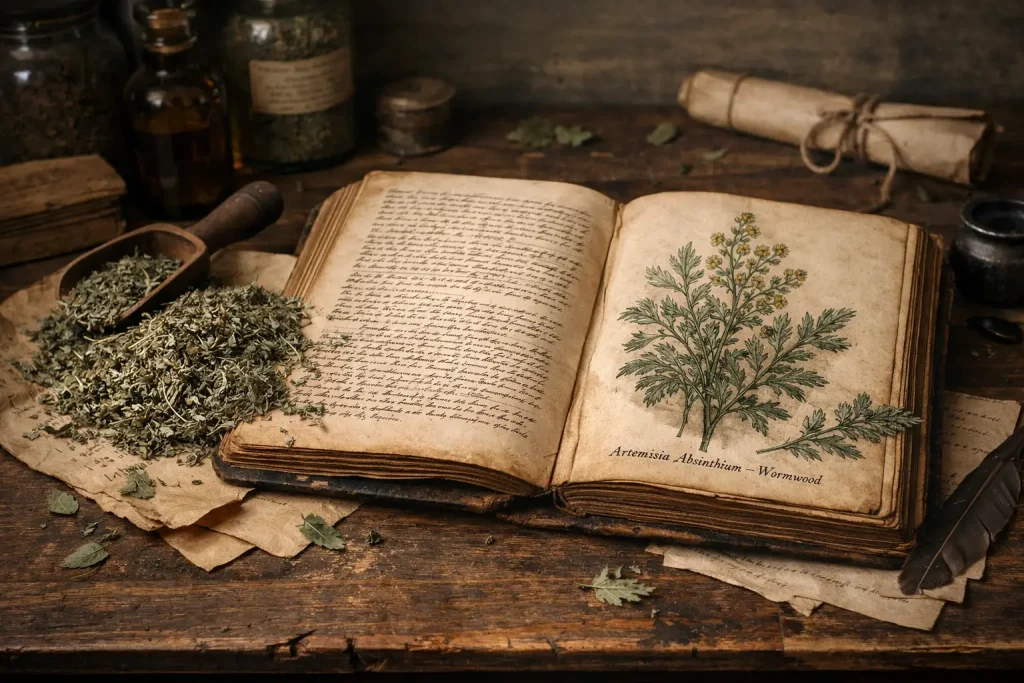
Why Is Wormwood Called Wormwood? Origin and History
If you have ever wondered why is wormwood called wormwood, the answer begins in the old language of herbs, where plants were often named for what people believed they did, how they tasted, or the kind of problem they were traditionally used around. Wormwood is one of those deeply old herb names that carries centuries of folklore, household practice, and bitter aromatic memory. Long before modern branding, herbal names were practical. They were labels that told people what to expect from a plant in the hand, in the cup, or in the apothecary jar.
For tea makers and botanical blenders, it is more than a dramatic old name. It is a sharp, dry, resinous herb with a strong bitterness that can shift a formula with only a small amount. It also belongs to a wider family of silvery, fragrant Artemisia plants that have been valued in traditional herb craft for generations. When used carefully, it can bring structure, tension, and old-world character to a blend. Understanding its name helps explain not only its history, but also why herbalists treated it with respect and why modern makers do the same.
Why Is Wormwood Called Wormwood? The Short Answer
The simplest answer to why is wormwood called wormwood is that the name reflects traditional historical use. In older English herb lore, “worm” often referred not only to actual worms but to creeping pests, internal complaints, and unwanted infestations in a broad pre-modern sense. “Wood” in this case does not mean timber. It comes from old naming patterns attached to herbs and wild plants, especially those with a strong, bitter, or shrubby character.
In old herbals, it was commonly described as an intensely bitter plant associated with cleansing, driving away, or discouraging things people did not want in the body or the household. The name stuck because it was memorable, descriptive, and tied to use. Like many historical plant names, it tells you more about inherited folk understanding than about modern scientific labeling.
The Old Language Behind the Name
To understand why is wormwood called wormwood, it helps to think like an herbalist working from a bench two or three hundred years ago. Plant names were often functional. They were not always botanically precise, but they were vivid. Bitter herbs especially tended to receive names that sounded strong, protective, or corrective.
Wormwood comes through Old English and later medieval usage, and it belongs to a tradition where the sensory nature of a plant mattered. It tastes piercingly bitter. It smells dry, green, camphor-like, and a little wild. This is not a soft herb. It announces itself immediately. In many old naming systems, plants with such strong personalities were linked to strong actions.
There is also a long overlap between household herb use and symbolic language. A plant used to freshen storage areas, scent linens, flavor tonic wines, or prepare bitter infusions could easily keep a name that reflected those traditional associations. For that reason, the old name survived even as botanical science later placed wormwood in the genus Artemisia.
Wormwood in Traditional Herbal History
A deeper look at why is wormwood called wormwood brings in the history of European herbal practice. Wormwood appears in old herb books, monastic gardens, household manuals, and bitter preparations made for digestion and general household use. Herbalists often valued it for its bitterness first. In traditional herb craft, bitterness was not considered a flaw. It was a defining quality.
This matters for modern tea makers because wormwood belongs to an older bitter tradition that includes aperitif herbs, digestive bitters, and aromatic infusions where small amounts of intense plants changed the whole profile of a formula. A little wormwood could sharpen a blend, lengthen the finish, and bring a dry botanical edge that sweeter herbs could not.
If you are building an old-world style tea blend, it can pair well with herbs that soften or round its intensity. Try adding mugwort c/s for a related Artemisia note with a gentler, more rounded herbal aroma. For more root depth in a serious bitter formula, dandelion root c/s can add roasted structure without making the cup feel flat.
Wormwood, Mugwort, and the Artemisia Family
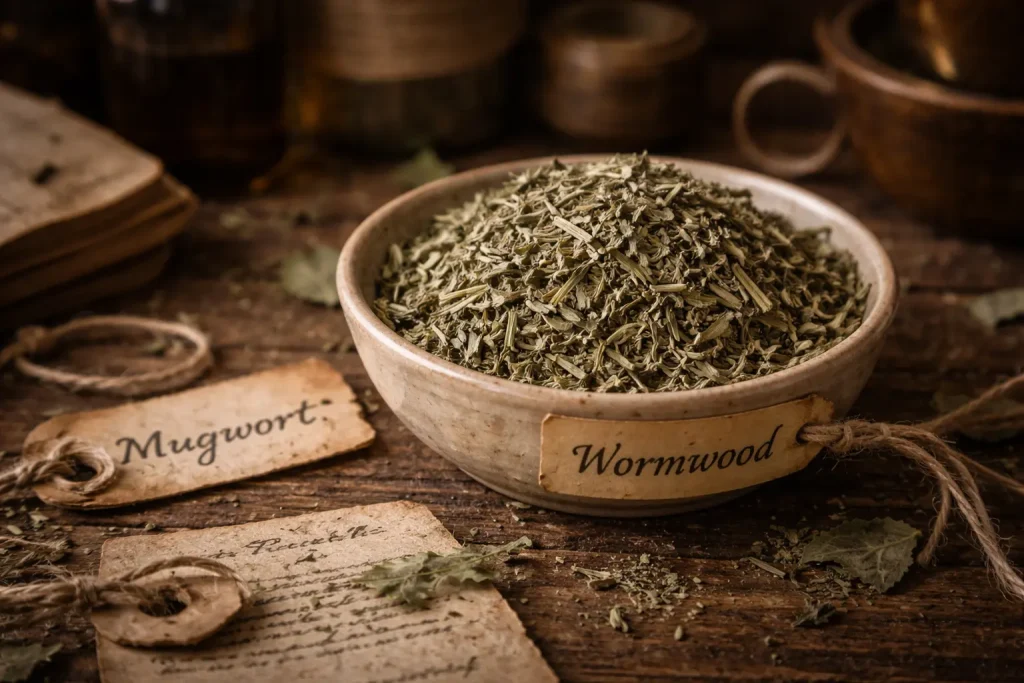
Wormwood is not the only famous Artemisia herb. Mugwort is its better-known cousin in many modern herbal circles, and comparing the two helps explain how makers should handle it. Mugwort is generally softer, earthier, and more diffusely aromatic. Wormwood is drier, sharper, and more aggressively bitter.
For that reason, herbalists and blenders rarely use it as a bulk herb in the way they might use nettle, peppermint, or chamomile. It is more often a precision ingredient. A little can give backbone. Too much can dominate everything.
This is where product pairing becomes useful in practice. Try wormwood herb c/s when you want a bitter top note in old apothecary-style blends. Soften the profile with mugwort c/s for a more rounded wild-herb character. If you want floral lift without adding sugary softness, calendula petals can brighten the visual and aromatic profile of a dry blend. If you want a cool leafy finish, peppermint leaf can help make bitter formulas more approachable in the cup.
How Tea Makers Use Wormwood in Small Amounts
For a tea maker, the real question is not only etymological. It is practical. Once you know the history, you can use the herb more intelligently. In modern blending, why is wormwood called wormwood matters because the name warns you that this is a powerful botanical with a long reputation for intensity.
Wormwood works best when treated as an accent herb. Think in terms of edges, not volume. It can be useful in:
bitter tea blends
old-world botanical formulas
aromatic non-sweet digestif style infusions
small-batch experimental kombucha secondary flavoring, used carefully
blended apothecary-style sachet teas where bitterness is part of the concept
A practical starting point is to build wormwood into formulas that also include balancing herbs. Try adding licorice root c/s when you want natural sweetness to cushion bitterness. For a warm spice bridge, ginger root c/s helps connect bitter herbs with the palate and gives the blend more movement. For a more woodland style formula, holy basil leaf can add aromatic breadth and soften the stark edge of wormwood.
When used in kombucha-style work, it is usually best kept subtle. It is not a fruit-forward star ingredient. It is a dry, sophisticated accent. A pinch can create interest. A heavy hand can ruin a batch.
Working Ratios for Tea and Test Batches
 When makers ask how to use wormwood practically, exact ratios matter more than romantic descriptions. For loose tea, start small.
For a 10 gram test blend:
0.2 to 0.4 grams wormwood
2 to 3 grams supporting aromatic leaf or flower
2 to 4 grams root or body-building herb
balance with neutral or harmonizing herbs
In teaspoons, that usually means:
about 1/8 teaspoon wormwood
1 to 2 teaspoons supporting herbs total, depending on cut and density
For a single 8 to 10 ounce cup:
0.15 to 0.3 grams wormwood
roughly a small pinch to 1/8 teaspoon
1 to 2 teaspoons of the rest of the blend
Steep at 90 to 95°C (194 to 203°F) for 4 to 6 minutes if blended. If using wormwood alone for sensory evaluation, start at 2 to 3 minutes. Longer steeping increases bitterness quickly.
For kombucha 2F test work:
0.1 to 0.2 grams wormwood per 500 ml bottle
combine with 1 to 2 grams of a softer herb
strain carefully before bottling if using fine cut material
Troubleshooting
Flat flavor:
Wormwood may be too dominant, masking brighter herbs. Add a small amount of peppermint, grapefruit peel, or calendula to restore lift.
Too tart:
If the blend includes acidic fruit or kombucha culture tang, wormwood can make the profile feel harsher. Reduce sour elements and support with licorice root or warmer roots.
Over-carbonation:
In 2F, wormwood itself is not usually the cause, but mixed herb particles can accelerate activity if sugars are also present. Use smaller herb loads and burp test bottles carefully.
Sediment:
Cut-and-sifted wormwood can shed fine particles. Use a fine mesh bag, strain twice, or let the infusion settle before bottling.
Aroma loss:
Because wormwood’s appeal is partly aromatic, poor storage or long steep times can leave only blunt bitterness behind. Pair it with fresher aromatic herbs and shorten extraction.
Storage + Quality
Storage matters because wormwood is as much about aroma as bitterness. Keep it airtight, cool, and away from humidity. A glass jar with a tight lid or a properly sealed pouch works well. Avoid frequent heat exposure from sunny shelves or warm production spaces.
Good wormwood should have a distinct scent that feels dry, green, resinous, and clean. The color should still suggest life, usually muted green to gray-green depending on cut and age. If it smells dusty, stale, or oddly faint, the lot may be tired. If the herb has browned heavily or lost most of its aromatic lift, it may still taste bitter but will lack character.
For makers blending larger dry batches, store it separately until final formulation. Its aroma can spread, and its bitterness can tempt overuse when scooping by eye. Measure it deliberately.
Safety
Wormwood is a traditional herb with a strong reputation, but it should be handled thoughtfully. This article is for educational and formulation purposes only, not medical advice. Herbalists often use wormwood in very small amounts and with a clear understanding that strong bitter herbs are not casual everyday ingredients for everyone.
Avoid exaggerated health claims. It is better to say wormwood was traditionally used in old herbal practice and that herbalists often value it for bitterness and aromatic intensity. People who are pregnant, nursing, highly sensitive to bitter herbs, or unsure whether a herb suits them should consult a qualified professional before using concentrated or frequent preparations.
For product development, clear labeling and restrained serving guidance are part of good herbal practice.
Conclusion
So, why is wormwood called wormwood? Because the name comes from an old herbal world where plants were named for what people believed they did, how they behaved in the home, and how strongly they announced themselves in the body and the senses. Wormwood kept its name because it was memorable, bitter, and historically important.
For modern tea makers, that old name is still useful. It reminds you that wormwood is not a filler herb. It is a precise botanical tool. Used carefully, it brings dryness, tension, and antique herbal depth to a blend. Used carelessly, it can take over. That balance between respect and curiosity is exactly what makes wormwood such a compelling herb to study and use.
FAQ
Is wormwood named after wood?
Not really. In this case, “wood” is part of an old plant name pattern, not a reference to timber.
Why is wormwood called wormwood in old herb books?
Because older herbal naming often linked plants to traditional household or bodily uses, especially for bitter and strongly aromatic herbs.
Does taste like mugwort?
No. They are related, but wormwood is usually much more bitter and sharper than mugwort.
Can be used in tea blends?
Yes, but only in small amounts. It works best as an accent herb rather than a main ingredient.
How much wormwood should I use per cup?
A small pinch to about 1/8 teaspoon is a cautious starting point for a blended infusion.
Is wormwood good for kombucha second fermentation?
It can be, but only in tiny amounts. It is better for dry herbal complexity than for fruity, easy-drinking bottles.
What herbs pair well with wormwood?
Mugwort, peppermint, licorice root, ginger root, calendula, dandelion root, holy basil, and small amounts of citrus peel can all work well.
Why is wormwood called wormwood if people use it today mostly for flavor and tradition?
Because plant names often outlive their original context. The historical name stayed, even as modern use shifted toward sensory and botanical appreciation.