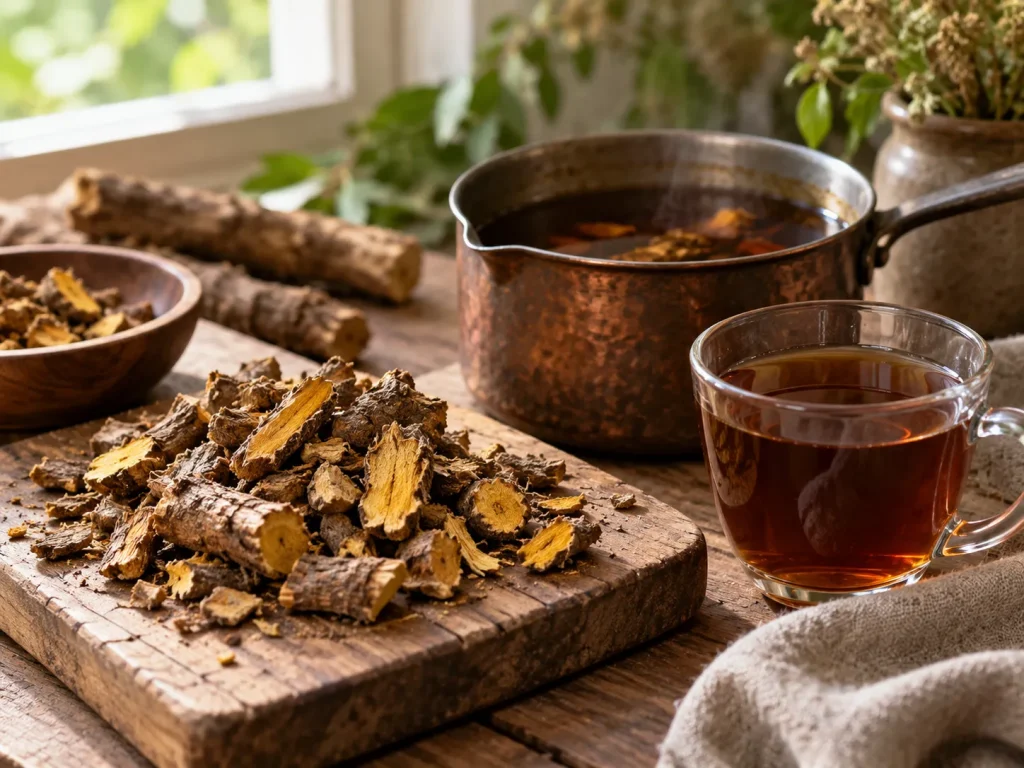
Yellow Dock Root: A Guide to This Traditional Bitter Herb
Yellow dock root is a classic bitter herb with a long place in folk herbalism. The plant grows almost everywhere, from roadsides to open fields. Its bright yellow root has been used in traditional tonics for generations. This guide explains what yellow dock is, how herbalists use it and how to prepare it at home.
In addition, you will learn how to choose good root, how to blend it with other herbs and which safety points matter most. So, let’s start with the plant itself.
What Is Yellow Dock Root?
Yellow dock (Rumex crispus) is also called curly dock because of its wavy leaf edges. It belongs to the buckwheat family, alongside sorrel and rhubarb. The long taproot has a deep yellow to orange color inside. Once harvested, it is cleaned, cut and dried for use in teas and tinctures.
The root tastes earthy and bitter, with a slight astringent finish. That bitterness is exactly why herbalists value it.
The plant first grew in Europe and western Asia. However, settlers carried it around the world, and it now thrives across North America. It forms a low rosette of long leaves in spring. Then, by midsummer, it sends up a tall stalk covered in green seeds that turn rusty brown in fall. Many hikers recognize dock by those dark seed heads standing in fields.
How Yellow Dock Differs From Other Docks
There are many dock species. For example, broadleaf dock (Rumex obtusifolius) has wider, flatter leaves and a less colorful root. Sheep sorrel is a smaller cousin with arrow shaped leaves. Herbalists traditionally prefer curly dock because its root shows the brightest yellow color when cut.
A Brief History of Yellow Dock
Dock has been part of rural life for centuries. In Britain, children rubbed dock leaves on nettle stings, and the habit still survives today. Meanwhile, country cooks picked the young spring leaves as a wild green, much like spinach.
The root had a different role. Folk herbalists dug it in the fall, when the plant stored its energy underground. They dried it, cut it and kept it for winter tonics. Later, North American herbalists of the 1800s added yellow dock to many of their bitter formulas. As a result, it became a standard root in herb shops by the early 1900s.
Traditional Uses of Yellow Dock Root
In European and North American folk practice, yellow dock root was a common ingredient in spring tonics and bitter blends. Herbalists often paired it with other roots such as dandelion and burdock. In addition, it appears in many traditional formulas that focus on digestion.
Bitter herbs have a long culinary and herbal history. If this topic interests you, our guide to gentian root covers another well known bitter. This article shares traditional background and is not medical advice.
Today, herbal makers still use the root in teas, tinctures and homemade bitters. Some also include it in iron rich food recipes alongside nettle and molasses, following old family traditions. Curious which root fits your own routine? Take our quick digestive herb quiz to compare the classics.
How to Make a Yellow Dock Root Decoction
Roots are dense, so a simple steep does not extract much flavor. Instead, herbalists prepare a decoction.
- Add 1 teaspoon of wild harvested yellow dock root to a small saucepan.
- Pour in 1 1/2 cups of cold water.
- Bring the water to a boil, then reduce the heat.
- Cover and simmer for 15 to 20 minutes.
- Strain the liquid and let it cool slightly before drinking.
Starting with cold water matters. In fact, slow heating helps draw more flavor out of the woody root pieces. Also, keep the lid on so the liquid does not reduce too much.
Yellow Dock Root Preparation Chart
Different preparations give different strengths. Use this chart as a simple guide.
| Method | Root | Liquid | Time | Flavor |
|---|---|---|---|---|
| Light decoction | 1/2 tsp | 1 1/2 cups water | Simmer 10 minutes | Mild, earthy |
| Standard decoction | 1 tsp | 1 1/2 cups water | Simmer 15 to 20 minutes | Bitter, full |
| Cold overnight soak | 1 tsp | 1 cup water | 8 hours in the fridge | Softer, less bitter |
| Homemade bitters | 2 tbsp | 1 cup vodka | 2 to 4 weeks | Strong, concentrated |
Blending Yellow Dock With Other Roots
On its own, yellow dock root tastes quite bitter. Therefore, many people blend it with sweeter or earthier roots. Here are some classic partners:
- Organic dandelion root adds a roasty depth.
- Organic burdock root brings a mild, earthy sweetness.
- Organic licorice root softens the bitterness with natural sweetness.
- Organic ginger root adds warmth.
For more on these partners, read our guides to dandelion root tea and burdock root blends.
A Simple Four Root Blend
This blend balances bitter, sweet and spicy notes. First, mix 1 part yellow dock, 2 parts burdock and 2 parts dandelion root in a jar. Then add 1/2 part licorice and 1/2 part ginger. Use 1 heaping teaspoon per 1 1/2 cups of water and simmer for 15 minutes. Finally, strain and add a little honey or a squeeze of orange.
Yellow Dock Root vs Other Bitter Roots
Many bitter roots share a shelf in traditional herbalism. However, each one tastes different. This quick comparison helps you choose.
- Yellow dock: earthy, bitter and slightly astringent, with a yellow color in the cup.
- Dandelion root: roasty and coffee like, especially when roasted.
- Burdock root: mild and sweet, almost like a root vegetable.
- Gentian root: intensely bitter, so herbalists use only tiny amounts.
As a result, yellow dock sits in the middle. It is more bitter than burdock, yet far gentler than gentian.
Other Ways to Use it
Decoctions are the most common choice. However, herbal makers have found several other ways to work with the root.
- Homemade bitters: soak cut root with orange peel and a few cardamom pods in vodka for two to four weeks. Then strain and use a few drops in sparkling water.
- Herbal syrup: simmer a strong decoction with molasses or honey, following old country recipes. Keep it in the fridge and use it within a few weeks.
- Tinctures: herbal makers often soak the dried root in alcohol for four to six weeks before straining.
- Natural dye: the root gives soft yellow and tan tones to wool and cotton.
- Bulk formulas: tea brands blend the cut root into earthy root teas and spring tonic mixes.
In each case, keep amounts modest. In fact, a little yellow dock goes a long way in any blend.
Tips for Wholesale Buyers
If you run a tea brand or herbal shop, consistency matters. First, ask for the same cut size in every order, so your blends look and brew the same. Next, keep the lot number of each bag on file. That way, you can trace every finished product back to its source. Finally, store open bags in sealed bins in a cool room, because roots can absorb moisture in humid weather.
Wildcrafted vs Cultivated Yellow Dock
Most yellow dock on the market is wildcrafted, which means it grows wild and someone harvests it by hand. Good wildcrafters dig only part of each stand, so the plants return the next year. They also choose clean fields far from roads and farm sprays. As a result, wildcrafted root often carries a strong, natural color and flavor.
Safety Notes
Yellow dock contains oxalates and natural compounds called anthraquinones. For this reason, it is best used in moderate amounts and for short periods. People with kidney stones, pregnant or breastfeeding women and anyone taking medication should consult a healthcare provider before use. Also, do not eat wild dock unless you are sure of the plant’s identity.
In addition, avoid harvesting dock from roadsides or sprayed fields, because roots can absorb pollutants. Children should not use it without guidance from a healthcare provider.
How to Choose and Store Yellow Dock Root
Good root starts with good sourcing. So, look for cut pieces that show a yellow to rusty orange color inside. The smell should be earthy and clean, never musty. Also, check that the pieces are dry and hard, with little dust at the bottom of the bag.
Keep the root in an airtight glass jar or a resealable bag. Then store it in a cool, dark cupboard away from the stove. Cut roots usually keep good quality for one to two years.
Common Mistakes With Yellow Dock
First, many people steep the root like a leaf tea, so the cup tastes thin. Second, some use too much root and end up with a harsh, bitter brew. Third, people often forget the lid, which lets flavor escape. Instead, start with a small amount, simmer it covered and adjust from there.
Frequently Asked Questions
What does yellow dock root taste like?
It tastes earthy and bitter with a mild astringent finish. Blending it with licorice or ginger makes it easier to enjoy.
Is yellow dock the same as burdock?
No. They are different plants from different families. Herbalists simply use them together in many traditional blends.
How should I store dried yellow dock root?
Keep it in an airtight container away from heat and light. Cut roots usually stay potent for one to two years.
Can I eat yellow dock leaves?
Country cooks traditionally ate the young spring leaves in small amounts, well cooked. However, the leaves contain oxalates, so people with kidney concerns should skip them.
When do herbalists harvest yellow dock root?
Most dig it in the fall, after the seeds ripen. At that time, the plant stores its energy in the root, which gives the best color and flavor.
Add it to Your Herbal Shelf
Yellow dock root offers a true taste of folk herbal tradition. It brews into an earthy, bitter cup that blends beautifully with dandelion, burdock, licorice and ginger. Also, remember to use it in moderation and follow the safety notes.
Ready to try it? Shop our wild harvested yellow dock root in retail or bulk sizes. Tea brands and herbal makers can also contact us for wholesale pricing.