White Tea vs Green Tea: Flavor, Caffeine and How to Brew
If you are comparing white tea vs green tea, you are looking at two close cousins. Both come from the same plant, Camellia sinensis. Both are light, fresh and low in oxidation. Still, they taste quite different, and each one needs its own brewing approach. This guide explains the key differences so you can choose the right cup.
In addition, you will find a side by side table, brewing steps for each tea, a cold brew recipe, buying and storage tips and answers to common questions. So by the end, you will know exactly which tin to reach for.
White Tea vs Green Tea: Same Plant, Different Process
All true tea starts as fresh leaves from the tea bush. What changes is how the leaves are handled after picking.
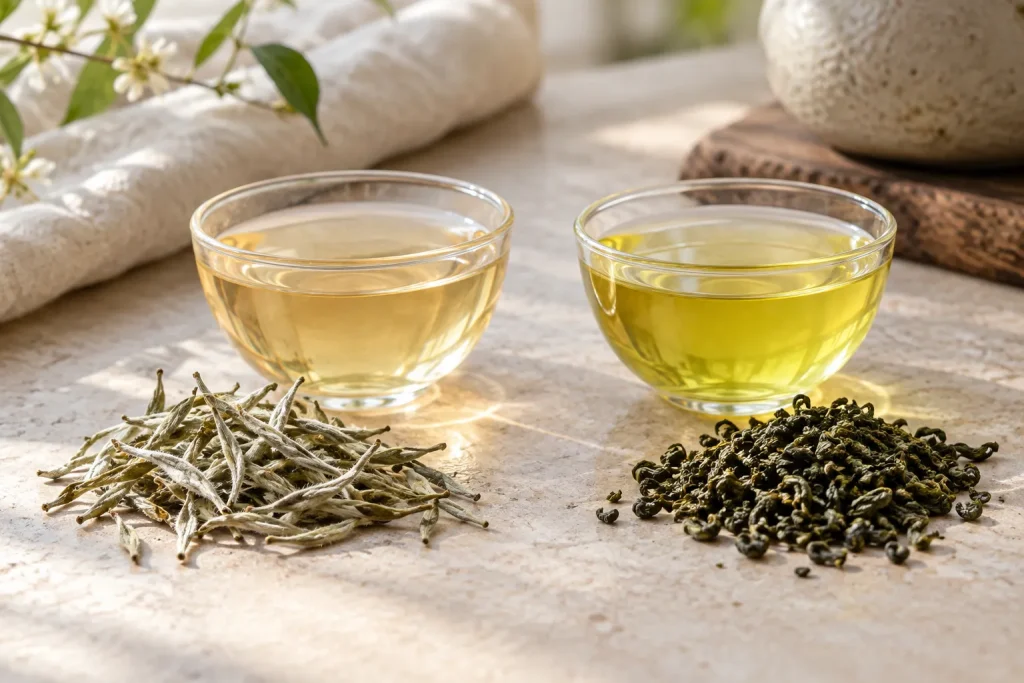
White tea is the least processed tea of all. Workers pick young leaves and buds, then simply wither and dry them. There is no rolling and very little handling. As a result, the leaves stay close to their natural state.
Green tea goes through one extra key step. Shortly after picking, the leaves are heated to stop oxidation. In China, this is usually done by pan firing. In Japan, steaming is more common. Then the leaves are rolled and shaped before drying.
That single heating step explains most of the difference. In fact, it locks in the fresh, vegetal character of green tea. White tea skips it, so a tiny amount of natural oxidation happens during the slow withering. For this reason, white tea often tastes a little sweeter and rounder.
Where Each Tea Comes From
White tea has deep roots in Fujian province, China. Classic styles include Silver Needle, made only from buds, and White Peony, which mixes buds and young leaves. Today, growers in Sri Lanka, India and Kenya also make fine white teas.
Green tea, meanwhile, has an even wider map. China produces famous pan fired teas such as Chun Mee and Gunpowder. Japan focuses on steamed teas like sencha. In addition, many other regions now craft their own green teas.
White Tea vs Green Tea at a Glance
This table sums up the white tea vs green tea differences. Use it as a quick reference before you brew.
| Feature | White Tea | Green Tea |
|---|---|---|
| Processing | Withered and dried | Heated, rolled and dried |
| Leaf look | Fluffy, silvery buds and leaves | Rolled, twisted or flat leaves |
| Flavor | Sweet, soft, honey and melon | Grassy, toasty, nutty or savory |
| Water temperature | 175 to 185°F | 160 to 180°F |
| Steep time | 3 to 5 minutes | 2 to 3 minutes |
| Leaf per 8 oz | 2 teaspoons | 1 teaspoon |
| Forgiveness | Very forgiving | Turns bitter if overbrewed |
How the Flavor Compares
White tea is soft, sweet and delicate. You may notice notes of honey, melon or fresh hay. It rarely tastes bitter, even when brewed a little too long.
Green tea, on the other hand, is brighter and more vegetal. Pan fired teas taste toasty and nutty. For example, our organic Chun Mee green tea has a smooth, slightly plum-like finish. Similarly, our organic pan fired green tea brings a gentle roasted note. Green tea can turn astringent if the water is too hot, so temperature matters more.
Steamed Japanese greens taste different again. They lean toward fresh spinach, seaweed and cut grass. So if you think you dislike green tea, try a pan fired style first. Its toasty side often wins people over.
Popular Styles Worth Knowing
Each category holds many styles, and the names can feel confusing at first. So here is a short guide to the ones you will see most often.
- Silver Needle: A white tea made only from buds. It tastes delicate, sweet and very smooth.
- White Peony: A white tea with buds and young leaves. It has more body and a light floral note.
- Chun Mee: A pan fired green tea with curved, eyebrow shaped leaves. It tastes smooth with a plum-like finish.
- Gunpowder: A green tea rolled into tight pellets. It brews a bold, slightly smoky cup.
- Sencha: A steamed Japanese green tea. It tastes grassy, fresh and a little savory.
In short, the white tea vs green tea choice is really a starting point. Within each family, you can explore a whole range of flavors.
Food Pairings for Each Tea
- White tea: Fresh fruit, soft cheeses, almond cookies and light salads. Its gentle flavor gets lost next to strong spices.
- Pan fired green tea: Stir fries, roasted vegetables, rice dishes and grilled fish. The toasty notes echo cooked flavors.
- Steamed green tea: Sushi, miso soup, tofu and steamed greens. Also, it cuts nicely through rich, salty food.
Caffeine: Which Tea Has More?
Many people assume white tea always has less caffeine. In reality, the answer depends on the leaf. Buds can hold quite a bit of caffeine. However, white tea is usually brewed at lower temperatures, which pulls out less caffeine per cup.
In general, both teas contain less caffeine than black tea or coffee. A typical cup of either falls somewhere between 20 and 45 milligrams. Steep time, water temperature and leaf amount all change the final number.
So if you want a lighter cup, steep for a shorter time and use cooler water. Also, a second infusion usually carries less caffeine than the first. If you are sensitive to caffeine, are pregnant or take medication, ask your healthcare provider how much tea suits you.
How to Brew White Tea and Green Tea
Both teas reward a little care. The main rules are simple: use fresh water, watch the temperature and taste as you go. In fact, temperature is where the white tea vs green tea difference matters most in the kitchen.
How to Brew White Tea
- Use 2 teaspoons of leaves per 8 ounce cup, since white tea leaves are light and fluffy.
- Heat water to about 175 to 185°F.
- Steep for 3 to 5 minutes.
- Taste, then steep the same leaves again for a second cup.
Our organic Ceylon white tea is a great place to start. It is grown in Sri Lanka and has a gentle, rounded flavor.
How to Brew Green Tea
- Use 1 teaspoon of leaves per 8 ounce cup.
- Heat water to about 160 to 180°F.
- Steep for 2 to 3 minutes.
- Strain promptly to avoid bitterness.
If you do not have a thermometer, let boiling water rest for two to three minutes before pouring. For more on fragrant green blends, see our guide to jasmine tea.
Common Brewing Mistakes
- Boiling water on green tea: It scorches the leaves and makes the cup harsh.
- Too few white tea leaves: The fluffy leaves weigh little, so measure generously by volume.
- Forgetting the timer: Green tea goes from pleasant to bitter in about a minute.
- Tossing leaves too soon: Good leaves give two or three tasty infusions.
Recipe: Cold Brew White and Green Tea
Cold brewing is a great way to taste the white tea vs green tea difference for yourself. Cold water pulls out sweetness and very little bitterness. As a result, both teas taste smooth and clean.
- Add 2 tablespoons of white tea to one quart jar and 1 tablespoon of green tea to a second jar.
- Fill each jar with cold filtered water.
- Cover and place both jars in the refrigerator.
- Steep the green tea for 4 to 6 hours and the white tea for 6 to 8 hours.
- Strain each tea and taste them side by side.
- Serve over ice with a slice of peach, a few mint leaves or a squeeze of lemon.
Keep cold brew in the fridge and drink it within three days. After that, the fresh flavor starts to fade.
Which One Should You Choose?
Choose white tea if you want a mellow, sweet cup that forgives small brewing mistakes. Choose green tea if you enjoy grassy, toasty or savory notes. Of course, many tea lovers keep both on hand. White tea suits quiet afternoons, while green tea pairs well with meals.
Still unsure? Take our quick find your perfect organic green tea quiz. It matches your taste to a style in under a minute.
How to Choose and Store White and Green Tea
First, look at the leaves. Good white tea looks silvery green with visible fuzzy buds. Good green tea has an even color and smells fresh, sweet or toasty. On the other hand, dull, dusty or brown leaves usually mean old tea.
Next, check where and how the tea was grown. Organic certification and a clear origin are good signs. At Hatton Naturals, every lot has its own Certificate of Analysis. You can search it by lot number on our COA lookup page, which gives you full transparency about what is in your cup.
Both teas stay fresh longer when stored properly. Keep them sealed and away from light, heat and strong odors. Our loose leaf tea storage guide covers the details. In general, enjoy green tea within six to twelve months. White tea keeps a bit longer, and some people even age it for years.
Frequently Asked Questions About White Tea vs Green Tea
Is white tea healthier than green tea?
Both teas are rich in natural plant compounds called polyphenols. Neither one is clearly better. The best choice is simply the tea you enjoy drinking.
Can I use boiling water for white or green tea?
It is better not to. Boiling water can scorch the delicate leaves and make the cup bitter. Aim for 160 to 185°F instead.
How many times can I steep white tea and green tea?
Good quality leaves can usually be steeped two or three times. Add 30 to 60 seconds to each new infusion.
Can I blend white tea and green tea together?
Yes. A half and half blend gives you sweetness plus a light toasty edge. Brew it at about 175°F for 3 minutes.
Which tea is better for iced tea?
Both work well. However, white tea makes an especially smooth cold brew, while green tea gives a brighter, crisper iced cup.
Start Your Own Tea Comparison
The best way to settle the white tea vs green tea question is to taste both teas yourself. Brew them side by side, at the right temperature, and notice how each one changes over two or three infusions.
Ready to begin? Pick up our organic Ceylon white tea and a tin of Chun Mee or pan fired green tea, then put the kettle on.