Assam Tea: A Guide to India’s Bold, Malty Black Tea
Assam tea is a strong, malty black tea from the lush lowlands of northeast India. It is the backbone of many breakfast blends and most masala chai. If you like a full bodied cup that stands up to milk, Assam is a great choice. This guide covers its origin, flavor, grades and brewing tips.
In addition, you will learn how Assam compares with other black teas, how to make chai with it and how to store the leaves. So, put the kettle on and let’s dive in.
Where Does Assam Tea Come From?
Assam is a state in northeast India, along the Brahmaputra River. Unlike Darjeeling, which grows in the mountains, Assam tea grows at low elevations. The climate is hot, humid and very rainy. As a result, the tea bushes grow quickly and produce bold, rich leaves.
The region uses its own native variety, Camellia sinensis var. assamica. This plant has larger leaves than the Chinese variety and naturally gives a stronger cup.
Today, Assam is one of the largest tea growing regions in the world. Its estates stretch across both banks of the river, and the region produces a large share of India’s tea. Many estates still follow the same seasonal rhythm they used a century ago.
A Short History of Assam Tea
The story begins in the 1820s. A Scottish trader named Robert Bruce learned that the local Singpho people brewed a wild tea plant. Later, his brother Charles Bruce sent samples to British botanists. At first, experts doubted that this native plant was true tea.
However, by the late 1830s, the first chests of Assam tea reached auction in London. Buyers liked the strong flavor. Then, plantations spread quickly through the valley. As a result, India soon became one of the world’s top tea producers, and Assam leaves found their way into countless breakfast blends.
What Does Assam Tea Taste Like?
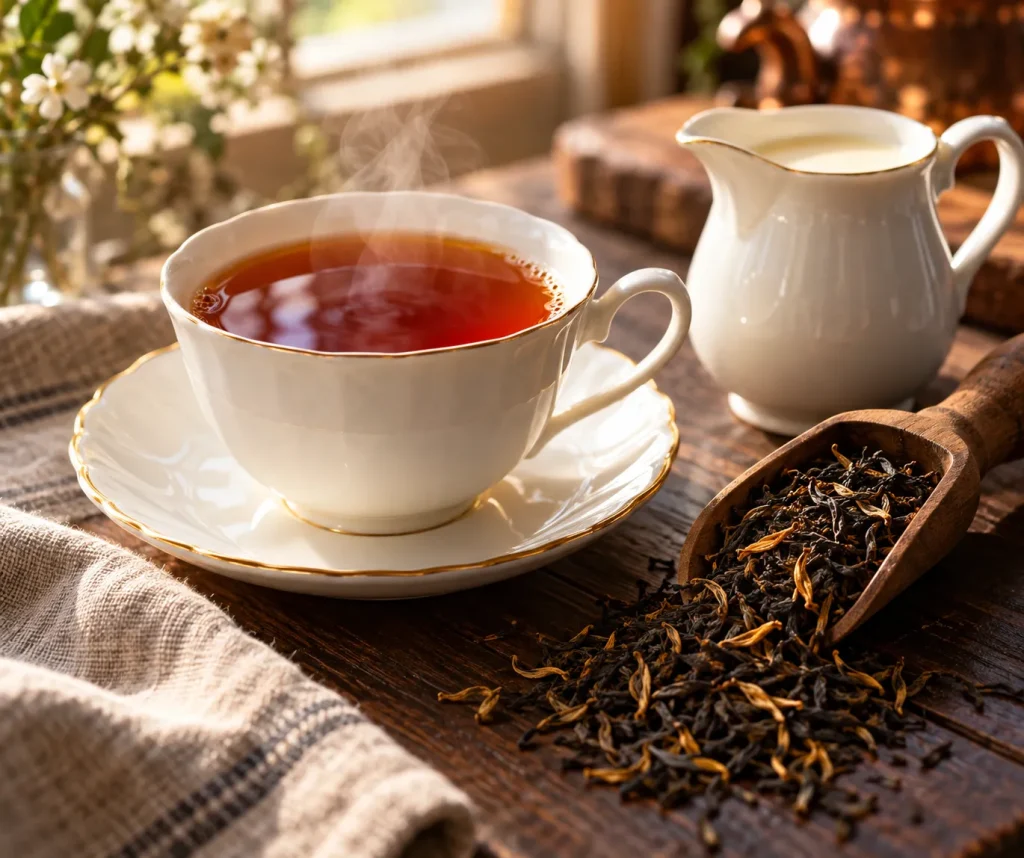
Assam tea is known for its malty, brisk flavor. Many cups also have notes of honey, dark bread or cocoa. The liquor is deep amber to reddish brown. Because it is so robust, it pairs well with milk and sugar.
First Flush vs Second Flush
Harvest season shapes the flavor too. The first flush, picked in March and April, tastes lighter and fresher. Meanwhile, the second flush, picked from May to June, is the most prized. It has rich malt, golden tips and a sweet, almost raisin like note. Later autumn teas are milder and often go into everyday blends.
Understanding Assam Tea Grades
Tea grades describe leaf size and appearance, not quality alone. Here are common grades you will see:
- TGFOP (Tippy Golden Flowery Orange Pekoe): whole leaves with many golden tips. Our organic Assam TGFOP tea is a good example, with a smooth, malty cup.
- FBOP (Flowery Broken Orange Pekoe): broken leaves that brew faster and stronger.
- CTC (Crush, Tear, Curl): small pellets that give a very strong cup, often used in chai.
- Fannings: tiny pieces used in tea bags. See our organic black fannings tea.
In general, smaller pieces release flavor faster. For this reason, CTC and fannings need shorter steeping times than whole leaf grades. Golden tips, on the other hand, add sweetness and a softer texture to the cup.
How to Brew Assam Tea
- Heat fresh water to a full boil, about 200 to 212 degrees F.
- Add 1 teaspoon of loose Assam tea per 8 ounces of water.
- Pour the water over the leaves.
- Steep for 3 to 5 minutes, depending on how strong you like it.
- Strain the tea and add milk or sugar if desired.
Steeping longer than 5 minutes can make the cup bitter. Instead, add a little more tea if you want more strength.
Assam Tea Brewing Chart
Use this chart to match your steeping time to the grade you have.
| Grade | Tea per 8 oz | Water | Steep Time | Best With |
|---|---|---|---|---|
| TGFOP whole leaf | 1 heaping tsp | Full boil | 4 to 5 minutes | Splash of milk or plain |
| FBOP broken leaf | 1 tsp | Full boil | 3 to 4 minutes | Milk and sugar |
| CTC | 1 level tsp | Simmered in milk and water | 3 to 5 minutes | Masala chai |
| Fannings | 1 level tsp | Full boil | 2 to 3 minutes | Quick strong cup |
Also, warm your teapot with hot water first. That simple step keeps the temperature steady while the leaves steep.
Using Assam Tea in Chai
Assam is the classic base for masala chai. Its bold flavor holds up to milk and warming spices. Simmer the tea with green cardamom pods, ginger root and whole cloves. Then add milk and sweeten to taste. Our homemade chai guide walks you through each step.
Quick Stovetop Chai for Two
- Lightly crush 4 cardamom pods and 3 cloves.
- Add them to a saucepan with 1 cup of water and 1 teaspoon of dried ginger root.
- Simmer for 5 minutes so the spices open up.
- Add 2 teaspoons of Assam tea and simmer for 2 more minutes.
- Pour in 1 cup of milk and heat until it just begins to rise.
- Sweeten to taste, then strain into two cups.
Want to fine tune the spice mix? Take our quick organic black tea quiz to find the leaf that suits your cup best.
Assam Tea vs Ceylon Tea
Both are popular black teas, but they taste different. Assam is heavier and maltier. Ceylon tea from Sri Lanka is brighter, with citrus notes. If you want to compare, try our organic Ceylon FBOP tea and read what Ceylon tea tastes like.
Darjeeling is another useful comparison. It grows in the Himalayan foothills and tastes light, floral and muscatel. In contrast, Assam is dark, bold and best with milk. So, many tea lovers keep Assam for mornings and Darjeeling for the afternoon.
How Assam Tea Is Made
Every cup starts with a careful harvest. Skilled pickers pluck two leaves and a bud from each shoot. Then the factory works through several clear steps.
- Withering: fresh leaves rest on long troughs while warm air removes moisture.
- Rolling or CTC: machines twist whole leaves, or crush, tear and curl them into pellets.
- Oxidation: the leaves rest in a humid room and slowly turn coppery brown.
- Drying: hot air stops oxidation and locks in the malty flavor.
- Sorting: sieves separate the leaves into grades by size.
Each step shapes the final cup. For example, a longer oxidation gives deeper malt and darker liquor. Meanwhile, gentle rolling keeps the golden tips whole and sweet.
Recipes Beyond the Teacup
Assam’s bold flavor also works in the kitchen. Here are a few easy ideas to try at home.
- Iced Assam with lemon: brew double strength, pour over ice and add a squeeze of lemon and a little honey.
- Tea latte: steep 2 teaspoons in 4 ounces of water, then top with frothed milk and a pinch of cinnamon.
- Tea infused oats: cook your morning oats in brewed Assam instead of water for a malty note.
- Baking: grind a teaspoon of leaves and add it to shortbread or chocolate cake batter.
- Marinade: mix cooled strong tea with soy sauce, garlic and brown sugar for chicken or pork.
In each case, use a strong brew. Otherwise, the tea flavor fades behind the other ingredients.
Tips for Cafes and Tea Brands
Cafes and tea brands often buy Assam in bulk for chai and breakfast blends. First, match the grade to your menu: whole leaf for pots, CTC for chai. Next, keep the lot number of every bag so each blend stays traceable. Finally, store bulk tea in sealed, opaque bins away from your spice shelf.
Food Pairings for Assam Tea
Because Assam is so full bodied, it pairs well with hearty food. Here are a few classic matches:
- A full breakfast with eggs, toast and butter.
- Scones with jam and cream.
- Spiced Indian snacks such as samosas or pakoras.
- Dark chocolate, which echoes the tea’s cocoa notes.
- Gingerbread and spice cookies in the colder months.
How to Choose and Store Assam Tea
First, decide how you like to drink it. Whole leaf TGFOP suits a slow pot with a splash of milk. On the other hand, CTC and fannings work better for strong chai or quick morning cups. Also, look for plenty of golden tips in whole leaf grades, since they add sweetness.
Fresh Assam leaves smell malty and slightly sweet. Store them in an airtight, opaque container away from heat, light and strong odors such as spices or coffee. Black tea usually keeps good flavor for about 18 to 24 months when stored well.
Common Assam Brewing Mistakes
First, many people use water that is not hot enough, so the cup tastes flat. Second, some steep for 8 or 10 minutes, which brings out harsh tannins. Third, storing tea in a clear jar near the stove fades the flavor fast. Instead, use boiling water, time your steep and keep the leaves in a dark tin.
Frequently Asked Questions
Does Assam tea have a lot of caffeine?
Assam tea has a moderate amount of caffeine, usually around 40 to 70 mg per cup. That is less than coffee but more than most green teas.
Is English breakfast tea the same as Assam tea?
Not exactly. English breakfast is a blend, but it often contains a large share of Assam tea.
Can I cold brew Assam tea?
Yes. Steep 2 teaspoons of leaves in cold water in the fridge for 8 to 12 hours. The result is smooth and less bitter.
Can I resteep Assam tea leaves?
Whole leaf grades can handle a second steep of about 5 minutes. However, CTC and fannings give most of their flavor in the first brew.
Should I add milk before or after the tea?
Add milk after steeping. That way, the leaves brew at full heat and you can judge the strength before adding milk.
Enjoy a Bold Cup of Assam Tea
Assam tea brings malty depth, a rich amber color and a fascinating history to your cup. Brew it plain, add milk or simmer it into a spiced chai. Also, try it next to Ceylon to taste the difference for yourself.
Ready to brew? Shop our organic Assam TGFOP tea in retail or bulk sizes. Cafes and tea brands can also contact us for wholesale pricing.