Gentian Root Bitter: A Digestive Herb
Gentian root bitter is arguably the most intensely bitter substance in the botanical world, with bitterness detectable in dilutions as extreme as one part per fifty thousand. Gentiana lutea, the yellow gentian, grows in the alpine meadows of central and southern Europe, producing thick, fleshy yellow roots that have been harvested for thousands of years as one of the premier digestive herbs in the European tradition. The plant is named after Gentius, the Illyrian king who allegedly discovered its medicinal virtues around 500 BCE.
What Makes Gentian Root So Bitter?
The extraordinary bitterness of gentian root comes primarily from secoiridoid glycosides — specifically amarogentin and gentiopicroside. Amarogentin is considered the bitterest natural compound known, measurable at dilutions of 1:58,000,000. These compounds activate bitter taste receptors on the tongue and throughout the digestive tract, triggering a cascade of digestive responses.
When bitter compounds stimulate taste receptors, they signal the nervous system to increase production of saliva, gastric acid, digestive enzymes, and bile. This is the physiological basis for the traditional use of gentian root bitter and all bitter herbs as digestive tonics. Furthermore, this bitter reflex is why bitters were historically served before meals as aperitifs in European cuisine — to prime the digestive system for the food to follow.
The root also contains flavonoids, xanthones, alkaloids, and tannins, which contribute additional botanical activity beyond the bitter compounds alone.
Gentian Root in Traditional Herbalism
Gentian root has been central to European herbalism since antiquity. It appears in the writings of Dioscorides, the ancient Greek physician, who described it as a digestive herb of the highest importance. Throughout the Middle Ages, it was one of the most commonly prescribed herbs by European physicians and apothecaries.
The German Commission E officially approves gentian root for loss of appetite and dyspepsia — two classic indications for bitter herbs. Traditional use includes stimulating appetite before meals, relieving bloating and flatulence, supporting bile flow for fat digestion, and addressing general digestive sluggishness.
In folk medicine, gentian root bitter preparations were used as general tonics for debility and fatigue, based on the traditional belief that improving digestion improves overall vitality. In other words, in the old herbal tradition, a well-functioning digestive system was considered the foundation of good health.
How to Use Gentian Root
Gentian root is traditionally prepared as a decoction, tincture, or bitters formula rather than a simple tea. The intense bitterness means that small amounts go a long way. For a simple gentian decoction, simmer one quarter to one half teaspoon of gentian root wild harvested cut and sifted in two cups of water for ten to fifteen minutes, then strain and drink a small cup — around four to six ounces — fifteen to thirty minutes before a meal.
The flavor is profoundly bitter, often described as medicinal and challenging on first encounter. Many people find it easier to take in small doses rather than as a full cup of tea. As a result, gentian is perhaps most commonly used in bitters formulas, where it provides the bitter base alongside more palatable herbs.
Traditional European bitters formulas typically combine gentian with aromatic digestive herbs that moderate its harshness. Dandelion root and fennel seeds are classic companions — dandelion adds liver-supportive bitterness while fennel contributes a sweet, carminative element that counterbalances the intensity of the gentian.
Making Digestive Bitters with Gentian
Homemade digestive bitters are one of the most practical ways to incorporate gentian root into a wellness routine. The basic formula involves steeping bitter, aromatic, and sweet herbs in high-proof alcohol for two to four weeks, then straining and using a few drops or a small dropper-full before meals.
A simple formula: combine one tablespoon of gentian root, two tablespoons of orange peel, one tablespoon of fennel seeds, and one teaspoon of cardamom pods in a jar. Cover with two cups of vodka or brandy. Seal and let steep for two to four weeks, shaking daily. Strain and bottle in dark glass dropper bottles.
Use ten to twenty drops in a small amount of water or directly under the tongue fifteen to thirty minutes before eating. The dose is small but effective — this is one area where less truly is more. Consequently, a small batch of homemade bitters can last for months even with daily use.
Gentian Root in the Aperitif Tradition
Many of Europe’s most famous aperitif spirits owe their bitterness to gentian root. Suze, the French yellow gentian aperitif, uses Gentiana lutea as its primary flavoring. Campari, Aperol, and Angostura bitters all contain gentian among their botanical ingredients. Even Moxie soda — one of America’s oldest soft drinks — was originally flavored with gentian root as a “nerve tonic.”
This cultural tradition of pre-meal bitter drinks reflects centuries of practical wisdom about the role of bitter flavor in digestive health. Moreover, the global craft cocktail revival has brought renewed interest in digestive bitters and amari, reintroducing gentian root to a new generation of enthusiasts.
For non-alcoholic use, gentian root decoctions can be incorporated into non-alcoholic aperitif drinks and botanical mocktails. Similarly, small amounts of gentian tea blended with sweeter herbs like licorice root make a more palatable pre-meal tonic.
Selecting Quality Gentian Root
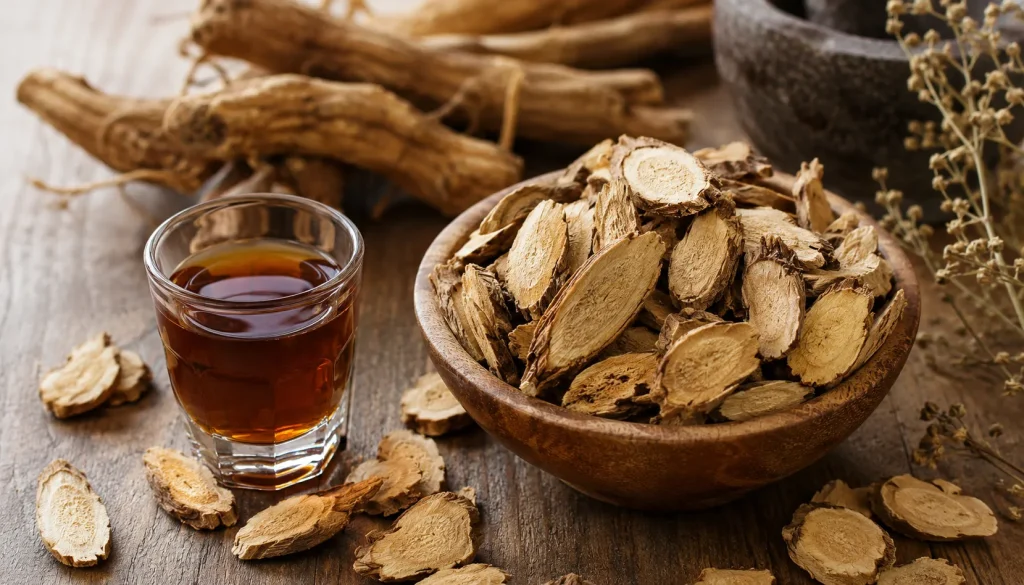
Quality dried gentian root should be golden-yellow to light brown in color with an intensely bitter taste — a tiny piece placed on the tongue should produce an almost immediate and prolonged bitter sensation. The aroma is distinctive: earthy, slightly sweet, and characteristic. Root that tastes flat or barely bitter may be old or adulterated.
Wild-harvested gentian is particularly prized because the plant grows slowly in high-altitude alpine conditions, producing roots with higher concentrations of bitter compounds. However, because Gentiana lutea is over-harvested in some European regions, sourcing from reputable suppliers who practice sustainable wildcrafting is important.
Safety and Considerations
Gentian root is generally safe for adults when used in traditional small amounts. However, its strong effects on gastric acid production mean it is contraindicated for individuals with peptic ulcers, gastroesophageal reflux disease (GERD), or gastritis. Conditions where increased stomach acid would be harmful. It should not be used during pregnancy. Because gentian can lower blood pressure, those on antihypertensive medications should exercise caution. Always start with very small amounts to assess tolerance. This post is educational and does not constitute medical advice.
Frequently Asked Questions
Why does gentian root taste so bitter?
Gentian root contains secoiridoid glycosides, particularly amarogentin, which is among the bitterest natural compounds identified. These molecules bind strongly to bitter taste receptors, producing an intense, prolonged bitter sensation even at very low concentrations. The bitterness is a feature, not a flaw — it is precisely this quality that makes gentian effective as a digestive bitter.
How much gentian root should I use?
Gentian is potent and should be used in small amounts. For tea or decoction, one quarter to one half teaspoon per serving is typical. For tinctures or bitters, ten to twenty drops is the conventional dose. More is not better — excessive amounts can cause nausea and vomiting.
Is gentian the same as gentian violet?
No. Gentian violet is a synthetic dye (crystal violet) used as an antiseptic. Despite the name, it contains no botanical gentian. Herbal gentian root comes exclusively from the Gentiana plant genus.
Can I drink gentian root tea without food?
It is generally best to drink gentian preparations before a meal rather than on a completely empty stomach, as the stimulation of gastric acid production without food to buffer it can cause discomfort in sensitive individuals. Take it fifteen to thirty minutes before eating for best effect.
Gentian root is a foundational herb for anyone interested in digestive herbalism. Explore our wild-harvested gentian root and discover more digestive herbs at the Hatton Naturals shop.