Wild Yam Pottery: Earthy Botanical Design Ideas
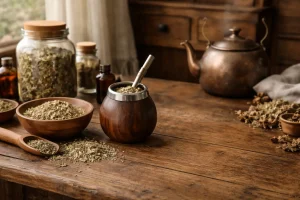
Wild yam pottery has a grounded, almost archaeological beauty that feels right at home beside loose roots, steaming cups, and a wooden tea table. The phrase may sound unusual at first, but the idea behind it is deeply intuitive. When makers study the shape of a wild root, the way it twists under soil, the roughness of bark-like skin, and the soft dust of dried botanicals, they often discover a design language that translates beautifully into clay. For tea makers and herbalists, that matters. The vessel is never just a vessel. A mug, bowl, teapot, or fermentation crock shapes the mood of the drink, the pacing of the ritual, and even how the aroma is held and released.
In practice, wild yam pottery is less about literally adding yam to clay and more about drawing from botanical form, earthy color, and root-inspired texture. It belongs to a world of hand-thrown mugs with subtle ridges, matte glazes in soil tones, and serving pieces that feel calm rather than polished. For tea makers especially, that visual language fits root-heavy blends, roasted notes, and old apothecary sensibilities. It also opens useful design questions. What kind of cup flatters a warming infusion? What clay tone makes pale herbs look luminous? How can handmade ware support both beauty and function in a production-minded herbal kitchen?
What Wild Yam Pottery Really Suggests
At its core, wild yam pottery suggests a visual and tactile conversation between plant life and fired earth. The “wild yam” part evokes roots that are fibrous, irregular, and hidden beneath the surface. The “pottery” part brings in weight, porosity, mineral color, and the memory of hand pressure. Put together, the phrase becomes a style cue. It points toward forms that are not overly symmetrical, surfaces that invite touch, and details that feel gathered from nature rather than engineered.
This is why wild yam pottery appeals so strongly to tea makers. Root herbs already carry a sensory identity: they are dense, aromatic, woody, and often slightly sweet or bitter in a deep way. A glossy white porcelain cup can be beautiful, but an earthy stoneware cup often feels more aligned with the character of roots. The vessel becomes part of the story.
For a tea brand, studio, or herbal kitchen, this aesthetic can also be commercially useful. Handmade-looking ware photographs well, helps a product line feel premium, and pairs naturally with dried roots, leaves, and flowers in flat lays and educational content. Try featuring wild yam root c/s beside a matte cup when you want a deeper root-forward visual tone.
Wild Yam Pottery as a Design Language for Tea Makers
Wild yam pottery works best when it is treated as a design language rather than a literal category. Think in terms of silhouette, finish, and mood. A cup with a slightly flared lip can release aroma more generously. A low bowl can make dried roots feel ceremonial before steeping. A stout mug with a thick wall can visually reinforce warmth and steadiness.
For tea makers, the most effective forms usually have three qualities. First, they feel stable in the hand. Second, they leave enough interior width for aroma to gather. Third, they photograph with a quiet, natural confidence. This matters in product storytelling. A root infusion poured into a vessel with speckled clay and a muted glaze immediately reads as earthy, slow, and handcrafted.
The beauty of wild yam pottery is that it does not need decorative overload. A soft thumb mark, a carved line that resembles a root scar, or a glaze break on the rim is often enough. Overworked botanical design can become theatrical. The best pieces usually stay restrained.
This is also a good place to think about supporting botanicals. Wild yam pottery often looks strongest when styled with roots and warm spices rather than bright tropical ingredients. Try adding ashwagandha root c/s when you want a fuller root profile in your visual tea styling.
Color, Texture, and Surface Cues That Feel Botanical
Color is where many makers either find the soul of the piece or lose it. Earthy clay tones do not need to be dull. The most compelling botanical surfaces often live in a narrow range of warm neutrals: clay brown, mushroom gray, oat, smoke, bone, and muted olive. These colors allow herbs to stand out while still keeping the whole scene calm.
Texture matters just as much. Root-inspired pottery tends to benefit from one or two tactile signals: grogged clay, a lightly scraped surface, finger-smoothed seams, or shallow carved channels. Those small marks echo what roots already teach us. Nothing underground grows in perfect straight lines. A bit of irregularity makes the vessel feel alive.
For tea photography and display, matte and satin finishes are often more forgiving than high gloss. They reduce glare, preserve the visibility of herbal texture, and make dried material look richer. A pale infusion in a matte interior can also show color more clearly.
This is where gentle contrast helps. Pair a darker mug with paler roots, or a lighter bowl with bark-like herbs. Try styling with licorice root c/s for a pale woody accent that sits beautifully against deeper clay tones.
Practical Forms for Brewing, Serving, and Fermentation
Beautiful pottery should still earn its place in the working kitchen. Tea makers do not only need attractive cups. They need ware that supports measuring, pouring, steeping, tasting, and sometimes even secondary fermentation or syrup work. The spirit of wild yam pottery becomes most useful when it balances expression with function.
For daily herbal tea service, consider a 10 to 12 ounce mug with a rounded belly and comfortable handle. That shape supports warming infusions and gives space for aromatic roots to feel substantial. For tastings, smaller yunomi-style cups or handleless bowls are useful because they let the hands feel the warmth directly. For loose herb staging, shallow bowls are practical and photogenic.
Lidded jars and crocks also deserve attention. While wild yam pottery may sound purely decorative, the same aesthetic can guide storage and prep tools. A stoneware jar with a snug lid looks beautiful on a shelf and protects sensitive botanicals from light and humidity. For a softer floral contrast in root-forward styling, try adding chamomile flowers whole near a rough clay bowl.
The concept of wild yam pottery becomes strongest when every object around the brew station feels part of one quiet family. That does not mean everything must match. It means everything should feel intentional.
A Root-Inspired Herbal Serving Formula
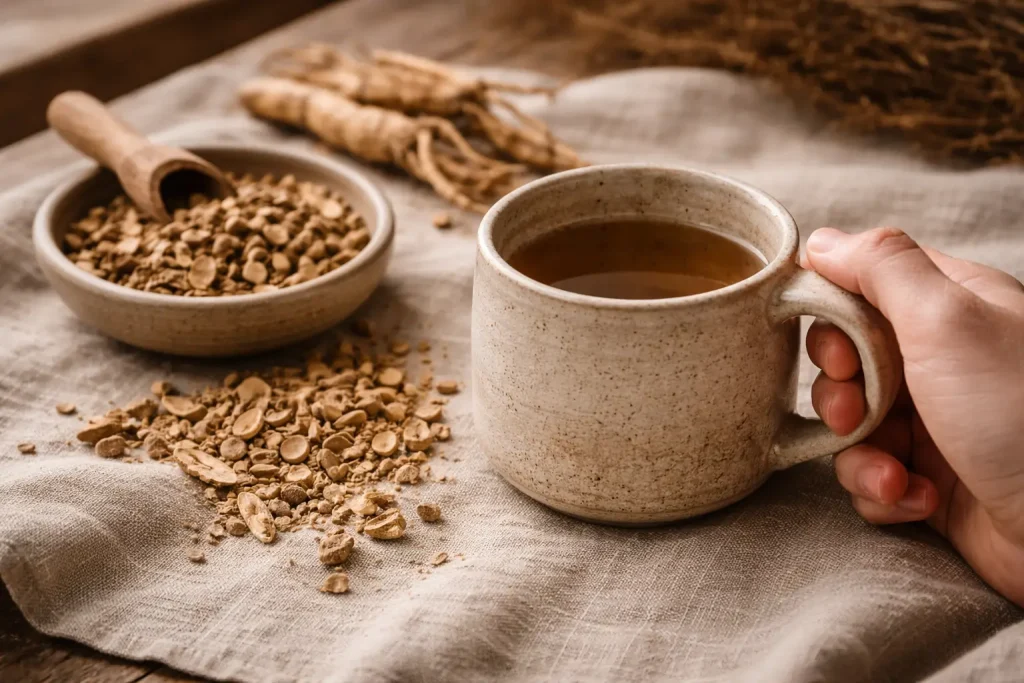 Tea makers who want a practical entry point can start with a simple root-centered infusion and let the vessel amplify the experience. This is not about making pottery from herbs. It is about using pottery to frame the sensory life of herbs more effectively.
A balanced root-forward blend for tasting or photography can look like this:
6 grams wild yam root c/s (about 2 teaspoons)
4 grams ashwagandha root c/s (about 1 1/2 teaspoons)
2 grams licorice root c/s (about 3/4 teaspoon)
1 gram cinnamon chips (about 1/2 teaspoon)
350 grams hot water at 95°C / 203°F
Steep covered for 12 to 15 minutes in a ceramic pot or heat-safe brewing vessel, then strain into a stoneware mug. The result is earthy, rounded, and visually well matched to matte clay surfaces. If you want a leaf note to lift the base, try a small addition of raspberry leaf c/s for a greener top line in the cup and on the palate.
For a fermented presentation, keep the vessel for serving rather than active fermentation unless the crock is designed for that purpose. A tart or sparkling drink poured into a root-toned cup can be striking, but function still comes first.
A good handmade vessel also changes perceived rhythm. Slower sipping tends to follow quieter objects. That is one reason wild yam pottery feels so natural in herbal spaces.
Troubleshooting
Even the most beautiful vessel cannot rescue a poorly balanced drink, but it can help reveal where the problem is. In root-forward tea or herbal ferments served in earthy ware, common issues become easier to spot if you assess aroma, color, and mouthfeel together.
Flat flavor
This usually means the ratio is too weak or the steep time is too short. Increase total botanicals by 1 to 2 grams per 350 grams water, or steep 3 more minutes. A wider mug may also release aroma better than a narrow one.
Too tart
If you are serving a fermented herbal drink, reduce acidic ingredients and shorten the secondary flavoring time. Root-inspired cups pair best with rounded, earthy notes, not aggressive sharpness. Try softening the profile with cinnamon chips in the infusion stage.
Over-carbonation
When bottling herbal ferments, avoid excess sugar and watch warm room temperatures. Open chilled bottles slowly and decant into sturdy pottery cups rather than drinking from the bottle.
Sediment
Root herbs naturally shed fine particles. Use a finer strainer, allow the brew to settle briefly, and pour gently. Stoneware with a light interior helps you evaluate clarity more easily.
Aroma loss
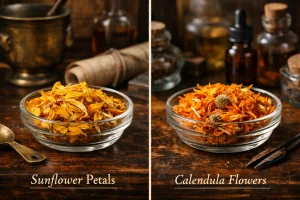
Aroma fades when herbs are old, loosely stored, or overheated. Use fresher material and keep brewing covered. For a brighter aromatic accent in styling and blending, try a little calendula petals alongside deeper roots.
Storage + Quality
Good storage protects both the herbs and the atmosphere you are trying to create around them. Botanical design falls flat when the ingredients themselves look tired. Keep roots, flowers, and leaves in airtight containers away from humidity, direct light, and temperature swings. If you use ceramic jars, make sure the lids close firmly enough to preserve scent.
Color and aroma are your best daily cues. Fresh roots should smell distinct and grounded, not dusty or stale. Leaves should retain recognizable color rather than turning uniformly brown. Flowers should still have some brightness and shape. If a material looks faded and smells vague, it will rarely produce a compelling cup or a compelling image.
Pottery itself also deserves care. Matte finishes can absorb oils from hands over time, which some people love and others prefer to avoid. Wash thoroughly, dry fully, and store where airflow is good. Do not stack delicate handmade rims carelessly.
To round out a botanical shelf visually, try keeping dandelion root c/s in a nearby jar for another earthy material that supports the same handmade mood.
Safety
Wild yam pottery is an aesthetic and functional concept, not a health claim. When writing content, teaching workshops, or selling tea blends, keep the language responsible. Herbalists often use roots because they bring body, bitterness, sweetness, depth, and tradition to the cup. That does not mean every root is suitable for every person or every context.
Avoid promising outcomes. Use wording like “traditionally used,” “often chosen for earthy blends,” or “may contribute a grounding character.” That keeps the focus where it belongs: sensory experience, craft, and preparation.
The same principle applies to pottery. Use food-safe ware from reliable makers, especially if the piece is glazed. Do not assume every decorative ceramic object is appropriate for hot liquids or acidic beverages. Functional beauty still requires practical standards.
In the end, wild yam pottery works best when it respects both materials. Clay should be safe and well fired. Herbs should be fresh and properly stored. The experience should be beautiful, useful, and honest.
Conclusion
Wild yam pottery offers tea makers and herbal stylists a rich visual language built from root forms, muted earth tones, and the quiet authority of handmade objects. It is not a gimmick. It is a way of seeing. When the vessel echoes the character of the herb, the whole brew experience becomes more coherent. The cup feels right in the hand. The roots look more vivid on the table. The ritual slows down in a good way.
For anyone building a botanical tea practice, a content style, or a product presentation strategy, wild yam pottery is worth exploring. It brings together clay, roots, function, and mood in a way that feels timeless rather than trendy. When used thoughtfully, it can help even a simple infusion feel more grounded, memorable, and complete.
FAQ
What is wild yam pottery?
Wild yam pottery is a botanical-inspired pottery style that draws from the look and feel of roots, earthy clay tones, and handmade textures.
Does wild yam pottery mean pottery made with wild yam?
Usually no. The phrase more often describes the design inspiration, not the literal clay recipe.
Why does wild yam pottery suit herbal tea styling?
Because root herbs and earthy ceramics share a similar visual language: muted color, tactile texture, and a grounded mood.
What clay colors work best for this style?
Warm browns, oat, mushroom gray, smoke, muted olive, and bone tones usually work best.
What herbs pair visually with this look?
Roots, barks, gentle flowers, and some leafy herbs pair well. Think wild yam, ashwagandha, licorice, chamomile, calendula, and raspberry leaf.
Can I use wild yam pottery for kombucha service?
Yes, for serving. For active fermentation, use vessels specifically designed and proven safe for that process.
How do I keep herbs looking fresh in photos and on the shelf?
Store them airtight, away from humidity and light, and replace them once color and scent noticeably fade.
Is wild yam pottery only for rustic brands?
No. It can be rustic, modern, minimal, or editorial depending on shape, glaze restraint, and styling choices.