Turmeric Uses for Skin: Traditional Routines and Simple Masks
If you’ve ever opened a jar of turmeric and caught that warm, earthy, almost resinous aroma, you already know why herbalists and home makers keep it close. Turmeric uses for skin show up across traditional routines because turmeric is a strongly pigmented botanical that pairs well with simple carriers and gentle wash-off rituals. For tea makers, the mindset is familiar: control the ratio, watch the temperature, track contact time, and treat quality like the whole game. Skin routines work the same way. When you keep it practical, small batch, and consistent, you can build a routine that feels grounded instead of messy and random.
This guide sticks to straightforward, traditional, wash-off methods and gentle rinses. You’ll get exact ratios in both grams and teaspoons, plus process notes that matter if you care about repeatability. You’ll also get troubleshooting (yes, including the kind of issues beverage makers recognize), storage and quality cues, and safety language that stays compliant. The goal is not “miracles.” The goal is a clean routine you can actually keep.
Turmeric uses for skin: what herbalists aim for
When herbalists talk about turmeric uses for skin, the aim is usually simple: a comforting ritual that leaves skin feeling clean, calm, and cared for. Turmeric is traditionally used in short-contact applications, often mixed into a carrier that makes it spreadable and easy to rinse. Think “mask” and “paste,” not “leave-on serum.” This matters because turmeric stains easily, and longer contact times do not automatically equal better results.
The practical lens is: pigment management, texture management, and rinseability. A mask that spreads evenly, stays put for 8 to 12 minutes, and rinses without friction will usually feel better than a thick paste you have to scrub off. If you’ve ever tuned a tea blend, you know the pattern: a little too much of a dominant ingredient can flatten everything and create more work on the back end.
Also, turmeric is not a single experience. Grind size, freshness, and storage change how it behaves. A fresh, aromatic powder disperses differently than an old jar that smells dusty and looks dull. Start with small batches so you can observe how your skin responds and so you don’t waste product.
Ingredient quality: turmeric powder and virgin coconut oil
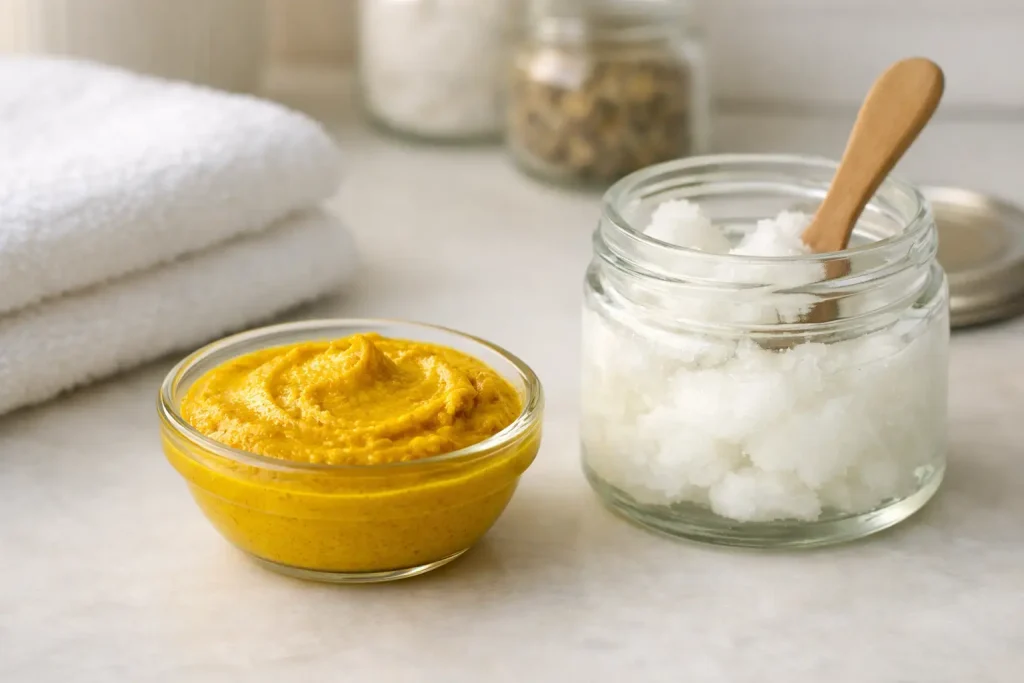
The simplest “base pair” for turmeric uses for skin is Turmeric Powder plus Virgin Coconut Oil because it solves three problems at once: dispersion, glide, and rinseability. Coconut oil helps turmeric spread thinly and reduces that gritty drag that encourages over-rubbing.
A few quality notes that matter:
Turmeric Powder: Look for a bright golden color and a clear, warm aroma. If it smells flat or looks brownish, it’s likely oxidized or stale.
Virgin Coconut Oil: Use a clean, food-grade oil with a fresh coconut scent, not rancid or waxy. If it feels heavy on your skin, you can lighten it with a small amount of warm water during mixing (more on that below).
Practical workflow tip for consistency: treat your mask like a tiny formulation. Use a small bowl, a mini whisk or spoon, and measure. “Eyeballing” turmeric is how you end up neon-yellow and scrubbing your sink like it owes you money.
Try pairing with Turmeric Powder when you want a simple, reliable wash-off mask.
Try pairing with Virgin Coconut Oil to make turmeric spread smoothly and rinse clean.
Tea maker mindset: a turmeric infusion for rinses
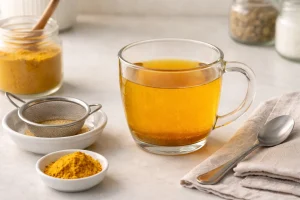
Not every routine needs to be a thick mask. For people who like gentle, repeatable processes, a turmeric “tea rinse” is a smart entry point. It’s also where tea makers feel at home because it’s basically controlled extraction.
Here’s a practical rinse base you can make in minutes:
Heat water to 85 to 90°C (185 to 194°F). Boiling water can drive off aroma and can feel harsher on sensitive skin.
Whisk turmeric into hot water, steep briefly, then strain or let fines settle.
This is one of the turmeric uses for skin that stays low-drama because the contact is short and you’re not coating your face in oil. It’s especially useful as a “pre-mask” rinse or as a quick wash-off ritual after a long day.
Try adding Ginger Root to a warm rinse blend when you want a cozier aroma and a more tea-like ritual.
A three-step traditional routine you can actually keep
 Most people fail routines because they’re complicated. Keep this simple and repeatable. Think of it like a core blend you can riff on.
Step 1: Prep (30 to 60 seconds)
Wash with a gentle cleanser or warm water. Pat dry. You want clean skin so the mask sits evenly.
Step 2: Apply (8 to 12 minutes)
Use a thin layer, not a paste brick. Thin layers rinse better and stain less.
Step 3: Rinse and reset (1 to 2 minutes)
Rinse with lukewarm water. No scrubbing. Pat dry. If you want, apply a basic moisturizer you already tolerate.
You can schedule it like this:
Daily or every other day: turmeric tea rinse only (very mild, quick).
Two times per week: coconut oil turmeric mask (short contact time).
Weekly: add a soothing botanical pairing (like calendula or chamomile) for a more spa-like routine.
This is where turmeric uses for skin become a stable habit, not a “project.”
Try adding Chamomile Flowers to your weekly ritual for a softer, more calming aromatic profile.
Simple masks with exact ratios in grams and teaspoons
These formulas are designed to be small, predictable, and easy to rinse. If you are sensitive to staining, start with the “light” version.
Mask A: Light turmeric coconut mask (1 application)
Turmeric Powder: 1.0 g (about 1/2 teaspoon)
Virgin Coconut Oil: 6.0 g (about 1 1/2 teaspoons)
Warm water: 2.0 g (about 1/2 teaspoon), optional for easier spread
Method:
Mix turmeric and coconut oil first until smooth. Add warm water last and whisk until it becomes a silky paste. Apply a thin layer. Leave 8 to 10 minutes. Rinse gently.
Mask B: Richer mask for body areas (1 application)
Turmeric Powder: 2.0 g (about 1 teaspoon)
Virgin Coconut Oil: 10.0 g (about 2 1/2 teaspoons)
Optional: finely steeped botanical tea, 5.0 g (about 1 teaspoon) to lighten texture
Method:
Same approach: disperse pigment into oil first, then adjust texture with a small amount of warm liquid.
Mask C: Turmeric plus soothing floral “milk” (no dairy)
Turmeric Powder: 1.0 g (about 1/2 teaspoon)
Virgin Coconut Oil: 5.0 g (about 1 1/4 teaspoons)
Strong chamomile infusion (cooled): 5.0 g (about 1 teaspoon)
This is one of those turmeric uses for skin that feels surprisingly elegant because the infusion changes the glide and makes the rinse feel cleaner.
Try adding Calendula Flowers when you want a more classic herbalist-style soothing blend for wash-off masks.
Botanical pairings that play well with turmeric
Turmeric has a dominant, earthy profile. For tea makers, the obvious move is balancing. For skin rituals, “balance” is mostly about aroma and feel, not flavor.
Pairing ideas (all as tea infusions to blend into masks, or as separate rinses):
Calendula Flowers: traditionally used in soothing wash-off routines, adds a gentle herbal aroma.
Chamomile Flowers: soft, familiar, calming scent and a “clean” feeling rinse.
Elderflower: delicate, floral-lift aroma that can make turmeric feel less heavy.
Dandelion Root: deeper, roasty note for people who like earthy profiles (better as a rinse than in a mask, because it can add sediment).
Ginger Root: cozy warmth and a brighter nose.
A simple way to work: make a concentrated infusion, cool it, then use 1 teaspoon (5 g) of that infusion to adjust a mask’s texture. This lets you keep the oil ratio stable while changing the sensory profile.
Try adding Elderflower when you want a lighter, more “fresh spa” aromatic finish.
Try adding Dandelion Root as a rinse base if you like deeper, earthy herbal profiles.
Troubleshooting (flat aroma, too tart, over-carbonation, sediment, aroma loss)
If you approach turmeric uses for skin like production, you’ll troubleshoot fast.
Flat aroma
Cause: stale turmeric, too much hot water, or long steeping that strips the pleasant top notes.
Fix: use fresher powder, steep rinses briefly (5 to 7 minutes), and keep water below boiling. Store turmeric airtight and away from light.
Too tart
This happens if you experiment with a fermented “beauty toner” style rinse using kombucha or vinegar. Some tea makers do this for a bright, astringent feel, but it can be too sharp for many.
Fix: dilute heavily. Start at 1 part kombucha to 10 parts water for external rinse only, then adjust. If it stings, stop and switch to plain infusion.
Over-carbonation
If you bottle a diluted kombucha rinse and forget it, pressure builds just like 2F.
Fix: do not seal fully, or burp daily, or keep it uncarbonated. For external rinse experiments, small jars in the fridge are safer than pressure-tight bottles.
Sediment
Cause: turmeric fines and root particles settling out, especially if you stir right before use.
Fix: let the infusion settle 10 minutes and pour off the top, or strain through a fine filter. For masks, disperse turmeric into oil first to avoid gritty clumps.
Aroma loss
Cause: heat, light, humidity, and leaving infusions uncovered.
Fix: cover your steep, cool quickly, and use fresh infusions within 24 hours. For masks, mix right before use.
If you want the cleanest workflow, keep turmeric uses for skin in the wash-off lane: small batch masks, short contact time, controlled rinses.
Storage + Quality (airtight, humidity, color and scent cues)
Turmeric is sensitive to the same enemies as good tea: oxygen, light, heat, and moisture. Treat it like a premium ingredient.
Storage rules:
Airtight container, ideally opaque.
Cool, dry cabinet away from the stove.
Use a dry spoon. No wet fingers. Humidity clumps powder and dulls aroma.
If you blend powders, label with date and ratio.
Quality cues:
Color: bright golden-orange is good. Dull brown or grayish tones suggest age or oxidation.
Scent: should smell warm and distinct. If it smells like cardboard, it will behave like cardboard.
Texture: should be free-flowing. Clumps can mean moisture exposure.
For Virgin Coconut Oil, watch for rancid smell and texture changes. If it smells “old” or feels waxy and off, skip it. Great turmeric uses for skin start with ingredients that still have life in them.
Safety (compliant, no medical claims, and who should skip)
Turmeric is strongly pigmented and can stain skin, towels, and grout. Keep contact times short, apply thinly, and rinse gently. Patch test on a small area first, especially if you have sensitive skin.
Keep it compliant and practical:
Use “traditionally used” language and focus on how it feels, not what it “treats.”
Avoid eyes, lips, and broken skin.
If you’re prone to irritation from oils, reduce the oil amount or use the rinse method instead.
Wear an older shirt and use darker towels.
If staining happens, cleanse gently and give it time. Do not scrub aggressively.
Used thoughtfully, turmeric uses for skin can be a simple ritual that fits a disciplined, maker-style routine: measured, consistent, and easy to repeat without turning your bathroom into a crime scene. Keep it small batch, keep it wash-off, and let the craft be the point.
FAQ
What are the best turmeric uses for skin if I hate staining?
Use a turmeric tea rinse and keep it dilute. If you do a mask, use the light ratio and a thin layer for 8 minutes max.
Can I leave a turmeric mask on overnight?
Not recommended. Turmeric stains easily and long contact time can increase irritation. Keep it short and wash-off.
How often can I do a turmeric coconut oil mask?
Many people do it 1 to 2 times per week. Start once weekly and adjust based on how your skin feels.
Can I mix turmeric with kombucha as a toner?
Some tea makers experiment with diluted kombucha for external rinse use, but it can feel too tart. Dilute heavily and stop if it stings.
Why does my mask feel gritty?
Turmeric fines are clumping. Disperse turmeric into coconut oil first, then add any water or infusion last.
What’s the best way to rinse without staining towels?
Rinse thoroughly with lukewarm water, pat dry with a darker towel, and avoid rubbing.
How do I know if my turmeric powder is too old?
If the color is dull and the aroma is flat, it’s past its prime. Fresh turmeric smells warm and distinct.
Can I add other herbs to the mask?
Yes, especially as a cooled tea infusion to adjust texture. Calendula, chamomile, or elderflower infusions are common choices.