Henna Powder Hair Dye: How to Use It
Henna powder hair dye is one of the oldest cosmetic traditions in the world, used across North Africa, the Middle East, South Asia, and beyond for thousands of years. It colors hair with rich, warm tones ranging from auburn to deep copper-red, using only plant-derived pigment from the Lawsonia inermis plant. Understanding how to use it correctly is the key to beautiful, long-lasting results.
What Is Henna Powder?
Henna powder is made from the dried and ground leaves of the henna plant, Lawsonia inermis. The primary pigment molecule, lawsone, binds to the keratin protein in hair, skin, and nails to produce a permanent stain. In hair dyeing applications, henna creates a semi-translucent color layer over the natural hair shaft — the final color depends on the starting color of your hair.
Pure henna powder produces orange-to-auburn-red tones. It does not lighten hair. On dark brown or black hair, the result is a subtle reddish sheen visible in sunlight. On medium brown hair, expect warm auburn tones. For light blonde or gray hair, henna produces vivid copper or orange-red, which can be very striking. Furthermore, the conditioning properties of henna — it coats and thickens each hair shaft — leave hair feeling fuller and shinier after use.
Choosing the Right Henna Powder
Not all henna powders are equal. The most important distinction is between pure henna and “compound henna” — products that blend henna with metallic salts, synthetic dyes, or other plant-based powders pre-mixed in. For hair dyeing, always start with pure, body-art-quality (BAQ) henna that contains only Lawsonia inermis leaf powder.
Black henna — often sold for temporary skin tattoos — frequently contains para-phenylenediamine (PPD), a synthetic dye that can cause severe allergic reactions. This is a different product entirely from natural henna and should be approached with caution. Natural henna does not produce black color on its own.
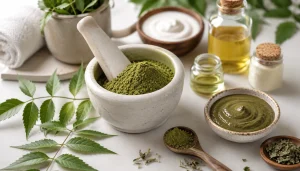
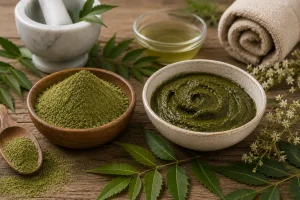
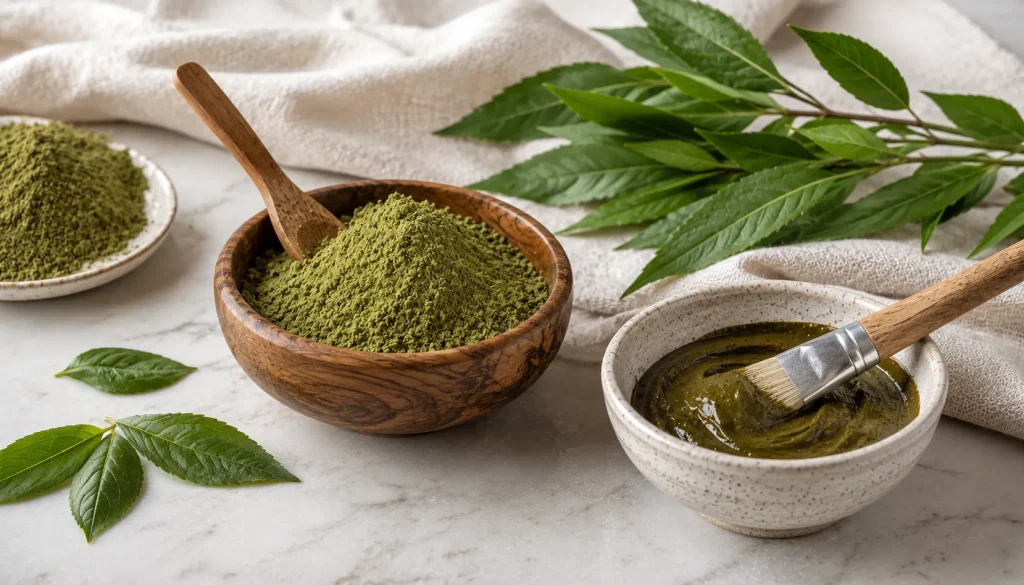
Our henna powder is pure, organically sourced Lawsonia inermis leaf powder — no additives, metallic salts, or synthetic dyes. The color is rich green in powder form and produces warm auburn-to-red tones on hair.
How to Mix Henna Powder for Hair
Mixing henna correctly is the foundation of a good result. Start with 100–200 grams of henna powder for medium-length hair, more for long or very thick hair. Add an acidic liquid to release the lawsone dye — lemon juice, apple cider vinegar, or strongly brewed black tea all work. Mix to a smooth, yogurt-like consistency.
The dye release process is critical. After mixing, cover the bowl with plastic wrap and allow it to sit at room temperature for 4–12 hours. In warm climates (above 75°F), dye release happens faster — 4–6 hours may suffice. In cooler conditions, allow the full 12 hours. You can tell dye release is complete when the surface of the paste darkens from bright green to olive or brownish-green.
Many experienced henna users add other botanical ingredients to the mix. A tablespoon of amla powder (Indian gooseberry) added to the mix is a traditional technique. Amla is traditionally believed to deepen the color result and is a longstanding ingredient in South Asian henna hair preparations. Additionally, amla is prized in Ayurveda for its traditional role in hair care.
Applying Henna to Hair
Before applying, protect your skin. Apply a thin layer of petroleum jelly or coconut oil along your hairline, ears, and neck to prevent staining. Wear gloves throughout the entire process — henna stains hands intensely and the stain is long-lasting.
Start with clean, dry hair. Section the hair and apply henna paste generously, working from roots to ends. Think of it like applying a thick hair mask rather than a chemical dye. Saturation is important — thin or partial application leads to uneven color. Once fully covered, pile hair on top of the head and wrap in plastic wrap or a shower cap.
Leave the henna on for 2–6 hours. Longer processing time produces deeper, more saturated color. Moreover, heat accelerates the process — sitting in a warm room or using a hair dryer on low heat over a wrapped head can shorten processing time. Rinse thoroughly with warm water and conditioner until the water runs clear. Avoid shampoo for 24–48 hours to allow the color to fully oxidize and deepen.
Using Indigo Powder for Darker Shades
Pure henna produces red-auburn tones. For darker results — brown, dark brown, or black-brown — henna is combined with indigo powder. Indigo comes from Indigofera tinctoria and produces blue-black pigment on its own. Combined with henna-colored hair, it produces rich, natural-looking dark brown to near-black shades.
The two-step method involves applying pure henna first, rinsing, then applying indigo powder mixed with warm water. The indigo step requires a much shorter processing time — 30–60 minutes. The result is a deep, dimensional color with warm undertones that synthetic dark dyes rarely achieve. Consequently, the two-step henna and indigo process has become the gold standard in natural hair coloring for those seeking dark brown or black results.
Some users prefer a one-step mix of henna and indigo combined in varying ratios to achieve brown tones in a single application. Experimentation is necessary to find the ratio that produces your desired result, as results vary significantly by starting hair color.
Maintenance and Long-Term Use
Henna color is permanent in the sense that it does not wash out — it grows out with your hair. The initial vibrant redness fades and deepens over 48–72 hours as the lawsone oxidizes. After one week, the color has settled into its final tone, which is typically richer and less orange than the immediate result.
Root touch-ups are needed every 4–8 weeks depending on hair growth rate. Re-applying henna to previously hennaed hair is safe — in fact, many regular users find that repeated applications deepen and improve the richness of their color over time. The conditioning effect of henna also accumulates with repeated use, leaving hair progressively thicker and shinier.
One critical caution: if you plan to use synthetic chemical dye after henna, a patch test and strand test are essential. Henna-treated hair can react unpredictably with chemical relaxers, bleach, and certain oxidative dyes. Always do thorough testing before combining henna with any chemical process.
Safety Note
Pure, natural henna (Lawsonia inermis) is generally well-tolerated. However, some individuals may have sensitivity to lawsone. Always perform a patch test 48 hours before full application. Apply a small amount of mixed henna to the inner arm, leave for 30 minutes, then rinse. Monitor for redness, itching, or irritation. Do not use henna on damaged, chemically over-processed, or bleached hair without testing first. Avoid “black henna” or any henna product containing PPD or metallic salts.
Frequently Asked Questions
How long does henna hair color last?
Henna color is permanent — it does not fade or wash out the way semi-permanent or demi-permanent dyes do. The color will grow out with your hair over months. Over time, sun exposure and repeated washing may cause the tone to shift slightly, typically becoming warmer or more muted. Regular henna applications to new growth maintain consistent color throughout the hair.
Can I use henna on color-treated hair?
It depends on the type of previous color treatment. Henna can be applied over most oxidative (permanent) hair dyes safely, though results may vary. It should not be used over hair treated with metallic salts, which can cause dangerous reactions. Bleached or heavily highlighted hair may react unpredictably. Always perform a strand test on a small hidden section before applying to the full head.
Why does my henna look orange at first?
Freshly rinsed henna is typically bright orange because the lawsone pigment oxidizes over 24–72 hours. The orange tone deepens into auburn, copper-red, or warm brown as the pigment oxidizes and the hair’s natural undertones interact with it. Avoid judging the final color until at least 48 hours after application. Exposure to air, light, and warmth all speed up and deepen the oxidation process.
Can I mix henna with other botanical powders?
Yes — many traditional preparations include additional powders. Amla powder is a classic addition for conditioning and color depth. Cassia obovata (neutral henna) can be added to reduce redness and produce more golden-blonde tones on light hair. Brahmi powder is sometimes added in Ayurvedic hair masks. Avoid mixing with any synthetic dye or product containing metallic salts.
Ready to color naturally? Shop henna powder, indigo powder, and amla powder — pure, organic botanical powders for traditional and natural hair care routines.