Brahmi Powder for Hair: Ayurvedic Guide
Brahmi powder for hair has been a cornerstone of Ayurvedic hair care for centuries. Brahmi (Bacopa monnieri) is a revered plant in traditional Indian herbalism, and its powdered form has long been used in hair oils, pastes, and rinses. Furthermore, its use reflects a broader Ayurvedic philosophy that scalp health and hair vitality are closely connected.
This guide explains what brahmi powder is, how Ayurvedic practitioners traditionally use it on hair, how to prepare a hair mask at home, and what to realistically expect from consistent use. Additionally, you will learn how to pair brahmi with complementary powders for a more complete routine.
What Is Brahmi and Why Is It Used for Hair?
Brahmi is a small creeping herb native to wetlands across South Asia. It has been documented in Ayurvedic texts for thousands of years, primarily as a brain tonic (medhya rasayana) and as an ingredient in hair care formulations. In classical Ayurveda, brahmi is associated with cooling the scalp and nourishing the hair roots.
Herbalists value brahmi powder for its content of alkaloids, saponins, and bacosides. Traditional Ayurvedic hair care preparations, such as brahmi oil and brahmi hair pastes, have been used across generations in South Asian households. Moreover, the powder form is versatile — it can be mixed into oils, yogurt, or water-based pastes depending on the application.
Brahmi powder at Hatton Naturals is sourced to meet the expectations of traditional Ayurvedic use. Quality matters here, as the potency of the powder depends heavily on sourcing and processing.
How Brahmi Powder Is Used in Ayurvedic Hair Care
Traditional Ayurvedic practitioners recommend brahmi for the scalp and hair roots rather than the hair shaft itself. The powder is typically infused into sesame oil or coconut oil through a gentle heating process, and the resulting brahmi oil is massaged into the scalp.
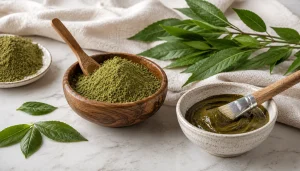
Brahmi powder paste is another popular preparation. The powder is mixed with water, yogurt, or aloe vera gel to form a thick paste applied directly to the scalp and hair. This approach is simpler than making infused oil and delivers the botanical material directly to the scalp.
In folk Ayurvedic practice, brahmi hair treatments are applied one to two times per week. The combination of scalp massage during application and the properties of the brahmi itself creates a deeply nourishing ritual. Furthermore, the practice of regular scalp massage is valued independently in Ayurveda for promoting circulation at the hair roots.
How to Make a Brahmi Powder Hair Mask
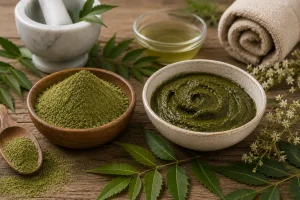
This is the most accessible way to begin using brahmi for hair care at home. You need two tablespoons of brahmi powder, enough yogurt or warm water to form a smooth paste, and optionally one tablespoon of amla powder for added nourishment.
Combine the brahmi powder with plain, full-fat yogurt to achieve a thick, spreadable consistency. The yogurt provides a protein and lactic acid base that complements the botanical powder well. If your hair is oily, use water or aloe vera gel instead of yogurt.
Apply the paste section by section to the scalp, massaging gently with your fingertips. Work the paste down through the hair length after covering the scalp. Wrap your hair in a warm towel or shower cap and leave the mask on for thirty to forty-five minutes. Rinse thoroughly with lukewarm water, then shampoo as usual.
Combining Brahmi with Amla and Henna
Many Ayurvedic hair care recipes combine several botanical powders for a more complete effect. Amla (Indian gooseberry) powder is the most classic pairing with brahmi. In traditional Ayurveda, amla is considered one of the most valuable herbs for hair vitality. It is rich in vitamin C and tannins.
A blend of brahmi and amla powders in equal parts, mixed with yogurt or coconut oil, creates a deeply nourishing mask. Moreover, some practitioners add a small amount of shikakai powder to improve rinseability.
Henna powder is another traditional Ayurvedic hair ingredient. However, unlike brahmi and amla, henna deposits a reddish tint and conditions the hair shaft primarily. Henna combined with brahmi is popular in traditional Indian hair care routines focused on combining color with scalp nourishment. Be aware that henna is a semi-permanent dye and will tint hair red-orange.
Making Brahmi-Infused Hair Oil
Brahmi-infused oil is the classic preparation described in Ayurvedic texts. Place two tablespoons of brahmi powder in a small saucepan with half a cup of sesame oil or coconut oil. Heat on the lowest possible setting for thirty to forty-five minutes, stirring occasionally. Do not let the oil smoke or boil.
Strain the oil through cheesecloth into a clean glass jar. Let it cool completely before sealing. Apply a small amount to the scalp two to three times per week, massaging gently for five to ten minutes. In Ayurvedic practice, warm oil massage (abhyanga) of the scalp is considered particularly effective when performed before bed and rinsed out in the morning.
Consequently, brahmi oil gives you a lighter, more spreadable form of the botanical that is easy to apply daily without the heaviness of a full paste mask.
What to Expect and How Long to Use It
Ayurvedic hair care is a long-term practice rather than a quick fix. Traditional practitioners emphasize consistency over weeks and months. Results, when they occur, are gradual and cumulative. Therefore, approaching brahmi hair care as a weekly ritual rather than a one-time treatment reflects the original intent of the practice.
Most people who use brahmi powder for hair consistently notice improvements in scalp comfort and hair texture within four to eight weeks. Additionally, the ritual of regular scalp massage and nourishment contributes to overall hair and scalp care regardless of any single ingredient’s effect.
Store unused brahmi powder in an airtight container away from moisture and light. Similarly, store any prepared brahmi oil in a cool, dark place. Pre-mixed paste should be used immediately and not stored, as it can ferment or separate.
Important note: Brahmi powder hair care information is provided for educational purposes only and reflects traditional Ayurvedic practices. This is not medical advice. If you have scalp conditions such as dermatitis, psoriasis, or hair loss related to a medical condition, consult a dermatologist or qualified healthcare provider before beginning any topical herbal regimen.
Frequently Asked Questions
How often should I use brahmi powder for hair?
Traditional Ayurvedic guidance suggests one to two applications per week for hair masks and two to three times per week for brahmi oil scalp massage. Consistency over weeks and months is the foundation of Ayurvedic hair care. Starting with once a week allows your scalp time to adjust before increasing frequency.
Does brahmi powder stain hair or skin?
Brahmi powder has a mild greenish tint when wet but does not permanently stain hair or skin. It rinses out fully with shampooing. This is different from henna, which is a semi-permanent dye. Always rinse brahmi paste thoroughly to avoid any temporary green tint, particularly on lighter hair colors.
Can I leave a brahmi powder hair mask on overnight?
Extended leave-in times of eight or more hours are practiced in some Ayurvedic traditions, particularly for oil-based preparations. However, for paste masks, thirty to sixty minutes is generally sufficient. Leaving a yogurt-based paste overnight may cause it to dry out and become difficult to rinse. Oil-based treatments are better suited to overnight application.
Is brahmi the same as gotu kola?
No. Brahmi and gotu kola are often confused because both are used in Ayurvedic practice, but they are different plants. Brahmi is Bacopa monnieri, while gotu kola is Centella asiatica. In some regional traditions, the name brahmi is applied to gotu kola, which adds to the confusion. For hair care, both are used traditionally, but check your product’s botanical name to know which you are using.
Explore brahmi powder and our full range of Ayurvedic botanical powders at Hatton Naturals to start your traditional hair care routine today.