Cornflower for Skincare: Natural Anti-Inflammatory Uses
Cornflower skin benefits have been recognized in European cosmetic and herbal traditions for centuries, long before the plant became a fixture in artisan tea blends. Centaurea cyanus earned its place in skin preparations not because of marketing but because generations of herbalists and apothecaries observed consistent results with it: reduced puffiness around the eyes, soothed irritated skin, and a gentle toning effect that suited even sensitive complexions. The French cosmetic industry formalized this tradition into eau de bleuet, a cornflower hydrosol still sold commercially today and used specifically as a facial toner and eye-area treatment.
What makes cornflower particularly useful in modern natural skincare is the combination of mild anti-inflammatory compounds, natural blue pigment with potential antioxidant activity, and an exceptionally gentle profile that rarely triggers irritation. This article covers the full picture of cornflower skin benefits: the compounds responsible, the traditional preparations, how to make effective home formulations, and where dried petals fit into a contemporary skincare routine.
The Compounds Behind Cornflower Skin Benefits
Understanding what is in the petal helps clarify what it can and cannot do for skin. Cornflower is not a high-potency active ingredient in the pharmaceutical sense. Its value in skincare comes from a combination of compounds that work gently and cumulatively.
Anthocyanins and Antioxidant Activity
The vivid blue color of cornflower petals comes from protocyanin, a complex anthocyanin that requires both iron ions and co-pigmenting flavonoids to produce its characteristic hue. Anthocyanins as a class are established antioxidants, meaning they can neutralize free radical activity in tissue. In skincare, antioxidant compounds are valued for their potential to support skin against oxidative stress from UV exposure and environmental pollution.
Protocyanin specifically has been studied in preliminary research for anti-inflammatory activity. While cornflower is not a high-potency source of anthocyanins compared to berries or purple vegetables, its topical application delivers these compounds directly to the skin surface where they are needed.
Flavonoids: Apigenin and Luteolin Glycosides
Cornflower petals contain apigenin and luteolin in glycoside form. Both are well-researched flavonoids with documented anti-inflammatory properties. Apigenin in particular has been studied for its ability to inhibit inflammatory pathways and for its mild calming effect on reactive skin. It appears in chamomile as well, which partially explains why both plants share a traditional reputation for soothing irritated skin.
Luteolin has demonstrated antioxidant and anti-inflammatory activity in laboratory studies. In the context of topical cornflower preparations, these compounds contribute to the plant’s traditional reputation for reducing redness and calming reactive skin.
Hydroxycinnamic Acids and Tannins
Cornflower also contains hydroxycinnamic acids, a group of phenolic compounds with antioxidant activity, and modest tannin levels. Tannins in topical preparations produce a mild astringent effect: they temporarily tighten the skin surface, reduce the appearance of pores, and contribute to the toning effect that made cornflower preparations popular as facial rinses and toners historically.
Traditional Eye-Area Use: The Most Documented Cornflower Skin Benefit
The most consistently documented cornflower skin benefit across European herbal literature is its application to the eye area. Maude Grieve’s “A Modern Herbal” references the use of cornflower water as an eye lotion. German herbal traditions document cornflower compress use for tired, puffy eyes. The French commercial tradition of eau de bleuet extends directly from this historical practice.
Why the Eye Area Specifically
The skin around the eyes is the thinnest on the face, which makes it both the most reactive to irritation and the most responsive to gentle topical treatments. Cornflower’s mild anti-inflammatory compounds, particularly the flavonoids and anthocyanins, are well-suited to this sensitive area precisely because they work gently rather than aggressively.
The tannin content contributes mild vasoconstriction when applied as a cool compress, which is the mechanism most likely responsible for the visible reduction in puffiness traditionally associated with cornflower eye treatments. This is not a dramatic pharmaceutical effect. It is a gentle, temporary response consistent with what other mild astringent botanicals produce.
Simple Eye-Area Compress
To replicate the traditional preparation at home: steep 3 g of organic cornflower petals in 100 ml of water that has just come off the boil. Allow to cool completely to room temperature, then refrigerate for 30 minutes. Strain carefully through a fine cloth or multiple layers of cheesecloth to remove all plant material. Soak two cotton pads in the chilled infusion and apply to closed eyes for 10 to 15 minutes.
The cool temperature contributes as much to the depuffing effect as the botanical compounds. Both work together in this preparation.
Cornflower as a Natural Skin Colorant
Beyond its anti-inflammatory properties, cornflower offers something few other botanical skin ingredients do: a genuine natural blue colorant derived from the anthocyanin pigments in the petals.
The Challenge of Natural Blue in Cosmetics
Blue is one of the most difficult colors to achieve from natural botanical sources. Most plant pigments fall into the red, orange, yellow, and green ranges. True blue from a botanical source is rare, which makes cornflower genuinely distinctive as a cosmetic colorant.
The cornflower skin benefits in colorant applications are both aesthetic and functional. The anthocyanin pigments that produce the blue color carry the same antioxidant and anti-inflammatory properties as the compounds valued for their skin-soothing effects. A colorant that also functions as an active ingredient is a meaningful formulation advantage.
pH Sensitivity in Formulation
The blue color of cornflower pigment is stable in neutral to slightly alkaline conditions and shifts toward pink or red in acidic environments. This pH sensitivity is the primary technical challenge in using cornflower as a cosmetic colorant.
Most skin-compatible formulations are mildly acidic (pH 4.5 to 5.5) to match the skin’s natural acid mantle. At this pH, cornflower pigment shifts from blue toward violet or pink rather than holding its vivid blue. Formulators working with cornflower as a blue colorant need to work at a higher pH than typical skincare formulations, which requires careful balancing with other ingredients.
For home preparations where color consistency is less critical, this shift is simply something to observe and accept. A cornflower face mist that looks violet rather than blue is still delivering the same botanical compounds.
Making a Cornflower Facial Toner at Home
A cornflower facial toner is the most accessible home preparation and the most direct contemporary equivalent to the traditional eau de bleuet. The preparation is simple, the shelf life is short (use within three days without preservatives), and the result is a genuine functional toner rather than scented water.
Basic Cornflower Toner
- Water: 200 ml, filtered or distilled
- Organic cornflower petals: 6 g
- Heat water to 190°F / 88°C (below boiling to preserve delicate volatile compounds)
- Steep petals for 8 minutes
- Strain through fine cloth until completely clear of plant material
- Cool to room temperature, then transfer to a clean glass bottle or spray bottle
- Refrigerate and use within 3 days
Apply with a cotton pad after cleansing, or decant into a small spray bottle for direct misting. The toner is suitable for all skin types but particularly well-suited to sensitive, reactive, or redness-prone complexions.
For a longer-lasting preparation, add witch hazel at a 1:1 ratio (100 ml cornflower infusion to 100 ml alcohol-free witch hazel). The witch hazel extends shelf life to approximately two weeks refrigerated and adds its own mild astringent toning properties to the blend.
Cornflower in Face Mists and Hydrosols
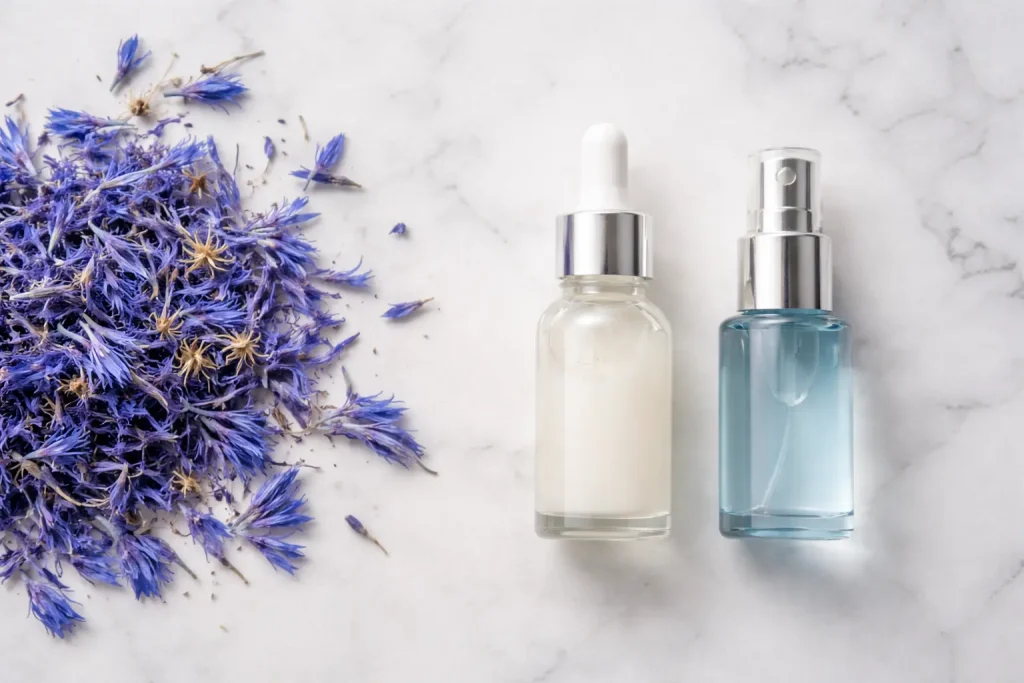
A face mist is simply a dilute toner in a spray bottle, and cornflower works exceptionally well in this format. The fine mist application suits the delicate anti-inflammatory compounds that benefit from light, even distribution across the face rather than targeted application.
Commercial Cornflower Hydrosol
True cornflower hydrosol, produced by steam distillation of fresh cornflower flowers, contains the water-soluble aromatic compounds and a portion of the flavonoids from the plant. It is more concentrated and more stable than a home infusion, and it maintains the blue-to-violet color characteristic of cornflower more reliably than an infusion prepared from dried petals.
Commercial eau de bleuet is the most widely available form and is worth sourcing if you want a stable, ready-to-use cornflower preparation for daily use. For home production from dried petals, the infusion method above gives a functional if less concentrated result.
DIY Cornflower Face Mist
Prepare a cornflower infusion using the basic toner recipe above. Strain until completely clear. Transfer to a fine-mist spray bottle. Add 2 to 3 drops of vegetable glycerin per 100 ml of infusion to increase skin adhesion and add a minimal humectant effect. Shake gently before each use and store refrigerated.
Mist over a clean face before applying moisturizer, or use throughout the day as a refreshing hydration boost. The cornflower skin benefits in this format are primarily hydrating and calming rather than targeted treatment.
Cornflower for Sensitive and Reactive Skin
The cornflower skin benefits most relevant to sensitive skin types are anti-inflammatory action, mild astringency without stripping, and an exceptionally low irritation profile. Among botanicals used in facial skincare, cornflower is at the gentle end of the spectrum. It does not contain the strong volatile oils that make eucalyptus or tea tree problematic for reactive skin. It does not carry the sensitization risk associated with fragrant botanicals like ylang ylang or cinnamon.
Redness-Prone Skin
The flavonoid content, particularly apigenin and luteolin, makes cornflower relevant for chronically redness-prone complexions. Both compounds have demonstrated anti-inflammatory activity relevant to vascular reactivity in skin. Regular use of a cornflower toner or face mist as part of a consistent routine may support reduced visible redness over time, in the same way that chamomile, which shares these compounds, is traditionally used for reactive skin.
Post-Sun Skin
A chilled cornflower infusion applied as a compress to skin after sun exposure follows both the traditional and the biochemically sensible approach. The cool temperature reduces heat in the skin. The anthocyanins and flavonoids support the skin’s response to oxidative stress from UV exposure. This is a traditional use with clear biological plausibility, though it is not a substitute for proper sun protection and is not a treatment for sunburn in a medical sense.
Incorporating Dried Cornflower Petals into Skincare Preparations
Beyond infusions and toners, dried cornflower petals have several practical applications in home skincare formulation.
Bath Preparations
Dried cornflower petals added to a bath create a visually striking preparation and deliver their mild anti-inflammatory compounds to the skin surface. Use 10 to 15 g of petals in a muslin bag or tied cloth, hung from the tap so the water runs through the petals as the bath fills. Direct addition of loose petals to the bath creates a cleanup problem without meaningfully increasing the botanical benefit.
Pair organic cornflower petals with chamomile flowers in equal parts for a bath preparation that combines the anti-inflammatory profiles of both plants. The chamomile adds apigenin in higher concentration than cornflower alone, and the visual combination of blue and yellow petals in the bag is pleasant.
Facial Steam
A cornflower facial steam delivers the volatile and water-soluble compounds directly to the skin surface in warm vapor form, which temporarily increases skin permeability and may enhance absorption of the botanical actives.
Use 4 g of dried cornflower petals in a bowl of water just off the boil. Lean over the bowl with a towel draped over your head to trap the steam. Steam for 5 to 8 minutes. Follow immediately with toner and moisturizer while skin is still warm and receptive.
Solid Preparations
Dried cornflower petals can be incorporated into solid skincare preparations including salt scrubs, sugar scrubs, and solid facial bars, primarily for visual effect and mild antioxidant contribution. At the concentrations used in scrubs, the cornflower skin benefits are secondary to physical exfoliation, but the visual and sensory experience of whole or lightly crushed petals in a scrub preparation is a genuine product quality signal.
Use petals whole or lightly crushed in a salt or sugar scrub at 5 to 10% of total weight. The petals soften quickly on contact with water and do not create the microtear risk associated with harder exfoliant particles.
Exact Ratios for Cornflower Skincare Preparations
Basic facial toner (200 ml):
- Organic cornflower petals: 6 g
- Filtered or distilled water: 200 ml
- Temperature: 190°F / 88°C
- Steep: 8 minutes, strain fully
- Shelf life: 3 days refrigerated
Extended-life toner with witch hazel:
- Cornflower infusion (prepared as above): 100 ml
- Alcohol-free witch hazel: 100 ml
- Shelf life: up to 2 weeks refrigerated
Eye compress infusion:
- Organic cornflower petals: 3 g
- Water: 100 ml at 190°F / 88°C
- Steep: 8 minutes, strain completely, refrigerate before use
Bath preparation (per bath):
- Organic cornflower petals: 8 g
- Chamomile flowers: 8 g
- Place in muslin bag, hang from tap
Facial steam:
- Dried cornflower petals: 4 g
- Water: 500 ml just off boil
- Steam time: 5 to 8 minutes
Troubleshooting Cornflower Skincare Preparations
Infusion produces no visible color: Petals are old or heat-damaged. Fresh quality petals produce a visible pale blue to violet tint even at low concentrations. Replace the stock and source from a supplier using organic cornflower petals with clearly vivid blue dried petals.
Color shifts pink in toner: The formulation pH is acidic, triggering the anthocyanin color shift. This does not indicate a problem with the preparation. The active compounds are still present and functional. Accept the violet-to-pink color or adjust formulation pH upward.
Infusion looks cloudy after refrigeration: Tannin-protein complexes may precipitate at cooler temperatures. This is harmless. Strain again through a fine cloth before use for a clearer preparation.
Skin feels sticky after applying toner: Glycerin quantity is too high. Reduce to 1 drop per 100 ml or eliminate entirely. The cornflower infusion alone should feel light and quickly absorbed.
Eye compress causes irritation: Incomplete straining left plant particles in the infusion. Re-strain through multiple layers of fine cheesecloth until completely clear. Any plant material contact with the eye area should be avoided entirely.
Petals turn brown or lose color in scrub preparation: Oxidation and moisture exposure. Prepare scrubs in small batches for immediate use rather than storing for extended periods. For products intended for longer shelf life, keep cornflower petals as a surface garnish applied at the point of sale rather than incorporating them into the wet scrub matrix.
Storage and Quality for Skincare-Grade Cornflower Petals
The same storage principles that apply to culinary and tea-grade cornflower apply to skincare use, with one additional consideration: for topical preparations, microbial contamination risk is more significant than for ingested preparations that pass through stomach acid.
Store dried petals in airtight glass in a cool, dark location. Use clean, dry implements when measuring petals. Do not return unused petals from a measuring spoon to the storage jar.
Finished water-based preparations (toners, infusions, compresses) have a very short shelf life without preservatives. Three days refrigerated is a conservative but safe guideline. Any preparation that develops an off-smell, visible cloudiness beyond initial tannin precipitation, or color change beyond normal pH response should be discarded.
Color quality check: petals should remain vivid blue. Pale gray-lavender indicates age or light damage. Any musty aroma in the dried petals means discard before use in any preparation, topical or otherwise.
Safety and Patch Testing
Cornflower has an excellent safety profile for topical use and is not commonly associated with skin sensitization. However, individuals with known Asteraceae family allergies (chamomile, calendula, echinacea, ragweed) have a theoretical cross-reactivity risk and should patch test before applying any cornflower preparation to the face.
Patch test method: apply a small amount of prepared cornflower toner to the inner forearm. Leave uncovered for 24 hours and observe for redness, itching, or swelling. If no reaction occurs, the preparation is likely safe for facial use.
All cornflower skincare preparations are traditionally used wellness products and do not constitute medical treatment. Any persistent skin condition, including chronic redness, eczema, or reactive skin, should be evaluated by a qualified dermatologist. Do not use cornflower eye preparations if you have any active eye infection or condition without medical clearance.
Frequently Asked Questions
Q: What are the main cornflower skin benefits for everyday use? A: The primary cornflower skin benefits in daily use are mild anti-inflammatory action from flavonoids and anthocyanins, gentle astringent toning from tannins, and antioxidant support from the same pigment compounds that give the petals their blue color. These work cumulatively as part of a consistent routine rather than producing immediate dramatic results.
Q: Is cornflower good for sensitive skin? A: Yes. Cornflower is one of the gentler botanicals used in facial skincare. It lacks the strong volatile oils and sensitizing compounds found in more aggressive plant actives. It is a traditional choice specifically for reactive and sensitive complexions.
Q: How long does a homemade cornflower toner last? A: Three days refrigerated without preservatives. Adding alcohol-free witch hazel at a 1:1 ratio extends this to approximately two weeks refrigerated. Any off-smell or unusual cloudiness means discard immediately.
Q: Does cornflower actually reduce redness? A: Traditional use and the biological activity of its flavonoid compounds, particularly apigenin and luteolin, support a mild anti-inflammatory effect on reactive skin. Results are gentle and cumulative rather than immediate. Cornflower is not a treatment for chronic skin conditions.
Q: Can I add cornflower to my existing moisturizer? A: Dried petals can be steeped into a small amount of water and that infusion used to replace part of the water phase in a DIY moisturizer. Adding dry petals directly to a finished commercial moisturizer is not effective as the active compounds need water extraction to become bioavailable.
Q: What is eau de bleuet and how does it differ from a home infusion? A: Eau de bleuet is a commercially produced cornflower hydrosol made by steam distillation of fresh flowers. It is more concentrated, more stable, and more consistent than a home infusion from dried petals. It is worth sourcing if you want a ready-to-use daily cornflower preparation without home preparation time.