Organic Mullein: How to Brew a Smooth Leaf Infusion
Organic mullein has a quiet way of filling a cup. Not loud, not sharp, not perfumey like a jar of petals. It’s more like warm hay in late sun, a soft field note that settles into the background and makes space for everything else. When tea makers say mullein can feel “silky,” they usually mean the finished infusion drinks rounder than you’d expect from a plain leaf, especially when you brew it gently and filter it well. That last part matters. organic mullein is famous for its fine leaf hairs (the stuff that can feel scratchy if you rush your strain). So the goal of this guide is simple: a smooth, pale infusion that tastes clean, feels comfortable, and holds up in blends.
We’ll brew organic mullein with a production-minded approach: consistent weights, repeatable water temperature, timing, and filtration you can scale from one mug to a small batch. You’ll also get blend ideas that keep mullein’s calm “leaf body” while adding aroma and sweetness, especially with Organic Mullein + Chamomile Tea Whole Flowers. Along the way, you’ll learn how to reduce sediment, protect aroma in storage, and troubleshoot issues like flat flavor and aroma loss without overcomplicating the process.
Why organic mullein brews differently than most leaves
organic mullein is not a delicate top note herb and not a heavy root. It lives in the middle, a leaf that gives structure without bitterness if you treat it right. The main brewing difference is physical: mullein leaf can shed very fine particles. Those particles are not “bad quality” by default. They’re part of the plant material. But for a smooth cup, you want a filtration method that suits mullein’s texture.
If you brew aggressively (boiling water, long steep, hard agitation), you can shred the leaf further and make filtration harder. If you brew too cool, you can get a cup that tastes like warm water with a faint grass note. The sweet spot is a moderate temperature, short-to-moderate time, and a calm steep (minimal stirring). Once you nail that, organic mullein becomes a reliable base leaf for gentle blends, including florals that can easily dominate.
Try pairing it with chamomile tea whole flowers for a soft apple-like aroma that rounds the cup without turning it into a perfume.
Leaf prep and equipment that makes a smooth cup
You do not need fancy tools, but you do need consistency.
Choose one of these setups:
Mug or small pot plus fine mesh tea filter, then a second pass through a paper filter (or unbleached coffee filter).
Teapot with a large basket infuser plus a paper-filter “polish” pass.
For small-batch production: a sanitized food-grade container, then a large fine mesh strainer, then paper filters.
Leaf prep tips:
If your organic mullein is very fluffy, weigh it instead of measuring by volume. Volume varies too much.
Avoid grinding. You want intact leaf pieces for easier straining.
If you’re blending, mix dry ingredients thoroughly before portioning so each batch is uniform.
Aroma protection tip (small but real): pre-warm your vessel with hot water, then discard. It stabilizes steep temperature and helps volatile aromatics stay in the cup instead of shocking onto cold ceramic.
Try adding organic peppermint leaf as a small accent if you want lift without turning the blend into mint tea (keep it subtle so mullein stays the base).
Core brewing method for organic mullein (smooth, pale, repeatable)
This is the main “house method” for organic mullein when you want a clean infusion that feels comfortable and blends well.
Water: filtered, low to moderate mineral content.
Temperature: 90–95°C (194–203°F).
Time: 8–12 minutes, covered.
Agitation: minimal.
Process:
Heat water to 90–95°C. If you don’t have a kettle with temp control, bring water near boiling, then let it sit 2–3 minutes with the lid off.
Dose leaf into your infuser or vessel.
Pour water gently over the leaf, cover, and steep 8–12 minutes.
Strain through a fine mesh first.
For the smoothest result, run it through a paper filter as a second pass. This “polish” step is where mullein becomes truly velvety in mouthfeel.
Flavor target: pale straw to light gold, soft meadow-like aroma, gentle leaf body, no sharpness.
Try adding chamomile tea whole flowers during the steep for a naturally sweet, soothing aroma that plays well with mullein’s quiet leaf character.
Exact ratios in grams and teaspoons (single cup and small batch)
Consistency is your friend with organic mullein. Here are two reliable ratios you can scale.
Single cup (300 ml):
organic mullein: 1.2 g (about 2 teaspoons loosely filled)
Water: 300 ml
Steep: 10 minutes at 92°C, covered
Stronger cup (300 ml):
organic mullein: 1.8 g (about 3 teaspoons loosely filled)
Water: 300 ml
Steep: 10–12 minutes at 92–95°C, covered
Small batch (1 liter):
organic mullein: 4.0 g (about 6–7 teaspoons loosely filled)
Water: 1,000 ml
Steep: 10 minutes at 92°C, covered
Batch notes:
Teaspoon estimates depend on cut and fluffiness, so use grams whenever you can.
If you scale up, keep the steep time similar. Don’t assume bigger batch equals longer time. The extraction physics doesn’t require it, and longer time can increase fines.
Try adding organic ginger root cut if you want a warmer base note for winter blends (use a small amount so you don’t overpower mullein).
Pairing organic mullein with chamomile for a “soft-focus” infusion
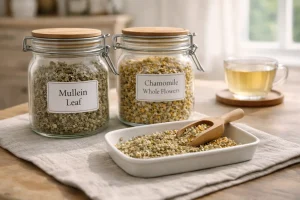 Organic mullein and chamomile is a classic kind of pairing, but it’s easy to get wrong if chamomile dominates. The goal is mullein as the base leaf, chamomile as the aromatic cushion.
Balanced blend ratio (per 300 ml):
organic mullein: 1.2 g
chamomile tea whole flowers: 0.6 g
Water: 92°C
Time: 8–10 minutes, covered
Filter: fine mesh then paper filter
Taste and aroma notes:
Mullein gives body and a soft leaf backbone.
Chamomile adds a mellow, apple-like floral sweetness and makes the cup feel “finished.”
Production-minded tip:
If you pre-blend, mix by weight in a larger bowl (for example, 2 parts organic mullein to 1 part chamomile by weight). Then portion into jars or bags. It keeps every scoop consistent.
Try adding organic lavender flowers very lightly if you want a more aromatic “top note” (think 0.1–0.2 g per cup). Lavender is powerful, so treat it like a seasoning, not a base.
Filtration and clarity: how to remove sediment without stripping flavor
If you only remember one thing about organic mullein, make it this: filtration equals comfort. You can brew perfectly and still ruin the experience by letting fines float into the cup.
Three filtration levels:
Casual: fine mesh strainer only. You’ll get some sediment.
Smooth: fine mesh plus paper filter. Best for most tea makers.
Ultra-polished: let the strained infusion rest 2 minutes, then decant slowly and paper-filter. This reduces the load on the paper filter and speeds up flow.
Avoid squeezing the spent leaf hard. Pressing pushes fines through the mesh and can dull the aroma. Let gravity do the work. If you need speed for service, use a larger filter surface area (bigger cone filter or a wider paper filter holder).
Try adding organic licorice root cut for natural sweetness and mouthfeel, especially when you’re serving mullein blends to people who normally sweeten tea.
Troubleshooting (flat flavor, too tart, over-carbonation, sediment, aroma loss)
Flat flavor:
Usually water is too cool, the dose is too low, or the steep is too short. For organic mullein, raise water temp to 92–95°C and keep the steep at 10 minutes. Also check storage: old leaf loses aromatic life.
Too tart:
Mullein itself isn’t tart. Tartness usually comes from other ingredients (citrus peels, hibiscus-type ingredients, or acidic additives). If you taste tartness in a mullein blend, reduce the tart component and add a rounder partner like chamomile. Keep organic mullein as the base and aim for balance rather than intensity.
Over-carbonation:
This is more relevant if you’re using mullein in a fermented beverage workflow (like a lightly fermented tea base). If you carbonate, measure sugar additions and control time and temperature. Over-carbonation is usually too much fermentable sugar, too long at warm temp, or bottling before fermentation slowed. Use pressure-rated bottles and chill early if pressure climbs.
Sediment:
This is the classic. Use a paper filter pass. Also reduce agitation. Don’t grind the leaf. Don’t squeeze the strainer. If sediment persists, rest the infusion briefly and decant before filtering.
Aroma loss:
Aroma disappears when herbs sit exposed to air, heat, or humidity. Keep jars airtight, away from light. For brewing, cover the steep. Don’t boil the leaf. Pour water gently and avoid long uncovered steeps that vent the aromatics.
Try adding chamomile tea whole flowers when your mullein tastes too “quiet.” Chamomile fills the aromatic space without making the cup sharp.
Storage + quality: keeping leaf fresh, fragrant, and consistent
organic mullein is hygroscopic enough that it can go stale quickly in a humid room. The leaf may still look fine while aroma fades and flavor turns dusty.
Storage rules:
Airtight containers, ideally with a gasket seal.
Keep away from the stove, sunlight, and any moisture source.
Avoid frequent lid opening in a steamy production area. Decant a working amount into a smaller jar for daily use.
Quality cues:
Color: should look like clean dried leaf, not greyed-out or overly brown.
Scent: should smell softly herbal, like dry meadow. If it smells like cardboard or nothing at all, it’s past its prime.
Texture: should feel dry and crisp, not limp.
Batching tip:
If you pre-portion for a bar, label with date and lot if you have it. Rotate stock. Even small improvements in rotation habits produce consistent cups and fewer “why is it bland today?” moments.
Try adding organic lemongrass cut for a bright, clean aromatic lift that reads fresh even when served iced (and it plays nicely with mullein’s gentle base).
Safety and compliant use (no medical claims, practical best practices)
This is tea craft, not medical care. organic mullein is traditionally used by herbalists in many contexts, but in a beverage-making setting your focus is quality, comfort, and responsible language. Keep claims out of your product copy. Describe sensory experience and traditional context without promising outcomes.
Safe, compliant phrasing:
“Traditionally used in herbal preparations.”
“Herbalists often use mullein leaf in soothing infusions.”
“May support a comforting tea ritual.”
Practical best practices:
Filter well to reduce fine particles in the cup.
If someone is sensitive to plant material in infusions, suggest a lighter dose and extra filtration.
Keep everything clean and dry in storage to prevent quality issues.
Try adding organic licorice root cut if you want sweetness without sugar, but keep it moderate so the blend stays balanced.
Serving ideas: hot, iced, and batch service without losing softness
Hot service:
Serve at drinking temperature, not piping hot. Mullein’s subtlety shows best when the cup is warm and calm. If it’s too hot, you’ll miss the aroma.
Iced service:
Brew slightly stronger, then dilute over ice.
For 1 liter iced: use 5.0 g organic mullein instead of 4.0 g, steep 10 minutes at 92°C, filter well, then pour over 500–700 g ice (adjust to taste).
Batch service:
For café or prep, brew in a sanitized container, cover during steep, then filter. Keep chilled if you’re holding it. Serve within 24 hours for best aroma. The longer it sits, the more the top notes fade.
Try adding organic peppermint leaf in iced versions at a very low percentage for a refreshing finish that doesn’t overwhelm the mullein base.
A smooth cup comes from gentle brewing and good filtration
organic mullein shines when you treat it like a quiet base leaf and respect its texture. Keep water hot but not boiling, steep covered, don’t thrash the leaf, and filter in two passes when you want a truly smooth infusion. Once you’ve locked in the core method, mullein becomes a dependable canvas for softer florals, especially chamomile. The result is a pale, gentle cup that feels intentional, not weak. If you’re building blends for daily drinking, organic mullein can be your steady backbone, the kind that supports other botanicals without getting loud. Brew it calmly, store it carefully, and filter it like you mean it.
Try adding chamomile tea whole flowers for a mellow aromatic finish that makes mullein feel complete in a blend.
FAQ
What’s the best way to brew organic mullein for a smooth cup?
Use 90–95°C water, steep 8–12 minutes covered, then strain fine mesh and finish with a paper filter for the smoothest result.
Why does my organic mullein tea feel scratchy?
It’s usually fine leaf particles. Do a second filtration pass through a paper filter and avoid squeezing the leaf.
Can I blend organic mullein with chamomile in the same steep?
Yes. A good starting point is 1.2 g organic mullein with 0.6 g chamomile tea whole flowers per 300 ml, steep 8–10 minutes at 92°C and filter well.
How much organic mullein should I use per cup?
Start with 1.2 g per 300 ml (about 2 teaspoons loosely filled). For a stronger cup, use 1.8 g (about 3 teaspoons).
Does organic mullein get bitter if I steep too long?
It can turn dull or overly “leafy” with long steeps, especially if you agitate it. Keep steep time around 10 minutes and avoid boiling water.
How should I store organic mullein to keep aroma?
Airtight jar, away from heat, light, and humidity. If you open the main jar often, decant a smaller working jar for daily use.
Can I serve organic mullein iced without losing flavor?
Yes. Brew slightly stronger, filter well, then dilute over ice. Stronger base plus clean filtration keeps it smooth and not watery.
What herbs pair well with organic mullein for flavor without overpowering it?
Chamomile is a top choice. Light accents of peppermint, lemongrass, ginger, lavender, or licorice can work if you keep them measured.