Ginkgo Biloba: What Does It Do in Traditional Use
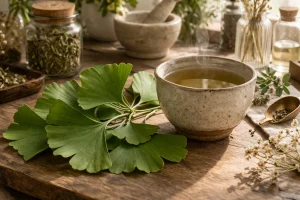
When people ask ginkgo biloba what does it do, they are usually trying to understand both the plant’s traditional identity and the reason it continues to hold a place in herbal practice. Ginkgo has a distinctive personality in the cup and in the apothecary. Its fan-shaped leaves are visually iconic, but herbalists have long valued the leaf more for its role in thoughtful, steady formulations than for dramatic flavor. In traditional use, ginkgo biloba is often chosen as a support herb in balanced daily infusions, especially when a blend calls for a dry green note, a slightly tannic edge, and a botanical profile that feels clean rather than showy. For tea makers, it is less about building a sweet or fruity cup and more about creating structure, rhythm, and herbal character.
This makes ginkgo a useful ingredient for formulators who want to work with leaves that bring purpose as well as texture. It pairs especially well with other aromatic leaves and needles, with rosemary being one of the most natural companions. Together they create a blend that smells focused, brisk, and pleasantly old-world. For anyone exploring ginkgo biloba what does it do, the most practical answer is that herbalists often use it as a contemplative leaf in traditional teas, while modern tea makers appreciate its dry profile, visual appeal, and blending versatility.
Ginkgo biloba what does it do in herbal tradition
A practical way to answer ginkgo biloba what does it do is to start with how herbalists have traditionally approached the leaf. Ginkgo is not usually treated like a cozy kitchen herb meant to dominate the mug. Instead, it is often included in measured amounts as part of a broader formula. Herbalists often use it where the goal is a composed, botanical infusion rather than a lush or dessert-like tea.
The leaf itself brings a green, somewhat firm character. Depending on the cut, harvest style, and ratio in a blend, it may come across as woody, grassy, faintly bitter, or softly astringent. That means it performs best when paired with herbs that soften, round, or lift it. Rosemary is an ideal example because it contributes a clean aromatic top note without turning the tea into something overly perfumed.
For tea makers, this matters because ginkgo works more like a structural leaf than a flavor bomb. It can help a blend feel intentional. It can sharpen the edges of softer herbs and keep a formula from tasting flat or muddy. Try building around Ginkgo Biloba Leaf C/S as a base when you want a classic herbal profile with visual identity in the dry mix.
Flavor profile and what to expect in the cup
Anyone searching ginkgo biloba what does it do should also understand what it does sensorially. Ginkgo leaf is not sweet. It is not juicy. It does not deliver the instant brightness of citrus peel or the soft floral bloom of petals. What it offers is restraint. In the cup, it can feel dry, leafy, slightly tannic, and faintly bitter if pushed too far.
That is why it shines in blends that are designed with contrast. Rosemary adds lift. Peppermint can brighten the center. Tulsi can add warmth and roundness. Nettle can create a greener, fuller body. Cinnamon chips can introduce quiet sweetness and depth without burying the leaf.
A useful blending mindset is to treat ginkgo like a supporting botanical that defines tone. It helps create a tea that feels herbal in a serious, traditional way. For aromatic contrast, try Organic Rosemary Leaf in the same formula when you want a more lifted and resinous finish.
Best brewing ratios for tea makers
For loose-leaf work, ratio matters more with ginkgo than with softer herbs. Too little and it disappears. Too much and the cup may become stern.
A reliable starting point for a single serving is:
- 2 grams ginkgo leaf plus 1 gram rosemary leaf in 300 ml water
- About 2 teaspoons ginkgo leaf plus 1 teaspoon rosemary leaf, depending on cut and density
For a gentler solo infusion:
- 1.5 to 2 grams ginkgo leaf in 250 to 300 ml water
- About 1.5 to 2 teaspoons per cup
For a small blending batch:
- 40 grams ginkgo leaf
- 20 grams rosemary leaf
- 20 grams nettle leaf
- 10 grams peppermint leaf
- 10 grams tulsi leaf
This gives a 100 gram formula with a dry, green, aromatic style that is pleasant for repeated brewing tests.
Steeping guidance:
- Water temperature: 90 to 95°C
- Steep time: 5 to 7 minutes covered
- For a milder result, start at 5 minutes
- For more body, extend toward 7 minutes, but avoid pushing much longer
If you are experimenting with traditional-style green herbal blends, try Nettle Leaf to broaden the body without overwhelming the cup.
Why rosemary works so well with ginkgo
The pairing in this article is not random. Rosemary and ginkgo meet in a very useful middle ground. Ginkgo gives dryness and form. Rosemary gives aroma and movement. Together they create a tea that smells awake and tastes grounded.
Rosemary also helps reduce the impression that ginkgo is too severe on its own. A little goes a long way. In most blends, rosemary should stay below the ginkgo ratio unless you want the cup to lean strongly resinous and savory.
A good working formula for a daily herbal tea is:
Simple ginkgo rosemary blend
- 3 parts ginkgo biloba leaf
- 1 part rosemary leaf
- Optional 1 part tulsi for softness
This kind of formula feels especially appropriate for tea makers who want to position a blend as botanical, intentional, and less fruit-driven. It has a classic apothecary mood that fits well in premium loose-leaf assortments. Try Tulsi Leaf if you want to soften the sharper herbal edges while keeping the blend leaf-forward.
Building a fuller blend around ginkgo
If the question is ginkgo biloba what does it do, one practical answer is that it helps anchor blends built for clarity of flavor and botanical elegance. It works especially well with leaves, bark, and roots that do not fight for attention.
Here are several fitting companions for Hatton Naturals-style blending:
- Peppermint for lift and freshness
- Nettle for body and green depth
- Tulsi for warmth and roundness
- Cinnamon chips for subtle sweetness
- Ginger root for a dry warming edge
- Chamomile for a softer finish in evening-style formulas
A balanced tea-maker blend might look like this:
Botanical daily blend
- 35 grams ginkgo leaf
- 15 grams rosemary leaf
- 20 grams nettle leaf
- 10 grams peppermint leaf
- 10 grams ginger root
- 10 grams cinnamon chips
The result is firm, aromatic, and layered. Ginkgo defines the structure. Rosemary rises first in the aroma. Ginger and cinnamon warm the back palate. Nettle keeps the center from feeling thin. For a brighter aromatic edge, try Peppermint Leaf in a restrained percentage so the blend stays sophisticated rather than mint-dominant.
Troubleshooting
Working with ginkgo-based formulas takes a little calibration. Here are practical corrections for common issues.
Flat flavor
Cause: too much neutral leaf, too low temperature, or weak aromatic support.
Fix: increase rosemary or peppermint slightly, raise water temperature to 95°C, or extend steeping by 1 minute. Try Organic Rosemary Leaf when the cup smells weaker than expected.
Too tart
Cause: another ingredient in the blend is pushing acidity or sharpness. Ginkgo itself is not usually tart, so this often comes from an overly aggressive companion herb.
Fix: remove sour elements, increase nettle or chamomile, and shorten steep time.
Over-carbonation
This is mostly relevant if a tea-maker uses the blend as a base for a fermented beverage or sparkling herbal infusion.
Cause: bottling too early or using too much fermentable sugar.
Fix: reduce priming sugar, chill sooner, and test in smaller bottles before scaling.
Sediment
Cause: very fine leaf particles or excessive agitation in storage.
Fix: use a coarser cut, sift the blend before packing, and pour through a fine mesh strainer.
Aroma loss
Cause: stale rosemary, poor seal, or too much light exposure.
Fix: refresh the aromatic component, store airtight, and keep stock away from heat and sun. Add Chamomile Flowers in small amounts only if the blend needs softness without losing its herbal identity.
Storage + Quality
Quality is everything with leaf-based blends, especially when subtle herbs like ginkgo are involved. A stale batch will not announce itself loudly the way a spoiled spice blend might. It will simply taste tired.
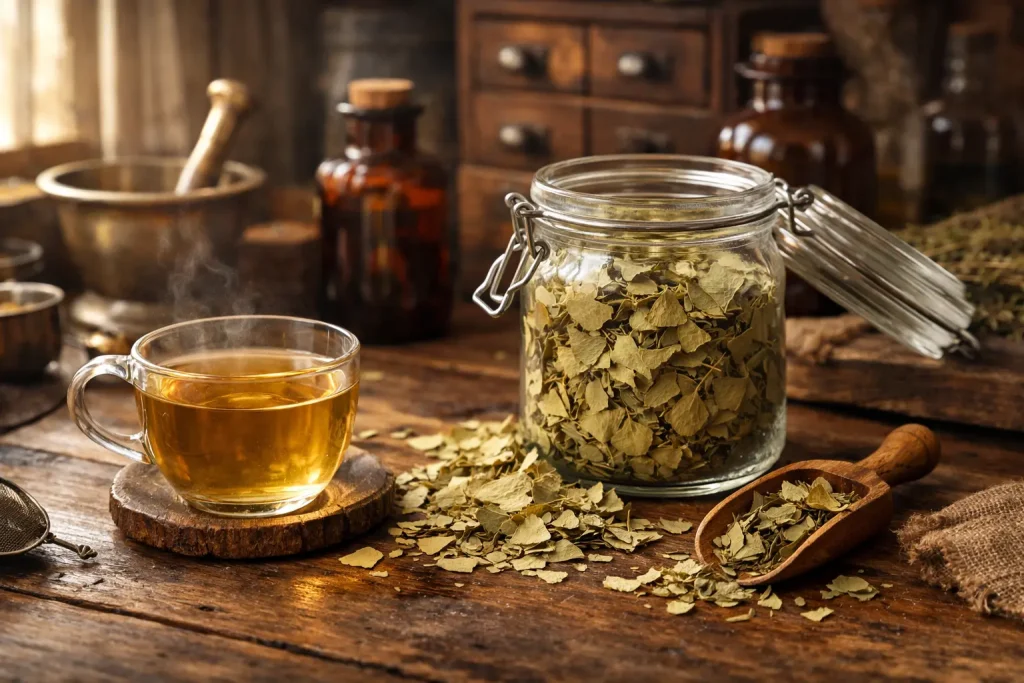
Store ginkgo leaf and finished blends in airtight containers away from direct light, humidity, and temperature swings. Food-safe tins, dark glass, or well-sealed pouches all work well. Humidity is the enemy because leaves lose crispness quickly and aroma-bearing partners like rosemary flatten out.
Look for these cues:
- Color should remain muted green to olive, not dull brown-gray
- Aroma should be light but present, especially in rosemary-containing blends
- Leaves should feel dry, not soft or limp
- The blend should not smell dusty, cardboard-like, or faintly sweet in a stale way
For tea makers managing inventory, it is smart to blend in modest batches and refresh frequently rather than building very large lots that sit too long. Try Ginger Root C/S in small-batch production when you want a dry warming accent that holds up well in storage.
Safety
With any discussion of ginkgo biloba what does it do, wording matters. This is an herb with a long traditional history, but tea content should stay compliant and practical. It is best to describe ginkgo in terms of traditional use, formulation style, and sensory role rather than making medical claims.
Use language such as:
- traditionally used in herbal practice
- herbalists often use
- may support a balanced herbal routine
- appreciated for its role in traditional formulations
Avoid promising outcomes or referring to diseases, treatments, or cures. Tea makers and retailers benefit from clear, grounded descriptions that respect both the herb and the customer. If your audience prefers softer leaf blends, try Cinnamon Chips to make ginkgo-based formulas more approachable without turning them sweet.
Conclusion
So, ginkgo biloba what does it do in traditional herbal use? It functions less like a flashy feature ingredient and more like a disciplined botanical leaf that gives shape, seriousness, and herbal character to a blend. It is traditionally appreciated in thoughtful formulations, and for tea makers it offers something equally valuable: structure in the cup, visual distinction in the dry blend, and compatibility with aromatic herbs like rosemary, peppermint, tulsi, nettle, ginger, chamomile, and cinnamon.
For formulators, ginkgo is most rewarding when used with intention. Keep the ratios measured, pair it with supportive herbs, and pay attention to storage and freshness. Done well, it creates a tea that feels rooted in herbal tradition rather than trend. If you are still asking ginkgo biloba what does it do, the clearest practical answer is this: it helps build composed, botanical teas that taste purposeful, layered, and distinctly apothecary in style.
FAQ
Ginkgo biloba what does it do in a tea blend?
In a tea blend, ginkgo biloba what does it do usually comes down to structure. It adds a dry, leafy, traditional herbal character and works best with aromatic companions like rosemary or mint.
What does ginkgo biloba taste like?
It tastes green, dry, lightly bitter, and somewhat astringent. It is usually better in a blend than used alone in large amounts.
Is ginkgo a sweet herb?
No. Ginkgo is not naturally sweet. Tea makers often pair it with warmer or more aromatic herbs to round out the cup.
What herbs pair well with ginkgo biloba?
Rosemary, nettle, peppermint, tulsi, ginger, chamomile, and cinnamon all pair well depending on the style of blend you want.
How much ginkgo leaf should I use per cup?
A good starting point is 1.5 to 2 grams per 250 to 300 ml of water, or roughly 1.5 to 2 teaspoons depending on cut.
Can ginkgo be used in sparkling or fermented herbal drinks?
Yes, but carefully. The leaf can be part of a more complex herbal base, though the formula should be tested for balance and carbonation control.
How should ginkgo leaf be stored?
Keep it airtight, dry, and out of direct light. Freshness is especially important because subtle leaf aromas fade quietly over time.
Is it okay to describe ginkgo with health promises?
No. It is better to use compliant wording such as traditionally used, herbalists often use, or may support, without making disease claims.