Burdock Root Side Effects: What to Consider Before Brewing It
When people look up burdock root side effects, they are often not trying to avoid the herb entirely. They usually want to brew it well, understand its character, and make better choices before it reaches the cup. That is a sensible approach. Burdock root has a long history in traditional herbal practice, and herbalists often value it for its earthy, grounding presence. Yet it is also a root with personality. It can taste too dull if under-extracted, too heavy if pushed too far, and too rough around the edges if paired carelessly. A good tea maker pays attention not only to benefits and flavor, but also to strength, context, and proportion.
In practical terms, burdock works best when treated like a serious botanical ingredient rather than a casual scoop-and-steep herb. Its rooty sweetness develops slowly, its aroma stays understated, and its texture can move from silky to muddy if the cut size, time, and ratio are off. That is why it helps to think about brewing, pairing, storage, and common caution points all at once. If you enjoy calm, balanced herbal cups, or if you are developing blends for everyday drinking, burdock becomes much more useful once you understand how it behaves.
Burdock Root Side Effects in Context
The phrase burdock root side effects sounds dramatic, but in many tea situations the real issue is simply fit. Not every herb is right for every body, every blend, or every brewing method. Burdock is a dense, earthy root. Its flavor lands low on the palate, and its best qualities come forward with steady heat and enough time. If you rush it, the cup can feel thin. If you overload it, the root note can dominate the blend and make the tea feel tiring rather than pleasant.
In practice, the most common concerns are not mysterious. Tea makers usually run into intensity, rough texture, or awkward pairings before anything else. That is why it helps to think of burdock root side effects as part of formulation discipline. A mild daily cup needs a different ratio than a deep evening decoction. A floral blend needs lift. A root-forward blend needs space. If you want a softer profile, try Chamomile Tea Whole Flowers alongside the root for a rounder finish and a gentler aromatic top note.
What Burdock Root Tastes Like and Why It Matters
Burdock does not announce itself with a bright first impression. It enters the cup quietly. Expect an earthy aroma, a dry woodsy note, and a faint roasted sweetness when brewed well. Some cups suggest damp soil after rain. Others lean toward grain husk, dried root cellar notes, or a soft vegetal finish. This is exactly why burdock benefits from thoughtful pairing. Left alone, it can feel too flat for some drinkers. Supported by the right botanicals, it becomes deep, calm, and memorable.
Texture matters just as much as flavor. Root teas can leave a heavier impression than leaf or flower infusions, especially when cut-and-sifted material is brewed hard. A little floral softness or mint brightness helps open the cup. For a cleaner lift, try peppermint leaf c/s in a small proportion. For gentle warmth, ginger root c/s can sharpen the edges without overwhelming the root. These additions do not hide burdock. They help it read more clearly.
Who Should Pause Before Brewing a Strong Cup
A practical herbalist knows that burdock root side effects are not only about the herb itself, but also about the drinker and the dose. Anyone who is highly sensitive to bitter, earthy, or concentrated herbal brews may want to start with a lighter cup. Burdock belongs to the Asteraceae family, so people who are cautious with botanicals in that family often take a slower approach. Since this article also recommends chamomile as a pairing herb, the same kind of care makes sense there too.
It is also wise to avoid making burdock your strongest ingredient on day one. Start with a moderate infusion, notice how the tea sits with you, and adjust from there. Traditional herbal use always included observation. Tea makers did not just measure. They tasted, watched, and corrected. That old habit is still useful. If the first cup feels too dense, shorten the steep or reduce the root. If it feels dull, let the root simmer gently instead of increasing the scoop.
Best Brewing Ratios for a Balanced Cup
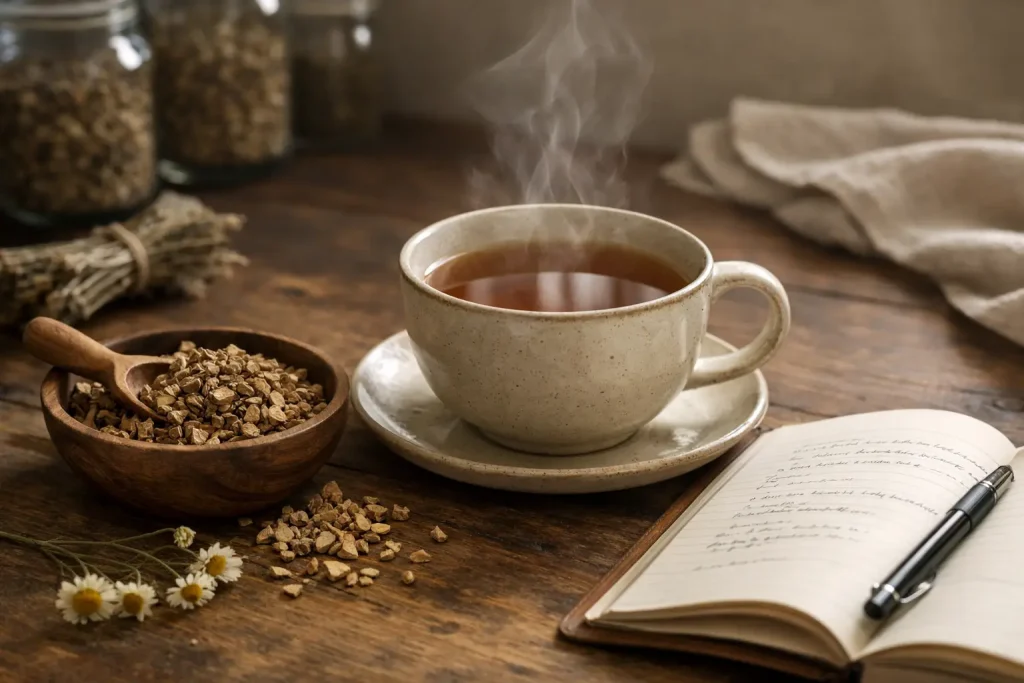
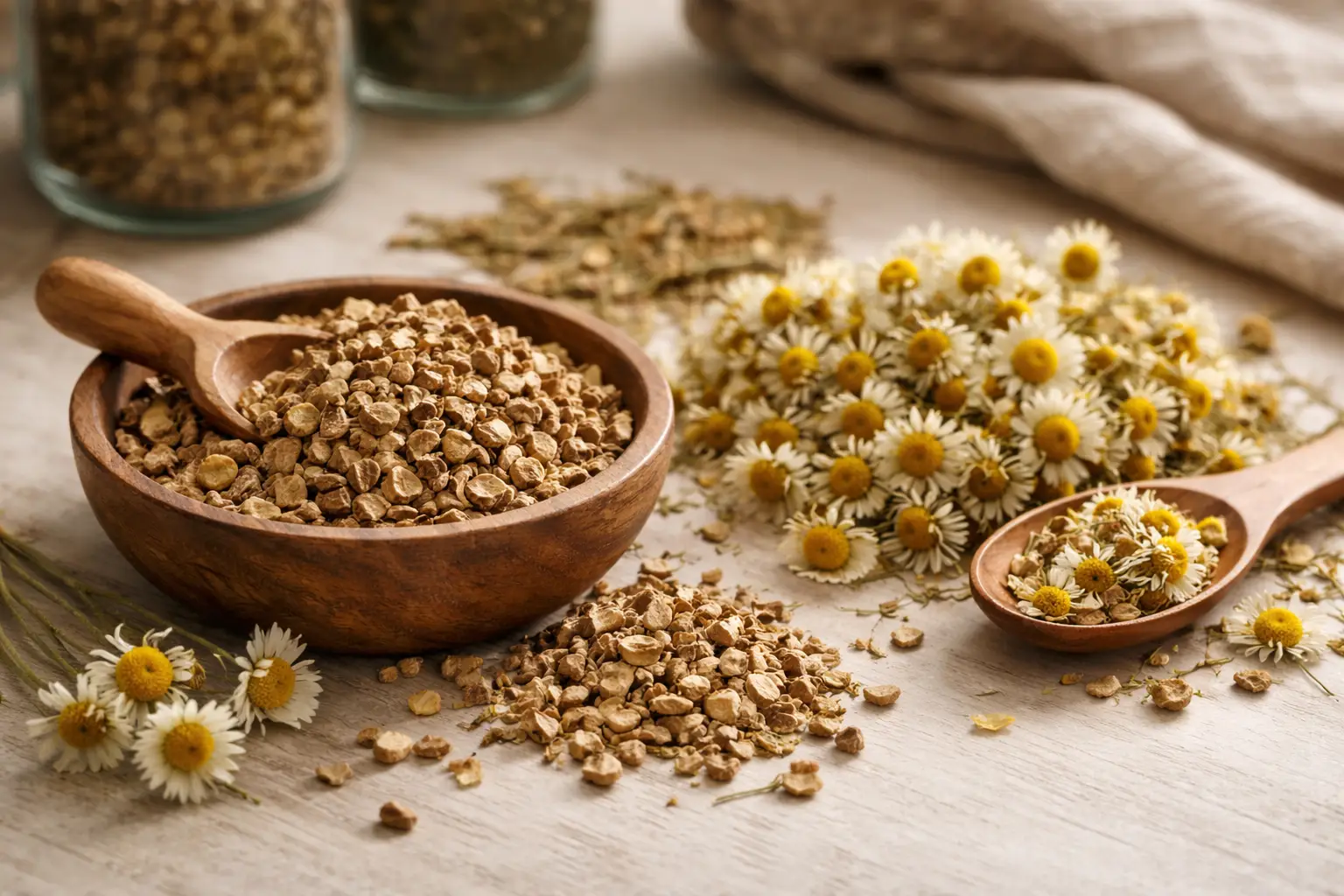 For a straightforward daily mug, use 4 grams of Burdock Root C/S plus 1 gram of chamomile per 350 ml to 360 ml of water. In kitchen terms, that is about 2 teaspoons of burdock root plus 1 teaspoon of chamomile for a 12 ounce cup. Bring the water close to a boil, then either simmer the burdock gently for 8 to 10 minutes before adding chamomile for the last 3 to 4 minutes, or steep everything covered for 12 to 15 minutes if you want a softer result.
This is where people often notice burdock root side effects in the form of brewing mistakes rather than ingredient problems. A weak steep makes burdock seem dusty and unimpressive. A long hard boil can push it into rough, woody territory. Covered brewing matters because roots and flowers lose aromatic detail quickly when left open. If you want a greener, more tea-like profile, a small spoon of nettle leaf c/s can bring freshness without turning the blend sharp.
For a blend intended for a teapot or small batch service, a reliable starting point is 20 grams burdock root, 5 grams chamomile, and 2 to 3 grams of a brightening herb such as mint per liter of water. That gives structure without producing a muddy pot. Try adding Burdock Root C/S to your tea rotation when you want body and an earthy backbone in non-caffeinated blends.
How to Pair Burdock So the Cup Feels Lively
Burdock benefits from contrast. It likes herbs that either lift its aroma, soften its body, or add a more elegant finish. Chamomile is an easy partner because it rounds the cup and gives a familiar floral softness that makes burdock easier to approach. Mint adds freshness. Ginger adds line and warmth. Cinnamon adds sweet structure. Calendula can brighten the visual and aromatic feel of the blend without making it perfumey.
If you are building a cozy evening blend, combine burdock with chamomile and a restrained amount of cinnamon cassia chips. If you want something cleaner and more daytime-friendly, combine burdock with chamomile and peppermint leaf c/s. For a more garden-like herbal profile, a touch of calendula petals gives a soft golden note that looks beautiful in loose tea and keeps the blend from feeling too brown and root-heavy.
The best pairings do not fight the root. They frame it. Burdock is not a showy herb, so it performs best when its partners make the whole cup more readable rather than louder.
Troubleshooting
Burdock root side effects are often blamed when the real culprit is process. If the tea tastes flat, increase your extraction time before increasing your dose. Burdock needs time more than brute force. If the cup tastes too tart, the issue is usually another ingredient in the blend rather than the root itself. Pull back on sharper herbs and let chamomile or cinnamon soften the profile. If sediment shows up in the cup, strain more finely and avoid crushing the root too much during handling.
Aroma loss usually comes from stale storage or uncovered brewing. Root herbs hold longer than delicate petals, but they still fade. Keep the pot covered while steeping and avoid leaving the blend near heat or sun. If your batch develops a strangely aggressive fizz or over-carbonation, that is not typical of plain tea service. It usually happens when burdock is used in sweetened herbal sodas, secondary ferments, or tea concentrates stored improperly. In that case, reduce residual sugar, chill sooner, and use pressure-safe bottles only when you know your process.
If the cup feels too heavy, lighten it with flowers or leaves instead of diluting it into blandness. Try Chamomile Tea Whole Flowers for softness, or use ginger root c/s in a small amount to add movement to the finish.
Storage + Quality
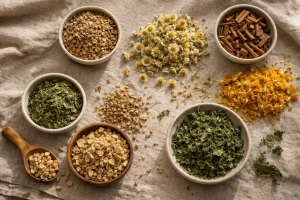 Good root tea begins long before the kettle. Burdock should be stored airtight, away from humidity, heat, and direct light. A clean glass jar with a tight lid works well if it is kept in a dark cupboard. A well-kept root still smells earthy and alive. It should not smell dusty, sour, or strangely sweet in a stale way. Color also tells a story. Healthy cut root usually keeps a natural tan to brown appearance. If it looks faded, uneven, or damp, quality may be slipping.
Because burdock is often blended with lighter botanicals, storage quality becomes even more important. Chamomile, calendula, and mint lose aromatic intensity faster than roots do. Store them separately when possible and blend closer to use. If you are building small-batch tea blends for sale, sampling, or repeated home brewing, keep the floral ingredients especially protected. Try Burdock Root C/S for tea blends that need depth, and add calendula petals only after confirming the whole blend still smells bright and clean.
Safety
From a practical tea-making standpoint, burdock root side effects are best handled with calm, sensible precautions. Keep your language simple and your brewing disciplined. Burdock is a traditional herb, not a magic shortcut. It may support a grounded herbal routine for some people, but that does not mean every strong brew is automatically a better brew. Avoid turning general tea guidance into medical advice. Respect personal sensitivity, family-related botanical caution, and the difference between a moderate cup and a concentrated decoction.
For compliant herbal writing and product education, it helps to use phrases like “traditionally used,” “herbalists often use,” and “may support general wellness routines,” while avoiding disease claims or exaggerated promises. This keeps the conversation accurate, responsible, and useful. If you are formulating approachable blends for everyday customers, nettle leaf c/s and Chamomile Tea Whole Flowers can make root-forward recipes feel more familiar and balanced.
Building a Tea Routine Around Burdock
Burdock works best when it has a job. Use it when you want body, quiet earthiness, and a sense of depth that lighter herbs cannot provide alone. It suits cool-weather cups, reflective evening blends, and formulations designed to feel nourishing without being sweet. It also performs well when you want a tea that feels crafted rather than flashy.
That is the real takeaway behind burdock root side effects. The concern is not usually whether burdock belongs in tea at all. It is whether the herb has been given the right context. Start moderate. Pair intelligently. Store carefully. Brew with patience. If you do that, burdock becomes less of a question mark and more of a dependable, grounding ingredient in the tea maker’s pantry.
FAQ
What are the most common burdock root side effects to think about before tea?
The main things to consider are intensity, personal sensitivity, heavy texture from over-brewing, and poor pairing choices that make the cup feel rough or dull.
Is burdock root better steeped or simmered?
For a fuller extraction, a gentle simmer usually gives better depth than a fast steep. For a softer everyday cup, covered steeping can still work well.
How much burdock root should I use for one mug?
A useful starting point is about 4 grams, or roughly 2 teaspoons, per 12 ounces of water. Add about 1 teaspoon of chamomile if you want a rounder cup.
Can I blend burdock with chamomile?
Yes. Chamomile is one of the easiest partners for burdock because it softens the earthy root note and makes the cup more approachable.
Why does my burdock tea taste muddy?
This usually comes from too much root, too much heat, or poor straining. Reduce the dose slightly and brew more gently.
Can burdock be used in cold preparations?
Yes, but it often tastes more complete with heat extraction first. Many tea makers brew it warm, then chill it for serving.
What herbs pair well with burdock besides chamomile?
Peppermint, ginger, nettle, cinnamon, and calendula all work well when used with restraint.
How do I know if my burdock root is no longer good?
If the aroma is stale, the color looks lifeless, or the material seems damp or dusty, quality has likely declined.