Eucalyptus Benefits for Tea and Herbal Use
Among classic aromatic herbs, eucalyptus benefits stand out for the way they bridge the gap between the apothecary shelf and daily ritual. A handful of cut eucalyptus leaf changes the mood of a cup almost immediately. The scent rises first, cool and resinous, then the infusion settles into something clean, woody, and quietly refreshing. Herbalists have long valued eucalyptus as a plant of atmosphere as much as flavor. It is not a soft floral herb and it is not a kitchen-spice herb either. It belongs to that special category of botanicals that can make a room, a teapot, or a steam bowl feel intentionally prepared.
For tea makers, eucalyptus has real practical value. It can sharpen a blend that tastes dull, lift an herbal steam cup with a more vivid aroma, and add structure when paired with sweeter or greener leaves. Used with restraint, it gives direction. Used carelessly, it can dominate. That balance is what makes it interesting. This guide looks at eucalyptus from a traditional herbal perspective while keeping the process useful for everyday makers who care about ratio, steep time, storage, and sensory quality.
Eucalyptus Benefits in Traditional Herbal Practice
When herbalists talk about eucalyptus benefits, they usually mean more than one thing at once. They mean the penetrating aroma, the freshening character, the feeling of openness created by the vapor, and the plant’s ability to transform a simple preparation into a more purposeful one. In traditional use, eucalyptus leaf often appears in steam preparations, bath sachets, room infusions, and strongly aromatic tea blends where its presence is meant to be noticed without overwhelming the rest of the formula.
Its value is deeply sensory. The first impression is brisk and camphor-like, but a closer tasting reveals wood, mint-like lift, and a faint bitterness that can be useful in blend design. That is why experienced herbalists rarely treat eucalyptus as a solo herb for casual sipping. Instead, they place it where it can lead the top note and let gentler herbs round the middle and finish.
This also explains why cut and sifted leaf works so well for makers. It infuses efficiently, measures consistently, and disperses its aroma fast enough to be practical in tea production, test batching, and small seasonal blends.
What Eucalyptus Leaf Tastes Like in a Cup
A good eucalyptus infusion should smell vivid before it tastes strong. The aroma reaches the nose first, almost like stepping into cool morning air near damp leaves and warm wood. In the cup, the profile is cleaner than many people expect. It can be slightly bitter if overdone, but in a balanced formula it reads as brisk, dry, and refreshing rather than harsh.
Peppermint is one of the easiest companions because it reinforces freshness while softening the sharper edges. Try adding peppermint leaf c/s when you want a cooler, cleaner finish that still feels bright and drinkable. Tulsi is another excellent partner because it brings body and a clove-like warmth. Try adding tulsi leaf c/s if you want a rounder, more layered aromatic blend with a calmer finish.
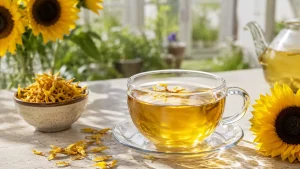
If you are building around eucalyptus, think of it as the lead singer, not the full choir. Chamomile can soften it. Ginger can warm it. Calendula can lighten the profile visually and texturally. Spearmint can make it more relaxed and sweet compared with peppermint’s sharper edge.
How to Brew Eucalyptus Leaf Well
The easiest way to miss eucalyptus benefits is to use too much leaf and steep too long. This herb performs better with restraint. For a single cup, start with:
1.5 to 2 grams eucalyptus leaf c/s (about 1 to 1 1/2 teaspoons)
1 to 1.5 grams peppermint leaf c/s (about 1 to 1 1/2 teaspoons)
240 ml hot water at about 90 to 95°C (194 to 203°F)
Steep 5 to 7 minutes, covered
For a one-liter test batch, use:
6 to 8 grams eucalyptus leaf c/s (about 4 to 6 teaspoons)
4 to 6 grams peppermint leaf c/s (about 4 to 6 teaspoons)
1 liter hot water at about 90 to 95°C
Steep 6 minutes covered, then strain
Covering the vessel matters. Aromatic herbs lose their most interesting compounds into the air quickly. A covered steep keeps the top notes in the liquid where you want them. For stronger aromatic impact, increase peppermint first before raising eucalyptus too aggressively. This is one of the simplest ways to preserve eucalyptus benefits without pushing the blend into bitterness.
If you want more warmth, add ginger root c/s in a small amount, around 0.5 gram per cup. It deepens the middle of the flavor and makes the blend feel more rounded, especially in colder weather.
Everyday Applications Beyond a Plain Tea
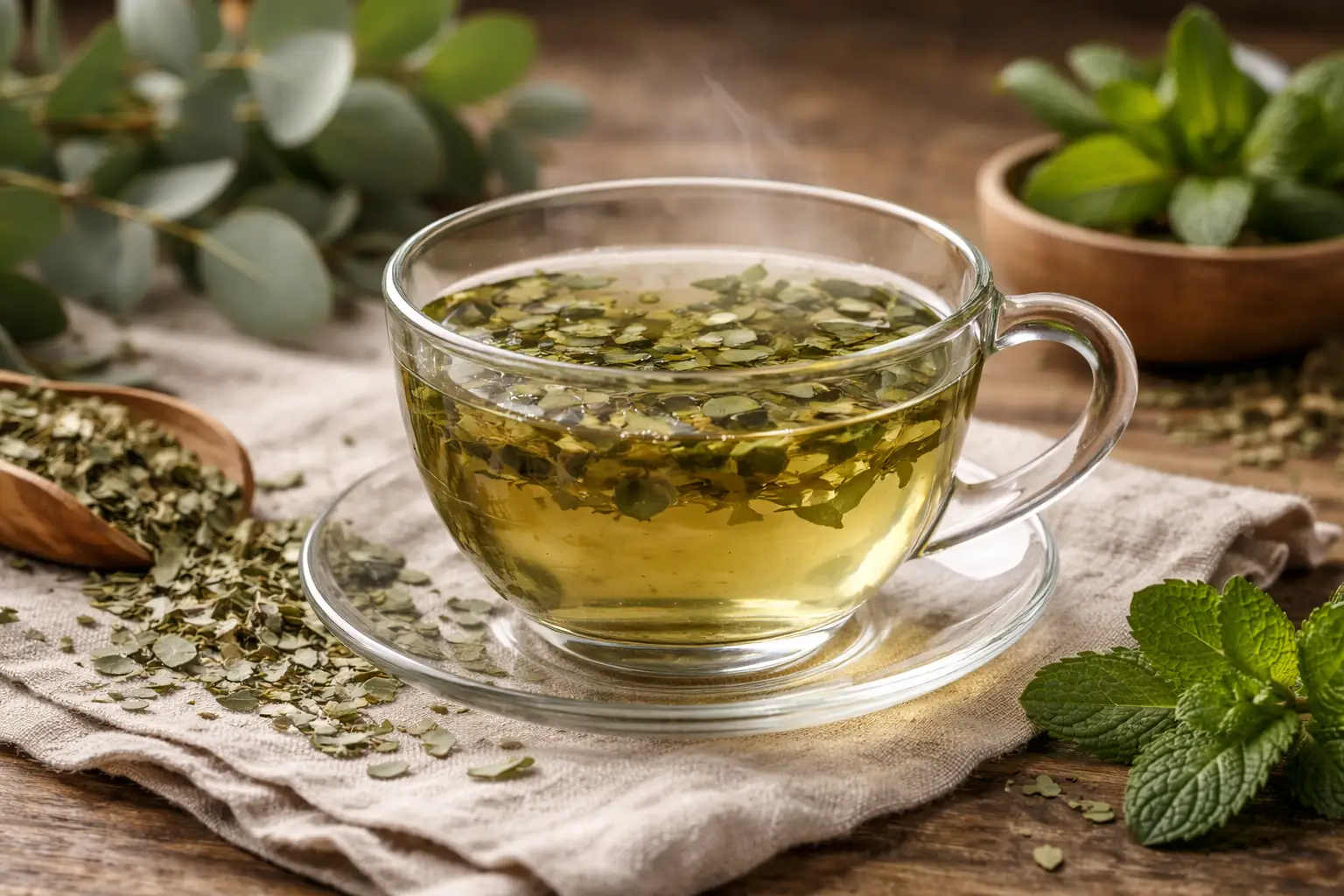 Eucalyptus is often most useful when it is not asked to do everything alone. A concentrated infusion can become the base for several non-medical, everyday preparations. Tea makers often use it in an aromatic sipping blend, a steam cup for household ritual, or a light herbal syrup meant for dilution into still or sparkling water.
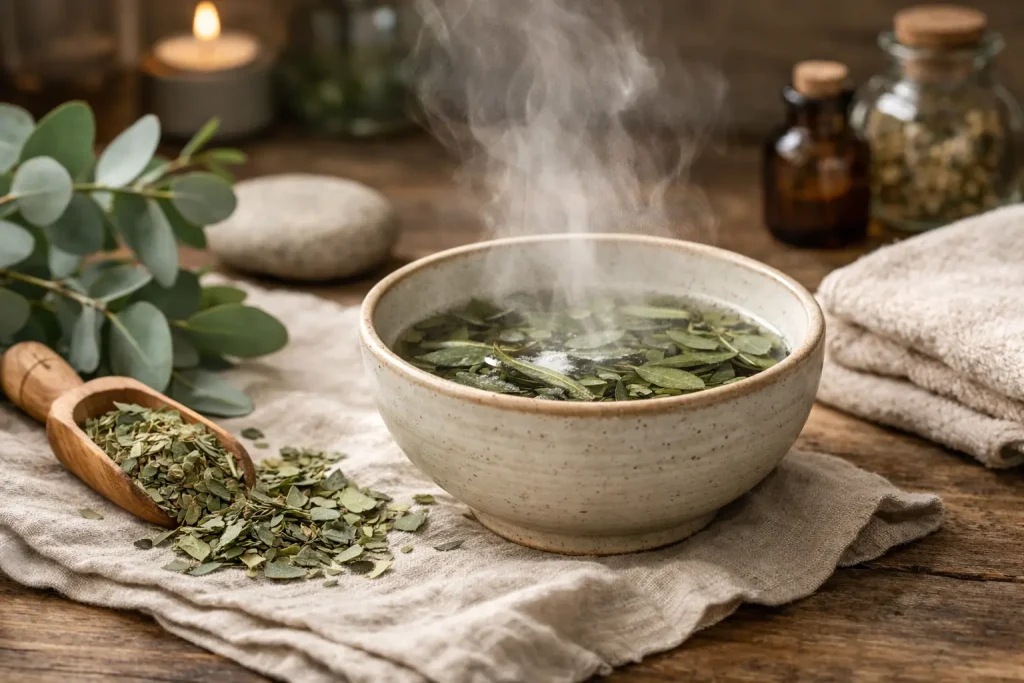
For a simple steam cup, place 2 grams eucalyptus leaf c/s and 1 gram peppermint leaf c/s in a heat-safe bowl and pour over 300 ml freshly heated water. Let the vapor rise naturally. This is less about drinking and more about creating a focused herbal moment with scent and warmth. For a gentler aromatic profile in the room, add chamomile flowers whole to soften the edge and make the overall experience less piercing.
For a diluted herbal syrup base, brew a strong infusion first, then sweeten lightly and chill before mixing into cold water. Eucalyptus works best here in very small amounts because cold serving increases the perception of sharpness. A little goes much further than most people think.
In bath sachets or shower bundles, eucalyptus leaf pairs especially well with mint and warming roots. The plant’s traditional appeal has always included atmosphere, and that is part of why eucalyptus benefits continue to feel relevant in modern herbal craft.
Building Better Blends with Complementary Herbs
Aromatic herbs need architecture. If eucalyptus provides lift, another herb must usually provide cushion. This is where blending becomes less theoretical and more practical.
Peppermint gives a bright, cooling line. Try adding peppermint leaf c/s when you want the blend to feel sharper, greener, and more invigorating. Spearmint is gentler and sweeter. Try adding spearmint leaf c/s for a softer mint note that makes eucalyptus feel more approachable in larger tea blends.
Tulsi adds body and quiet spice. Try adding tulsi leaf c/s when the formula needs depth without heaviness. Ginger adds warmth and persistence on the finish. Try adding ginger root c/s to turn a cool aromatic blend into something more balanced for evening or cold-weather service. Calendula is useful visually and texturally. Try adding calendula petals for a golden accent and a softer, more handcrafted look in loose tea jars. Cinnamon can also work in tiny amounts. Try adding cinnamon cassia chips if you want a cozier edge in a seasonal blend, but keep it restrained so the woodiness does not muddy the freshness.
The best eucalyptus benefits in blended tea come from contrast. Fresh against warm. Dry against sweet. Sharp against soft. That interplay is what makes a formula memorable instead of merely fragrant.
Troubleshooting Common Blend Problems
Even good herbs produce disappointing results when ratios or handling are off. If you are working with eucalyptus in tea, concentrate, or a lightly sparkling herbal beverage, these are the problems you will most likely see.
Flat flavor usually means the top notes escaped during steeping or storage. Cover the vessel while steeping, and make sure your jar seals tightly afterward. Flatness can also come from stale mint, not only weak eucalyptus.
Too tart usually points to an overly aggressive supporting ingredient, especially if you paired the blend with fruit, vinegar, or a sour base. Eucalyptus itself is not tart, so rebalance the formula by reducing acidic components and bringing in a softer leaf like chamomile flowers whole or spearmint leaf c/s.
Over-carbonation becomes an issue only if you use the infusion in a fermented or bottled sparkling format. Keep sugars measured, chill thoroughly before sealing, and burp test bottles if needed. In that setting, eucalyptus benefits are usually strongest at low percentages, not high ones.
Sediment is normal with cut herbs, but excessive sediment can make a polished blend feel rough. Use a finer mesh strainer or filter bag, especially for concentrates and syrups.
Aroma loss is the clearest sign of either age, heat exposure, or repeated air contact. If the jar smells weak when first opened, the finished tea will rarely recover the missing intensity.
Storage + Quality
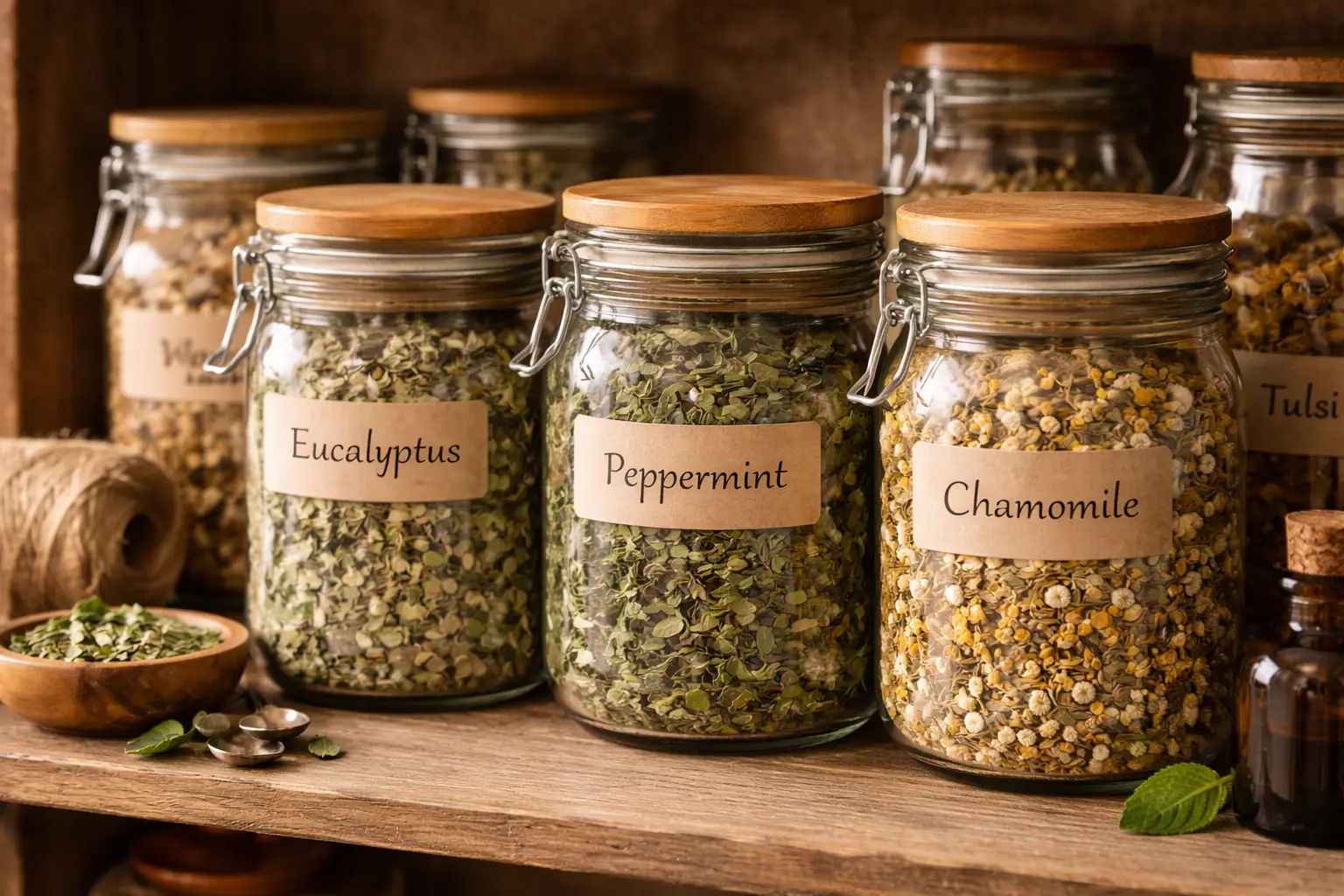 Because this is an aroma-driven herb, storage is not a minor detail. It is the difference between a crisp, useful botanical and a dull one. Keep eucalyptus leaf in an airtight container away from humidity, heat, and direct light. A cool shelf in a dry room is far better than a warm area near the stove or kettle.
Quality shows up first in scent. Fresh leaf should smell distinct as soon as the jar opens. If the aroma is faint, dusty, or flat, the tea will follow the same path. Color also matters. A good lot usually keeps a natural green to olive tone with some silvery variation depending on cut and handling. Excess browning can suggest age or poor storage.
Eucalyptus benefits depend heavily on preserved volatile aroma, so do not buy or blend more than you can realistically rotate through while fresh. If you are batching for retail or regular household use, date your jars and review them by scent before each refill. For visual lift in a jar blend, calendula petals can help, but appearance should never be used to disguise stale aromatic leaf.
Safety
Eucalyptus has a strong identity, and strong herbs call for measured use. In tea work, smaller amounts usually produce better flavor and a more elegant aromatic experience. This article discusses traditional herbal uses and beverage applications, not medical treatment. Herbalists often use eucalyptus for its distinctive aromatic qualities, but it should not be presented as a cure or as a substitute for professional care.
Avoid exaggerated wording. Say that eucalyptus is traditionally used in aromatic herbal practice. Say that it may support a refreshing sensory experience. Say that many makers enjoy it in tea, steam preparations, and household rituals. Those statements are accurate, useful, and compliant.
If you are blending for sale, label clearly, keep formulas conservative, and make sure your ingredient descriptions stay focused on flavor, aroma, preparation style, and tradition rather than disease-related claims.
Conclusion
The enduring appeal of eucalyptus benefits comes from precision. This is not an herb that asks to be piled into a blend by the handful. It works best when measured with intent, steeped with care, and supported by herbs that either soften, warm, or brighten its profile. In a cup, it brings atmosphere. In a steam bowl, it creates ritual. In a tea maker’s formula, it adds lift and direction that few other leaves can match in quite the same way.
Used alongside peppermint, tulsi, ginger, chamomile, spearmint, calendula, or a touch of cinnamon, eucalyptus becomes more versatile than its strong first impression suggests. Keep the leaf fresh, protect the aroma, and think in layers rather than extremes. That is usually where the best results live.
FAQ
What are eucalyptus benefits in herbal tea?
Eucalyptus benefits in herbal tea are mostly about aroma, freshness, and the clean, cooling character the leaf brings to a blend. Herbalists traditionally value it for sensory and atmospheric use.
How much eucalyptus leaf should I use per cup?
Start with 1.5 to 2 grams, or about 1 to 1 1/2 teaspoons, per 240 ml cup. That is usually enough for a clear aromatic profile without overwhelming bitterness.
Does eucalyptus pair well with mint?
Yes. Peppermint creates a sharper, brisker blend, while spearmint makes the cup gentler and slightly sweeter.
Can I use eucalyptus in a steam cup instead of drinking it?
Yes. Many people use it in hot water bowls or steam cups for a strongly aromatic household ritual. Covered infusion and fresh leaf make a noticeable difference.
Why does my eucalyptus tea taste too strong?
You likely used too much leaf or steeped too long. Reduce the eucalyptus first, then shorten the steep to 5 minutes and keep the vessel covered.
What herbs soften eucalyptus in a blend?
Chamomile, tulsi, spearmint, and calendula all help soften the sharper edges. Ginger and cinnamon add warmth if the blend feels too cold or thin.
How do I know if my eucalyptus leaf is still fresh?
Open the jar and smell it. Fresh eucalyptus should have a distinct, lively aroma. If it smells dull or dusty, quality has already declined.
Can I use eucalyptus in sparkling herbal drinks?
Yes, but in very small amounts. Its aroma can become sharper in cold, carbonated formats, so keep the formula restrained and balanced.