Irish Moss vs Sea Moss: Are They the Same Thing?
If you have ever searched for seaweed supplements, you have probably run into the question of Irish moss vs sea moss and wondered whether these two names refer to the same plant. The short answer is: sometimes yes, sometimes no — and the difference matters more than most people realize. These terms are used interchangeably in wellness circles, on product labels, and across social media, which creates genuine confusion for anyone trying to make an informed purchase. Understanding what each name actually refers to, where each species grows, how they differ in appearance and nutrition, and which one is best suited to your goals will help you shop smarter and get more out of your herbal routine. This guide breaks down the botany, the traditional uses, and the practical differences so you can stop guessing and start choosing with confidence.
What Is Irish Moss?
Irish moss is the common name for Chondrus crispus, a red algae species native to the rocky Atlantic coastlines of Ireland, the British Isles, and the northeastern United States. It has been harvested for centuries in Ireland and coastal Canada, where communities traditionally used it to thicken soups, make puddings, and support respiratory health during cold months. The plant grows in fan-like fronds ranging from deep purple to greenish-yellow depending on sun exposure, and it anchors itself firmly to rocks in cold, nutrient-rich tidal zones.
Chondrus crispus is the seaweed that Irish immigrants brought knowledge of to the Caribbean during the 19th century, where local communities adapted it into a popular wellness drink. That cultural migration is part of what fuels today’s naming confusion.
What Is Sea Moss?
The term “sea moss” is a broader, more loosely applied label. In Caribbean and contemporary wellness contexts, it most often refers to Gracilaria species — a different genus of red algae that grows in warmer Atlantic and Pacific waters. Gracilaria is the “sea moss” you typically see sold as golden or yellow gel, pool-grown in places like Saint Lucia, Jamaica, and parts of Latin America.
Some sellers also use “sea moss” to mean Chondrus crispus itself, adding another layer to the Irish moss vs sea moss debate. This inconsistency in labeling is widespread enough that you genuinely cannot rely on a product name alone — you must look at the Latin species name.
Key Botanical Differences Between the Two
The most important distinction is genus. Chondrus crispus and Gracilaria are related but belong to different taxonomic families. Here is how they compare across several dimensions:
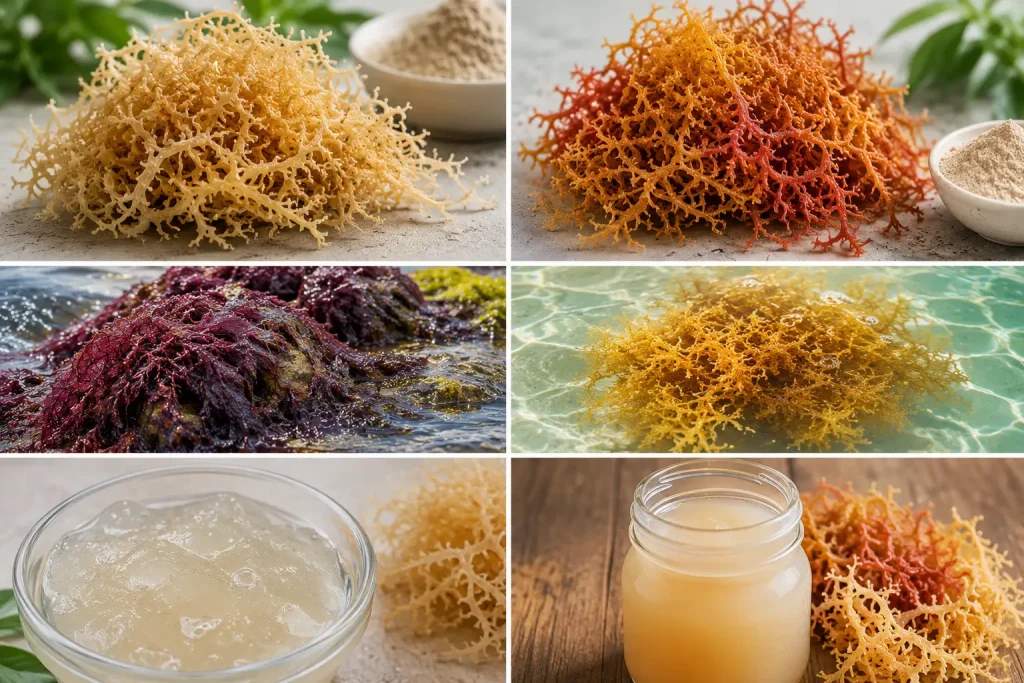
Appearance: Chondrus crispus has flat, fan-shaped fronds, often dark purple or reddish-brown. Gracilaria species have thinner, more cylindrical or string-like branches and typically appear golden or light tan when sun-dried.
Habitat: Irish moss grows on cold-water rocks in the North Atlantic. Gracilaria thrives in warmer, shallower waters and is widely cultivated in open-water farms or pools.
Carrageenan content: Chondrus crispus contains higher concentrations of carrageenan, the sulfated polysaccharide that gives it superior gelling power and is the primary active compound studied in research. Gracilaria contains agar rather than carrageenan, which behaves differently as a thickener.
Mineral profile: Both are mineral-rich, but the specific profile varies with growing conditions, water quality, and harvesting practices.
Irish Moss vs Sea Moss: Traditional Uses Compared
When comparing Irish moss vs sea moss through a traditional lens, the applications overlap significantly even though the species differ. In Irish folk medicine, Chondrus crispus was traditionally used for respiratory complaints, digestive soothing, and as a nourishing food during illness. Caribbean traditions applied Gracilaria-based preparations similarly — as a strengthening tonic, a digestive aid, and a base for nourishing drinks.
Both have been used for skin health topically and consumed as food-grade gels for gut support. The overlap in traditional use across different cultures and species reflects shared nutritional profiles rather than any botanical identity.
Nutritional Profile: Which Is More Nutrient-Dense?
Both types of seaweed deliver a broad spectrum of minerals including iodine, potassium, magnesium, calcium, and trace elements. They also provide dietary fiber, amino acids, and antioxidant compounds. However, Chondrus crispus is generally considered to have a richer carrageenan content and a more concentrated mineral density, partly because it grows in cold, nutrient-dense Atlantic waters.
Gracilaria grown in controlled pool environments may have a lighter nutritional profile depending on the water source and growing conditions. Wild-harvested and ocean-grown varieties of either species will typically outperform pool-farmed alternatives in mineral content.
For those seeking authentic Chondrus crispus, Hatton Naturals offers Organic Irish Moss (Chondrus chamissoi), a certified organic cut-and-sifted seaweed that delivers the real plant — not a pooled Gracilaria substitute.
How to Identify What You Are Actually Buying
Given the labeling inconsistency in the market, use these steps to verify what you are purchasing:
Check the Latin name: Any reputable supplier will list the species name. If a product simply says “sea moss” without a genus and species, ask before buying.
Look at color and texture: Authentic Chondrus crispus dried product is darker — often reddish-brown or dark purple. Bleached or golden sea moss is almost always Gracilaria.
Ask about sourcing: Wild-harvested Atlantic-sourced products are more likely to be true Chondrus crispus. “Pool-grown” is a strong indicator of Gracilaria.
Read the ingredient list: If the product is a blend or gel, check whether carrageenan is listed or whether agar is the active thickener.
Can You Combine Irish Moss With Other Seaweeds?
Absolutely. Many traditional herbalists and modern wellness practitioners combine seaweeds for a broader nutritional base. Irish moss pairs exceptionally well with bladderwrack, which adds fucoidan-rich brown algae support and additional iodine. This combination is so popular it has become a standard in herbal practice.
Hatton Naturals carries Organic Bladderwrack (cut and sifted) that works well alongside Irish moss preparations. Many customers order both together to create a more complete seaweed blend at home.
Which Should You Choose?
The choice between Irish moss vs sea moss comes down to your priorities. If you want the plant with the longer documented history in Western herbal traditions, higher carrageenan content, and a more concentrated cold-water mineral profile, Chondrus crispus is your best option. If you simply want a versatile, affordable sea vegetable gel for smoothies and recipes, Gracilaria is a reasonable choice — just know what you are getting.
For culinary gelling, both will thicken recipes. For targeted herbal use with a specific phytochemical focus, Chondrus crispus is the more researched and traditionally grounded option.
Safety and Precautions
Both Irish moss and sea moss are generally considered food-safe for most adults when consumed in reasonable culinary or supplement amounts. Because both contain iodine, individuals with thyroid conditions — particularly hyperthyroidism or those on thyroid medication — should consult a qualified healthcare provider before adding significant quantities to their routine. Pregnant and breastfeeding individuals should also seek professional guidance. Start with small amounts to assess tolerance, especially if you are new to seaweed-based foods. Quality matters: always source from certified organic suppliers who test for heavy metals, as seaweeds can concentrate environmental contaminants from polluted waters.
Frequently Asked Questions
Is Irish moss vs sea moss really just a naming issue?
Partly, but not entirely. “Sea moss” is sometimes used to mean Chondrus crispus (true Irish moss) and sometimes to mean Gracilaria, which is a different genus. The naming confusion is real, but the botanical difference is also real and affects the product’s phytochemical profile.
Which has more carrageenan — Irish moss or sea moss?
Chondrus crispus contains carrageenan as its primary structural polysaccharide. Gracilaria contains agar, not carrageenan. If carrageenan content is important to you, Chondrus crispus is the right choice.
Can I use either one to make a gel?
Yes. Both will form a gel when soaked and blended. However, the texture and gelling strength differ — Chondrus crispus produces a firmer, more cohesive gel due to its higher carrageenan content, while Gracilaria-based gels tend to be slightly lighter.
Is pool-grown sea moss inferior to wild-harvested Irish moss?
Pool-grown Gracilaria may have a lighter mineral profile than wild-harvested Chondrus crispus because pool environments do not replicate the full mineral exposure of open ocean water. Wild-harvested, certified organic seaweed is generally preferred for maximum nutritional value.
Do Irish moss and sea moss taste the same?
Both have a mild ocean flavor that most people find easy to mask in smoothies, teas, or recipes. Chondrus crispus can have a slightly stronger mineral note. Once made into a gel, the flavor of both is very subtle.
Can I combine both types of seaweed?
Yes. Combining seaweeds is a common practice in herbal wellness. Many people blend Irish moss with bladderwrack or kelp to access a broader range of marine nutrients. There is no known interaction concern with combining these food-grade sea vegetables.
Where can I find authentic Irish moss (Chondrus crispus)?
Look for products that list the Latin species name on the label. Hatton Naturals sells Organic Irish Moss and other certified organic seaweeds. You can also browse the full Hatton Naturals shop for complementary sea vegetables.
How much should I use daily?
Traditional and culinary use typically involves one to two tablespoons of prepared gel per day. There is no universal standardized dose. Start small, observe how your body responds, and adjust as needed with the guidance of a healthcare professional if you have any underlying health conditions.
Conclusion
The debate around Irish moss vs sea moss is more than a branding quirk — it reflects real botanical and nutritional differences that matter when you are choosing a supplement. Knowing the species name, sourcing origin, and processing method lets you make a genuinely informed choice. Whether you opt for Chondrus crispus or Gracilaria, quality and transparency from your supplier are the most important factors in any seaweed purchase.