Eucalyptus Tea Benefits: A Refreshing Herbal Brew to Explore
The appeal of eucalyptus tea benefits starts with the cup itself: bright aroma, cooling lift, and a clean herbal profile that feels both rustic and refined. Long before herbal beverages became a modern wellness trend, eucalyptus leaves were valued in traditional herbal practice for their penetrating scent and invigorating character. In the teacup, that translates into something memorable. It is not heavy like a root infusion, not as floral as blossom-based blends, and not as sharp as some spice-led formulas. Instead, it offers a crisp, camphor-like freshness that herbalists often use when they want a tea to feel open, airy, and clear.
For tea makers, eucalyptus also brings technical advantages. Its aroma holds up well in dry blends, it plays nicely with citrusy and grassy notes, and a little goes a long way. That makes it useful in both simple single-herb cups and more layered formulas built around leaves, roots, and select flowers. Whether you are exploring a home herbal routine or developing small-batch tea blends, eucalyptus is worth approaching with care and curiosity. The key is balance. Brew it too hard and it can feel aggressive. Blend it thoughtfully and it becomes refreshing, elegant, and surprisingly versatile.
What makes eucalyptus leaf stand out in the cup
Eucalyptus leaf has a strong identity. Even in dry form, the cut leaf releases a penetrating fragrance that can fill a blending table as soon as the pouch is opened. In hot water, those aromatic compounds rise quickly, which is one reason eucalyptus feels so immediate in an infusion. You notice it before you even sip it.
From a sensory standpoint, eucalyptus sits between green, resinous, and cooling. It is often described as brisk, woodsy, and slightly medicinal in the old herbal sense of the word, meaning purposeful and concentrated rather than unpleasant. That character is exactly why herbalists rarely treat it as a background herb. It usually works best as a lead note or a strong accent.
Many eucalyptus tea benefits are tied to that aromatic intensity. A well-brewed cup feels clarifying and fresh, especially when served warm and inhaled slowly before drinking. In practical tea-making terms, eucalyptus also gives structure to lighter blends that might otherwise taste thin. It can add lift to grassy herbs, definition to mellow roots, and a clean top note to richer formulas.
If you are building a blend from the Hatton Naturals catalog, start with Eucalyptus Leaf C/S when you want a bold aromatic backbone that still reads as herbal rather than perfumey.
Eucalyptus tea benefits for daily herbal routines
When people talk about eucalyptus tea benefits, they are usually responding to the tea’s sensory effect as much as its traditional herbal reputation. The cup feels vivid. It wakes up the palate. It brings a cooling brightness that can make a routine feel cleaner and more intentional. Herbalists have traditionally used aromatic leaves like eucalyptus when they wanted a brew that felt open, fresh, and enlivening.
In daily use, eucalyptus tea often fits best as a morning or midday infusion rather than a sleepy evening cup. Its personality is lively. It pairs especially well with quiet routines that involve steam, a slow breakfast, journaling, or a short reset between tasks. The aroma is part of the experience, so it is worth using a covered mug or teapot that captures the volatile notes instead of letting them escape too fast.
For beverage makers, another of the practical eucalyptus tea benefits is economy. Because the herb is assertive, you do not need large amounts to create presence in the blend. That makes it useful for premium formulations where control matters. A small percentage can shift a tea from generic herbal to distinctive.
To soften the sharper edges without losing freshness, try Organic Lemongrass C/S for a brighter, more rounded cup with a clean citrus-grass finish.
Flavor profile and smart blending ideas
Eucalyptus tastes best when paired with herbs that either round its edges or echo its freshness. On its own, it can be compelling, but many drinkers prefer it in a blend where the resinous top notes are supported by something softer underneath.
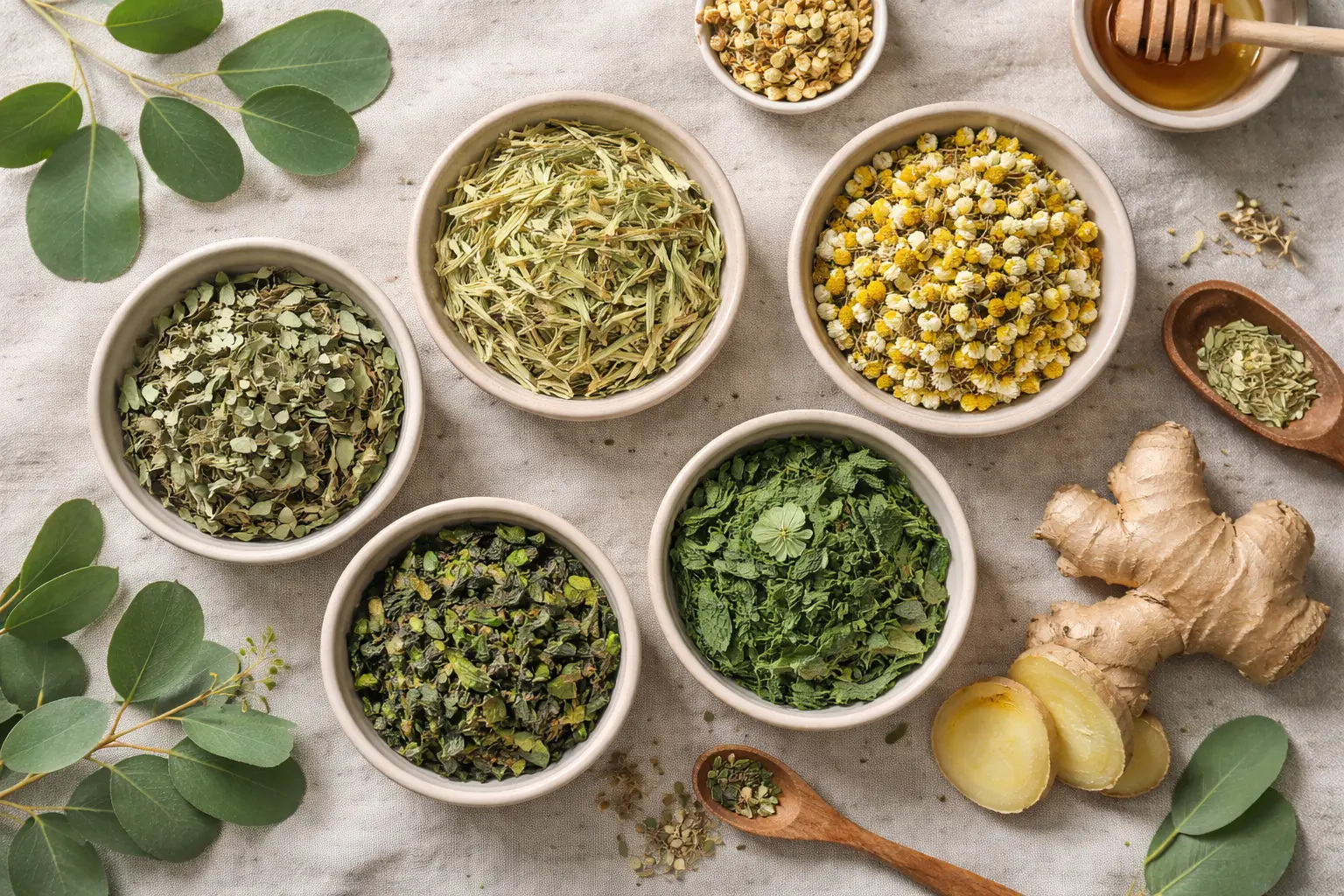 Lemongrass is one of the easiest partners because it brings a light citrus tone without the oily sharpness of peel. Peppermint can intensify the cooling sensation, so use it carefully. Ginger can provide warmth and body, which creates a pleasing contrast. Chamomile smooths the blend and softens the edges. Nettle adds a green, earthy base that makes the cup feel fuller and more grounded.
This is where eucalyptus tea benefits become especially interesting for tea makers. The herb is not just a flavor. It behaves like a structural note in formulation. It can sharpen a blend that tastes dull, or bring aromatic life to a formula that feels flat in the nose but acceptable on the palate.
A simple starting blend for a refreshing daily cup could be:
2 parts eucalyptus
3 parts lemongrass
1 part chamomile
For a greener profile:
2 parts eucalyptus
2 parts nettle
1 part peppermint
For a warmer profile:
2 parts eucalyptus
2 parts lemongrass
1 part ginger
If you want extra depth in a cooling blend, try peppermint leaf in a restrained amount so the cup stays balanced rather than overpowering. For a softer middle note, add chamomile flowers to round the aroma and improve the finish. For more body, use nettle leaf to give the infusion a greener backbone. For gentle warmth, work in ginger root c/s to contrast the cooling top notes.
How to brew eucalyptus tea with balanced strength
A good eucalyptus infusion should smell vivid but taste clean. Overdo the leaf or the steeping time and the cup can become harsh, almost too assertive. Underdo it and you lose the signature character that makes the herb worth brewing in the first place. Getting the ratio right matters.
For a single mug:
Use 2 to 3 grams of Eucalyptus Leaf C/S per 240 ml (8 oz) of water. That is about 1 to 1 1/2 teaspoons, depending on cut size and leaf density. If blending with softer herbs, keep eucalyptus at around 30 to 40 percent of the total formula.
For a 1-liter teapot:
Use 8 to 10 grams total herbs, with eucalyptus making up 3 to 4 grams. In teaspoon terms, that is roughly 4 to 6 teaspoons combined herbs, with eucalyptus taking 1 1/2 to 2 teaspoons of that amount.
Water temperature:
90 to 96°C (194 to 205°F)
Steeping time:
Covered, 5 to 7 minutes for a fresher cup
Covered, 8 minutes for a stronger aromatic profile
The phrase eucalyptus tea benefits means more when the brewing method respects the herb. Cover the vessel while steeping. This is not optional if you care about aroma. Those fragrant compounds dissipate quickly into the air, and an uncovered cup loses some of the very qualities that make eucalyptus distinctive.
For a cleaner finish, strain promptly. Do not leave the leaf sitting in the liquid for long service unless the blend is intentionally mild. If serving iced, brew slightly strong, then dilute over ice rather than oversteeping to compensate.
For a crisp citrus-herbal profile, build your base around Organic Lemongrass C/S and let eucalyptus carry the aromatic top note.
Small-batch blending and production-minded tips
If you are developing tea blends for gifting, retail sampling, or menu testing, eucalyptus rewards careful batching. Start with small trials at 25 to 50 grams of finished blend. Because the herb is potent, even a 5 percent adjustment can noticeably change the final cup.
Weigh first, then convert to volume only after you know how the specific cut behaves in your workspace. Eucalyptus leaf can vary in fluffiness and settle differently across lots. Grams will always give you more repeatable results than teaspoons when scaling formulas. Once you settle on the taste, make a quick bench note with percentages, steep time, water temperature, and sensory outcome.
One of the more practical eucalyptus tea benefits for a formulator is that it announces itself early in tasting. You do not need a long sensory panel to know whether the level is correct. If the aroma feels dominant before the cup reaches your lips, consider dialing the percentage down. If the finish drops off too fast, support it with a fuller herb rather than adding more eucalyptus.
For a brighter, tea-room style blend, try lemon verbena leaf for a soft citrus note that stays elegant. For a more artisanal herbal profile, use calendula petals as a visual accent and mild blending companion.
Troubleshooting eucalyptus tea blends
Even good herbs can produce disappointing tea when the process is off. This matters because eucalyptus tea benefits are easiest to appreciate in a cup that is clean, balanced, and aromatic.
Flat flavor
If the tea smells promising but tastes dull, the issue is often dilution or stale supporting herbs. Increase total herb weight slightly before extending steep time. Also check whether eucalyptus is paired with ingredients that mute rather than support it.
Too tart
Eucalyptus itself is not usually tart. If the blend reads too sharp, look at companion herbs, water quality, or overconcentration. Reduce the brighter components and test with slightly cooler water.
Over-carbonation
If you are using the blend for a tea base in fermented beverages or soda-style experiments, too much residual sugar or bottling too early can create over-carbonation. Strain well, cool fully before bottling, and monitor fermentation carefully. Eucalyptus is aromatic, but it is not a fix for process imbalance.
Sediment
Leaf dust, broken herbs, or aggressive agitation can leave sediment in the cup. Use a fine strainer and avoid crushing the blend during handling. Sediment also becomes more noticeable in iced service.
Aroma loss
Aroma loss usually comes from uncovered steeping, excessive age, or poor storage. Cover the infusion, store herbs properly, and buy in quantities that match realistic turnover.
If your blend feels one-dimensional, try chamomile flowers or ginger root c/s in modest amounts to restore depth without crowding the eucalyptus.
Storage + Quality
Storage determines whether your blend remains lively or fades into something dull and dusty. Eucalyptus is aromatic, so poor handling shows up quickly. Keep it airtight, away from humidity, heat, and direct light. A good pouch or sealed glass jar stored in a cool cabinet will preserve far more character than a loosely closed bag kept near the stove.
Color and scent are your first quality cues. The leaf should still look recognizably green to olive-green, not uniformly brown and tired. The aroma should be evident as soon as the container is opened. If you have to search for the scent, the material is likely fading. That matters because eucalyptus tea benefits depend heavily on those bright aromatic qualities.
For blended products, check not only the eucalyptus but also the softer companions. Chamomile can go papery. Lemongrass can lose brightness. Nettle can become dull and grassy in a stale way rather than a fresh one. Rotate stock with discipline and label your jars with fill date and target use window.
For blend integrity over time, keep Eucalyptus Leaf C/S and Organic Lemongrass C/S in separate airtight containers until batching day whenever possible.
Safety
Eucalyptus is a strong herb, and strong herbs deserve measured use. This article is about traditional herbal beverage practice, not medical advice. Eucalyptus tea benefits are best understood as part of sensory herbal use and traditional routine-building, not as a promise to treat or prevent disease.
Use culinary amounts and start modestly, especially if the flavor is new to you. More is not better here. A well-balanced cup is usually more enjoyable and more practical than an overly concentrated infusion. If you are pregnant, nursing, taking medication, managing a health condition, or preparing herbs for someone with heightened sensitivity, it is wise to consult a qualified professional before using unfamiliar herbs regularly.
Keep the material clearly labeled and out of reach of children. Do not confuse cut eucalyptus leaf for tea with concentrated essential oil products, which are entirely different in strength and use.
In compliant herbal language, eucalyptus may support a refreshing tea ritual, and herbalists often use it for its aromatic qualities. That is the useful frame.
Conclusion
The best eucalyptus tea benefits come through when the herb is handled with restraint, freshness, and a good sense of proportion. In the cup, eucalyptus offers a rare combination of brightness, depth, and aromatic lift. It can stand alone in a focused infusion, but it often shines even more in thoughtful blends with lemongrass, nettle, chamomile, peppermint, ginger, or lemon verbena.
For home brewers, it adds character to a simple daily ritual. For tea makers, it offers a powerful formulation tool that can sharpen a profile and make a blend memorable with relatively little material. Brew it covered, measure it carefully, store it well, and pair it with herbs that support rather than compete. Done right, eucalyptus becomes more than a novelty. It becomes one of those herbs you return to when you want a cup that feels clean, vivid, and intentional.
FAQ
What do eucalyptus tea benefits usually refer to?
Eucalyptus tea benefits usually refer to the tea’s refreshing aroma, cooling flavor profile, and its traditional use in herbal routines that emphasize a clean, invigorating cup.
What does eucalyptus tea taste like?
It tastes bright, resinous, cooling, and slightly woodsy. When balanced well, it feels fresh rather than harsh.
How much eucalyptus should I use per cup?
A good starting point is 2 to 3 grams per 240 ml of water, or about 1 to 1 1/2 teaspoons depending on cut size.
Should eucalyptus tea be brewed covered?
Yes. Covered steeping helps preserve the aromatic compounds that define the character of the tea.
What herbs pair well with eucalyptus?
Lemongrass, peppermint, chamomile, nettle, ginger, and lemon verbena all pair well when used in balanced proportions.
Can I drink eucalyptus tea iced?
Yes. Brew it slightly stronger than usual, strain promptly, and pour over ice for a bright and refreshing result.
How do I know if my eucalyptus leaf is no longer fresh?
Look for fading color and weak aroma. If the leaf smells dull when opened, it has likely lost much of its character.
Is eucalyptus tea a medicine?
No. It is best approached as an herbal beverage used in traditional practice and everyday sensory routines, not as a medical treatment.