Aronia Berry Chokeberry Flavor, Brewing, and Blend Ideas
Aronia berry chokeberry is one of those ingredients that feels like a secret pantry weapon for tea makers. It’s dark-fruited, tannic, and quietly intense, with a “dry red wine” grip even when there’s no sweetness present. Brewed well, it gives a deep ruby cup, a moody aroma, and a structure that can hold up to bold botanicals without getting bullied. Brewed poorly, it can read flat, dusty, or aggressively astringent. The good news is that aronia is predictable once you learn its levers: water temperature, steep length, and the way you balance tartness with softness.
This guide is written for practical blending and production decisions: how to get consistent flavor from batch to batch, what it likes to pair with, and how to build blends that taste deliberate instead of “random berries.” You’ll find exact ratios in grams and teaspoons, cold brew options, a kombucha-friendly approach, plus a troubleshooting checklist for the issues that show up in real kitchens and small tea rooms.
What aronia is, and why tea makers reach for it
Aronia berries (often called chokeberries) are small, dark fruits known for a bold, drying tannin and a concentrated berry skin character. For tea makers, that matters because tannin is structure. It creates a sense of body even in a caffeine-free blend, and it gives you a “finish” that lingers on the palate. That lingering finish is what makes a blend feel premium instead of thin.
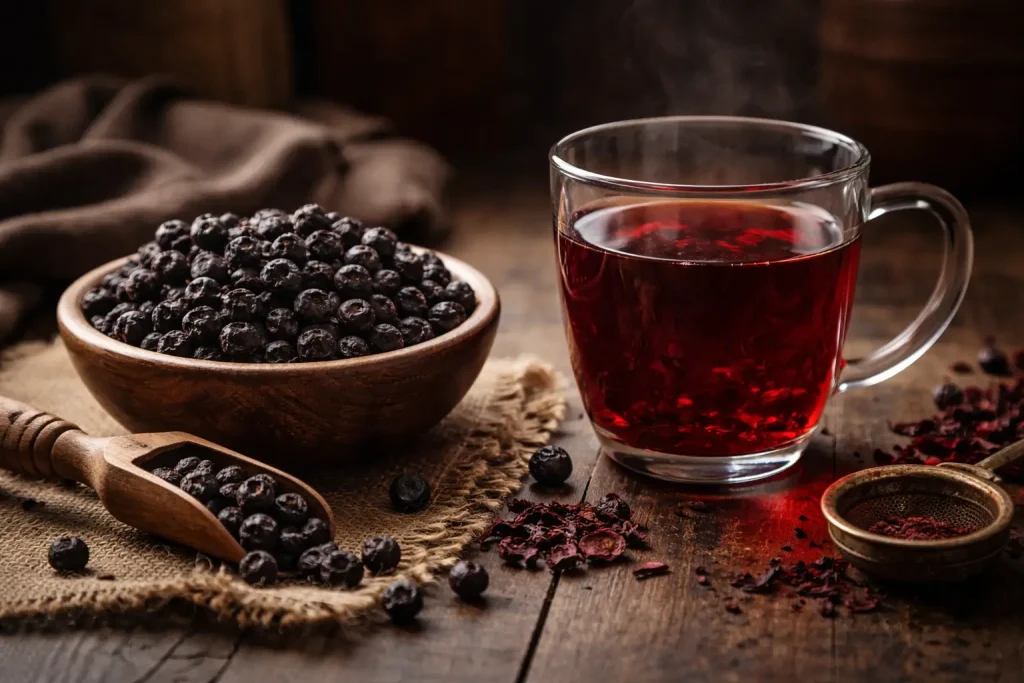
If you’re building blends for iced tea, aronia is also a color anchor. A small percentage can turn a pale infusion into a dramatic ruby-red, especially when paired with tart botanicals. It’s a reliable way to create visual impact without relying on flavor extracts.
For production: aronia tends to be consistent in cut size, but it is sensitive to humidity. Once opened, it needs airtight storage fast, or the aroma dulls and the berry character turns muted.
Aronia berry chokeberry flavor profile (taste, aroma, mouthfeel)
Aronia berry chokeberry tastes like dark berry skins, dried plum, and a gently earthy note that can read like black tea tannin. The first sip often hits with a tart edge and then dries out across the tongue, especially if steeped hot and long. That dryness can be a feature if you treat it like structure, not like “sweet berry.”
Aroma is subtle compared to showy fruits. Expect a quiet, winey berry scent, more “cellar and fruit leather” than “jam.” That’s why pairing matters: aromatic tops like mint or chamomile can lift the nose, while warm spices can round the finish.
Mouthfeel is where aronia earns its keep. Even at 5–10% of a blend, it can create a fuller, more gripping cup. If your blend feels watery, aronia is one of the most efficient ways to add backbone.
Brewing aronia for a clean cup (hot infusion, timing, temp)
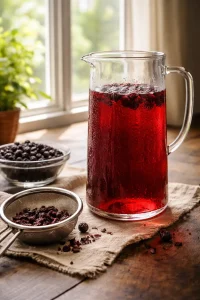 When you brew aronia on its own, your goal is extraction without harshness. Think “controlled tannin.”
A solid baseline for aronia berry chokeberry as a standalone tea:
Water temperature: 195–205°F (90–96°C)
Steep time: 8–12 minutes
Covered steeping helps retain aroma (especially if you add leaves or flowers).
If you’re using aronia as part of a blend, keep an eye on the other ingredients. Leaves and flowers often prefer shorter times or slightly cooler water. In those cases, you can:
Do a two-stage steep (berry first, then add delicate ingredients), or
Use a mid-temp compromise (190–195°F / 88–90°C) and extend time.
For a smoother profile, rinse quickly with a splash of hot water, discard that splash, then steep normally. This can shave off a little surface dust and soften the first tannic hit without stripping the berry character.
Practical note for tea makers: steep time affects “perceived sweetness” even when there’s no sugar. Shorter steeps feel brighter and fruitier. Longer steeps feel drier and more “red-wine-like.”
Ratios that work (grams + teaspoons) and blend formulas you can scale
Below are ratios you can use immediately, with both grams and teaspoons for quick bench work. (Teaspoons vary by cut and settling; grams are your production truth.)
Single-cup test (about 12 oz / 355 ml):
Aronia berries: 4–6 g (about 2 tsp)
Optional brightener: 1.5–2 g (about 1 tsp) of hibiscus flowers
Optional warmth: 0.8–1.2 g (about 1/2 tsp) of ginger root
Steep at 200°F (93°C) for 10 minutes. If it’s too drying, reduce aronia to 3–4 g or shorten steep to 8 minutes.
Blend formula 1: “Ruby Berry Spice” (great hot or iced)
60 g aronia berries
25 g hibiscus flowers
10 g cinnamon chips
5 g ginger root
Bench-scale version (per mug):
Aronia: 5 g (2 tsp)
Hibiscus: 2 g (1 tsp)
Cinnamon: 0.8 g (1/2 tsp)
Ginger: 0.8 g (1/2 tsp)
This blend reads like dark fruit with a warm, rounded finish. Try adding cinnamon chips when you want sweetness without sweetener.
Blend formula 2: “Evening Berry Calm” (softer tannin, lifted aroma)
55 g aronia berries
20 g chamomile flowers
15 g peppermint leaves
10 g lemongrass
Bench-scale version (per mug):
Aronia: 4.5 g (about 2 tsp)
Chamomile: 1 g (about 1 tsp, fluffy)
Peppermint: 0.6 g (about 1 tsp, light)
Lemongrass: 1 g (about 1 tsp)
This is a better fit for customers who dislike tartness. The chamomile and mint lift the aroma and make the cup feel “round.” Try using chamomile flowers when you want to soften aronia’s drying edge without dulling it.
Blend formula 3: “Deep Berry Base” (a modular production base)
70 g aronia berries
30 g elderberries
Use as a base and add your aromatic layer later. If you want more dark-fruit depth without extra tartness, try elderberries alongside aronia.
Iced tea and cold brew (color, clarity, and smoother tannin)
Cold extraction is one of the easiest ways to make aronia taste expensive. It keeps the berry skin character but reduces harsh tannin.
Cold brew method for aronia berry chokeberry:
Ratio: 10–12 g aronia per 1 liter water
Time: 10–14 hours in the fridge
Strain well (fine mesh helps), then bottle.
If you need more color, add 2–4 g per liter of hibiscus flowers for the last 60–90 minutes of the cold steep. That timing gives you ruby color and tart lift without pushing the cup into sharpness.
For iced tea service, a practical approach is a strong hot concentrate diluted over ice:
Concentrate: 20 g aronia per 500 ml water, 200°F (93°C), 10 minutes
Dilute: pour over a full ice glass, or cut 1:1 with cold water.
Cold brew tends to produce less sediment in the cup, but you’ll still see some fine berry particles. If clarity matters, double-strain.
Aronia + hibiscus done right (tart control and “moody” red infusion)
Aronia and hibiscus together can be stunning: deep red, bright nose, and a flavor arc that starts juicy and ends structured. But it can also turn aggressively sour if the ratio is off.
A reliable pairing ratio for aronia berry chokeberry with hibiscus:
Aronia:hibiscus = 2:1 by weight for a bold, tart tea
Example: 6 g aronia + 3 g hibiscus per 12 oz mug.
If your goal is “dark berries, not sour candy,” shift to 3:1 (aronia heavier). If your goal is a punchy iced tea, 2:1 is the crowd-pleaser.
To keep hibiscus from dominating, steep berries first:
Steep aronia 8 minutes at 200°F (93°C).
Add hibiscus flowers for the last 2–4 minutes.
This keeps the cup ruby and bright, while preventing the sharpest acids from taking over.
Kombucha 2F: aronia-friendly method (less sediment, better balance)
Aronia can shine in second fermentation because its tannin reads like “body” once carbonation lifts the aroma. The trick is managing sediment and over-acidity.
Use aronia berry chokeberry in 2F as either a quick infusion or a syrup.
Option A: Quick infusion (simplest)
Steep 10 g aronia in 250 ml water at 200°F (93°C) for 10 minutes.
Cool completely.
Add 30–60 ml of this infusion to each 16 oz (475 ml) bottle, then top with finished kombucha.
Option B: Berry syrup (more control, less grit)
Simmer 40 g aronia in 300 ml water for 8–10 minutes.
Strain hard.
Dissolve 30–60 g sugar into the hot liquid (depending on how active your culture is).
Cool. Add 1–2 tbsp (15–30 ml) per 16 oz bottle.
To brighten the berry without citrus, try 1–2 tsp of lemongrass in the infusion stage (steep it for the last 3 minutes). For warmth, a tiny pinch of ginger root can make the berry taste “juicier” without adding sweetness.
Troubleshooting (flat flavor, too tart, over-carbonation, sediment, aroma loss)
Flat flavor: Usually under-dosed or steeped too cool. Increase aronia by 10–20% or raise water temp to 200–205°F (93–96°C). If it still reads dull, add a small aromatic lift like peppermint leaves or lemongrass to wake up the nose.
Too tart: This is often hibiscus or long steeping. Reduce hibiscus by 25–50%, or add it only at the end of steeping. If it’s still sharp, shorten total steep time by 2 minutes and increase aronia slightly to keep body.
Over-carbonation (kombucha 2F): You likely added too much sugar or bottled too warm. Reduce syrup amount, shorten 2F time, and “burp” bottles daily. Keep bottles in a cooler spot to slow activity.
Sediment: Common with berries. Use a finer strainer, or steep in a sachet. For production, consider a two-stage strain (coarse then fine). Cold brew typically reduces sediment compared to long hot steeps.
Aroma loss: Usually storage or heat exposure. Keep berries airtight and away from light. In blends, add top-note leaves and flowers late in production and store quickly after blending to preserve volatile aromatics.
Storage + quality (airtight, humidity, and sensory cues)
Aronia’s quality is mostly judged by aroma, color, and the way it stains the brew. Store in an airtight container with minimal headspace, away from heat and light. Humidity is the real enemy: it softens texture, dulls aroma, and encourages clumping.
Quality cues to look for:
Color: berries should look dark and even, not dusty gray.
Aroma: a quiet winey berry scent is normal, but “cardboard” or “stale pantry” means it’s past its best.
Brew color: a good lot gives a clear ruby-brown to deep red infusion. If the color looks weak at normal dose, the lot may be tired.
For tea makers doing consistent production: weigh by grams, not scoops, and record steep time and temp during bench tests. Small changes (2 minutes or 5°F) noticeably shift perceived astringency.
Safety (compliant, no medical claims)
This article is for flavor and beverage-making use. Aronia is a food botanical commonly used in teas and blends, but individual sensitivities vary. Herbalists often use berries as part of balanced formulas, and many people enjoy them as everyday beverages.
General best practices:
If someone is pregnant, nursing, has a medical condition, or takes medication, they should ask a qualified clinician before making major dietary changes.
Keep blends within normal culinary ranges.
Avoid making disease claims. Focus on taste, craft, and traditional culinary use.
FAQ
What does aronia berry chokeberry taste like?
Dark berry skins, a wine-like dryness, and a tart edge (more “structured” than sweet).
Is aronia very astringent?
It can be. Control it with shorter steeps, slightly cooler water, or by balancing with aromatic herbs.
How much aronia should I use per cup?
A dependable range is 4–6 g (about 2 tsp) per 12 oz, depending on how bold you want it.
Can I cold brew aronia overnight?
Yes. Cold brew produces smoother tannin and a clean, deep color (10–12 g per liter for 10–14 hours).
How do I reduce sediment in the cup?
Use a fine strainer, steep in a sachet, or cold brew and double-strain for clarity.
Does aronia pair well with mint?
Yes. Mint lifts aroma and makes the berry feel juicier. Try peppermint leaves for a bright top note.
What’s the best way to pair aronia with warm spices?
Use small amounts of cinnamon chips and ginger root to round the finish without covering the berry character.
Conclusion
Aronia berry chokeberry is a blender’s tool for structure: deep color, a vinous berry tone, and a tannic finish that makes herbal tea feel intentional. Use hot steeping for boldness, cold brew for elegance, and treat tart ingredients like hibiscus as a dial you can turn rather than a default. When you weigh your ratios, manage steep time, and store airtight, aronia becomes one of the easiest ways to build a “premium” sensation in caffeine-free blends, iced teas, and kombucha-friendly infusions.