Sarsaparilla Root Benefits for Female Wellness Traditions
When herbalists talk about sarsaparilla root benefits for female wellness traditions, they are usually speaking about a broader craft of nourishment, rhythm, and balanced daily use rather than a single dramatic effect. Sarsaparilla has a deep, earthy sweetness that feels grounding in the cup, and that character is part of why it has remained meaningful in traditional root blends for generations. In practical herbal work, it is often chosen for its round body, its ability to carry companion herbs, and the way it gives a formula a steady backbone without making the brew feel heavy or muddy.
For tea makers, this root is especially useful because it bridges flavor and function so well. It can sit at the center of a gentle tonic-style tisane, support floral notes without overpowering them, and hold up beautifully in longer simmered preparations. That makes it appealing for both home brewers and anyone developing small-batch herbal beverages. When thinking about sarsaparilla root benefits for female wellness traditions, it helps to see the plant not as a miracle ingredient but as a dependable root with history, structure, and warmth. It shines most when prepared with patience and paired with herbs that soften, brighten, or lift its naturally woody depth.
Why Sarsaparilla Has Long Been Used in Women’s Herbal Traditions
The language around old-fashioned root tonics often overlaps with household herbalism, where roots, blossoms, and leaves were chosen to support daily vitality and seasonal balance. In that setting, sarsaparilla root benefits for female wellness traditions were valued as part of an overall approach to restorative tea drinking. It was not uncommon to combine it with meadow-like flowers, mineral-rich leaves, or gently aromatic roots to create a brew that felt both comforting and purposeful.
Part of sarsaparilla’s appeal is its temperament in formulation. It is sturdy but not harsh. It has enough character to stand up to longer extraction, yet enough softness to work in blends meant for regular sipping. Herbalists often use it when they want a formula to feel rooted, rounded, and somewhat old apothecary in style.
Its flavor also matters. A pleasant herbal routine is easier to keep, and sarsaparilla brings a mellow sweetness that can reduce the need for stronger masking ingredients. In female-focused traditions, that made it an appealing base for formulas intended to feel steady, gentle, and sustaining over time.
Flavor Profile and Why It Works So Well in Balanced Blends
Sarsaparilla tastes woody, slightly sweet, and faintly spicy, with an almost creamy root-beer-like impression when simmered properly. That makes it especially attractive for tea makers who want a blend to feel full in the mouth without depending on artificial flavoring or excessive sweetener.
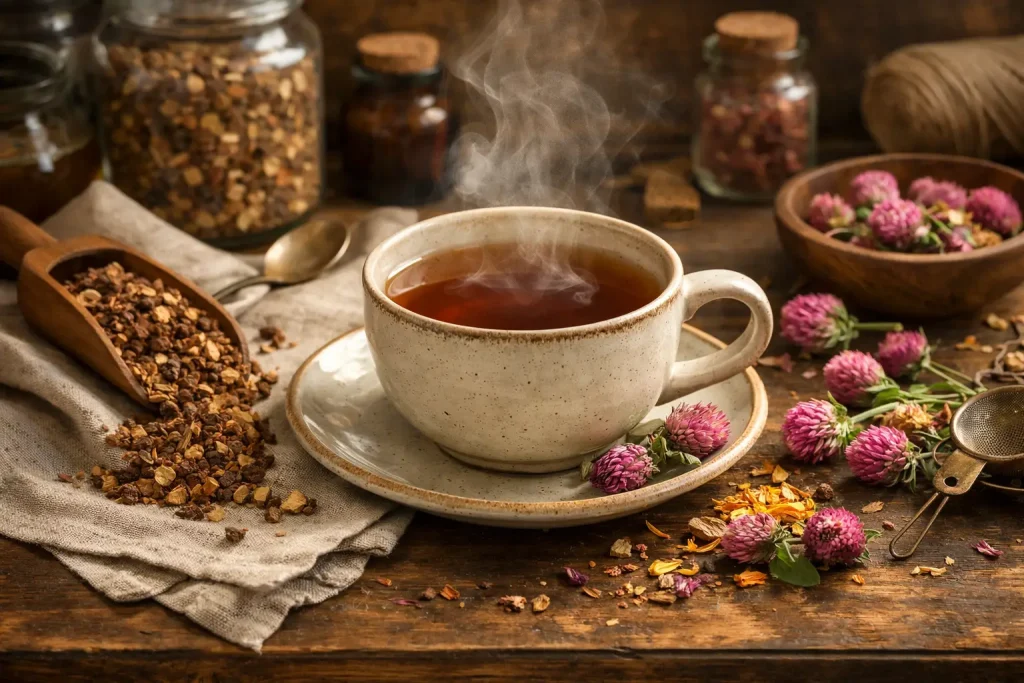
This is where pairing matters. Try building around Sarsaparilla Root C/S when you want a dark, grounding base that can anchor blossoms and leaves. For a softer floral lift, bring in Red Clover Blossoms to round the cup and lighten the root’s bass notes.
A practical blend for daily use often includes one grounding root, one soft floral herb, and one aromatic or green note. Sarsaparilla fits the grounding role beautifully. It can then be brightened with mint, sweetened in character with chamomile, or made more meadow-like with calendula. In sensory terms, it gives the cup a center of gravity.
For small-batch tea brands, that matters because a memorable blend is not just about aroma when dry. It is also about how the brew lands on the palate after steeping. Sarsaparilla helps create that deeper middle note that makes a cup feel complete rather than thin.
Simple Ratios for Tea Makers (Grams and Teaspoons)
A useful starting point for understanding sarsaparilla root benefits for female wellness traditions is learning how much root to use. Because sarsaparilla is dense and cuts differently from leaves or blossoms, measuring by weight gives more consistency. Still, teaspoons are helpful for small kitchen batches.
For one 12 to 14 ounce cup:
- Use 4 grams sarsaparilla root cut and sifted (about 2 teaspoons)
- Use 1.5 grams red clover blossoms (about 2 teaspoons loosely filled)
- Optional: 0.5 gram spearmint leaf (about 1 teaspoon)
- Optional: 0.5 gram calendula petals (about 1 teaspoon)
For a 1 liter small-batch decoction:
- 12 grams sarsaparilla root C/S (about 6 teaspoons)
- 5 grams red clover blossoms (about 6 to 7 teaspoons)
- 2 grams nettle leaf (about 4 teaspoons)
- 1 gram ginger root C/S (about 1 teaspoon)
Simmer the sarsaparilla first for 12 to 18 minutes at a gentle bubble. Then turn off the heat, add the more delicate herbs, cover, and steep 8 to 10 minutes. This two-stage method keeps the root fully extracted while preserving the softer aromatics of blossoms and leaves.
For a greener, more lively finish, try a touch of Spearmint Leaf. For a deeper root profile in more robust blends, layer in Burdock Root C/S.
Best Pairings for a Softer, More Feminine Herbal Cup
Sarsaparilla is a generous team player. It can move in several directions depending on the result you want. If you are aiming for a soft, traditional, female-centered wellness blend, the goal is usually balance rather than intensity.
Red clover is one of the most natural companions because it adds a light honeyed meadow quality that opens the cup. Try Red Clover Blossoms when you want the blend to feel airy and rounded instead of purely root-driven. Nettle brings a green, nourishing body and works well in daily-use formulas. Add Nettle Leaf if you want a fresher, more herbaceous finish.
Chamomile can make a sarsaparilla blend feel more familiar and comforting, especially for evening service or gentle tonic teas. Try Chamomile Flowers when you want a soft apple-like top note. Calendula gives brightness and color without turning the blend sharp. Add Calendula Petals for a golden visual lift and a clean herbal edge.
For beverage makers developing a line, think in layers. Sarsaparilla is your base note. Red clover and chamomile shape the middle. Mint or ginger refines the finish. That structure makes the cup more memorable and gives you control over how rustic, floral, or refreshing the final profile becomes.
How to Brew for Maximum Character Without Harshness
The most common mistake with sarsaparilla is under-extraction. A quick steep often gives aroma but not body. Since this is a root, it usually performs better as a light decoction than as a simple pour-over infusion.
To explore sarsaparilla root benefits for female wellness traditions in a way that feels true to the plant, start with cool water and bring the root up slowly. This helps the woody sweetness come forward. A rolling boil is unnecessary and can flatten nuance. Keep it at a low simmer instead.
A practical method:
- Add the root to cold water.
- Bring to a simmer over medium heat.
- Maintain a gentle simmer for 15 minutes.
- Turn off heat.
- Add blossoms and leaves.
- Cover and steep another 8 minutes.
- Strain well.
If you want to serve it iced, brew slightly stronger and dilute after chilling. For sparkling herbal beverages, make a concentrated decoction, sweeten lightly if desired, chill completely, then top with sparkling water rather than fermenting unless you are experienced with pressure management. This keeps the flavor vivid and reduces surprises in carbonation.
For a warming edge that plays well with the root, add Ginger Root C/S in small amounts during the simmering stage.
Troubleshooting
Even skilled tea makers sometimes miss the mark. Here is how to correct the most common issues in root-and-flower blends.
Flat flavor
Usually the root was under-simmered or the blend lacked an aromatic top note. Increase the simmer time by 3 to 5 minutes, or add a small amount of Spearmint Leaf after heat is off.
Too tart
This can happen if the floral side of the blend dominates or if the beverage was acidified for iced service. Increase the proportion of Sarsaparilla Root C/S slightly and reduce sharper companion herbs. A little chamomile can also soften the edges.
Over-carbonation
If you turn your concentrated tea into a sparkling beverage, avoid sealing it for natural fermentation unless you are tracking sugar, temperature, and pressure carefully. For a safer result, combine chilled concentrate with fresh sparkling water at serving time.
Sediment
Roots and blossoms naturally shed small particles. Use a fine mesh filter or double strain through paper if you want a polished bottle-ready appearance.
Aroma loss
Volatile notes disappear when delicate herbs are boiled with the root. Keep blossoms and leaves out of the simmering stage. Add them only during the covered steep.
Storage + Quality
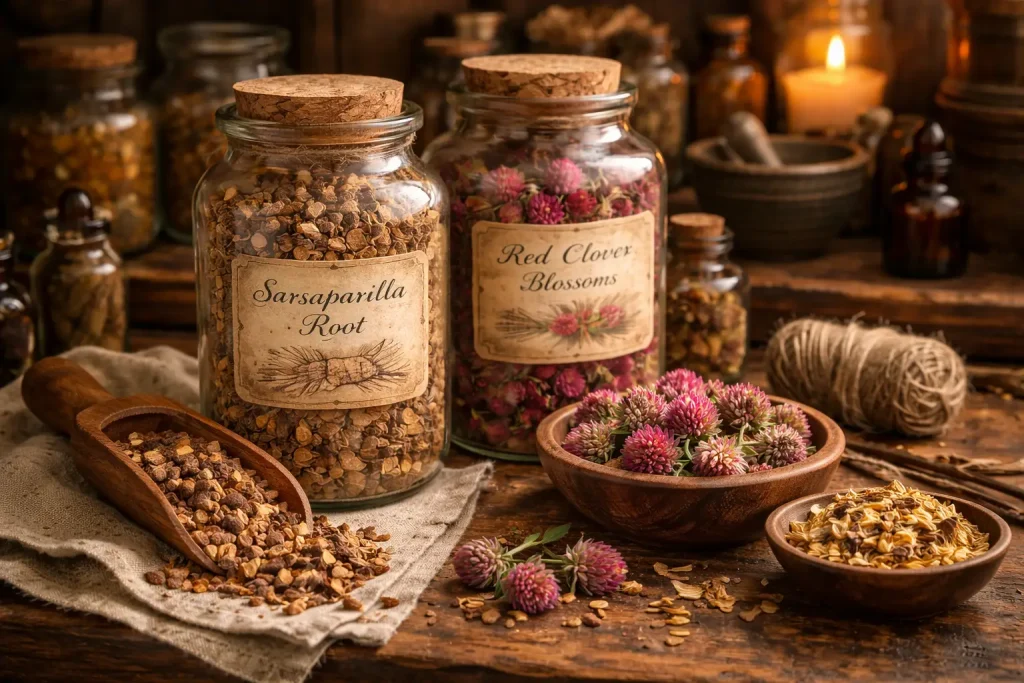 Good storage is part of good flavor. If you want the best experience from sarsaparilla root benefits for female wellness traditions, start with herbs that still smell alive. Sarsaparilla should have a warm, woody, sweet-root aroma. If it smells dusty, flat, or stale, the cup will too.
Store roots, leaves, and blossoms in airtight containers away from direct sun, heat, and humidity. Roots can often hold quality longer than fragile petals, but they still suffer from moisture exposure. A dry pantry shelf is usually better than a warm kitchen cabinet above the stove.
Watch for visual cues. Sarsaparilla should retain a natural brown tone with variation, not look gray and lifeless. Red clover should keep some pink or rosy-purple character rather than fading to dull tan. Mint and nettle should still look green, not olive-brown.
Buy in quantities you can move through steadily. For production-minded tea makers, that often means rotating stock more frequently rather than holding large volumes too long. Try Burdock Root C/S and Nettle Leaf in companion blends only when they are bright, fragrant, and well-kept.
Safety
When discussing sarsaparilla root benefits for female wellness traditions, it is important to keep language responsible and realistic. Herbal tradition is not the same as medical advice. Sarsaparilla is best described as an herb historically used in tonic-style preparations and daily wellness blends. Herbalists often use it as part of broader formulas meant to support routine care and seasonal balance.
Avoid presenting it as a treatment, cure, or guaranteed solution for symptoms or conditions. Keep your wording grounded in tradition, sensory use, and practical preparation. For product copy, terms like traditionally used, often included in herbal practice, and valued in classic root blends are more appropriate.
Anyone who is pregnant, nursing, taking medication, or managing a health concern should check with a qualified professional before using herbal products regularly. From a compliance perspective, that kind of straightforward caution is simply good practice.
A Root Worth Keeping in the Tea Cabinet
The lasting appeal of sarsaparilla root benefits for female wellness traditions is not about hype. It is about steadiness. Sarsaparilla brings depth, warmth, and a quietly sweet root character that makes a blend feel substantial. It works especially well when combined with blossoms and green herbs that soften its woody edges and make the cup more graceful.
For tea makers, it offers flexibility. You can keep it rustic and old-world, or guide it toward a brighter modern tisane with mint, calendula, or chamomile. Its real strength is how well it supports the whole formula. That is often what makes an herb valuable in daily practice: not noise, but reliability.
FAQ
What are sarsaparilla root benefits for female wellness traditions?
They are usually described in terms of traditional herbal use, daily tonic-style tea making, and the root’s role in balanced blends rather than medical outcomes.
Is sarsaparilla better as an infusion or decoction?
A decoction is usually better because roots need more time to release body and flavor.
What herb pairs best with sarsaparilla for a softer cup?
Red clover is one of the best choices because it adds a light floral sweetness that softens the root profile.
Can I drink sarsaparilla tea hot or iced?
Yes. It works well both ways. For iced service, brew it a little stronger so the flavor holds after chilling.
How much sarsaparilla root should I use per cup?
A good starting point is 4 grams, or about 2 teaspoons, per 12 to 14 ounces of water.
Why does my brew taste dull?
Most often the root was not simmered long enough, or the herbs were old and had lost aroma.
Can I make a sparkling version?
Yes, but the simplest method is to mix chilled concentrate with sparkling water rather than relying on fermentation.
What other Hatton Naturals herbs fit this style of blend?
Good companions include red clover, nettle, spearmint, chamomile, calendula, burdock, and a little ginger for warmth.