Milk Thistle Benefits: What to Know
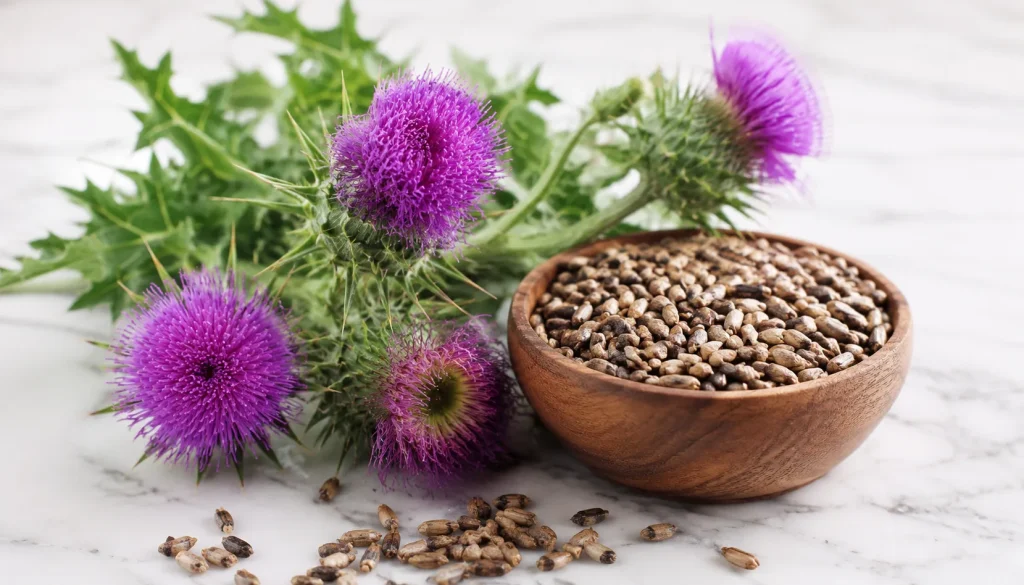
Milk thistle benefits have been recognized since ancient times, with records of its use as a liver herb stretching back to the writings of Dioscorides and Pliny the Elder in the first century AD. Silybum marianum is a striking biennial plant native to the Mediterranean basin, recognizable by its large, deeply lobed leaves with white marbling and dramatic purple flower heads surrounded by sharp, spiny bracts. The seeds of milk thistle contain one of the best-documented bioactive complexes in botanical medicine — silymarin.
What Is Silymarin?
Silymarin is a group of flavonolignans — a unique class of compounds found almost exclusively in milk thistle seeds. The main constituents include silybin (also called silibinin), silydianin, and silychristin, with silybin being the most biologically active and extensively studied. These compounds are concentrated in the seeds and seed coat, making the seeds by far the most potent part of the plant for liver-related uses.
Silymarin has a strong affinity for liver tissue. It is absorbed by liver cells, where it appears to stabilize cell membranes and reduce oxidative damage. Furthermore, research suggests it may stimulate protein synthesis in liver cells, supporting the regeneration of damaged hepatocytes — a property that distinguishes it from most other hepatoprotective herbs.
Modern clinical research has focused primarily on silymarin as a standardized extract, but traditional herbalists have long valued whole milk thistle in various forms. The seeds remain the primary form used in herbal practice today.
Milk Thistle Benefits in Traditional Herbalism
In European folk herbalism, milk thistle was traditionally used as a liver and gallbladder herb for centuries before modern research identified silymarin. Herbalists recommended it for jaundice, liver enlargement, bile flow, and recovery from excess alcohol consumption. In other words, the traditional uses align closely with what modern science has since investigated.
The German Commission E approves milk thistle seed preparations for dyspeptic complaints and as a supportive treatment in chronic inflammatory liver conditions. This endorsement reflects the herb’s strong evidence base and distinguishes it from many botanicals that lack official recognition.
Beyond liver support, folk herbalists also valued milk thistle for digestive complaints, including bloating, gas, and sluggish digestion. The bitter principles in the herb stimulate bile production, which aids fat digestion and reduces the discomfort associated with fatty meals. Additionally, milk thistle has a traditional reputation as a galactagogue — an herb used to support milk production in nursing mothers.
How to Use Milk Thistle
Milk thistle is available in several forms, each with different advantages. The seeds are most commonly used and are available whole or ground. For tea, the seeds are best lightly cracked or ground before steeping — the silymarin compounds are not highly water-soluble, so a long, hot infusion with freshly ground seeds is more effective than steeping whole seeds.
To make milk thistle seed tea, grind one tablespoon of milk thistle seeds in a coffee grinder. Steep the ground seeds in just-boiled water for fifteen to twenty minutes, then strain through a fine-mesh strainer or coffee filter. The resulting tea is mildly bitter and slightly nutty in flavor.
Alternatively, milk thistle herb cut and sifted — which includes leaf, stem, and flower material in addition to seeds — provides a broader range of the plant’s compounds in a convenient tea form. This whole-herb approach is more traditional and offers a gentler, more balanced botanical experience.
Combining Milk Thistle with Other Liver Herbs
Milk thistle works well and has great benefits in combination with other herbs traditionally associated with liver and digestive health. The most classic pairing is milk thistle with dandelion root, which supports bile flow and liver function through different mechanisms. Together, they form a complementary liver tonic blend used by Western herbalists for generations.
Other traditional companions include artichoke leaf, burdock root, and yellow dock root. Each brings its own bile-stimulating or liver-supportive properties, and together they create formulas that address different aspects of digestive and hepatic function.
For a simple everyday digestive tea, blend equal parts ground milk thistle seed, dandelion root, and a smaller amount of fennel seed for palatability. Steep as a decoction for fifteen minutes before meals. This blend supports digestive comfort while providing the liver-protective compounds from the milk thistle.
Milk Thistle Seed as a Food
Beyond herbal medicine, milk thistle seeds have a genuine culinary tradition. The seeds are edible and can be eaten raw, roasted, or incorporated into granola, trail mix, and baked goods. Roasted seeds have a pleasant, mildly nutty flavor similar to sunflower seeds. In fact, all parts of the milk thistle plant are edible — the young leaves and stems were eaten as vegetables in Europe, and the flower heads were prepared like artichokes.
Ground milk thistle seed can be added to smoothies, oatmeal, and yogurt without significantly affecting the flavor of the dish. This makes it an easy way to incorporate the herb into daily life for those who find the taste of the tea challenging. Similarly, milk thistle seed oil has been produced in some regions as a specialty food product.
Buying and Storing Milk Thistle
High-quality milk thistle seeds should be plump, well-formed, and brownish-gray in color with a slightly mottled appearance. They should have a mild, nutty aroma. Crushed or shriveled seeds, or seeds with a rancid or musty smell, indicate poor quality or age.
Store whole seeds in an airtight container in a cool, dark location. Whole seeds maintain quality for two to three years. However, once ground, the seeds oxidize quickly — grind only what you need for immediate use. Consequently, purchasing whole seeds and grinding as needed provides the best combination of shelf life and potency.
Safety and Considerations
Milk thistle is among the safest herbal supplements in common use and has an excellent safety record in both traditional and clinical settings. Mild digestive upset (loose stools, gas) can occur when starting milk thistle, particularly at higher doses — starting with smaller amounts and increasing gradually is advisable. Individuals with ragweed allergies may experience cross-reactivity, as milk thistle belongs to the same botanical family (Asteraceae). Those taking hepatically metabolized medications should consult a healthcare provider, as milk thistle may influence drug metabolism. This post is educational only and does not constitute medical advice.
Frequently Asked Questions
Do milk thistle seeds need to be crushed before use?
Yes, for tea preparation, lightly crushing or grinding the seeds dramatically improves extraction. Whole intact seeds allow very little water penetration and release minimal silymarin into hot water. Even roughly cracking them in a mortar and pestle improves the infusion significantly.
How long should I take milk thistle to notice their benefits?
Traditional use supports both short-term and long-term use. Many herbalists use milk thistle as a long-term liver tonic, taken consistently for months or years. Clinical studies have used it for periods ranging from weeks to over a year without significant safety concerns. However, consulting a healthcare provider is recommended for extended therapeutic use.
Is milk thistle the same as blessed thistle?
No. Milk thistle (Silybum marianum) and blessed thistle (Cnicus benedictus) are different plants with different uses. Blessed thistle is primarily a bitter digestive herb, while milk thistle is valued specifically for its silymarin content and liver-supportive properties. They are not interchangeable.
Can I take milk thistle alongside medications?
Milk thistle can interact with certain medications metabolized by liver enzymes (particularly those processed by CYP2C9 and CYP3A4 pathways). If you are taking prescription medications, consult your doctor or pharmacist before adding milk thistle to your routine.
Milk thistle stands out in the herbal world for the quality of scientific attention its primary compound has received, making it one of the most confidently used botanical liver herbs available. Explore our milk thistle seeds and full range of liver-supportive botanicals at the Hatton Naturals shop.