Valerian Root Benefits for Skin: Herbal Tradition and Curiosities
When people search for valerian root benefits for skin, they usually expect a neat list. Herbal practice is rarely that tidy. Valerian is a root with a deep, earthy character, a famously strong aroma, and a long history in traditional herbal preparation. It is more often discussed in nighttime teas than in botanical skincare, yet that is exactly what makes it interesting. Herbalists have long worked with roots not only for sipping, but also for steams, rinses, compresses, and infused liquid blends that bring the plant into direct contact with the skin.
For tea makers, this opens a useful angle. Valerian does not need to act alone, and it usually should not. Its strength is often in how it rounds out a formula with heavier root depth while softer herbs lift texture, comfort, and aroma. In practice, that means thinking beyond a cup and toward a full botanical workflow: infusion strength, scent balance, extraction time, storage stability, and whether a blend is meant for drinking, steaming, or external use. Used with curiosity and restraint, valerian can become part of a thoughtful herbal skin ritual.
Valerian Root Benefits for Skin in Traditional Practice
Discussions of valerian root benefits for skin usually come from herbal tradition rather than modern cosmetic positioning. Old-style herbalism often looked at the whole sensory profile of a plant: warmth, smell, moisture, density, and how it behaved in water. Valerian’s rooty heaviness makes it less of a beauty herb in the floral sense and more of a grounding base note in an herbal system.
That matters because skin-focused herbal work is not always about fragrance or immediate brightness. Sometimes the goal is a richer infusion for a warm compress, a facial steam with depth, or a rinse blended with softer demulcent herbs. Valerian brings body to water. It contributes an earthy, cellar-like character that feels substantial, especially when combined with herbs that soften or brighten the preparation.
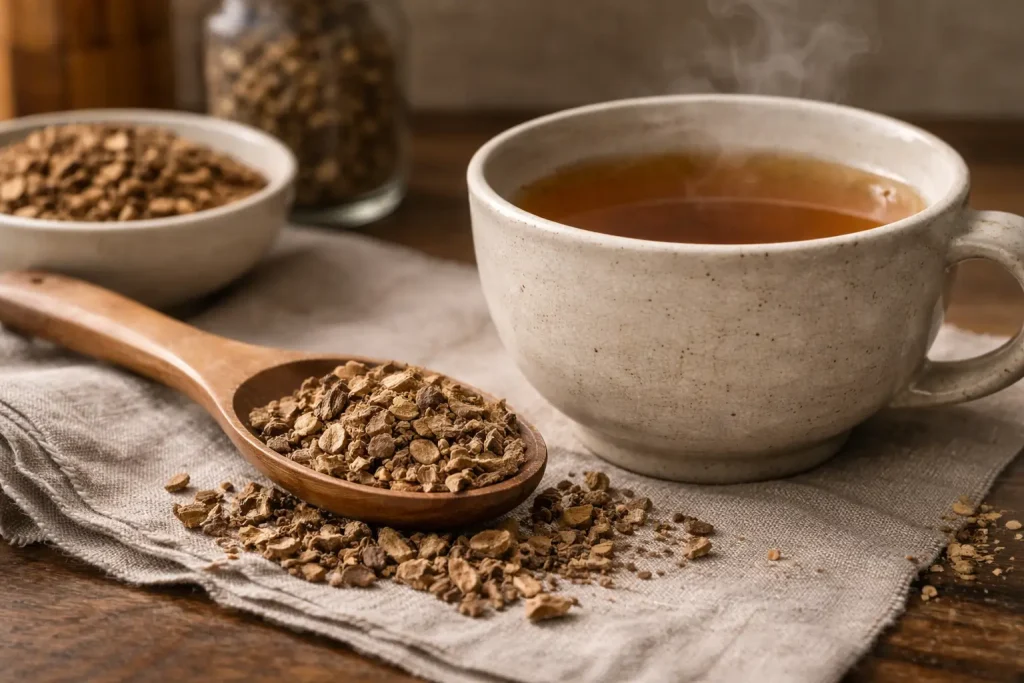
For tea makers developing wellness blends with a skin-conscious story, valerian is usually better as a supporting root than a headline flavor. A small amount of valerian root c/s can add depth to an infusion meant for a compress or evening steam. If the formula needs more glide and softness, marshmallow root c/s is the natural companion.
Why Tea Makers Pair Valerian with Softer Herbs
The most practical way to think about valerian root benefits for skin is through formulation. On its own, valerian can smell intense and taste stubbornly earthy. In a blend, it becomes more workable. Tea makers already understand this logic from root-heavy tisanes: one herb provides backbone, another provides lift, and another improves mouthfeel or aromatic appeal.
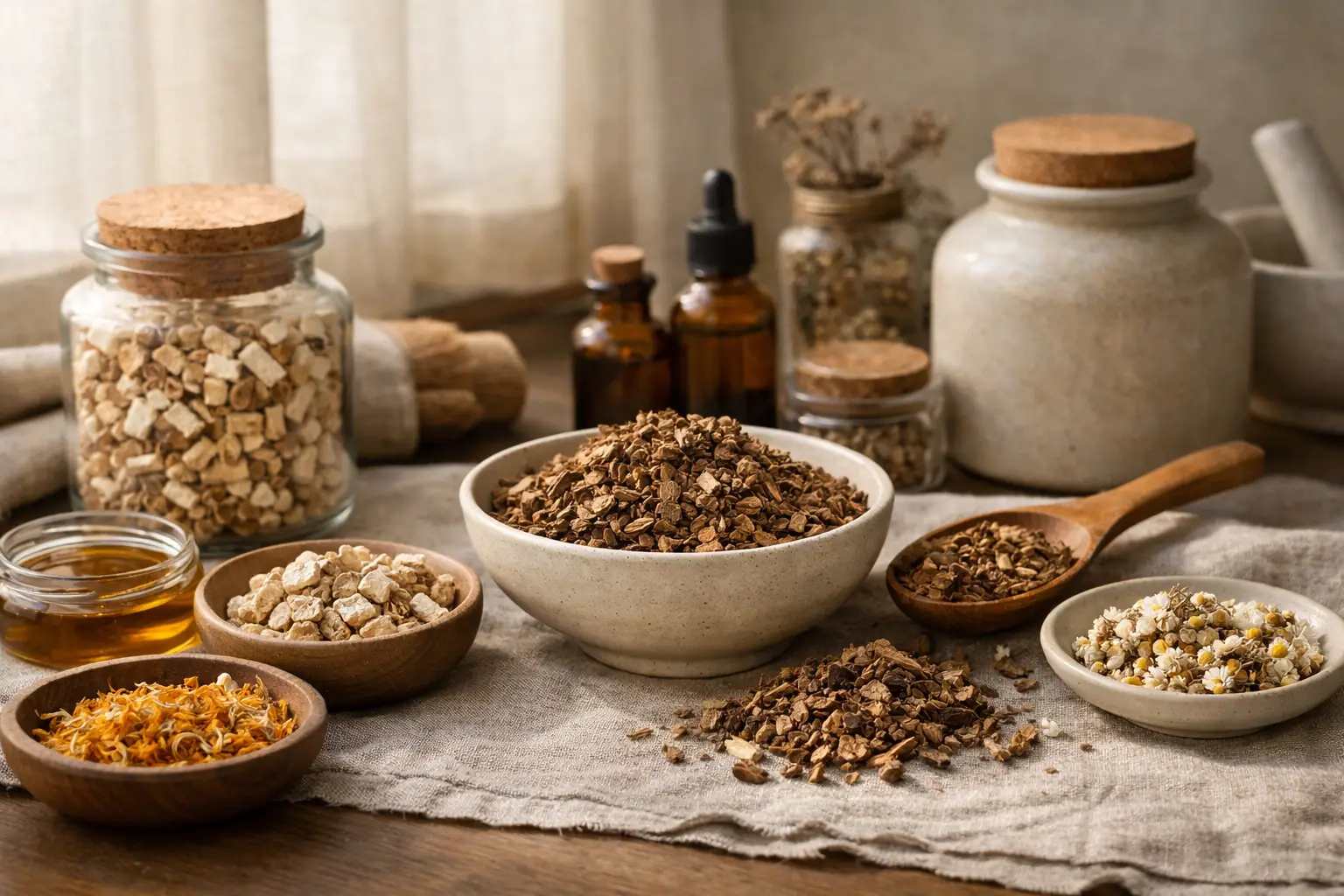
For external herbal use, marshmallow is especially useful because it brings a silky, moistening feel to water preparations. A small portion of marshmallow root c/s can soften valerian’s rough edges in both scent and texture. Calendula petals add a golden visual note and a gentle, classic apothecary feel. Chamomile tea whole flowers round the blend with a familiar floral softness that makes an infusion feel more inviting from the first pour.
If you want a lighter top note, lavender flowers can sharpen the aromatic profile in a clean way, while peppermint leaf c/s adds a cooling impression that works well in facial steam concepts. For a greener, more tonic style infusion, nettle leaf c/s can help bridge roots and flowers without making the blend feel perfumed.
In other words, valerian rarely carries a skin-oriented formula by itself. It works best when the rest of the blend handles elegance, texture, and aromatic balance.
Ratios for Infusions, Compresses, and Facial Steam
For anyone exploring valerian root benefits for skin in practical production, ratios matter more than vague herbal language. A tea maker needs measurements that can scale from a mug to a pilot batch.
 Basic skin-focused infusion ratio
 Basic skin-focused infusion ratio
For a simple infusion that can be sipped or cooled for external use, start with:
6 grams total herbs per 240 ml water
About 2 teaspoons total dried herbs per 1 cup water
A balanced starting blend looks like this:
2 grams valerian root c/s (about 3/4 teaspoon)
2 grams marshmallow root c/s (about 3/4 teaspoon)
1 gram chamomile flowers (about 1 teaspoon whole flowers)
1 gram calendula petals (about 2 teaspoons petals)
Use water just off the boil, around 95 to 98°C. Cover and steep 12 to 15 minutes. Strain well. For sipping, drink warm. For external use, cool completely before applying with clean cotton or a compress cloth.
Facial steam ratio
For steam, do not make it too dense. Use:
8 grams herbs per 750 ml hot water
About 3 tablespoons mixed herbs per 3 cups water
A good steam blend is 2 parts calendula, 1 part chamomile, 1 part peppermint, 1/2 part valerian. The valerian should stay restrained. Too much will dominate the aromatic experience.
Compress ratio
For a stronger compress liquid:
12 grams herbs per 300 ml water
About 4 teaspoons roots and flowers per 1 1/4 cups water
Steep covered for 15 to 20 minutes, strain twice, and let cool to warm. This gives more body and a denser herbal liquid without becoming muddy.
From Cup to Topical Curiosity
The most interesting conversations around valerian root benefits for skin happen when tea culture meets old apothecary habits. A tea maker is already trained to think about extraction, aroma release, sediment, and how herbs behave in hot water. Those same instincts translate well to topical curiosity.
A cooled infusion can be used as the liquid phase for a simple cloth compress. It can also be blended into a short-lived botanical rinse kept in the refrigerator for a day or two. Some makers even explore skin-inspired tea concepts where the same dry blend serves two roles: a mild evening tisane and a non-cosmetic external herbal rinse. That kind of dual-purpose design can make a small-batch formula more interesting without overcomplicating inventory.
This is where supporting herbs matter. Chamomile whole flowers help soften valerian’s dark profile. Calendula petals make the visual story brighter in both dry blend and brewed liquid. Lavender flowers create a cleaner aromatic edge if the root note feels too heavy. Peppermint leaf c/s works best in very small amounts when the goal is a fresher steam rather than a strongly minty cup.
The practical rule is simple: keep valerian low enough that the blend still feels pleasant to brew. Curiosity is useful. Overbuilding the formula is not.
Troubleshooting
Skin-oriented herbal blends still face the same process issues tea makers know well. If a formula is intended for sipping, steaming, or small-batch tonic experiments, the following adjustments help.
If the flavor feels flat, the infusion may need a brighter aromatic counterweight. Increase chamomile or peppermint slightly before adding more valerian. Valerian deepens a blend, but it does not create sparkle.
If the result tastes too tart, that usually comes from a supporting herb or a fermentation trial rather than valerian itself. Pull back any sharper floral or leafy element and shorten steep time. In skin-oriented tonic R&D, excessive acidity can distract from the earthy structure you want.
If you notice over-carbonation in a fermented herbal tonic, reduce sugar load, bottle later, or chill earlier. Valerian root does not cause fizz by itself, but root particles can make fermentation feel more active if the batch is not strained cleanly.
If sediment is excessive, strain through a fine mesh and then again through paper or tightly woven cloth. Root blends, especially those using marshmallow and valerian together, release fine particles that settle fast.
If aroma loss happens during storage, the usual causes are heat, light, or a loose lid. This is one of the quieter but real lessons behind valerian root benefits for skin: the herbal effect begins with fresh, intact plant character. Once the scent is stale, the preparation feels tired before it even touches water.
Storage + Quality
Good results start long before the kettle. Roots and flowers need different kinds of attention in storage, and valerian is especially revealing because its scent changes quickly when handled poorly.
Keep dried herbs in airtight containers away from sunlight, kitchen steam, and frequent temperature swings. Humidity is the enemy. If roots soften, clump, or smell dusty instead of dense and earthy, quality is already slipping. Calendula and chamomile should keep their color reasonably well. Lavender should remain aromatic, not faded and woody. Marshmallow should feel light and fibrous, not stale.
For dry blends, store in amber glass or lined pouches with a strong seal. Label the blend date, not just the product name. For prepared liquid infusions, refrigeration is best, and small batches are smarter than large ones. Use them quickly. A fresh infusion looks alive. A tired one looks dull, smells flat, and loses that clean herbal edge that makes the ritual worthwhile.
Tea makers should also watch the relationship between cut size and shelf life. Smaller cuts extract faster, but they also expose more surface area. That can mean quicker aroma loss if storage is careless.
Safety
Valerian belongs in careful herbal use, not exaggerated claims. When discussing valerian root benefits for skin, it is better to speak in traditional and sensory terms than to promise outcomes. Herbalists often use roots and flowers as part of supportive routines, but that is not the same as making cosmetic or medical claims.
Patch testing is sensible for any external herbal preparation, especially one involving concentrated roots or multiple botanicals. Use clean vessels, strain thoroughly, and avoid storing water-based preparations for long periods. Do not apply hot liquid directly to the skin. Let it cool to a comfortable temperature first.
For beverage products, keep labeling conservative. Say that a blend is traditionally used in herbal practice or appreciated in calming evening rituals. For external applications, frame it as a botanical infusion, steam, or compress. Avoid implying treatment, cure, or guaranteed skin outcomes. Good compliance language still allows the blend to sound beautiful, grounded, and useful.
FAQ
Can valerian root be used in a skin-focused herbal infusion?
Yes. It is usually used in small amounts as part of a broader formula rather than alone.
What are valerian root benefits for skin in herbal tradition?
Herbal tradition tends to describe it as a grounding root used in infusions, steams, and compresses, especially when paired with softer herbs.
Does valerian smell too strong for skincare-style blends?
It can. That is why formulators often balance it with marshmallow, chamomile, calendula, or lavender.
Is valerian better for drinking or external use?
It can be explored both ways, but the formula should change depending on the purpose. External use usually benefits from lighter aromatic support and very clean straining.
What herbs pair best with valerian in a skin-oriented blend?
Marshmallow, calendula, chamomile, lavender, peppermint, and nettle are all practical options depending on the result you want.
How long should I steep valerian in a blended infusion?
Most small-batch blends do well at 12 to 15 minutes, covered. Compress liquids can go a bit longer.
Closing Thoughts
The best way to approach valerian root benefits for skin is with curiosity, proportion, and respect for the plant’s character. Valerian is not a pretty floral showpiece. It is a deep root with presence. In a smart formula, that presence becomes an asset. It adds weight to steams, body to compress infusions, and a grounding note to evening blends designed with both ritual and practical production in mind. Keep the ratios modest, pair it with softer herbs, store it well, and let the preparation stay fresh enough to speak for itself.