Green Cardamom: Uses, Flavor, and Tea Blending Tips
Green cardamom has a way of changing a blend before it even reaches the cup. Crack a pod and the air shifts at once: sweet, resinous, citrusy, cool, and faintly floral, with a clean spice note that feels bright rather than heavy. In the herbalist pantry, green cardamom is one of those ingredients that bridges pleasure and utility. It can warm a simple tisane, round out a chai-style base, lift a creamy dessert tea, or add a polished finish to syrups, rice puddings, and botanical drink concentrates.
For tea makers, it is also remarkably efficient. A small amount goes a long way, and the form you choose matters. Whole pods give a slower, gentler release. Ground spice brings quick aroma and deeper integration, but it must be handled with more care. When used thoughtfully, cardamom can soften rough edges, brighten roots, and lend elegance to floral or seed-based blends. This guide explores how herbalists and beverage makers work with it in a practical way, from flavor structure and exact ratios to storage, troubleshooting, and smart pairings for the tea bench.
What green cardamom tastes like and why it matters in blends
The flavor of green cardamom is layered. First comes a lively top note that feels almost sparkling. Then a cooling, camphor-like lift. Underneath that sits gentle sweetness, a little eucalyptus-like freshness, and a delicate citrus peel character. This complexity is why it behaves almost like a blending tool rather than just a spice.
In warm infusions, green cardamom can do three useful things at once. It brightens dense ingredients, smooths sharp ones, and gives the finish a more refined aromatic arc. A root-heavy blend that feels dull can suddenly feel more complete. A floral tea that risks becoming perfumey can gain backbone. A creamy drink can taste more vivid without becoming aggressive.
Tea makers often treat cardamom as a supporting note, but it can also lead. That depends on whether you want a whisper of aromatic lift or a clearly spiced profile. For a cleaner expression, start with lightly crushed green cardamom pods. For a faster, fuller infusion in lattes, syrups, or powdered blends, ground cardamom spice is often the better choice.
Choosing between pods and ground cardamom
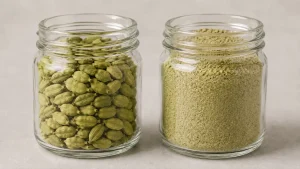
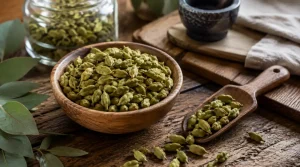
Form changes function. Whole pods protect volatile oils until the moment you bruise or crack them. That makes them especially useful when freshness matters. They also steep more slowly, which gives you more control in long hot infusions or simmered preparations.
Ground cardamom is more immediate. It disperses quickly and gives a fuller aromatic body in short-steep beverages, dessert applications, and dry blends. The trade-off is stability. Once ground, the fragrance fades faster, especially if exposed to heat, light, or humidity.
For tea makers, the choice usually comes down to process:
Use pods when:
You want a clean infusion with less sediment.
>You are making loose-leaf blends meant to keep well on the shelf.
>You want the drinker to crush or simmer the spice fresh.
>You are working with delicate leaves and flowers that could be overwhelmed.
Use ground when:
You are making instant drink bases or concentrated syrups.
>You want cardamom distributed evenly through a powder blend.
>You are flavoring creamy beverages, puddings, or spiced rice dishes.
>You need fast extraction in a short production cycle.
A practical bench habit is to keep both on hand. Use green cardamom pods for premium loose blends and ground cardamom spice for fast-moving kitchen or production work.
How to use green cardamom in tea with exact ratios
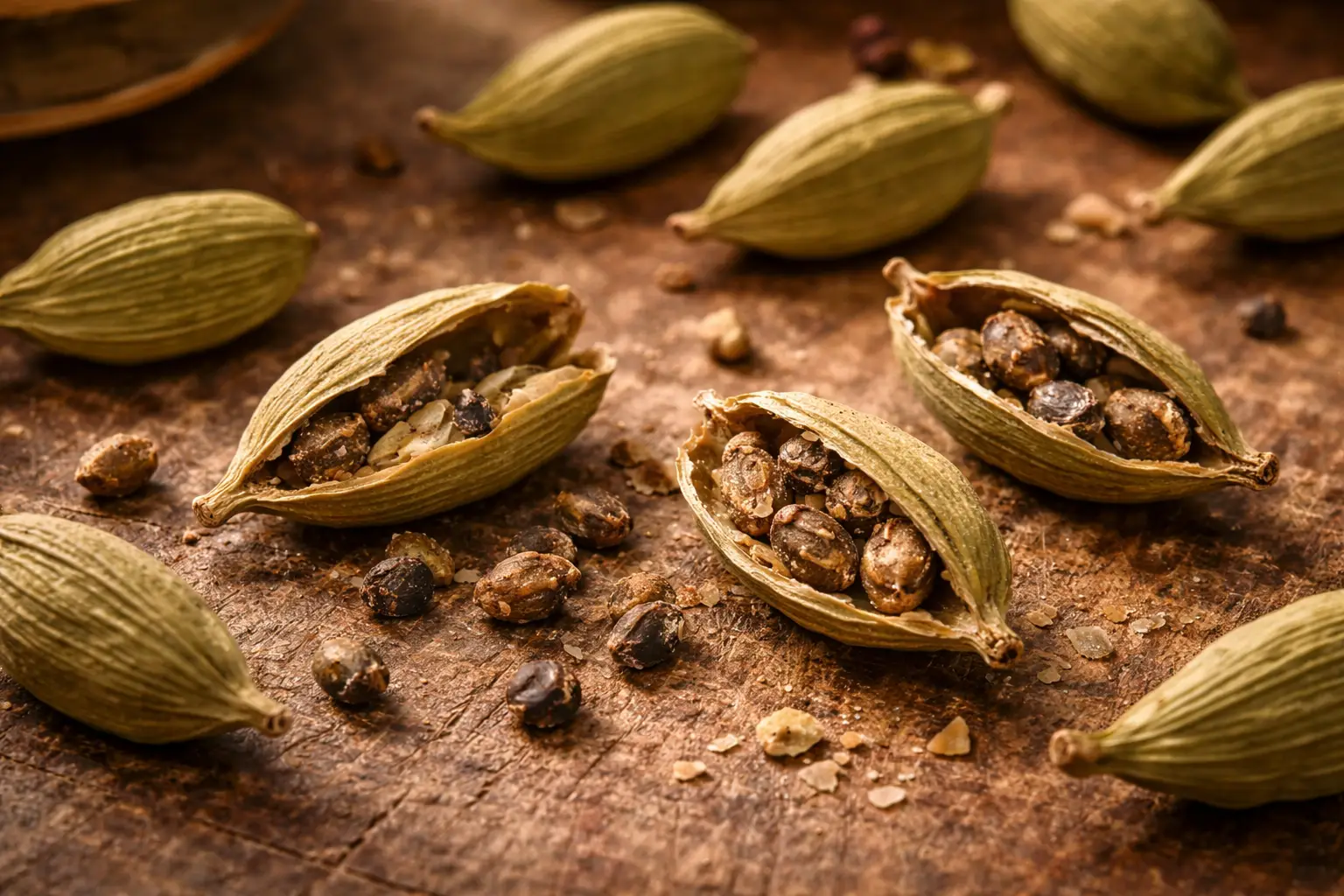 The easiest mistake with green cardamom is overusing it. The second easiest is not bruising the pods enough. A whole intact pod can stay too quiet. A lightly cracked pod opens beautifully.
For a single 10 to 12 ounce mug:
Use 2 to 3 lightly crushed pods, or 1/8 teaspoon ground cardamom.
That equals roughly 0.4 to 0.6 grams of pods, or about 0.25 grams ground.
For a 1 liter teapot or batch infusion:
Use 8 to 10 lightly crushed pods, or 1/2 teaspoon ground cardamom.
That equals roughly 1.8 to 2.5 grams of pods, or about 1 to 1.2 grams ground.
For a stronger chai-style profile:
Use 12 pods per liter, or 3/4 teaspoon ground.
That equals roughly 3 grams pods, or about 1.5 grams ground.
Water temperature matters. For most herbal blends, use water around 95 to 100°C (203 to 212°F). For blends containing delicate green herbs or flowers, 90 to 95°C (194 to 203°F) is often enough. Steep 7 to 10 minutes for a standard infusion. If simmering with roots or bark, 10 to 20 minutes is fine.
A good starting blend for a balanced aromatic cup is:
2 grams chamomile
1 gram fennel
0.5 gram crushed cardamom pods
0.5 gram ginger root
That is about:
2 teaspoons chamomile
1 teaspoon fennel
2 to 3 crushed cardamom pods
1 teaspoon cut ginger root
For a rounded herbal cup, try chamomile flowers with fennel seed and a few green cardamom pods. For more lift and warmth, fold in ginger root cut and sifted.
Green cardamom for chai, milk teas, and dessert-style botanicals
Green cardamom shines in richer preparations because it can cut through sweetness without becoming harsh. This is one reason herbalists and culinary tea makers return to it again and again. In milk teas and creamy infusions, it keeps the profile from feeling flat. In dessert-style blends, it adds structure.
A classic approach is to pair it with warming spices and a smooth floral or root base. Cardamom works especially well with cinnamon, ginger, fennel, vanilla-type profiles, and creamy textures. It also pairs beautifully with toasted grains and rice-based desserts.
For a spiced milk tea concentrate:
1 liter water
10 crushed cardamom pods
6 grams ginger root
4 grams cinnamon chips
optional sweetener after steeping
Bring the water just to a boil, add herbs, reduce to a gentle simmer for 12 minutes, then strain. Blend with milk or a dairy-free base to taste.
For a softer aromatic profile, use cinnamon chips alongside green cardamom pods. For a naturally rounded, sweet-spice feel, try licorice root cut in small amounts with ground cardamom spice. The result is especially good in evening-style caffeine-free blends.
Pairing green cardamom with flowers, leaves, roots, and seeds
Good blending starts with understanding role. Green cardamom can lead, bridge, or finish. Its best partners tend to fall into four families.
Flowers
Floral ingredients give lift and visual softness. Cardamom helps them feel less fragile and more grounded. Chamomile is especially useful because it offers apple-like roundness that meets cardamom halfway.
Try adding chamomile flowers when you want a gentler, honeyed edge around cardamom’s brightness.
Leaves
Leafy herbs can create the middle body of a blend. Tulsi is a strong match because it shares a naturally aromatic, uplifting profile while still leaving room for spice.
For a fragrant everyday cup, combine tulsi leaf with green cardamom pods and a little fennel.
Roots
Roots bring depth and persistence. Ginger makes cardamom feel warmer and more alive. Licorice adds sweetness and length, though it should be used carefully. Dandelion or roasted roots can also work in more robust profiles, but they need enough cardamom to brighten the finish.
Try ginger root cut and sifted if the blend needs movement and a livelier finish.
Seeds
Seeds often bring structure. Fennel, coriander, and anise-like notes play very well with cardamom. They help create a full aromatic field without crowding the cup.
For a cleaner digestive-style flavor profile, add fennel seed with ground cardamom spice in small measured doses.
Light production-minded detail for tea makers
For small-batch production, green cardamom deserves its own handling notes. Pods should be added late in the blending process if possible, especially after dusty ingredients have already been mixed. This helps preserve aroma and reduces breakage. If you want visible pod pieces in the finished blend, crack them gently rather than crushing aggressively.
Ground cardamom should be blended evenly and packed promptly. Because the powder is aromatic and fine, it can cling to equipment and dominate nearby ingredients if your workflow is loose. Small-scale makers often do better with micro-batches when using the ground form.
A useful production rule is to pre-test three strengths:
Low aromatic: 0.8% of total blend weight
Medium aromatic: 1.2%
Pronounced spice: 1.8%
For example, in a 100 gram blend:
0.8 grams mild
1.2 grams balanced
1.8 grams bold
Green cardamom also performs well in syrup work. Simmer cracked pods gently for 8 to 12 minutes, cover during cooling, then strain. Keeping the pot covered after heat is off helps retain volatile aroma.
For shelf-ready loose teas, use green cardamom pods when you want a fresher aromatic release over time. For powdered drink mixes or bakery-oriented spice blends, ground cardamom spice offers smoother distribution.
Troubleshooting green cardamom blends
Even a beautiful ingredient can misbehave if the process is off. Here is how to correct the most common issues.
Flat flavor
The pods may have been stale, uncracked, or used too sparingly. Fresh cardamom should smell vivid when opened. If it does not, increase freshness before increasing quantity.
Too tart
This is usually a pairing problem rather than a cardamom problem. Acidic botanicals or fruit-heavy components may be too dominant. Add body with chamomile, fennel, or a small amount of licorice root instead of more spice.
Over-carbonation
In fermented beverage finishing, ground spice and fine particles can create more active nucleation and uneven behavior in bottles. Use well-strained infusions or pod-based extracts instead of loose powder when carbonation control matters.
Sediment
Ground cardamom throws fine particles into the cup. Use a tighter filter, reduce dose, or shift to crushed pods. This is especially important in bottled concentrates and clear tea service.
Aroma loss
Cardamom loses its best notes quickly when stored poorly or held too long after grinding. Work in smaller batches, keep containers tight, and avoid warm prep stations.
If your blend feels heavy rather than bright, try rebalancing with tulsi leaf or fennel seed before raising spice levels further.
Storage + Quality
Green cardamom keeps best when protected from air, humidity, light, and excess heat. Whole pods naturally hold their character longer than ground spice, but both forms need careful storage if you want the aroma to remain lively.
Store pods in an airtight container away from steam and direct sun. Ground spice should be kept equally tight and used more quickly. For makers doing repeated bench trials, it is better to decant a small working jar and keep the main stock sealed.
Look for these quality cues:
Color: pods should be green to olive green, not dull beige or gray
Scent: bright, sweet, resinous, and immediately noticeable when crushed
Texture: pods should feel dry but not brittle from age
Ground spice: fragrant and clean, not dusty-smelling or flat
Humidity is the enemy. If cardamom sits near kettles, sinks, or hot-fill stations, quality drops faster. Herbalists often prefer to buy whole pods and grind only what is needed for short production runs.
For longer shelf confidence in loose tea blends, pair green cardamom pods with stable supporting botanicals like cinnamon chips or ginger root cut and sifted rather than highly fragile aromatics.
Safety
Green cardamom has a long history of culinary and traditional herbal use, but it should still be presented responsibly. This article is for educational and food-use purposes. It is not medical advice, and it does not diagnose, treat, cure, or prevent any disease.
Herbalists often use cardamom to bring warmth, aroma, and comfort to a blend. It may support the overall sensory experience of tea and botanical beverages, especially in cool-weather or spice-forward formulations. Keep wording focused on flavor, traditional use, and preparation method rather than health claims.
For commercial beverage makers, avoid overstating function on packaging or product pages. Describe green cardamom through taste, aroma, origin, and use case. Terms like traditionally used, aromatic, warming, bright, resinous, and culinary are generally more appropriate than therapeutic language.
Conclusion: why green cardamom deserves a permanent place on the tea shelf
Green cardamom rewards attention. It is potent but graceful, technical but sensual, and flexible enough to move from a loose herbal tisane to a creamy dessert drink without losing its character. For the home herbalist, it offers beauty and aroma in a very small measure. For the tea maker, it offers precision. Pods give freshness and elegance. Ground spice gives speed and integration. Both can transform a blend when handled with respect.
The most useful way to approach green cardamom is to think in roles: brightener, bridge, finisher. Once you do that, formulation becomes much easier. Start small, bruise the pods, test in measured increments, and build from there. With a few strong companion herbs and careful storage, green cardamom can become one of the most dependable tools in a practical botanical pantry.
FAQ
What is green cardamom?
Green cardamom is an aromatic spice made from the seed pods of a plant in the ginger family. It is valued for its sweet, resinous, citrusy fragrance and is used in teas, spice blends, desserts, and savory dishes.
Is it better to use green cardamom pods or ground spice?
Pods are usually better for loose teas and longer storage. Ground spice is better for quick extraction, powdered blends, syrups, and creamy beverages.
How many cardamom pods should I use for tea?
For one mug, 2 to 3 lightly crushed pods is a good starting point. For 1 liter, use 8 to 10 pods for a balanced profile.
Can I combine green cardamom with chamomile?
Yes. Chamomile softens the spice and adds a gentle roundness that works especially well in calming evening-style blends and dessert-inspired teas.
Why does my cardamom tea taste weak?
The pods may be stale, left whole instead of cracked, or used in too small a quantity. Freshness and light crushing make a major difference.
Does ground cardamom create sediment?
Yes, it can. Ground spice releases more quickly but often leaves fine particles in the cup. A tighter filter or using pods can solve that.
How should I store cardamom?
Keep it airtight, dry, and away from heat and sunlight. Whole pods hold quality longer than ground spice, especially in humid environments.
Can green cardamom be used in commercial tea blends?
Yes. It is excellent in loose herbal teas, chai-style blends, syrup bases, and dessert-inspired botanical beverages when dosed carefully and packed well.