Sunflower Petals for Kombucha: Best 2F Method
The first time you drop a handful of golden sunflower petals into a jar of freshly bottled kombucha, the liquid transforms. Within minutes, the petals begin to unfurl and release a warm, honey-like sweetness that no syrup or juice can replicate. Using sunflower petals kombucha second fermentation (2F) is one of the simplest ways to add natural color, subtle floral flavor, and visual drama to your homebrew or production batch. The technique works whether you are bottling six swing-tops on your kitchen counter or filling 200 bottles for a farmers market run.
This guide walks through exact measurements, water temperatures, steep times, and flavor pairings so you can produce a consistent sunflower petal kombucha every time. We also cover the most common mistakes brewers make with botanical 2F and how to avoid them. If you have been looking for a way to elevate your kombucha beyond fruit juice additions, dried flower petals are the answer.
Why Sunflower Petals Work So Well in Kombucha
Most dried flowers used in kombucha fall into two categories: intensely flavored (like hibiscus or lavender) or primarily decorative (like cornflower). Sunflower petals occupy a rare middle ground. They contribute a gentle, honey-adjacent sweetness with faint notes of chamomile and hay, without the bitterness or astringency that stronger botanicals can introduce during extended bottle conditioning.
The petals are naturally low in tannins, which means they will not make your kombucha taste dry or medicinal even if you accidentally over-steep. This forgiving nature makes sunflower petals kombucha an ideal starting point for brewers who are new to botanical second fermentation.
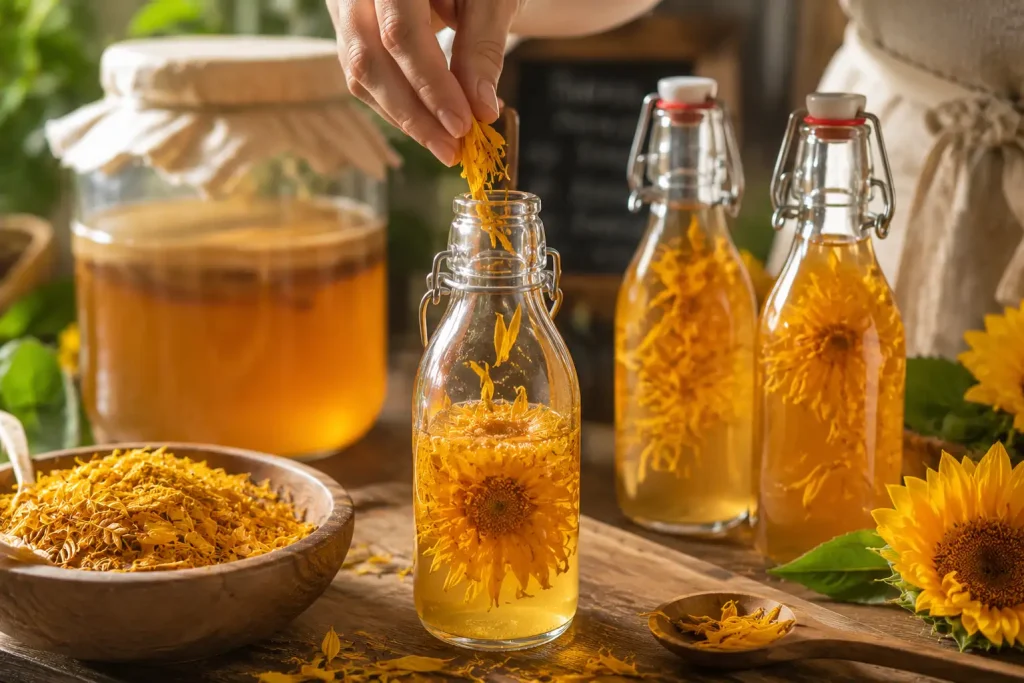
From a visual perspective, the petals release a warm golden hue into the liquid. In clear glass bottles, this creates a striking appearance that photographs well for retail and social media. Several small-batch kombucha brands now use sunflower petals as their signature botanical precisely because of this visual appeal.
Choosing the Right Petals for Brewing
Not all dried sunflower petals are equal. For kombucha 2F, you want petals that are:
Whole or large pieces: Intact petals steep more evenly and are easier to strain. Fine crumbs can cloud the finished kombucha and create sediment at the bottom of the bottle.
Vibrant golden-yellow color: Faded or brown petals indicate age, oxidation, or improper drying. Fresh petals should smell faintly of honey and dried grass.
Free from stems and leaf matter: Green plant material can introduce grassy, vegetal off-flavors during the acidic 2F environment.
Certified organic: Since kombucha is a living culture, you want to avoid any pesticide residues that could interfere with carbonation or flavor development.
Hatton Naturals supplies wild-harvested sunflower petals in bulk quantities suitable for both home and commercial kombucha production.
The Basic Sunflower Petals Kombucha 2F Method
This is the foundational technique. Once you master it, you can experiment with blends and ratios.
Ingredients per 16-ounce (473 ml) bottle:
- 14 ounces (414 ml) freshly brewed kombucha, fermented to your preferred tartness
- 1 tablespoon (approximately 1.5 grams) dried sunflower petals
- 1 teaspoon (4 grams) organic cane sugar or honey (for carbonation fuel)
Steps:
1. Add the sugar to the empty bottle first. This ensures even distribution.
2. Drop in the dried sunflower petals. There is no need to crush or chop them.
3. Pour in the kombucha, leaving about 1 inch (2.5 cm) of headspace for carbonation buildup.
4. Seal the bottle tightly. Swing-top glass bottles or commercial PET bottles both work well.
5. Leave at room temperature (72 to 78°F / 22 to 26°C) for 2 to 4 days. The warmer the environment, the faster carbonation develops.
6. After 2 days, burp one bottle to check carbonation. When you get a satisfying hiss and visible bubbles, move all bottles to the refrigerator.
7. Strain the petals before serving, or leave them in for visual effect. They are edible and safe to consume.
Advanced Blend: Sunflower and Hibiscus Duo
For a more complex flavor profile with deeper color, combine sunflower petals with organic hibiscus flowers. The hibiscus adds tartness and a vivid ruby hue that layers beautifully over the sunflower’s golden sweetness.
Blend ratio per 16-ounce bottle:
- 1 tablespoon (1.5 grams) sunflower petals
- 1 teaspoon (1 gram) hibiscus flowers, cut and sifted
- 1 teaspoon sugar
The result is a coral-pink kombucha with a sweet-tart balance that rivals commercial fruit kombucha, without any fruit juice at all. This blend is particularly popular at farmers markets because the color catches the eye from across the booth.
Five More Botanical Pairings Worth Trying
Once you are comfortable with sunflower petals kombucha, expand your repertoire with these complementary botanicals:
Sunflower + Lavender: Add half a teaspoon (0.3 grams) of organic lavender per bottle for a calming, spa-like profile. Go light on the lavender to avoid a soapy note.
Sunflower + Calendula: Calendula flowers deepen the golden color and add a faint peppery warmth. Use 1 teaspoon per bottle.
Sunflower + Rose: Organic rose buds and petals bring an elegant, perfumed sweetness. Half a teaspoon of crushed rose buds per bottle is enough.
Sunflower + Chamomile: Chamomile flowers amplify the honey notes and create a soothing evening kombucha. Use 1 teaspoon per bottle.
Sunflower + Butterfly Pea: For a dramatic color-changing kombucha, add half a teaspoon of butterfly pea flower. The brew starts blue-purple and shifts to pink when the kombucha’s acidity activates the anthocyanin pigments.
Troubleshooting Your Botanical Kombucha
Problem: No carbonation after 4 days.
The most common cause is insufficient sugar. Dried petals alone do not provide enough fermentable sugar for the yeast. Always add at least 1 teaspoon of sugar per 16-ounce bottle, even when using sweet-tasting botanicals.
Problem: Kombucha tastes flat or watery.
Your 1F (first fermentation) likely was not acidic enough before bottling. Aim for a pH of 3.0 to 3.5 before starting 2F. A more tart base kombucha produces a more flavorful finished product.
Problem: Overly floral or perfumy taste.
You used too many petals or steeped too long at warm temperatures. Scale back to half the recommended amount and refrigerate after 2 days instead of 4. Sunflower petals are forgiving, but other botanicals like lavender and rose can become overpowering quickly.
Problem: Cloudy or murky kombucha.
Fine petal fragments or excessive yeast sediment can cause cloudiness. Strain through a fine-mesh sieve or cheesecloth before serving. For production batches, consider steeping petals in a muslin bag inside the bottle so they are easy to remove cleanly.
Problem: Bottles overflow when opened.
Over-carbonation from too much sugar or too long at room temperature. Always burp bottles at the 48-hour mark. If you are producing at scale, invest in a carbonation testing gauge to standardize your process.
Storage and Quality
Dried sunflower petals maintain their flavor and color for up to 18 months when stored properly. Keep them in an airtight container away from direct sunlight, heat, and moisture. A cool, dark pantry or sealed food-grade bucket works well for bulk quantities.
Signs of degradation include faded color (from vibrant gold to dull tan), loss of the honey-like aroma, or a musty smell. If your petals smell like cardboard, they have oxidized and will not contribute meaningful flavor to your kombucha.
For production-scale brewing, buy in quantities that you will use within 3 to 6 months. Hatton Naturals offers sunflower petals in bulk wholesale sizes that are ideal for small to mid-size kombucha operations.
Once your sunflower petals kombucha is bottled and carbonated, it keeps well in the refrigerator for up to 3 weeks. The flavor actually improves over the first 5 to 7 days as the botanicals continue to infuse in the cold liquid. After 3 weeks, the petals may begin to break down and create sediment.
Safety Considerations
Sunflower petals are generally recognized as safe for consumption and have a long history of use in herbal teas and culinary applications. They are naturally caffeine-free and contain no known allergens beyond a rare sensitivity in individuals allergic to plants in the Asteraceae (daisy) family.
If you sell kombucha commercially, check your local health department regulations regarding botanical ingredients in fermented beverages. Most jurisdictions treat dried edible flowers the same as dried fruit or herbs, but requirements vary. Always use food-grade, certified organic petals from a traceable source to satisfy regulatory inspections.
Pregnant or nursing individuals should consult a healthcare provider before consuming any new herbal ingredient, including sunflower petal kombucha.
Scaling Up for Commercial Production
For kombucha brands ready to move beyond small-batch experimentation, here is how to scale the sunflower petals kombucha method:
Bulk ratio: Use approximately 3 grams of dried sunflower petals per liter (34 ounces) of kombucha. This ratio translates well from 16-ounce bottles to 5-gallon kegs.
Batch steeping method: Instead of adding loose petals to individual bottles, steep the total petal amount in a muslin bag inside your bottling vessel for 30 to 60 minutes before filling bottles. This gives you more control over flavor intensity and eliminates the need to strain each bottle individually.
Consistency tip: Weigh your petals on a gram scale rather than measuring by volume. Petal density varies between batches, and weight-based measurements produce more consistent results across production runs.
Sourcing at scale: When ordering sunflower petals for production, request a sample first to verify color, aroma, and steep quality. Hatton Naturals provides samples and offers competitive wholesale pricing on bulk botanical orders.
FAQ
How many sunflower petals should I use per bottle of kombucha?
Use approximately 1 tablespoon (1.5 grams) of dried sunflower petals per 16-ounce bottle. This produces a noticeable but not overpowering floral flavor. For stronger flavor, increase to 2 tablespoons, but taste-test first with a single bottle before scaling up.
Do sunflower petals add caffeine to kombucha?
No. Sunflower petals are completely caffeine-free. Any caffeine in your finished sunflower petals kombucha comes from the tea used in the first fermentation, not from the petals added during 2F.
Can I use fresh sunflower petals instead of dried?
Fresh petals contain significantly more moisture and can introduce unwanted bacteria into your 2F environment. Dried petals are strongly recommended because they are shelf-stable, consistent in flavor, and have been properly processed to reduce microbial contamination.
How long should I let sunflower petal kombucha ferment during 2F?
Two to 4 days at room temperature (72 to 78°F / 22 to 26°C) is the standard range. Start checking carbonation at 48 hours. Move to the refrigerator once you achieve the desired fizz level. Longer fermentation produces more carbonation but may also increase tartness.
Will sunflower petals change the color of my kombucha?
Yes. Sunflower petals release a warm golden-amber tint that is most visible in lighter-colored kombucha bases. If your 1F kombucha is already dark from black tea, the color change will be subtle. For maximum visual impact, use a green tea or white tea base.
Can I combine sunflower petals with fruit in 2F?
Absolutely. Sunflower petals pair well with peach, mango, pear, and lemon. Add the fruit and petals together at the start of 2F. The fruit provides additional sugar for carbonation, while the petals contribute aroma and color. A popular combination is 1 tablespoon of sunflower petals with 2 tablespoons of diced peach per 16-ounce bottle.
Where can I buy organic sunflower petals for kombucha?
Look for USDA-certified organic, food-grade sunflower petals from a reputable botanical supplier. Hatton Naturals offers wild-harvested sunflower petals in bulk sizes suitable for both home brewers and commercial kombucha producers.
Are sunflower petals safe for people with nut allergies?
Sunflower petals come from the flower head, not the seed. They do not contain sunflower seed proteins. However, if you have a severe sunflower seed allergy, consult your allergist before using the petals, as cross-contamination during harvesting is theoretically possible depending on the supplier’s processing facility.
Sunflower petals kombucha is one of the most approachable ways to bring botanical elegance to your fermentation practice. The mild flavor, forgiving steep behavior, and stunning golden color make it a reliable ingredient for both first-time experimenters and seasoned production brewers looking to expand their lineup. Whether you are bottling for your own fridge or for retail shelves, a handful of golden petals can transform an ordinary brew into something genuinely memorable.