Hibiscus Kombucha Recipe: Tart Ruby Brew in 5 Days
This hibiscus kombucha recipe delivers everything you want from a second fermentation: a deep ruby-red color that looks stunning in the glass, a boldly tart flavor with fruity depth, and natural carbonation that builds reliably within five days. Hibiscus is one of the most forgiving and rewarding botanicals in the home brewer’s pantry, and when you pair it with complementary ingredients like rose hips, orange peel, or a touch of cinnamon, you get a brew that stands on its own as a sophisticated craft drink. Follow this step-by-step guide and you will have a reliable hibiscus kombucha recipe you can scale and repeat batch after batch.
What Makes Hibiscus Ideal for Kombucha 2F?
Hibiscus calyces are exceptionally rich in anthocyanins, the same pigment family responsible for the color of blueberries, red cabbage, and pomegranates. In an acidic environment like finished kombucha, these pigments dissolve rapidly and produce a vivid crimson hue within hours. The flavor profile is similarly assertive: tart, slightly astringent, and reminiscent of cranberry or sour cherry with a clean, refreshing finish.
From a technical standpoint, hibiscus also contains naturally occurring organic acids that complement rather than disrupt the acidity profile of kombucha. It does not introduce off-flavors, it strains easily, and it consistently produces carbonation at the expected rate because it adds no significant fermentable sugars beyond what your base brew already contains. If you are new to this hibiscus kombucha recipe or to 2F in general, hibiscus is an excellent starting point precisely because it is so reliable.
Ingredients
Core Ingredients (makes approximately 64 ounces, four 16-oz bottles)
- 64 oz finished first fermentation (1F) kombucha, SCOBY and starter liquid removed
- 3 tablespoons organic hibiscus cut and sifted (about 2.25 tsp per 16-oz bottle)
- 2 tablespoons organic cane sugar or raw honey (0.5 tsp per bottle for carbonation)
Optional Flavor Boosters
- 2 tablespoons whole rose hips (adds depth and a subtle berry note)
- 1 tablespoon cut and sifted orange peel (brightens the citrus dimension)
- One 2-inch cinnamon cassia stick, broken into four pieces (one per bottle, for warmth)
- 1 teaspoon fresh ginger, thinly sliced, or dried ginger from our shop (adds a spicy backbone)
- 1 tablespoon organic lemon myrtle cut and sifted (amplifies the citrus and floral notes)
- 1 tablespoon whole organic elderflowers (for a honeyed floral counterpoint to hibiscus tartness)
Equipment
- Four 16-oz flip-top glass bottles (or equivalent swing-top bottles)
- Fine mesh strainer or cheesecloth for straining before serving
- Funnel
- Measuring spoons
- Labels or masking tape for dating bottles
Step-by-Step Instructions
Step 1: Prepare Your Bottles
Sanitize your bottles using either a food-safe sanitizer (such as Star San) or by running them through a hot dishwasher cycle and allowing them to cool completely. Any contamination at this stage can compromise your hibiscus kombucha recipe. Do not rinse with tap water after sanitizing if you used a no-rinse sanitizer.
Step 2: Add Botanicals to Each Bottle
Using your funnel, add the following directly to each 16-oz bottle before any liquid goes in. This ensures even distribution. Per bottle:
- 2.25 teaspoons hibiscus cut and sifted
- 0.5 teaspoon cane sugar or a small drizzle of raw honey
- Optional additions: 1.5 teaspoons rose hips, 0.75 teaspoons orange peel, one piece of cinnamon stick, two to three thin slices of ginger, 0.75 teaspoons lemon myrtle, or 0.75 teaspoons elderflowers
You do not need to use all optional ingredients at once. For your first batch following this hibiscus kombucha recipe, start with just hibiscus and one complementary botanical so you can understand how each ingredient contributes before building more complex blends.
Step 3: Fill with First Fermentation Kombucha
Pour your 1F kombucha into each bottle, leaving about 1 inch of headspace at the top. Seal the flip-top securely. Label each bottle with the date and contents.
Step 4: Second Fermentation at Room Temperature
Place your sealed bottles in a spot away from direct sunlight at room temperature, ideally between 68 and 78 degrees Fahrenheit. This is where the magic happens. Over the next two to five days, the residual yeast and bacteria will consume the added sugar, produce carbonation, and the hibiscus will steep into the kombucha, releasing its color and flavor compounds.
Check carbonation daily starting on day two by carefully opening one bottle slightly over the sink. If you hear a healthy fizz and get a brief release of gas, you are building carbonation well. If there is little to no fizz, give it another 24 hours. Warm kitchens ferment faster than cool ones.
Step 5: Refrigerate and Rest
Once you reach your target carbonation level, move all bottles to the refrigerator. Cold temperatures slow fermentation significantly, preserving the carbonation and flavor profile you have built. Allow the bottles to rest in the refrigerator for at least 12 hours before opening. This rest period also allows the hibiscus to continue steeping gently in the cold, often deepening the color and smoothing the flavor.
Step 6: Strain and Serve
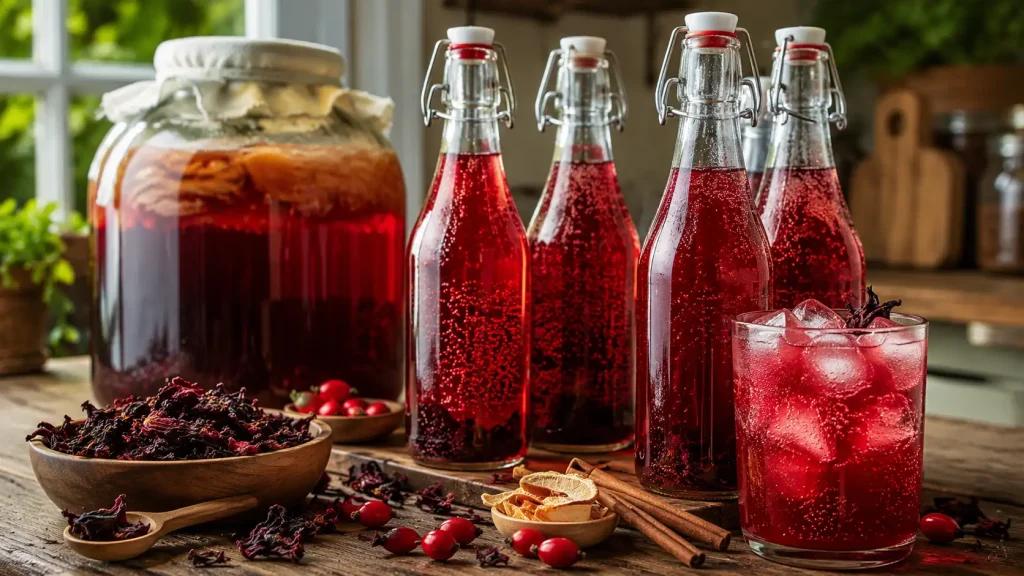
When you are ready to serve, open the bottle slowly over the sink, pour through a fine mesh strainer into your glass, and enjoy immediately. The color should be a deep, jewel-toned ruby. Taste should be tart, lightly sweet (depending on how far fermentation progressed), and vivid. If you included rose hips, you will notice a deeper berry dimension behind the hibiscus. Orange peel adds a bright citrus lift on the nose. Cinnamon provides a warm, spiced finish.
Flavor Variations
Once you are comfortable with the base hibiscus kombucha recipe, experimenting with the optional botanicals opens up a whole range of profiles:
- Hibiscus and Rose Hip: The most classic pairing. Rose hips are also high in vitamin C and organic acids, deepening the berry character and adding a slight jam-like richness.
- Hibiscus, Orange, and Ginger: Bright, spicy, and citrus-forward. This combination is one of the most popular 2F blends among experienced home brewers and gives the brew an almost mulled-wine warmth in cooler months.
- Hibiscus and Elderflower: Tart meets floral. The elderflower’s delicate honeyed notes soften the sharpness of hibiscus and add complexity without competing for center stage.
- Hibiscus and Lemon Myrtle: Citrus-forward and intensely aromatic. Lemon myrtle has a stronger lemon scent than actual lemon, making this combination vivid and refreshing.
- Hibiscus and Cinnamon: A warming, spiced brew well-suited to fall and winter. Use cinnamon sparingly or it can dominate the hibiscus flavor.
Troubleshooting
My kombucha is not carbonating after five days
Several factors can prevent carbonation from developing. First, check your room temperature. Below 65 degrees Fahrenheit, fermentation slows dramatically. Second, verify that you added a fermentable sugar at bottling. Without added sugar, residual fermentables may not be sufficient to build pressure. Third, check your bottle seal. If a flip-top gasket is worn or the seal is not tight, CO2 will escape faster than it is produced. Replace worn gaskets before your next batch.
My hibiscus kombucha is too tart
Tartness in this hibiscus kombucha recipe comes from two sources: the acidity of your 1F kombucha and the organic acids in the hibiscus itself. If the brew is too sharp, try using a slightly less mature 1F base (fermented for a shorter time), or reduce the hibiscus to 1.5 teaspoons per bottle and add a complementary botanical like elderflower or chamomile to round out the profile. Adding a small amount of honey at bottling also counteracts excess tartness.
The color is less vivid than expected
Pale color in a hibiscus brew usually indicates either old or low-quality hibiscus, or a 1F kombucha that is very light-colored to begin with. Check your hibiscus supply: it should be deep burgundy-red, not faded pink or brown. Fresh, high-quality organic hibiscus cut and sifted consistently produces that signature ruby color. Also note that longer steeping time (up to five days total) deepens the color significantly.
I am getting sediment in my finished kombucha
Fine botanical particles in 2F kombucha are normal and harmless. Strain through a fine mesh strainer or cheesecloth before pouring. If sediment bothers you aesthetically, consider placing botanicals in a reusable muslin tea bag inside the bottle for easier removal before refrigerating.
My bottles seem dangerously pressurized
Over-carbonation is a real safety concern in sealed 2F bottles. If your bottles feel very hard or you are getting explosive releases when opening, refrigerate immediately and burp (open briefly to release pressure) once cold. In the future, reduce your added sugar quantity slightly or shorten your room-temperature fermentation period. Always open 2F bottles slowly and never shake them.
Storage and Quality
Finished hibiscus kombucha stored in a sealed bottle in the refrigerator is best consumed within three to four weeks of bottling. The flavor will continue to evolve in the refrigerator, generally becoming slightly more tart and complex over time as slow fermentation continues at low temperatures. The color may deepen as well, which is entirely normal and does not indicate spoilage.
For the botanicals themselves: store your dried hibiscus, rose hips, orange peel, and other dried ingredients in airtight containers away from heat, light, and moisture. A labeled glass jar in a cool pantry is ideal. Most dried botanicals retain peak quality for 12 to 18 months under these conditions. If your hibiscus has lost its deep burgundy color or no longer smells bright and tart, it is time to replace it.
Do not freeze finished kombucha. Freezing ruptures the carbonation and can crack glass bottles. If you need to slow fermentation for travel or delay, the refrigerator is always the right tool.
Safety
Hibiscus is traditionally used in culinary and herbal applications and is generally recognized as safe for healthy adults when consumed in normal food quantities. This hibiscus kombucha recipe uses hibiscus in amounts consistent with standard culinary use. Individuals who are pregnant or nursing should consult their healthcare provider before consuming fermented products or botanical infusions. People taking medications for blood pressure or blood sugar should note that hibiscus is traditionally used for its potential effects on these systems and may wish to discuss consumption with their doctor. Kombucha itself contains trace amounts of alcohol (typically under 0.5 percent) and caffeine from the tea base. Those sensitive to either should account for this. Always use food-grade botanicals from reputable sources rather than decorative dried flowers, which may contain non-food-safe additives.
Frequently Asked Questions
How much hibiscus should I use in this kombucha recipe?
This hibiscus kombucha recipe calls for approximately 2 to 2.25 teaspoons of dried hibiscus per 16-ounce bottle. For a milder flavor and lighter color, reduce to 1.5 teaspoons. For a very bold, intensely tart brew, you can go up to 3 teaspoons, but taste your brew daily to avoid over-extracting.
Can I use hibiscus tea bags instead of loose hibiscus?
You can, but loose cut and sifted hibiscus gives you more control over quantity and better extraction surface area. Tea bags often contain lower-grade material and may produce a less vivid color or flavor. Loose hibiscus is the better choice for consistent results with this hibiscus kombucha recipe.
Do I need to add sugar to the second fermentation?
Yes. A small amount of fermentable sugar is necessary to fuel carbonation in sealed bottles. Without it, you risk flat kombucha. Start with 0.5 teaspoon of cane sugar or a light drizzle of raw honey per 16-ounce bottle. If your 1F kombucha is quite sweet (young, less fermented), you can reduce this slightly.
How long does hibiscus kombucha take to carbonate?
At room temperature between 68 and 78 degrees Fahrenheit, most hibiscus kombucha batches are well-carbonated within three to five days. Cooler kitchens may take up to six or seven days. Check carbonation daily by gently pressing the side of a plastic bottle (if using plastic as a reference) or carefully burping a flip-top bottle over the sink.
Can I mix hibiscus with other botanical additions?
Absolutely, and some of the best batches come from thoughtful combinations. Rose hips, orange peel, ginger, cinnamon, elderflower, and lemon myrtle all complement hibiscus well. When adding multiple botanicals, reduce each individual quantity by about 30 percent to keep the total botanical load under 3 teaspoons per 16-ounce bottle.
Why is my hibiscus kombucha not as red as I expected?
Color intensity depends on the quality and freshness of your hibiscus and the acidity of your base kombucha. Higher acidity produces more vivid red tones. Faded or old hibiscus produces pale, washed-out color. Purchase fresh organic hibiscus cut and sifted from a reliable source and store it in an airtight container away from light for best color performance.
Is hibiscus kombucha safe to drink every day?
For most healthy adults, moderate daily consumption of kombucha, including this hibiscus kombucha recipe, is well tolerated. Most practitioners suggest limiting kombucha to four to eight ounces per day, especially for those new to fermented beverages. Hibiscus is traditionally used in food and beverage preparations globally and is considered safe in culinary quantities. Those with specific health conditions should consult a healthcare provider.
Can I reuse the hibiscus from a finished batch?
No, the dried hibiscus has given up most of its flavor and color compounds during the first steeping. Using spent hibiscus in a second batch will produce a significantly weaker result. Always start each batch with fresh dried hibiscus for consistent color and flavor.