Lavender Kombucha: How to Add Floral Notes Without Soap Taste
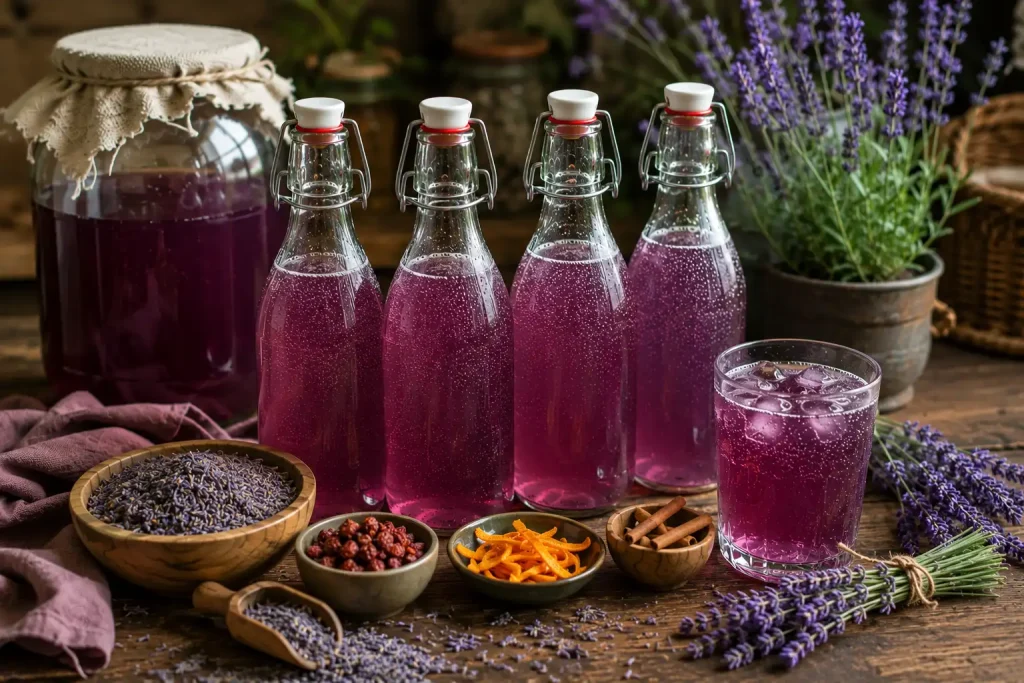
Lavender kombucha is one of the most requested floral second ferments, and it is also one of the most misunderstood. Done right, it delivers a soft, aromatic depth that makes every sip feel refined. Done wrong, it tastes like you drank a bar of soap, and that experience puts most brewers off floral kombucha entirely. The difference between those two outcomes comes down to three things: the form of lavender you use, the amount you add, and how long you let it steep. This guide covers all three in detail, along with pairing ideas, carbonation tips, and exactly how to rescue a batch that went too floral. Whether you are a first-time 2F experimenter or an experienced kombucha brewer looking to perfect a signature flavor, the steps below will get you to a clean, balanced, genuinely enjoyable lavender kombucha every time.
Why Lavender Is Tricky in Kombucha
Lavender contains high concentrations of linalool and linalyl acetate, the two primary aromatic compounds responsible for its characteristic scent. In tea, those compounds are pleasant because hot water extracts them gently and the drink is consumed quickly. In kombucha, the acidic environment and extended contact time amplify those same compounds dramatically. What started as a subtle floral note can become an overwhelming soapy or perfume-like taste within just a few extra hours.
The second complication is that not all lavender is the same. Culinary lavender (typically Lavandula angustifolia) is far more restrained in its aromatics than ornamental or soap-grade varieties. When you are brewing lavender kombucha, using a high-quality culinary-grade botanical is non-negotiable. Decorative lavender from a craft store or garden center will almost always produce that soapy outcome you want to avoid.
Choosing the Right Lavender for 2F
For second fermentation, you have two excellent options from Hatton Naturals. The first is Organic Lavender Super, a culinary-grade cut-and-sifted lavender with a balanced aromatic profile that integrates smoothly into an acidic brew. It releases its oils at a moderate pace, which makes it more forgiving if you steep slightly longer than intended.
The second option is Organic Lavender Flower Ultra Whole, which consists of whole dried flower buds. Whole buds release their aromatics more slowly than cut material, making them an excellent choice for brewers who prefer a gentler extraction or who want to leave the botanicals in the bottle for an extended second ferment. If this is your first attempt at lavender kombucha, whole buds are the safer starting point.
Never use lavender essential oil, lavender extract, or lavender syrup made with artificial flavoring. Those products introduce compounds that behave unpredictably in a living ferment and can harm your SCOBY if any 2F liquid is ever used as starter.
Ratios That Work: How Much Lavender to Use
The most common mistake is using too much lavender. A little goes a very long way in an acidic kombucha base. Here are the tested starting points per 16-ounce bottle:
- Lavender Super (cut and sifted): 1/4 teaspoon per 16 oz bottle
- Lavender Flower Ultra Whole (whole buds): 1/2 teaspoon per 16 oz bottle
For a 32-ounce bottle, double those quantities. These ratios produce a noticeable but not overwhelming floral character after 24 to 36 hours at room temperature. You can scale up to 1/2 teaspoon of cut lavender or 3/4 teaspoon of whole buds if you want a more pronounced flavor, but taste-test before sealing additional bottles.
The safest method is to do a single test bottle before bottling your entire batch of lavender kombucha. Fill one bottle with your standard ratio, burp it at 12 hours, taste it, and adjust your remaining bottles accordingly before they finish fermenting.
Steep Time and Temperature Control
Second fermentation for lavender kombucha should run between 24 and 48 hours at room temperature (68 to 72 degrees Fahrenheit is ideal). Beyond 48 hours, even whole buds will begin to release compounds that tip the balance toward soapy. If your home is warmer than 75 degrees Fahrenheit, reduce your ferment time to 18 to 24 hours and monitor closely.
After the initial room-temperature ferment, move the bottles to the refrigerator immediately. Cold temperatures halt further extraction almost entirely. You can leave whole lavender buds in the bottle during refrigeration for up to five days without significant quality degradation. Cut lavender should ideally be strained out before refrigerating if you are planning to store the bottles for more than two or three days.
To strain, simply pour the finished lavender kombucha through a fine-mesh strainer or cheesecloth into a clean bottle. This step also removes any sediment that has accumulated during the ferment.
Flavor Pairings That Complement Lavender
Lavender pairs beautifully with several botanicals that soften or brighten its aromatic intensity. These combinations are particularly effective in lavender kombucha:
- Lemon Myrtle: Adds a bright, citrusy top note that lifts the lavender and prevents it from feeling heavy. Use Organic Lemon Myrtle C/S at 1/4 teaspoon per 16 oz bottle alongside your lavender.
- Chamomile: Chamomile Flowers Whole adds a gentle honeyed softness that rounds out lavender’s sharper edges. Use equal parts chamomile and lavender (1/4 teaspoon each) for a very approachable floral blend.
- Rose Buds: Organic Rose Buds and Petals add a deeper floral note that creates complexity without competing directly with the lavender character.
- Elderflower: Elder Flowers Whole contribute a delicate, slightly sweet floral note that blends almost seamlessly with lavender.
- Peppermint: A small pinch of Peppermint Leaf Whole (no more than 1/8 teaspoon per 16 oz) creates a lavender-mint combination that feels bright and cooling rather than floral-heavy.
When using pairings, reduce your lavender quantity slightly to account for the combined aromatic load. A good rule of thumb is that the total botanical volume should not exceed 3/4 teaspoon per 16 oz bottle in a floral blend.
Building Carbonation in Lavender Kombucha
Floral botanicals like lavender do not themselves contribute fermentable sugars, so you will need a separate carbonation source in your 2F. The most common approach is to add one to two teaspoons of plain white cane sugar or a small amount of fruit juice per 16 oz bottle before sealing.
If you want to keep the flavor profile clean and purely floral, a small amount of white grape juice (about one tablespoon per 16 oz) works very well. It provides enough sugar for carbonation without adding a strong competing flavor. Plain sugar is equally effective and flavor-neutral.
Use plastic bottles if possible for your first few batches of lavender kombucha. Squeeze the bottle when you seal it to confirm it is firm. Once the bottle feels hard (usually after 24 to 36 hours), your carbonation level is likely sufficient. Refrigerate immediately to lock it in.
Troubleshooting: When It Tastes Like Soap
If your lavender kombucha has already gone soapy, there are a few recovery options. The first is dilution: blend the soapy batch with a fresh, unflavored kombucha at a one-to-one ratio. This often brings the aromatic intensity down to a drinkable level.
The second option is masking with acid. A squeeze of fresh lemon juice or a small splash of apple cider vinegar can cut through the soapy perception significantly. Add it by the half-teaspoon and taste as you go.
The third option is blending with a strongly flavored fruit juice, such as tart cherry or pomegranate. The berry notes tend to overpower the soapy lavender character and produce something reasonably pleasant.
For future batches, reduce your lavender quantity by 50 percent, shorten your steep time, or switch from cut lavender to whole buds. Any one of those changes usually resolves the problem.
Storage and Quality
Finished lavender kombucha keeps well in the refrigerator for up to two weeks. The floral character tends to mellow slightly over the first three to four days after refrigeration, which many brewers actually prefer because the initial intensity softens into something more integrated.
Store bottles upright to minimize contact between the liquid and the cap. Avoid storing near strong-smelling foods in the refrigerator, as kombucha can absorb ambient odors through minor pressure fluctuations in the cap seal.
If you notice the lavender aroma intensifying during storage (rather than mellowing), it is a sign that the botanicals were not removed before refrigeration and are continuing to steep. Strain the remaining liquid into a clean bottle as soon as possible.
For long-term quality, label each bottle with the date bottled and the botanical combination used. This makes it much easier to dial in your preferred recipe over multiple batches.
Safety
Culinary lavender is generally recognized as safe for consumption by healthy adults when used in food and beverage quantities. Lavender has been traditionally used for its calming properties, and herbalists often recommend it as a gentle botanical for relaxation support. However, it is not appropriate to make specific health claims about lavender kombucha.
Pregnant or breastfeeding individuals should consult a healthcare provider before consuming botanical-infused fermented beverages. People taking medications that affect the central nervous system should also seek medical guidance, as lavender may have mild interactions in some individuals.
As with all second-fermented kombucha, monitor your bottles carefully for over-pressurization. Open bottles over a sink and release pressure slowly. Do not shake bottles before opening.
Kombucha is a fermented product containing trace amounts of alcohol (typically under 0.5 percent). It is not suitable for individuals who must avoid alcohol entirely.
Frequently Asked Questions
Can I use fresh lavender instead of dried for lavender kombucha?
Fresh lavender can be used, but it requires more careful handling. Fresh flowers have a higher moisture content and a more volatile aromatic profile, which means they can over-extract very quickly. If using fresh lavender, use approximately twice the volume of dried lavender (so roughly 1/2 teaspoon of fresh buds per 16 oz bottle) and reduce steep time to 12 to 18 hours. Dried culinary lavender is more consistent and easier to control.
Does lavender affect the SCOBY or the fermentation process?
Lavender botanicals added during second fermentation do not come into direct contact with your SCOBY, so there is minimal risk. However, if you use any 2F liquid as starter tea for future batches, the strong essential oils could theoretically affect the microbial balance. Stick to using only plain first-ferment kombucha as your starter tea.
How do I know if my lavender kombucha has enough carbonation before refrigerating?
Use a plastic bottle and squeeze it every 12 hours. When the bottle feels firm and resists compression, carbonation is building well. For glass bottles, do a careful burp test by opening the cap slightly over a sink after 24 hours. A strong hiss indicates good carbonation and you should refrigerate immediately.
Why does my lavender kombucha smell fine but taste soapy?
This is a common experience with lavender. The compounds responsible for the soapy taste (primarily linalool at high concentrations) are perceived differently by smell and taste receptors. The solution is to reduce the quantity of lavender or shorten the steep time in your next batch. Diluting with unflavored kombucha is the fastest fix for the current batch.
What is the best lavender-to-chamomile ratio for a blended 2F?
A ratio of one part lavender to two parts chamomile tends to produce the most balanced result. For a 16 oz bottle, that means roughly 1/8 teaspoon of Lavender Super and 1/4 teaspoon of Chamomile Flowers Whole. This lets the chamomile carry the primary flavor while lavender provides a supporting floral note.
Can I add honey or a simple syrup made with lavender instead of dried lavender directly?
Yes, and this is actually a great technique for better control. Steep 1/2 teaspoon of dried lavender in 2 tablespoons of hot water with one teaspoon of honey for five minutes, then strain and cool completely before adding the syrup to your 2F bottle. This method lets you control extraction precisely before anything goes into the ferment.
How does lavender kombucha compare in complexity to rose or elderflower kombucha?
Lavender is typically more aromatic and assertive than either rose or elderflower, both of which are relatively delicate. Elderflower is the most subtle of the three. Rose sits in the middle. For a more layered botanical experience, try combining small amounts of all three using Lavender Super, Rose Buds and Petals, and Elder Flowers Whole at 1/8 teaspoon each per 16 oz bottle.
Does using whole buds versus cut lavender change the final taste?
Yes, meaningfully so. Whole buds release their oils more slowly and tend to produce a cleaner, slightly sweeter floral note. Cut lavender releases oils faster and produces a more intense, sometimes sharper aromatic punch. For most brewers, whole buds from the Organic Lavender Flower Ultra Whole line are the more forgiving and pleasant option in a 2F context.
Mastering lavender kombucha is largely a matter of restraint and timing. Use less botanical than you think you need, steep for less time than seems necessary, and always taste before sealing the full batch. With quality culinary-grade lavender and the ratios outlined here, you will consistently produce a lavender kombucha that is genuinely floral, genuinely refreshing, and completely free of that dreaded soapy character.