Best Dried Flowers for Kombucha Second Fermentation
Second fermentation is where kombucha transforms from a tangy base into something truly special, and adding dried flowers to kombucha during this stage is one of the most rewarding experiments a home brewer can run. The right botanicals introduce color, aroma, and layered flavor without overwhelming the culture you worked so hard to build. This guide covers seven dried flowers kombucha brewers reach for most often, complete with recommended ratios, steeping notes, and honest flavor profiles so you can bottle with confidence.
Why Add Dried Flowers to Kombucha During Second Fermentation?
Second fermentation (2F) happens after you remove the SCOBY and bottle your brew with a small amount of sugar and flavoring. The residual yeast and bacteria continue working inside the sealed bottle, consuming sugars and producing carbonation. This closed environment is ideal for botanical additions because the flowers steep gently over two to five days at room temperature, releasing their water-soluble compounds without any heat that could destroy delicate volatile oils.
Dried flowers kombucha pairings work particularly well because the acidity of the base brew acts as a natural extraction medium, pulling color compounds, light tannins, and aromatic esters out of the petals with remarkable efficiency. You get vivid hues, nuanced scents, and flavors that would take significant effort to achieve with standard fruit-only additions. There is also a practical advantage: dried botanicals carry far less water than fresh fruit, so they do not dilute your carbonation or significantly alter your sugar balance.
Choosing Quality Botanicals
Not all dried flowers are created equal. For kombucha, you want food-grade, organically grown material that has been dried and stored properly. Flowers that have lost their color (faded petals, dusty gray hues) have also lost most of their flavor-active compounds. Look for vibrant color, a clean aroma, and no signs of moisture damage. Certified organic sourcing matters here because you are essentially cold-steeping these petals directly in something you will drink, so pesticide residue is a real concern.
General Ratios and Timing
As a baseline, most dried flowers kombucha applications call for 1 to 2 teaspoons of dried petals per 16-ounce bottle. Strong-flavored flowers like hibiscus and elderflower sit toward the lower end of that range, while mild flowers like sunflower petals can go slightly higher. Steep at room temperature for two to four days, then refrigerate to slow fermentation and lock in flavor. Always do a small test batch before committing your entire brew to a new botanical.
Seven Best Dried Flowers for Kombucha Second Fermentation
1. Hibiscus
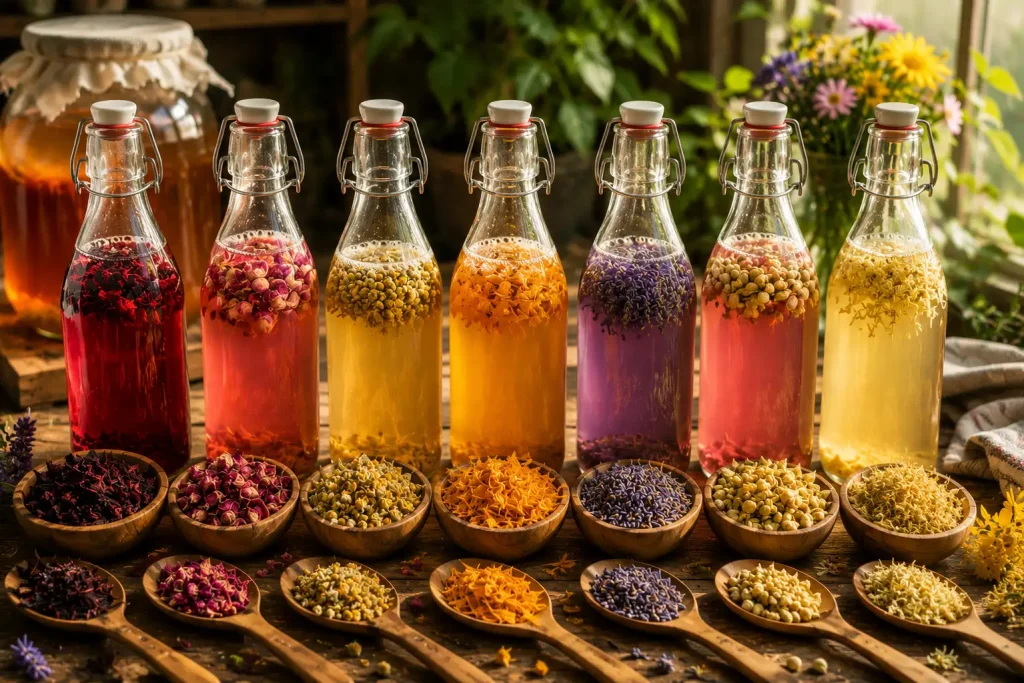
Hibiscus is arguably the most popular dried flower for kombucha second fermentation, and for good reason. The deep crimson petals contain high concentrations of anthocyanins that dissolve almost instantly in an acidic medium, turning your brew a stunning ruby red within hours. The flavor is boldly tart, slightly cranberry-like, and pleasantly astringent. Use 1 teaspoon per 16-ounce bottle and taste after two days. Hibiscus can become quite intense if left too long, so err toward a shorter steep if you prefer a more balanced profile. Organic hibiscus cut and sifted gives you a consistent particle size that is easy to strain.
2. Rose Buds and Petals
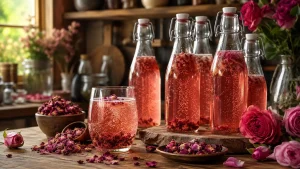
Rose brings an unmistakably romantic floral note to kombucha, balancing the tartness of the base brew with a soft, perfumed sweetness. Whole rose buds release their flavor more slowly than loose petals, so plan for a three to four day steep at room temperature. Use 1 to 1.5 teaspoons per 16-ounce bottle. The color contribution is a soft blush pink, which deepens slightly with longer contact time. Rose pairs beautifully with a small addition of dried hibiscus if you want more color or with a sliver of vanilla bean if you want a floral-sweet profile. Organic rose buds and petals from a reputable source will retain that characteristic fragrance that cheaper material often lacks.
3. Calendula
Calendula is one of the most versatile dried flowers kombucha brewers add to their repertoire once they move beyond hibiscus and rose. The golden-orange petals contribute a subtle honey-like sweetness with faint earthy undertones and a warm golden hue that brightens the otherwise amber-brown base. Calendula is relatively mild, so you can use up to 2 teaspoons per 16-ounce bottle. It pairs extremely well with citrus peel, ginger, or chamomile. Steep for two to three days. Organic calendula flowers whole retain more of their essential oils than pre-cut material and are worth seeking out for 2F use.
4. Lavender
Lavender is a botanical that demands respect in kombucha. The essential oil content is high, and overuse produces a soapy or medicinal character that overshadows everything else. Limit yourself to 0.5 to 1 teaspoon per 16-ounce bottle and do not exceed two days at room temperature. When used correctly, lavender adds a floral, slightly herbal depth that complements lemon or blueberry-based kombucha beautifully. The color contribution is minimal, a faint gray-purple tint, but the aromatic impact is significant. Organic lavender super grade offers tight, fragrant buds with concentrated oil content. A little goes a very long way.
5. Elderflower
Elderflower is a seasonal favorite in European brewing traditions, and it translates remarkably well to dried flowers kombucha applications. The flavor is delicate, lightly honeyed, and unmistakably floral with a subtle muscat-grape quality. Because elderflower is subtle rather than assertive, use 1.5 to 2 teaspoons per 16-ounce bottle and steep for three to four days to allow the flavor to fully develop. The color contribution is very light, pale ivory. Elderflower pairs naturally with lemon, ginger, or green tea-based kombucha. Whole organic elderflowers provide the best flavor extraction compared to pre-ground material.
6. Chamomile
Chamomile brings apple-like sweetness and a gentle floral warmth to kombucha that is particularly appealing in autumn blends. It is one of the mildest dried flowers kombucha brewers work with, making it forgiving for beginners experimenting with botanicals for the first time. Use 1.5 to 2 teaspoons per 16-ounce bottle and steep for two to three days. Chamomile combines exceptionally well with honey (added at bottling), vanilla, or a small amount of dried apple. The color it adds is a very faint golden tone. Whole chamomile flowers are preferable to chamomile powder for 2F because they strain easily and release flavor at a controlled rate.
7. Butterfly Pea Flower
Butterfly pea flower is the most visually dramatic botanical you can add to kombucha. The dried petals contain a pigment called ternatins, which turn water a deep indigo-blue at neutral pH and shift dramatically to purple or magenta as acidity increases. This means your kombucha will likely end up somewhere between deep violet and bright magenta depending on how tart your base brew is, and the color continues to evolve over the fermentation period. Flavor-wise, butterfly pea is earthy and faintly woody rather than strongly floral, so it serves more as a color agent than a primary flavor driver. Use 1 teaspoon per 16-ounce bottle, steep for two days, and enjoy the show. Wild-harvested butterfly pea flower delivers the vivid indigo color that makes this botanical so visually striking.
Bonus: Sunflower Petals
Sunflower petals are an underrated addition in dried flowers kombucha circles. They contribute a mild, slightly honeyed flavor, a soft golden hue, and attractive visual interest when left whole in the bottle as a presentation element. Because their flavor impact is gentle, use 2 teaspoons per 16-ounce bottle and steep for three to four days. Sunflower petals are excellent for blending with stronger-flavored botanicals like hibiscus or lavender to add visual volume without flavor competition. Organic whole sunflower petals stay intact during fermentation and make your bottles look stunning on the shelf.
Blending Dried Flowers for Complex Profiles
Some of the best dried flowers kombucha recipes involve two or three botanicals working together. A few proven combinations include hibiscus and rose (tart, deep ruby, and intensely floral), elderflower and lemon peel (delicate and citrus-forward), lavender and chamomile (herbal-sweet with a calming aroma), and butterfly pea with ginger (dramatic color with warming spice). When blending, reduce each individual botanical by 30 to 40 percent to avoid overwhelming the palate. Total botanical addition should rarely exceed 2.5 teaspoons per 16-ounce bottle across all ingredients combined.
Safety
Dried botanicals added to kombucha are generally well tolerated by healthy adults in the small quantities used for flavoring. That said, individuals with known plant allergies, particularly to members of the Asteraceae family (which includes chamomile, calendula, and sunflower), should use caution or avoid those specific flowers. Pregnant or nursing individuals should consult a healthcare provider before consuming kombucha flavored with elderflower, lavender, or other botanicals with traditional herbal uses. Always use food-grade, organic dried flowers sourced from reputable suppliers rather than decorative botanicals, which may contain dyes or preservatives not intended for consumption. Seal your 2F bottles tightly and open them carefully over a sink, as carbonation can build significantly, especially in warm weather.
Storage and Quality
Dried flowers for kombucha should be stored in airtight containers away from direct light and heat. A cool, dark pantry shelf is ideal. Most dried botanicals retain peak flavor for 12 to 18 months under these conditions, though some more volatile flowers like lavender and elderflower may fade faster. Buy in quantities you will use within a year rather than stocking up excessively. Label your containers with the purchase date so you always know what you are working with. Finished 2F kombucha that has been refrigerated after bottling is best consumed within three to four weeks, though it remains safe beyond that window as long as the seal was intact.
Frequently Asked Questions
How many dried flowers should I add per bottle of kombucha?
A general starting point is 1 to 2 teaspoons per 16-ounce bottle, adjusted based on the intensity of the specific flower. Strong botanicals like hibiscus and lavender sit at the lower end, while mild options like chamomile and sunflower petals can go toward the higher end.
Do I need to steep the flowers before adding them to the bottle?
No pre-steeping is necessary for 2F. Add the dried flowers directly to the bottle before sealing. The kombucha will extract flavor over two to four days at room temperature. Strain or leave the petals in the bottle based on your preference.
Will dried flowers affect carbonation levels?
Dried flowers have minimal impact on carbonation compared to sugar or juice additions. They do not add significant fermentable sugars, so they will not dramatically increase carbonation pressure. Your carbonation level is primarily determined by the residual sugar and the fermentation time.
Can I use fresh flowers instead of dried?
Fresh flowers can be used, but they introduce more water, carry a higher risk of contamination, and produce less consistent results than dried. Dried botanicals are more concentrated, easier to source year-round, and more reliably food-safe when purchased from a reputable supplier.
Which dried flower produces the most dramatic color in kombucha?
Butterfly pea flower and hibiscus produce the most dramatic color changes. Hibiscus turns kombucha a deep ruby red, while butterfly pea flower creates an indigo-to-purple-to-magenta shift depending on the acidity of your base brew.
How long should I let my dried flowers kombucha ferment at room temperature?
Two to four days at room temperature is standard for most botanical additions. Taste daily after day two and refrigerate once you reach your preferred flavor intensity. Refrigeration slows fermentation and locks in the taste profile you want.
Do dried flowers need to be rinsed before adding to kombucha?
If your botanicals are certified food-grade and from a reputable supplier, a rinse is not necessary and may actually wash away some of the volatile compounds you want to extract. Using high-quality, organically sourced material removes the need for extra preparation steps.
Can I mix dried flowers with fruit juice in the same 2F bottle?
Yes. Many brewers combine a small amount of fruit juice with dried botanicals for complexity. Just account for the sugar in the juice when estimating carbonation potential, and be aware that strong fruit flavors can sometimes overpower delicate flowers like elderflower or chamomile.