
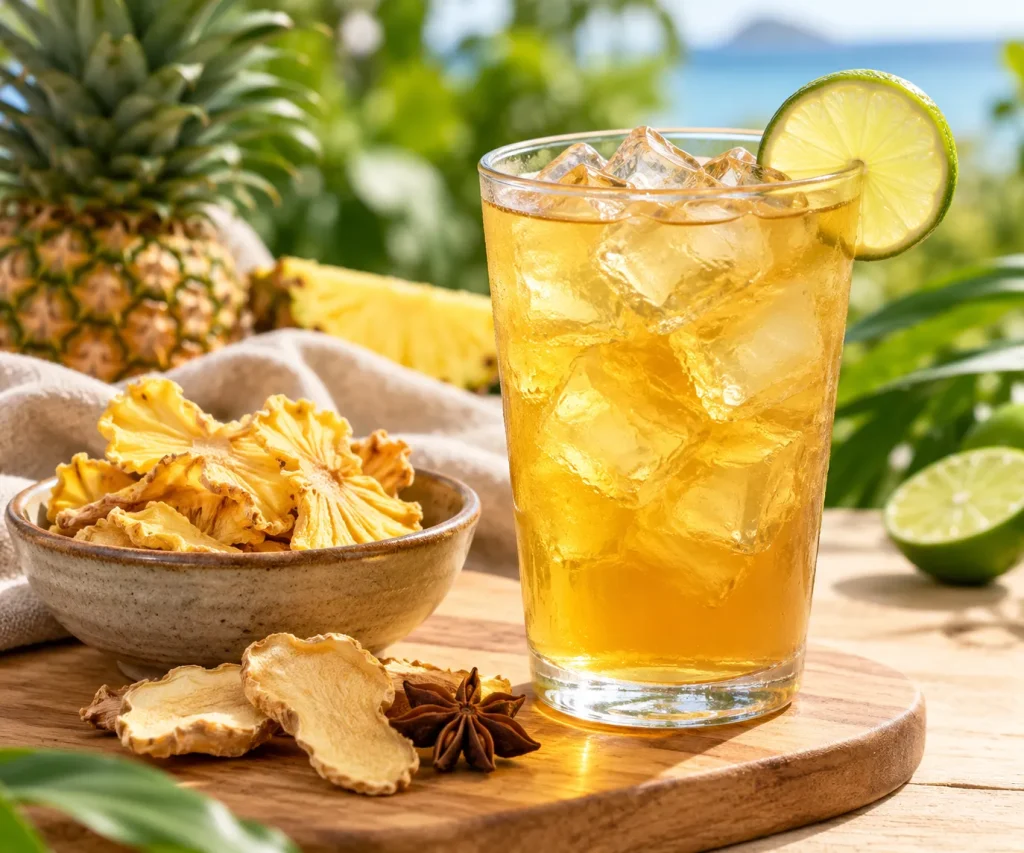
Pineapple Tea: How to Brew It With Dried Pineapple
Pineapple tea is a bright, tropical drink that tastes like a vacation in a cup. You can make it with fresh pineapple skins, but dried pineapple makes it much easier. It works hot or iced, and it blends with many herbs. This guide shows you how to brew pineapple tea and how to build your own tropical blends.
We will also share ratios, a spiced recipe, kombucha tips and storage advice. So whether you want a cozy winter mug or a cold summer glass, you will find a method here.
What Is Pineapple Tea?
Pineapple tea is an infusion of pineapple fruit, peel or core in water. In parts of Latin America and the Caribbean, people simmer pineapple skins with spices to make a homemade drink. In Mexico, for example, fermented pineapple rind becomes a drink called tepache.
Dried pineapple gives a sweet, tangy flavor and a golden color. Our organic pineapple, cut and sifted is sized for loose leaf brewing and tea blends.
Because it contains no leaves from the tea plant, this drink is a tisane, or fruit infusion. As a result, it is naturally caffeine free unless you mix in green or black tea.
Where Pineapple Comes From
Pineapple is native to South America, most likely the area around Paraguay and southern Brazil. Indigenous peoples grew it long before Europeans arrived. Later, Spanish and Portuguese sailors carried the fruit to Asia, Africa and the Pacific islands.
In Europe, pineapple soon became a luxury. Wealthy hosts even rented a single fruit to display at dinner parties. Meanwhile, tropical cooks used every part of it. They ate the flesh, brewed the skins and fermented the rinds. That thrifty habit is the true origin of homemade pineapple drinks.
The fruit also reached Hawaii in the 1800s. Soon, large plantations made it famous around the world. As a result, canned pineapple became a pantry staple in many American homes. Dried pineapple followed later as a handy snack and a popular tea ingredient.
Today, cooks in Jamaica, Puerto Rico and Mexico still simmer pineapple peels with ginger and cinnamon. In the Caribbean, people often call this pineapple skin tea. Dried pineapple simply makes the same idea easy for any kitchen.
How to Make Pineapple Tea
The basic ratio is simple. Use 1 to 2 tablespoons of dried pineapple for every 1 1/2 cups of water. Then choose between simmering and steeping, depending on how strong you like it.
Simmer Method
- Add 1 to 2 tablespoons of dried pineapple to a small pot.
- Pour in 1 1/2 cups of water.
- Bring to a boil, then lower the heat.
- Simmer for 8 to 10 minutes to soften the fruit.
- Strain and serve warm, or chill it for later.
Steep Method
If you prefer steeping, pour boiling water over the fruit and cover it for 10 minutes. The flavor will be lighter, but still pleasant. Also, fruit pieces release flavor more slowly than leaves, so give them time.
Fresh Peel Method
First, scrub a whole organic pineapple well. Next, cut off the skin and core. Then simmer them in 4 cups of water for 20 minutes. Finally, strain and sweeten lightly if needed. You can also combine fresh peels with a spoonful of dried pineapple for extra body.
Common Mistakes
- Rushing the brew: A short steep gives a weak, watery cup. So allow at least 8 minutes.
- Using candied pineapple: Sugared fruit makes the drink syrupy. Choose plain, unsweetened pieces instead.
- Steeping green tea too hot: Green tea turns bitter in boiling water. Cool the liquid to about 175°F first.
- Skipping the strainer: Small fruit fibers can cloud the cup. Therefore, use a fine mesh strainer.
How to Make an Iced Version
Pineapple tea really shines over ice. First, brew a double strength batch using twice the fruit. Next, let it cool to room temperature. Then pour it over ice and add a squeeze of lime. For a sparkling version, top it with soda water. Our herbal iced tea recipes include more summer ideas.
For cold brew, place 3 tablespoons of dried pineapple in a quart jar of cold water. Then refrigerate it for 8 to 12 hours. Cold brewing gives a softer, rounder flavor. In addition, it keeps the color bright and clear.
Serving Ideas for Parties
Iced pineapple tea makes a great alcohol free drink for gatherings. For example, fill a large pitcher with the cooled brew. Then add lime slices, fresh mint and a handful of frozen pineapple chunks. The frozen fruit chills the drink without watering it down.
You can also freeze the tea in ice cube trays. Later, drop the cubes into sparkling water or lemonade for a tropical twist. Another fun idea is a pineapple tea spritzer. Simply mix equal parts iced tea and soda water, then add a splash of orange juice. Kids and adults both enjoy it.
For a creamy treat, blend 1 cup of chilled pineapple tea with frozen banana and a spoonful of coconut milk. In that case, you get a smooth, piña colada style smoothie with no added sugar.
Tropical Blends to Try
Pineapple pairs well with spicy, tart and floral flavors. Here are a few easy combinations:
- Pineapple ginger: Simmer the fruit with 1 teaspoon of organic ginger root for a warm, zesty cup.
- Pineapple hibiscus: Add organic hibiscus for a ruby color and tart finish.
- Pineapple green tea: Steep the cooled pineapple liquid with organic Chun Mee green tea for 2 minutes.
- Pineapple lemongrass: Organic lemongrass adds a fresh citrus note.
- Spiced pineapple: Add Ceylon cinnamon, whole cloves and star anise for a cozy winter drink.
If you are new to mixing ingredients, our guide to tea blending for beginners explains how to balance ratios.
A simple rule helps when you build blends. Let pineapple make up about half of the mix. Then add one main partner and, if you like, one small accent. For example, combine 2 parts pineapple, 1 part hibiscus and a pinch of ginger. Too many ingredients can muddy the flavor, so keep it simple at first.
Use this table as a starting point for one cup with 1 tablespoon of dried pineapple:
| Blend | Partner amount | Brew time | Flavor |
|---|---|---|---|
| Pineapple ginger | 1 tsp dried ginger root | 10 minute simmer | Warm and zesty |
| Pineapple hibiscus | 1 tsp hibiscus | 5 to 7 minute steep | Tart and fruity |
| Pineapple green tea | 1 tsp Chun Mee | 2 minutes at 175°F | Fresh and grassy |
| Pineapple lemongrass | 1 tsp lemongrass | 8 minute steep | Bright and citrusy |
| Spiced pineapple | 1/2 tsp cinnamon, 2 cloves, 1 star anise | 10 minute simmer | Cozy and sweet |
Recipe: Caribbean Spiced Pineapple Tea
This recipe makes about four cups. It tastes great hot in winter and cold in summer.
- Add 1/4 cup of dried pineapple to a medium pot.
- Add 2 teaspoons of dried ginger root, 1 teaspoon of Ceylon cinnamon pieces and 3 whole cloves.
- Pour in 5 cups of water and bring it to a boil.
- Lower the heat and simmer, covered, for 15 minutes.
- Strain into a pitcher and stir in honey to taste.
- Add the juice of half a lime just before serving.
Using Pineapple in Kombucha
Dried pineapple is also a favorite for kombucha second fermentation. It adds natural sugar, which helps create fizz. Simply add a small handful to each bottle and ferment for two to four days. For more fruit and herb ideas, see our guide to kombucha tea flavoring.
Here is a simple process for beginners. First, brew and ferment your plain kombucha as usual. Next, place the dried pineapple in clean glass bottles. Then fill them with kombucha, leaving about an inch of space at the top. Finally, seal the bottles and keep them at room temperature, away from direct sun.
Pineapple also pairs well with other flavors in kombucha. Ginger gives it a spicy kick, while hibiscus adds a deep pink color. In addition, a few pieces of lemongrass make the brew taste fresh and bright.
For a 16 ounce bottle, about 1 tablespoon of pieces is plenty. Also, burp the bottles once a day so pressure does not build too high. Then refrigerate them once the fizz suits you. Curious which herb could join your pineapple? Take our quick kombucha flavoring quiz.
How to Choose and Store Dried Pineapple
For tea, choose plain dried pineapple with no added sugar or sulfites. The pieces should look golden yellow, not dark brown. They should also smell sweet and tangy. A cut and sifted size works best because it brews evenly and fits in infusers.
Dried fruit absorbs moisture easily. Therefore, keep it in an airtight container in a cool, dry place. Avoid the fridge door, where temperature changes cause condensation. Well stored pineapple keeps its flavor for many months.
Precautions
Pineapple tea is a simple fruit drink for most people. However, avoid it if you have a pineapple allergy. Also, hibiscus is traditionally avoided during pregnancy. If you are pregnant, nursing or taking medication, ask your healthcare provider before adding herbs to your routine.
Frequently Asked Questions About Pineapple Tea
Does pineapple tea contain caffeine?
No. Pure pineapple tea is caffeine free. It only contains caffeine if you blend it with green or black tea.
Can I eat the pineapple after brewing?
Yes. The softened fruit is tasty in yogurt, oatmeal or smoothies, so nothing goes to waste.
What does pineapple tea taste like?
It tastes sweet, tangy and tropical. Simmering brings out a deeper, almost caramel-like flavor.
How long does brewed pineapple tea last?
Store it in a closed jar in the fridge for up to three days. After that, the flavor starts to fade and may turn sour.
Is pineapple tea the same as tepache?
No. Tepache is fermented for several days and has a tangy, lightly fizzy taste. Pineapple tea is simply brewed and served right away.
Bring the Tropics to Your Kitchen
Pineapple tea is easy to brew, fun to blend and delicious at any temperature. Start with the simmer method. Then experiment with ginger, hibiscus or lemongrass until you find your signature cup.
Ready to start? Order our organic pineapple, cut and sifted and brew your first tropical pot today.


