Organic Coconut Cream for Smoothies Guide
Smoothie makers often look for ingredients that do more than add sweetness. They want body, aroma, a fuller mouthfeel, and a texture that stays pleasant from the first sip to the last. That is where organic coconut cream for smoothies stands out. It brings a rich tropical softness that can turn a thin fruit blend into something rounder, silkier, and more satisfying without making the process complicated. For herbal beverage makers and tea-focused formulators, it also opens up useful pairing options with spices, roots, and botanicals that create depth rather than just sugar.
What makes this ingredient especially useful is its flexibility. You can build around banana, mango, pineapple, cacao, brewed chai, matcha-style green blends, or vanilla-forward profiles and still keep a clean, balanced result. In practical terms, organic coconut cream for smoothies helps bridge water-based ingredients and powder ingredients, giving a more even suspension and a more luxurious finish. It is also convenient when you want consistency across batches. Whether you are making one breakfast glass or testing a small beverage menu, the right amount of coconut richness can make the formula feel complete rather than improvised.
Why Organic Coconut Cream for Smoothies Works So Well
The appeal of organic coconut cream for smoothies starts with texture. Coconut brings fat, and fat changes how a drink feels on the palate. A fruit-only smoothie can taste bright but fleeting. Add a creamy coconut element, and the blend slows down in a good way. Flavors linger longer, spices feel warmer, and the drink seems more composed.
It also helps with flavor layering. Coconut has a rounded sweetness even when no extra sugar is added. That makes it especially useful with ingredients that can seem sharp, grassy, earthy, or dry on their own. A little creaminess softens edges without erasing character. This is one reason beverage makers often pair it with vanilla, cinnamon, ginger, or mild roots and peels.
From a production angle, coconut-based cream components can support better batch repeatability than relying only on fresh dairy or highly variable fruit ripeness. When using powders, you can measure exactly, scale easily, and keep the profile more stable from one preparation to the next.
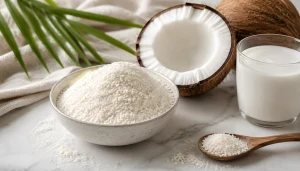
Try adding organic coconut milk powder when you want fast coconut body without opening a fresh can.
Flavor Profile: What It Adds Beyond Creaminess
A good smoothie does not need to taste heavy to feel rich. Coconut cream contributes a soft, rounded body, but it also adds a delicate aroma that suggests warmth, dessert, and tropical freshness all at once. In organic coconut cream for smoothies, that aromatic layer is part of the value. It can make a simple banana blend smell more complete, and it can give botanical ingredients a friendlier frame.
Vanilla is one of the cleanest pairings because it broadens the sweetness impression without forcing the drink into a dessert direction. That is particularly useful when you want something elegant and mild rather than candy-like. Soft spices also work well. Cinnamon gives familiar warmth. Ginger adds brightness and lift. Chamomile can add a mellow floral note when used in a very restrained infusion or powder-forward concept.
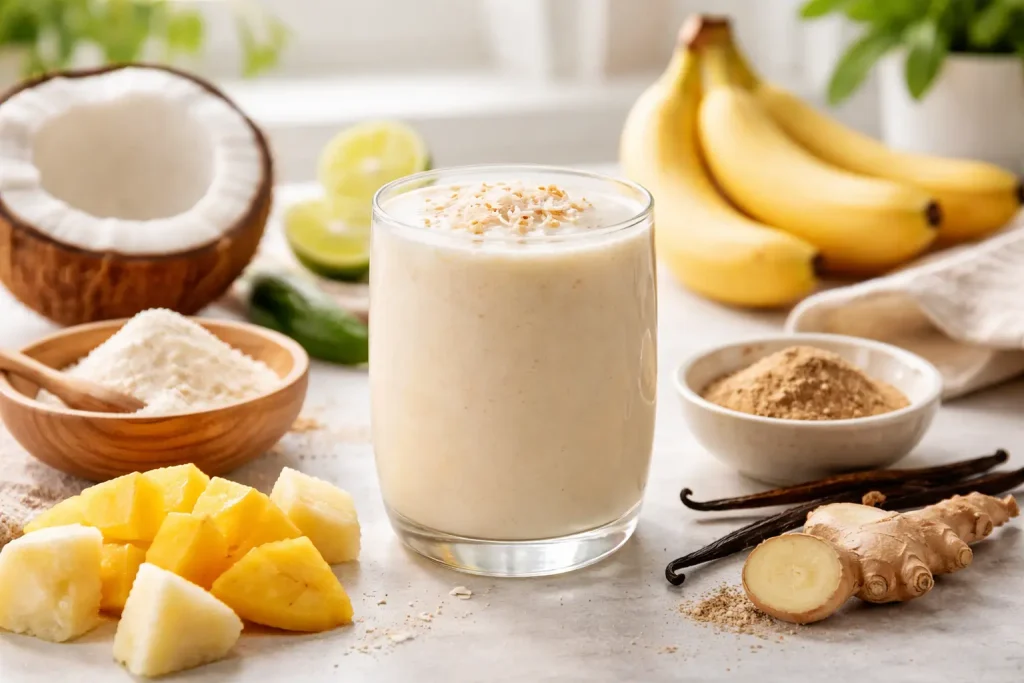
Fruit pairings tend to fall into three groups. First, there are tropical fruits like mango and pineapple, which echo the coconut naturally. Second, there are creamy fruits like banana and avocado, which build body. Third, there are tart fruits like berries, which create contrast and keep the drink from feeling too dense.
Try blending organic vanilla powder into mellow fruit bases when you want the coconut note to taste smoother and more layered.
Ratios and Base Formula in Grams and Teaspoons
When working with organic coconut cream for smoothies, ratio matters more than people think. Too little, and the coconut disappears. Too much, and the drink can become dense, oily, or muted. A balanced working formula is the easiest place to start.
Single-Glass Base Formula
For a 12 to 14 ounce smoothie:
- 240 g cold liquid (about 1 cup)
- 100 g frozen fruit
- 60 g banana or other creamy fruit
- 12 to 18 g organic coconut milk powder
- 2 to 4 g organic vanilla powder
- 8 to 12 ice cubes, depending on desired thickness
In teaspoon form:
- 1 cup cold liquid
- about 3/4 cup frozen fruit
- about 1/2 small banana
- 2 to 3 teaspoons organic coconut milk powder
- 1/2 to 1 teaspoon organic vanilla powder
For a richer version, increase the coconut milk powder to 20 to 24 g (roughly 4 teaspoons), but compensate with a little more liquid. This is the point where organic coconut cream for smoothies starts feeling dessert-like rather than lightly creamy.
If using brewed herbal tea as part of the liquid, cool it fully before blending. Warm liquid weakens texture and melts the ice too quickly.
Try a spoonful of cinnamon chips in a cooled infusion when you want subtle spice beneath the coconut profile.
Best Liquid Bases for Better Blending
The liquid you choose changes not only texture but also how the coconut reads in the final cup. Water gives the cleanest, brightest result. Coconut water makes the drink feel lighter and more tropical. Oat milk makes it softer and slightly cereal-like. Brewed tea or botanicals can make it feel more crafted and less like a generic smoothie.
For smoothie makers who want depth without heaviness, mild infusions can be especially effective. A light cinnamon infusion, a soft ginger infusion, or a barely-there chamomile base can support coconut beautifully. Keep the infusion gentle. You want the coconut and fruit to remain central.
This is where organic coconut cream for smoothies becomes especially interesting for tea makers. It allows a smoothie to behave more like a blended botanical beverage. Instead of choosing between fruit and herbs, you can integrate both. The coconut acts as a bridge, helping soft roots, peels, and flowers feel more harmonious.
For clean blending, keep your liquid very cold and add it to the blender first. Powders disperse better when they hit moving liquid rather than sitting directly on frozen fruit.
Try a light infusion with organic chamomile flowers if you want a calm apple, pear, or banana smoothie to taste softer and more rounded.
Easy Flavor Directions for Daily Use
Organic coconut cream for smoothies works best when you decide early what direction you want. Here are a few dependable profiles.
Tropical and Bright
Use mango, pineapple, banana, and coconut with a touch of vanilla. This is the most obvious direction, but it works because the fruit acidity keeps the richness lively.
Warm and Spiced
Use banana, pear, cinnamon, vanilla, and coconut. The result tastes full and bakery-like without needing pastry flavors.
Green and Creamy
Use spinach or a mild green base, banana, coconut, and vanilla. The coconut smooths the greener notes and makes the drink more approachable.
Cacao and Coconut
Use banana, cacao, coconut, and vanilla for a rounded, almost truffle-like profile. This works well when you want richness without dairy.
Root-Lifted Tropical
Use pineapple or mango with a little ginger and coconut. The ginger prevents the drink from tasting flat.
Try adding organic ginger root c/s in a gentle infusion or very small powdered amount to brighten heavy fruit blends.
How Tea Makers Can Use It in Beverage Development
For tea makers, organic coconut cream for smoothies is not just a home-kitchen ingredient. It can function as a textural tool in prototyping. If you already work with fruit teas, chai-style blends, vanilla notes, or spice-forward herbal concepts, coconut can help translate those flavors into a blended cold format.
A useful method is to begin with the aromatic axis of the drink before choosing the fruit. Ask whether the concept is floral, spicy, creamy, fresh, or dessert-leaning. Then choose coconut as the body builder. After that, select fruit for brightness and color.
For example, a vanilla-coconut base can support banana or pear. A ginger-coconut base can support mango or peach. A cinnamon-coconut base can support apple or banana. Chamomile-coconut works surprisingly well with soft stone fruit or mellow apple blends when kept subtle.
This approach matters because smoothies that rely only on fruit can feel one-dimensional. By thinking like a tea maker, you introduce top notes, middle notes, and finish. Coconut often occupies the middle and finish, rounding the drink and giving it a more deliberate identity.
Try using organic burdock root c/s in a very light decoction for a deeper, earthier beverage concept when you want more complexity behind coconut and vanilla.
Troubleshooting
Even simple smoothies can miss the mark. Here is how to fix the most common issues, including a few terms beverage makers use across other drink categories.
Flat flavor
Add a brighter fruit, a pinch of spice, or a little more vanilla. Coconut can soften edges so much that the blend loses contrast. Pineapple, ginger, or a colder serving temperature usually helps.
Too tart
Increase banana or add a touch more organic coconut milk powder. The fat and sweetness impression can soften sharp fruit acidity quickly.
Over-carbonation
This is not usually a smoothie issue, but if you are adapting concepts from sparkling or fermented beverages, remember that carbonated elements can foam unpredictably when blended with creamy ingredients. Blend still ingredients first, then fold sparkling components in only if truly necessary.
Sediment
Powders, spices, and roots can settle if the liquid base is too thin. Increase banana, reduce water slightly, or blend longer. Fine powders also disperse better when added after the liquid begins moving.
Aroma loss
Cold drinks mute aroma. To restore the bouquet, increase vanilla slightly, use fresher spices, or serve immediately after blending rather than holding too long.
These small corrections make organic coconut cream for smoothies much more dependable in repeated preparation.
Storage + Quality
Storage matters because coconut powders and aromatic botanicals can absorb moisture and lose character fast. Keep coconut milk powder, vanilla powder, and companion ingredients in airtight containers away from humidity, heat, and direct light. Once exposed repeatedly to steam or kitchen moisture, powders can clump and aroma can fade.
Color and scent are good quality cues. Coconut ingredients should smell clean, sweet, and fresh, not stale, soapy, or dusty. Vanilla should smell warm and rounded. Spices and flowers should still have a distinct aromatic lift when opened. If the scent is weak, the final smoothie will likely taste dull even if your formula is correct.
For smoothie service, blended drinks are best consumed immediately. If you must hold them, keep them refrigerated and stir or reblend before serving. Separation is normal over time, especially in formulas with high water content.
When sourcing ingredients for regular use, look for consistent cut, clean aroma, and stable storage performance. Organic coconut cream for smoothies benefits from that same discipline. Better ingredients reduce the need for sweeteners and unnecessary correction.
Try keeping organic green cardamom pods sealed tightly and using only a tiny amount when you want a fragrant, high-end coconut smoothie profile.
Safety
Keep all beverage language practical and compliant. Organic coconut cream for smoothies is best described in terms of texture, flavor, blending behavior, and traditional beverage use. Avoid disease language or medical promises. If discussing botanicals, phrases like “traditionally used,” “herbalists often use,” or “may support a balanced flavor profile” are the safer and more accurate route.
Also pay attention to allergens, sensitivities, and individual preferences. Coconut ingredients are not suitable for every customer, and strong botanicals should be used thoughtfully. In development work, test small amounts first, document your ratios, and keep labels clear.
Food safety basics still apply. Use clean tools, cold ingredients, and fresh produce. If using brewed botanicals, cool them quickly and store properly before blending. Discard any ingredient that smells off or shows signs of moisture damage.
Conclusion: Building Better Smoothies with Coconut and Botanicals
The reason organic coconut cream for smoothies remains so useful is simple. It does more than make a drink thick. It helps create shape, softness, aroma, and a more polished finish. It lets fruit taste fuller, spices taste warmer, and botanical accents feel intentional rather than scattered. For home smoothie makers, that means easier daily blends. For tea makers and beverage developers, it means a flexible base ingredient that supports layered cold drinks with more character.
Start modestly, measure carefully, and let the coconut support rather than dominate. When you pair organic coconut cream for smoothies with vanilla, gentle spice, or a well-chosen botanical, the result feels composed and memorable. That is often the difference between a smoothie that is merely acceptable and one you want to make again.
FAQ
What is the best amount of organic coconut cream for smoothies?
A practical starting point is 12 to 18 grams of coconut milk powder per serving, which is about 2 to 3 teaspoons.
Does organic coconut cream for smoothies make drinks too heavy?
Not if the ratio is balanced. Use enough cold liquid and bright fruit to keep the texture creamy but still fresh.
What fruits pair best with coconut cream smoothies?
Banana, mango, pineapple, pear, and peach are especially reliable because they support coconut without fighting it.
Can I use tea as the liquid base?
Yes. Mild, cooled infusions work very well, especially chamomile, cinnamon, or gentle ginger-based blends.
Why does my smoothie separate after blending?
Separation usually happens when the formula is too thin or held too long. Reblend briefly or increase creamy fruit.
Is vanilla a good addition to coconut smoothies?
Yes. Vanilla broadens sweetness perception and makes coconut taste smoother and more complete.
How should I store coconut milk powder and botanical ingredients?
Keep them airtight, dry, and away from heat and light. Check color and scent regularly for freshness.
Can I build more complex beverage ideas with organic coconut cream for smoothies?
Yes. It is especially useful for tea makers and herbal beverage developers because it supports layered flavor design with fruit, roots, spices, and soft florals.