Maca Powder Smoothie Recipe for Creamy Daily Blends
A good maca powder smoothie recipe should feel easy enough for a weekday and refined enough to satisfy someone who pays attention to aroma, texture, and ingredient behavior. Maca has a naturally earthy, malty profile with a round finish that pairs especially well with banana, cinnamon, creamy coconut, and gentle spice. For herbalists and tea makers, it is an especially interesting pantry ingredient because it behaves like a bridge between nourishment and flavor building. It can deepen a blend without making it heavy, and it can bring a soft grain-like body that supports roots, spices, and naturally sweet fruits.
This article walks through a practical approach to building a reliable daily smoothie, then expands into production-minded details like ratios, blending order, aroma control, storage, and pairing ideas using Hatton Naturals ingredients. The goal is not just to give you one formula, but to help you understand why certain combinations taste balanced, why others fall flat, and how to keep your blends consistent from one glass to the next.
Why a maca powder smoothie recipe works so well for daily use
Maca powder is one of those ingredients that earns its place through versatility. In the cup or glass, it brings warmth without heat, body without dairy, and a subtle roasted note that can make a simple smoothie taste more layered. Herbalists often describe its flavor as earthy, nutty, and faintly caramel-like, especially when it is paired with naturally sweet ingredients.
For daily blending, that matters. A smoothie that tastes one-dimensional gets boring fast. A smoothie with some grain, spice, and roundness feels more complete. That is why a maca powder smoothie recipe often performs better when built like a tea blend or botanical beverage, with a base note, a creamy middle, and a bright aromatic top.
Organic coconut milk powder is particularly useful here because it softens maca’s edge and creates a fuller mouthfeel. Try stirring in organic coconut milk powder when you want a richer, silkier finish.
The core formula: creamy everyday ratio in grams and teaspoons
A dependable formula makes experimentation easier. Start with this base for one generous serving:
250 to 300 ml cold water or chilled plant milk
1 medium banana (about 100 to 120 g peeled)
8 g Organic Maca Powder (about 2 teaspoons)
10 g Organic Coconut Milk Powder (about 2 1/2 teaspoons)
1 to 2 teaspoons maple syrup or honey, optional
1/4 teaspoon ground cinnamon
4 to 6 ice cubes
Small pinch of fine sea salt
This ratio gives you a smoothie that is creamy but still pourable. If you want more body, raise the coconut milk powder to 12 g. If you want the maca flavor more forward, raise the maca to 10 g, but do not jump too far too fast or the finish can become dusty and overly earthy.
For tea makers, this is the same logic used in dry blend formulation. Start with structure, then adjust accent notes. A maca powder smoothie recipe becomes more useful when you think in ratios instead of random spoonfuls.
Try using organic maca powder as the base note in your daily blend when you want a fuller, toastier flavor profile.
How to build flavor like a beverage maker
A balanced smoothie has contrast. Maca brings depth, banana brings sweetness and body, coconut brings softness, and cinnamon lifts the nose. Without contrast, even a nutritious blend can taste flat.
Think of the ingredients in layers:
Base notes
These are the flavors that stay on the palate. Maca, coconut, and banana sit here. They create the creamy foundation and the lingering finish.
Middle notes
These shape the identity of the blend. Cinnamon, vanilla, and carob can turn the same formula in different directions. A small amount of spice is usually enough.
Top notes
These are the first aromas you notice. A little ginger, a dusting of cinnamon, or a touch of peel can make the blend smell brighter before you even sip it.
One practical move is to avoid piling in too many strong botanicals at once. A maca powder smoothie recipe usually tastes better when built around two clear companions rather than five competing accents. Banana and cinnamon are classic because they soften the earthiness without hiding it.
For a deeper, more cocoa-like direction, try adding carob powder in a small amount to round out the middle notes.
Best ingredient pairings from the herbal pantry
 Maca is surprisingly adaptable, but some pairings are more elegant than others. The best additions either soften its earthy character or frame it with warmth and brightness.
Banana is the easiest partner because it contributes body and natural sweetness. Cinnamon supports both banana and maca with a dry, warming aroma. Coconut gives the whole drink a smoother, more dessert-like texture.
Beyond that, tea makers can treat smoothie ingredients like dry blend additions. A touch of root, leaf, or spice can shift the profile without overwhelming the glass. In my experience, the most useful companions are those that contribute gentle complexity.
Try a pinch of ceylon cinnamon powder when you want the aroma to open up without becoming sharp.
If you want a fresher top note, try a little ginger root cut blended or infused and cooled first for a lively finish.
For a more rounded pantry sweetness, a small amount of licorice root cut can be steeped, cooled, and used as part of the liquid base.
If you want a greener herbal accent, try nettle leaf cut and sifted in a light pre-infusion that cools before blending.
If you want an apple-like, soft floral touch, try chamomile flowers as a cooled infusion base for a gentler aromatic profile.
This is where a maca powder smoothie recipe becomes interesting rather than routine. Small adjustments can make it feel cozy, bright, dessert-like, or more botanical.
Step-by-step method for the smoothest texture
The order of blending matters more than many people think. Powders clump when they hit too little liquid, and aromatic ingredients lose some freshness when overblended. Use this sequence:
Add the liquid first.
Add banana and any sweetener.
Add Organic Coconut Milk Powder.
Add Organic Maca Powder.
Add spices or other accents.
Add ice last.
Blend 20 to 30 seconds on medium, then 10 to 15 seconds on high.
Let the smoothie rest for 30 seconds before pouring. This short pause allows foam to settle and the texture to become more even. If you are making two or three servings, blend only as long as needed. Excess blending can thin the texture and mute the aroma.
For batch testing, weigh your dry ingredients instead of relying only on spoons. Even a practical maca powder smoothie recipe becomes much more repeatable when you keep small notes on banana size, liquid volume, and total powder load.
Variations for everyday rotation
Once you have the base formula, it is easy to create variations that still feel coherent.
Warm spice version
Use banana, maca, coconut milk powder, cinnamon, and a tiny pinch of ginger. This version feels especially rounded and comforting.
Lighter botanical version
Use a cooled chamomile or nettle infusion for part of the liquid. Keep the coconut milk powder slightly lower so the herbal notes stay visible.
Dessert-style version
Add a little carob powder and a touch more cinnamon. This gives the smoothie a darker, richer profile without requiring chocolate.
Extra creamy version
Increase coconut milk powder slightly and reduce the ice. The result is thicker and more spoonable.
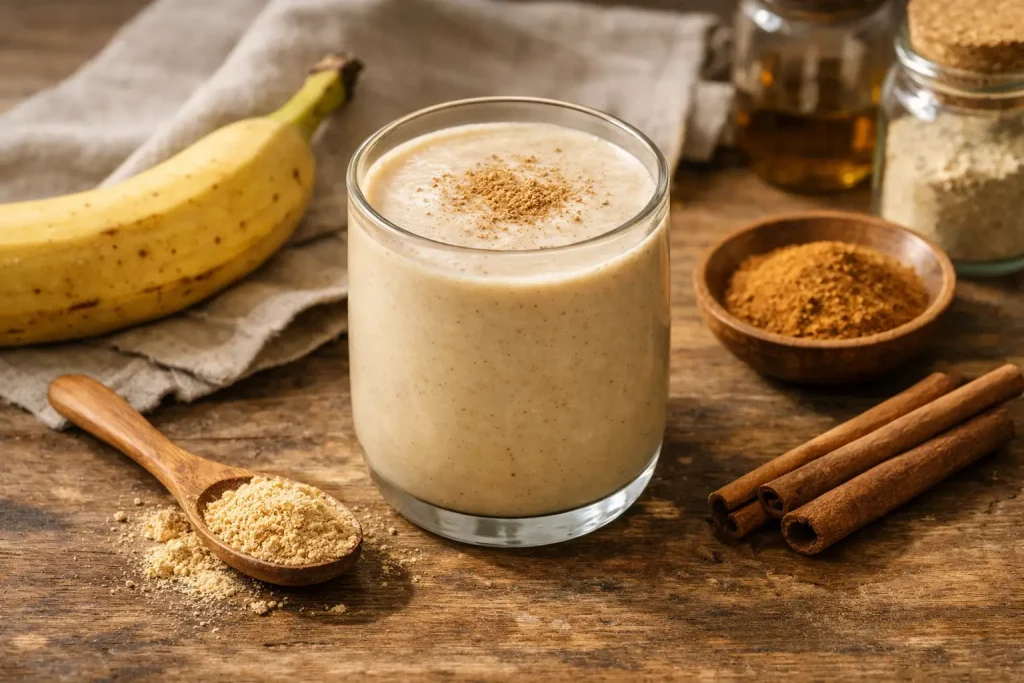
A maca powder smoothie recipe also adapts well to service-style presentation. Pour into a chilled glass, dust lightly with cinnamon, and finish with a thin banana slice or a faint sprinkle of maca on top for a more crafted feel.
Troubleshooting: flat flavor, too tart, over-carbonation, sediment, aroma loss
Even good ingredients can produce disappointing results when the balance is off. These are the most common issues and the quickest fixes.
Flat flavor
Usually caused by too much liquid or not enough aromatic lift. Add a pinch more cinnamon, slightly increase the maca, or reduce total liquid by 20 to 30 ml.
Too tart
This usually comes from fruit additions that are too acidic or from using a sharp infusion as the liquid base. Add more banana, a little extra coconut milk powder, or a small amount of sweetener to round the edges.
Over-carbonation
A smoothie itself should not be carbonated, but tea makers sometimes blend with sparkling ingredients or fermented bases. Do not do this in a sealed bottle. Blend still ingredients only, then serve immediately if adding sparkle afterward.
Sediment
Powders that are not fully dispersed will settle. Blend with enough liquid at the start, and avoid adding powders directly onto ice. Fine sediment is natural in a maca powder smoothie recipe, but heavy settling usually means the order was wrong or the powder load was too high.
Aroma loss
Overblending, warm liquid, or old spices can dull the nose. Use cold liquid, fresher aromatics, and shorter blend times.
Storage + Quality
Smoothies are best consumed soon after blending, but ingredient care makes a major difference long before that. Keep powders airtight and away from humidity, heat, and direct light. Coconut milk powder especially benefits from a tightly sealed container because moisture will cause clumping and flatten the aroma.
Maca should smell earthy, warm, and faintly nutty. If it smells stale, dusty, or strangely muted, it is past its best aromatic stage even if still technically usable. Coconut milk powder should smell sweet and creamy, not oily or flat.
Color and scent cues matter. Fresh maca powder usually has a warm beige to tan tone depending on grind and batch character. Cinnamon should smell vivid as soon as the container opens. Chamomile should retain a pleasant floral apple-like aroma. If the scent is weak, the blend will taste weaker too.
If you need to hold a finished smoothie briefly, refrigerate it in a covered jar and stir or shake before serving. A maca powder smoothie recipe is best within 12 hours, but the texture is at its peak in the first 30 minutes.
Safety
Use food-grade ingredients from reliable suppliers and keep your blending tools clean and dry. If using herbal infusions as part of the liquid, cool them fully before blending. Avoid making disease claims or presenting the smoothie as a treatment. It is better and more accurate to speak in culinary and traditional terms.
Herbalists often use maca as part of a nourishing pantry, but wording should stay practical and compliant. Describe flavor, texture, tradition, and preparation rather than promising outcomes. That keeps the beverage useful, honest, and suitable for a wide range of customers.
A maca powder smoothie recipe should also be adjusted to taste and context. Start modestly with strong ingredients, observe how the flavor behaves, and build from there.
Conclusion: a simple formula with room to grow
The best maca powder smoothie recipe is the one you can make consistently and still enjoy every week. Start with a creamy base, keep the flavor architecture clear, and use small adjustments rather than dramatic ones. Maca, banana, cinnamon, and coconut already create a strong foundation. From there, roots, flowers, leaves, and gentle spices can shape the blend toward warmth, brightness, or a more botanical finish.
For tea makers, this style of smoothie is especially satisfying because it responds to the same instincts used in blending: balance, restraint, texture, and aromatic lift. Keep your powders fresh, your ratios steady, and your process clean, and even a simple glass can feel crafted rather than rushed.
FAQ
What is the best liquid for a maca powder smoothie recipe?
Cold water works well for a cleaner taste, while plant milk creates a richer result. A cooled herbal infusion can also be used for more complexity.
How much maca powder should I use per smoothie?
A practical starting point is 8 g, or about 2 teaspoons, per serving. You can adjust from there based on taste and texture.
Can I make a maca smoothie without banana?
Yes. Use pear, cooked and cooled oats, or a little more coconut milk powder for body, though banana gives the easiest creamy texture.
Why does my smoothie taste dusty?
Too much powder, not enough liquid, or poor blending order can cause that. Add liquid first and keep the total powder load balanced.
Can I prepare it ahead of time?
Yes, but it tastes freshest shortly after blending. If stored cold for several hours, shake or stir well before drinking.
What spices pair best with maca?
Cinnamon is the easiest and most reliable. Ginger and carob also work well in small amounts.
Is this maca powder smoothie recipe very sweet?
Not necessarily. Banana brings natural sweetness, and added sweetener is optional. You can keep it mild and balanced.
How do I make the aroma stronger?
Use fresher cinnamon, colder liquid, and shorter blend times. A small finishing dust of spice on top also helps.