Kombucha Tea Flavoring: Best Herbs to Use
Kombucha tea flavoring is one of the most creative aspects of home brewing. Once you have mastered a basic first fermentation, kombucha tea flavoring in the second fermentation stage opens up an enormous range of flavor possibilities — from tart hibiscus and citrus to floral lavender and spiced ginger. The right herbs and botanicals can transform a plain kombucha base into something truly distinctive.
This guide covers the most effective dried herbs and botanicals for kombucha tea flavoring, explains when to add them, offers practical ratios, and helps you troubleshoot common flavoring challenges.
Understanding Second Fermentation and Kombucha Tea Flavoring
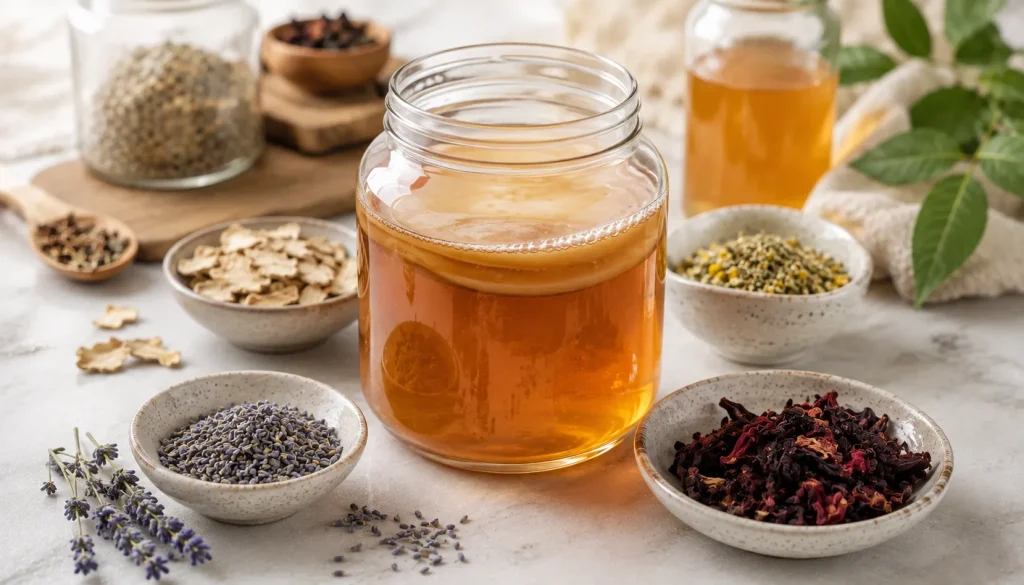
Kombucha tea flavoring happens primarily during the second fermentation (F2). After first fermentation (F1) produces the base kombucha from sweet tea and a SCOBY, the liquid is bottled with flavoring ingredients and sealed for 1-3 days at room temperature. This second ferment builds carbonation as the remaining yeast consumes sugars from the added flavorings, while simultaneously infusing the kombucha with the flavors of the herbs and fruits.
The timing of kombucha tea flavoring matters. Adding herbs too early — during first fermentation — can stress the SCOBY and introduce competing cultures. Additionally, the long F1 period would over-extract most herbs, producing an overpowering or astringent result. Second fermentation, by contrast, is short enough that herbs release their flavors without becoming bitter.
Hibiscus: A Classic Kombucha Tea Flavoring Choice
Hibiscus is arguably the most popular single herb for kombucha tea flavoring, and for good reason. The dried flowers dissolve readily into the liquid, releasing a vibrant crimson color and a distinctly tart, berry-like flavor. Hibiscus cut and sifted works particularly well because the finer cut provides a larger surface area for faster flavor extraction — important given the short 48-72 hour F2 window.
Use one to two teaspoons of hibiscus per 16-ounce bottle. This produces a bright red kombucha with a noticeable tartness that pairs well with citrus. Moreover, hibiscus also provides additional sugars that feed the yeast, contributing to strong natural carbonation.
Lavender for Floral Kombucha Tea Flavoring
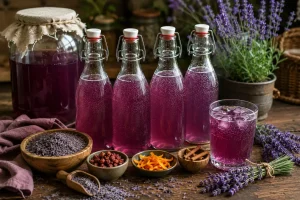
Lavender provides an elegant, aromatic kombucha tea flavoring option. It produces a subtly floral, slightly herbal kombucha with a pleasant aroma. However, lavender is a strong-flavored herb — too much creates a soapy, overpowering result that most people find unpleasant.
Use no more than half a teaspoon to one teaspoon of whole dried lavender flowers per 16-ounce bottle. Lavender pairs beautifully with lemon, blueberry, and peach. Consider combining half a teaspoon of lavender with a tablespoon of frozen blueberries for a lavender-blueberry kombucha that balances floral notes with fruity sweetness.
Rose Petals for a Delicate Kombucha Tea Flavoring
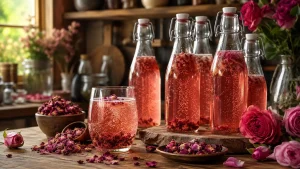
Rose petals create a delicate, romantic kombucha tea flavoring with a mild floral character and a faint blush-pink tint. Unlike hibiscus, rose petals are less acidic and produce a gentler flavor shift. They work best in combination with other ingredients rather than as a solo flavoring agent.
Dried rose petals cut and sifted combine naturally with hibiscus, raspberries, or lychee for a floral, berry-forward profile. Use one to two teaspoons per 16-ounce bottle. The result is a light, fragrant kombucha that makes an excellent non-alcoholic option for social occasions.
Ginger for Spiced Kombucha Tea Flavoring
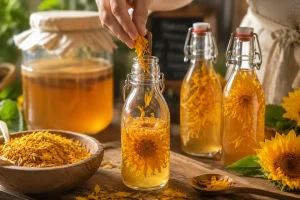
Ginger is one of the most popular kombucha tea flavoring ingredients across all skill levels. It provides natural sugars that boost carbonation, adds warmth and spice to the flavor profile, and complements the existing acidity of kombucha exceptionally well. Furthermore, ginger-flavored kombucha is commercially one of the best-selling varieties — which speaks to the broad appeal of this flavor combination.
For F2 flavoring, use dried ginger cut and sifted at one to two teaspoons per 16-ounce bottle. Dried ginger produces a more concentrated, slightly earthier spice than fresh ginger and requires no prep work. Pair ginger with lemon, turmeric, or hibiscus for popular flavor combinations.
Lemongrass for a Citrus Herb Kombucha Tea Flavoring
Lemongrass adds a bright, citrusy, slightly grassy note to kombucha that differs from direct lemon juice. It produces a clean, refreshing flavor without the sharp acidity of citrus fruit. Organic lemongrass cut and sifted works particularly well in lighter, summery kombucha blends. Use one to two teaspoons per bottle and pair with ginger for a lemongrass-ginger kombucha that is bright, slightly spiced, and highly refreshing when served cold.
Ratios, Tips, and Troubleshooting
A reliable baseline ratio for most dried herb kombucha tea flavorings is one to two teaspoons of dried herb plus one to two tablespoons of fruit or fruit juice per 16-ounce bottle. Always leave at least an inch of headspace in sealed bottles to allow CO2 to build safely.
Burp your bottles once daily during F2 — open the cap slightly to release pressure, then re-seal. This prevents bottles from over-pressurizing. After 48 hours, taste-test one bottle by opening it carefully. If carbonation and flavor are at the desired level, transfer all bottles to the refrigerator. Cold temperature dramatically slows fermentation and carbonation development.
If your kombucha tea flavoring comes out too weak, extend F2 by another 24 hours before refrigerating, or increase the amount of flavoring ingredient in your next batch. If the flavor is too strong or bitter, reduce the herb quantity and shorten F2 time.
Safety Disclaimer
The herbs described in this post — hibiscus, lavender, rose petals, ginger, and lemongrass — are widely used culinary botanicals with long histories of food and beverage use. Kombucha itself is a fermented beverage, and the fermentation process produces small amounts of alcohol (typically 0.5-3% ABV). People who are pregnant, immunocompromised, or who avoid alcohol should be aware of this. Additionally, homemade kombucha should always be stored in proper pressure-safe bottles. This post is for informational and culinary purposes only and does not constitute medical advice.
Frequently Asked Questions
When is the best time to add herbs for kombucha tea flavoring?
Always add dried herbs and other flavorings at the start of second fermentation (F2), not during first fermentation. Place the herbs directly into your clean F2 bottles before adding the base kombucha. Seal and allow to ferment at room temperature for 48-72 hours before refrigerating.
Do dried herbs add carbonation to kombucha?
Dried herbs alone contribute minimal carbonation compared to sugary fruit or juice. For strong carbonation in an herb-flavored batch, add a small amount of additional sugar (one teaspoon per 16-oz bottle) or combine the herbs with naturally sugary fruit to ensure the yeast has enough fuel to produce CO2.
Can I use fresh herbs instead of dried for kombucha tea flavoring?
Fresh herbs can be used but carry a higher risk of introducing competing bacteria and mold into your kombucha. Dried herbs are preferred because the drying process eliminates most surface microorganisms. If you use fresh herbs, ensure they are thoroughly washed and dried before adding them to your F2 bottles.
How do I strain the herbs out of my finished kombucha?
Pour the finished kombucha through a fine mesh strainer directly into a glass when serving. Alternatively, after F2 is complete, you can transfer the kombucha to a fresh bottle through a strainer before refrigerating. This produces a clean, herb-free kombucha that is easier to serve.
Explore our full selection of organic dried herbs and botanicals to discover every kombucha tea flavoring combination your next batch could use.