Sarsaparilla Root Beer Recipe Made at Home
A good sarsaparilla root beer recipe brings together aroma, spice, sweetness, and gentle bitterness in a way that feels both nostalgic and deeply botanical. Long before commercial soda flattened root beer into something overly sweet, home beverage makers worked with roots, bark, vanilla, and spice to build layered flavor from the pot up. This version keeps that old-fashioned spirit while making the process clear enough for modern kitchens and small-batch tea makers. If you enjoy crafting syrups, functional-style café drinks, or herbal soda concentrates, this is a practical place to start.
What makes this style so satisfying is the way the scent rises before the first sip. Sarsaparilla has a woody, earthy depth that pairs beautifully with vanilla and warm spice notes. The result is not just sweet fizz. It is rounded, fragrant, and full-bodied. This sarsaparilla root beer recipe is designed for home use, but it is also written with a production-minded mindset, so you can scale test batches, adjust sweetness with intention, and build a repeatable flavor profile that still tastes handcrafted.
Why Sarsaparilla Makes Such a Distinct Root Beer Base
Sarsaparilla root has been prized in traditional beverage making because it gives a dark, rounded, root-like backbone that feels classic without needing artificial flavoring. Herbalists and old beverage manuals often treated roots as the foundation of depth, not just an accent. In practical terms, that means sarsaparilla does the heavy lifting in a root beer blend. It gives the brew its grounding note, while supporting ingredients lift, soften, or brighten it.
In this sarsaparilla root beer recipe, the root should not be overwhelmed. Vanilla smooths the sharper edges and adds a creamy impression even before milk or foam are involved. Warm accents such as cinnamon, allspice, or a touch of licorice root can deepen the profile, but restraint matters. Too many bold botanicals and the brew starts tasting muddy rather than old-fashioned.
For tea makers, this is similar to building a strong base note in a custom blend. You need structure first. Then you adjust the top notes.
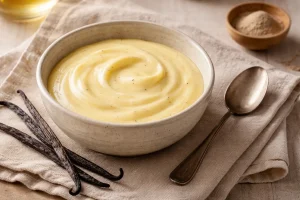
Try using organic vanilla bean pieces when you want a softer, more rounded finish in root-based drinks.
Core Ingredients for a Balanced Sarsaparilla Root Beer Recipe
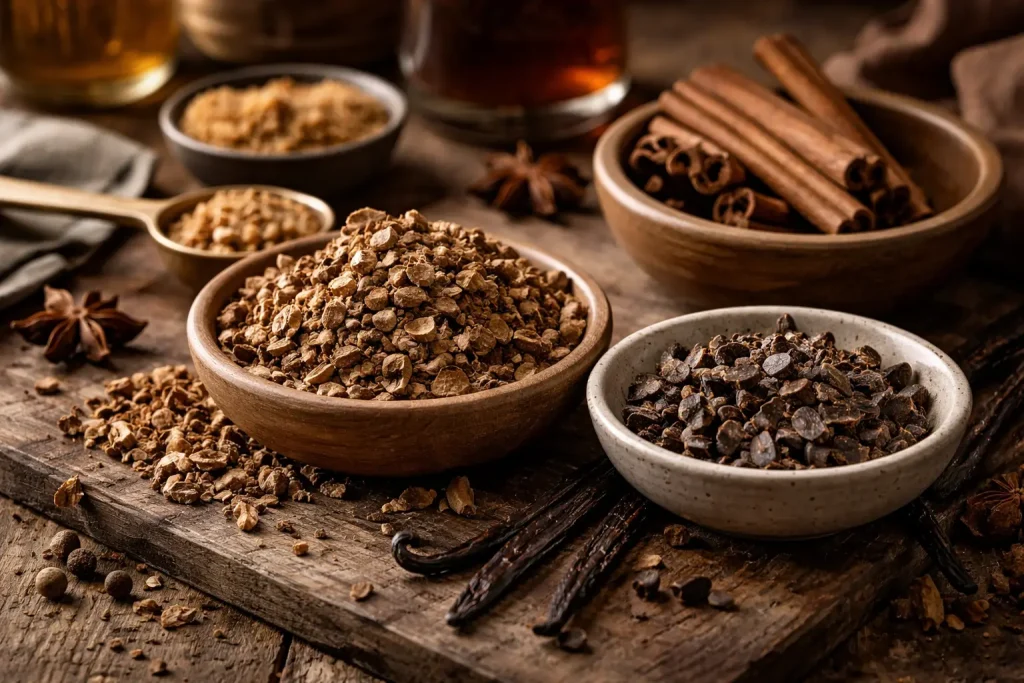 The beauty of a sarsaparilla root beer recipe is that it can stay simple while still tasting layered. For a home batch, start with a core formula and only then experiment. A reliable blend for approximately 1 liter of finished concentrate can include:
20 grams sarsaparilla root c/s
4 grams vanilla bean pieces
8 grams cinnamon chips or 1 small cinnamon stick
3 grams fresh ginger slices or 1 gram dried ginger
220 to 260 grams sweetener
1 liter water for simmering, plus dilution water later if needed
If you prefer spoon measurements for a small test batch, that looks roughly like this:
4 teaspoons sarsaparilla root c/s
1 teaspoon vanilla bean pieces
2 teaspoons cinnamon chips
1/2 teaspoon dried ginger
1 cup plus 2 tablespoons sugar
These ratios create a base that is woody, warm, and aromatic without becoming harsh. A tea maker may choose to substitute part of the sugar with a darker sweetener for more body, but clean cane sugar usually lets the botanicals show best. If you are exploring more layered soda-style profiles, a small amount of molasses can add depth, though too much will hide the root character.
Try adding organic sarsaparilla root c/s as the main botanical backbone for rich, old-style root beer character.
How to Brew the Root Base Without Losing Aroma
The most common mistake in a sarsaparilla root beer recipe is using water that is either too cool to extract properly or too aggressively boiled for too long. Roots need time, but not abuse. Put the sarsaparilla, cinnamon, and ginger into a pot with the water. Bring it just to a boil, then immediately lower to a gentle simmer. Keep it there for 20 to 25 minutes, partially covered.
Add the vanilla bean pieces during the last 5 to 7 minutes rather than from the beginning. This helps preserve more of the delicate aromatic quality. After simmering, turn off the heat and let the mixture steep for another 10 minutes with the lid on. Strain through a fine mesh filter while warm.
At this point, taste before sweetening. The unsweetened liquid should be stronger than you want in the final drink. It may seem woody, slightly spicy, and even a little dry. That is correct. Sweetness and carbonation will reshape the perception.
For a brighter top note in more complex root drink blends, try a small amount of organic dried ginger root in the simmering stage.
Sweetening, Syrup Building, and Flavor Adjustment
Once strained, return the liquid to low heat and stir in the sweetener until fully dissolved. For classic soda texture, the sweetened base should feel slightly heavier than a normal tea syrup but not as thick as pancake syrup. Simmer just long enough to dissolve the sugar completely. Do not reduce too aggressively unless you specifically want a concentrate.
If you are making a pour-over soda base, aim for a syrup that can be diluted at roughly 1 part syrup to 3 or 4 parts sparkling water. If you are building a directly fermented soda, use less initial reduction and measure sugar carefully for consistency.
This is where a sarsaparilla root beer recipe becomes personal. More vanilla gives a creamier impression. More cinnamon pushes it toward holiday spice. More ginger makes it feel sharper and livelier. Keep adjustments small. A 10 to 15 percent change in one ingredient is usually enough to notice.
For beverage developers, it helps to keep a notebook with three columns: root depth, sweetness, and top aroma. That makes each test batch more useful than simply brewing from instinct every time.
For a gentle sweet spice accent, try blending in organic cinnamon chips during the decoction stage.
Carbonation Options for Home Makers
There are two practical ways to finish this sarsaparilla root beer recipe. The first is the easiest and most controlled: chill the syrup and mix it with sparkling water to taste. This gives you excellent control over sweetness and avoids bottle pressure issues. It is ideal for cafés, mocktail builders, and anyone testing flavor before scaling.
The second is natural bottle carbonation. In that case, the sweetened and diluted brew is bottled with a small amount of active culture or a measured carbonation starter. This method creates a more traditional feel, but it requires close attention. Swing-top bottles must be burped and monitored. Fermentation speed changes with room temperature, sugar level, and yeast activity.
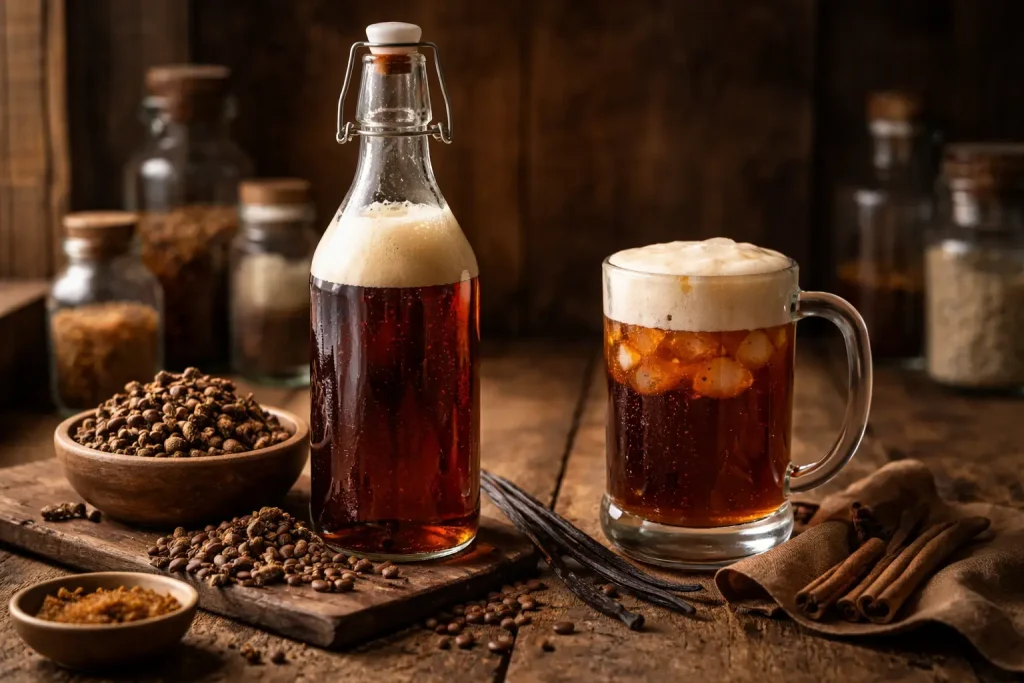
For most people, sparkling water added just before serving is the safest and simplest route. Pour the chilled syrup into a glass, add cold sparkling water, and leave room for foam. A scoop of ice and a slow pour will help preserve carbonation.
To add a subtle lift and a more complex aromatic edge, try a little organic licorice root c/s in very small amounts.
Serving Ideas for Soda Makers, Tea Shops, and Herbal Kitchens
A good sarsaparilla root beer recipe can be served beyond the standard bottle-and-foam format. That is part of its value for modern herbal beverage makers. You can serve it over ice with sparkling water, use it in soda floats, or blend a small amount into black tea concentrates for a root-spice house drink.
For tea shops, it also works as a seasonal syrup base. Mixed into chilled sparkling water, it offers something darker and more layered than fruit soda. Paired with vanilla and spice, it fits autumn menus beautifully, but its cooling fizz also works year-round.
For garnish and aroma, keep the visual language botanical and restrained. A strip of dried apple, a cinnamon stick, or a vanilla fleck on foam works better than an overloaded garnish.
Try adding dried apple pieces for a soft orchard note in seasonal soda or syrup variations.
Troubleshooting a Sarsaparilla Root Beer Recipe
Every handmade soda has its quirks. Here is how to correct the most common ones.
Flat flavor
Usually the root base is under-extracted or too diluted. Increase the simmer time slightly, or raise the sarsaparilla by 10 to 15 percent in the next batch. Also check that your sparkling water is cold and lively.
Too tart
This usually comes from added acids or an over-bright spice balance. Reduce ginger or acidic elements. Add a little more vanilla or sweetness to rebalance the edges.
Over-carbonation
If bottle fermenting, chill the bottles sooner and monitor pressure daily. Use strong bottles only. Never ignore fast foaming on opening.
Sediment
Fine root particles can slip through a basic strainer. Filter through a tighter cloth or paper filter after the first strain. Sediment is not always a defect, but too much muddies the drink.
Aroma loss
This often happens when vanilla or delicate spices simmer too long uncovered. Add aromatic ingredients later and keep the pot covered during steeping.
For a softer floral accent in specialty versions, try a restrained amount of chamomile flowers in the steeping phase rather than the simmer.
Storage + Quality
Store your strained syrup or concentrate in a clean glass bottle with a tight cap. Airtight storage matters because root-based aromas fade when exposed to air again and again. Refrigeration is best for preserving freshness, especially once sweetened. A home batch is usually at its best within 7 to 10 days, though a more concentrated syrup may last longer if handled cleanly.
Humidity matters most when storing the dry botanicals before brewing. Keep sarsaparilla root, vanilla, and other herbs in airtight containers away from heat, direct light, and kitchen steam. Check color and scent before use. Sarsaparilla should smell woody and rich, not dusty or dull. Vanilla should smell warm and deep, not faint. If the ingredients seem flat in the jar, they will not magically brighten in the pot.
This is also where tea maker habits help. Label every jar with purchase date and opening date. Rotate stock. Work small and fresh.
For brighter aromatic layering in root blends, try a touch of dried sweet orange peel only if you want a citrus variation outside the classic profile.
Safety
This sarsaparilla root beer recipe is intended as a culinary and beverage-making preparation. It is not medical advice, and it is not meant to diagnose, treat, or prevent any condition. Herbalists often use roots and spices for traditional beverage craft, but sensible sourcing, accurate labeling, and clean handling always matter.
Use food-safe bottles for any carbonated drink. If naturally fermenting, do not leave bottles unchecked. Pressure can build quickly. Keep batches labeled and dated. For commercial use, follow your local food handling and beverage regulations, especially around sweetened syrups, fermented drinks, and shelf life.
When introducing new botanicals into a house blend, test them in small quantities first. Flavor strength varies by cut size, age, and origin.
Conclusion: Building a Better Sarsaparilla Root Beer Recipe at Home
The best sarsaparilla root beer recipe is the one that respects the root first and lets the rest of the blend support it with purpose. When the sarsaparilla is deep, the vanilla is rounded, and the spice is measured, the drink feels old-fashioned in the best way. It tastes crafted rather than manufactured.
Start with a clean base, keep careful notes, and adjust only one or two variables at a time. That approach gives you a repeatable formula you can refine for home use, tea service, or small-batch beverage menus. Once you understand how the roots, sweetener, and aroma pieces interact, a sarsaparilla root beer recipe becomes less like a novelty and more like a dependable botanical classic.
FAQ
What is the best sweetener for a sarsaparilla root beer recipe?
Plain cane sugar is usually the cleanest choice because it supports the botanical flavor without adding too much extra heaviness.
Can I make a sarsaparilla root beer recipe without fermentation?
Yes. The simplest method is to make a syrup or strong brew and mix it with cold sparkling water before serving.
How strong should the root flavor be?
Before dilution, it should taste slightly stronger than you want in the glass. Carbonation and sweetness soften the perception.
Can I use powdered herbs instead of cut and sifted roots?
You can, but the drink may turn cloudy and harder to strain. Cut and sifted material is usually easier for syrup and soda work.
How long does homemade root beer syrup last?
Refrigerated and sealed well, it is often best within 7 to 10 days for peak aroma and flavor.
Why does my root beer taste dull?
The herbs may be old, the brew may be under-extracted, or the aromatic ingredients may have cooked too long uncovered.
Is this sarsaparilla root beer recipe suitable for tea makers?
Yes. It works well for syrup development, seasonal sparkling drinks, and small-scale menu testing.
Can I customize this sarsaparilla root beer recipe with other botanicals?
Yes, but make changes slowly. Small additions of roots, spice, peel, or flowers can shift the balance quickly.