Organic Herbs Shelf Life: Storage Guide for Businesses
Every herbal business owner has faced the frustration of opening a container only to find herbs that have lost their aroma, color, or potency. Understanding organic herbs shelf life storage is not just a best practice but a fundamental requirement for any company working with botanical ingredients. Whether you stock bulk organic herbs for tea blending, supplement manufacturing, or retail packaging, your storage practices directly determine how long those herbs remain viable and effective. Poor storage can turn a premium product into waste within weeks, while proper protocols can preserve quality for months or even years. This guide covers everything a buyer or business operator needs to know about maximizing the useful life of dried herbs and botanicals. From temperature and humidity controls to packaging materials and rotation systems, these recommendations are drawn from industry standards and practical experience. If you handle herbs at any scale, organic herbs shelf life storage knowledge will protect your investment and your reputation with customers who expect consistent quality in every order.
Why Organic Herbs Shelf Life Storage Matters for Your Business
Dried herbs are not immortal. From the moment they are harvested and processed, a slow degradation process begins. Essential oils evaporate. Pigments break down. Active compounds oxidize. For businesses that purchase in bulk, the gap between receiving inventory and selling or using it can span weeks to months. During that time, improper conditions accelerate degradation, leading to products that fall below quality standards.
Financial losses from spoilage add up quickly. A single batch of chamomile flowers whole that loses its characteristic apple-like aroma becomes difficult to sell at full price. Multiply that across your entire inventory, and the impact on margins is significant. Good storage practices are an investment that pays for itself many times over.
Beyond finances, consistency matters. Your customers expect the same color, aroma, and performance from batch to batch. Reliable organic herbs shelf life storage protocols are what make that consistency possible.
Key Factors That Affect Herb Longevity
Five environmental factors determine how quickly dried herbs degrade. Understanding each one allows you to design a storage environment that extends shelf life to its maximum potential.
- Temperature: Heat accelerates the evaporation of volatile oils and speeds chemical reactions that break down active compounds. Most herbs store best between 60 and 70 degrees Fahrenheit.
- Humidity: Moisture is the primary enemy of dried botanicals. Relative humidity above 60 percent can encourage mold growth, bacterial contamination, and caking. Target 40 to 50 percent relative humidity.
- Light: Ultraviolet and visible light degrade chlorophyll, carotenoids, and other pigments. Light also accelerates the oxidation of essential oils. Always store herbs in opaque or dark containers.
- Oxygen: Exposure to air promotes oxidation, which reduces potency and changes flavor profiles. Sealed containers or nitrogen-flushed packaging minimizes this risk.
- Time: Even under ideal conditions, herbs have finite shelf lives. Proper rotation using first-in, first-out systems ensures older stock moves before newer arrivals.
Shelf Life Ranges by Herb Type
Not all herbs age at the same rate. Whole herbs generally last longer than cut forms, and cut forms outlast powders. Here are general guidelines for properly stored organic herbs.
Whole dried flowers like lavender flowers and chamomile flowers whole typically maintain peak quality for 12 to 18 months. Their intact cell structures slow the release of volatile compounds. Whole leaves such as peppermint leaf whole and nettle leaf whole follow a similar timeline.
Cut and sifted herbs like ginger root cut and sifted generally hold up well for eight to 14 months. The increased surface area from cutting exposes more of the herb to air, which is why the range is slightly shorter than whole forms.
Powdered herbs and spices such as turmeric powder and ginger powder have the shortest window, typically six to 12 months. Their fine particle size maximizes surface area exposure to oxygen and light.
Best Packaging Materials for Long-Term Storage
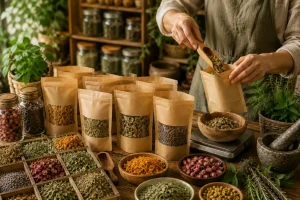
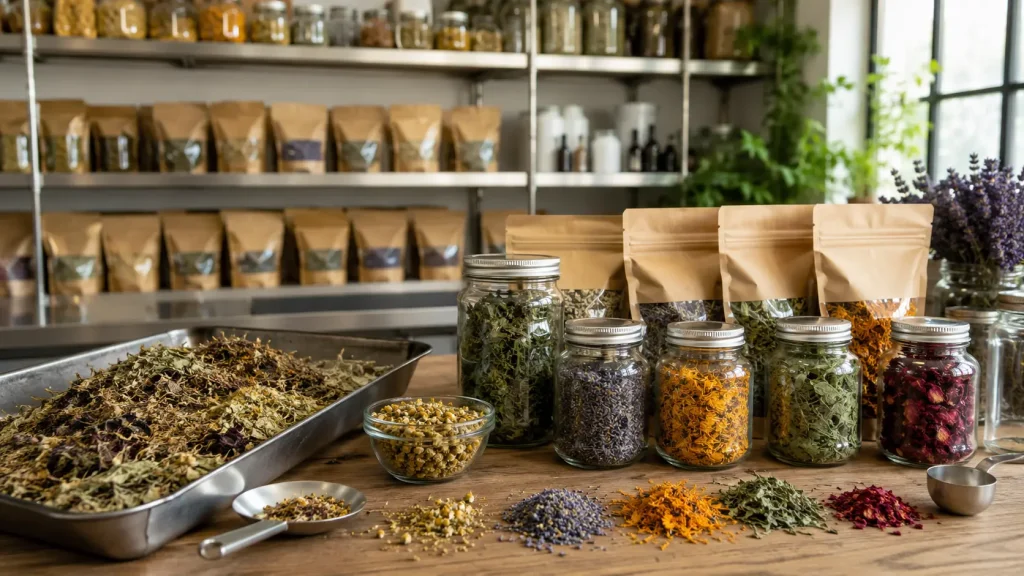
The container you choose is your first line of defense. For bulk storage, food-grade polyethylene bags inside rigid outer containers offer a good balance of protection and practicality. Multi-layer foil bags with zip-lock closures provide excellent barrier properties against moisture, oxygen, and light.
Glass jars with airtight seals work well for smaller quantities and retail display, though they must be stored away from light. Avoid clear glass unless the storage area is completely dark. Amber or cobalt blue glass blocks harmful wavelengths effectively.
For businesses storing larger volumes of products like bulk organic herbs, food-grade drums with sealed lids and desiccant packets offer excellent protection. Label every container with the product name, lot number, date received, and expected expiration. This practice is essential for proper organic herbs shelf life storage management.
Temperature and Humidity Control Strategies
Climate-controlled storage is the gold standard. If your facility lacks dedicated climate control, there are still steps you can take. Avoid storing herbs near heat sources such as ovens, steam pipes, or south-facing windows. Basements can be problematic due to humidity, so always use a dehumidifier if storing herbs below ground level.
Digital hygrometers placed throughout your storage area allow you to monitor conditions continuously. Many modern units log data over time, helping you identify patterns and problem areas. If humidity spikes during certain seasons, plan your purchasing accordingly and move sensitive inventory to better-protected areas.
Desiccant packets placed inside sealed containers provide an additional layer of moisture protection. Silica gel packets are the most common choice and are available in food-safe formulations. Replace them periodically as they absorb moisture over time.
Inventory Rotation and Batch Tracking
Even the best storage environment cannot overcome poor inventory management. A first-in, first-out system ensures that older stock is used or sold before newer arrivals. This requires clear labeling and organized shelving.
Assign each incoming shipment a lot number and record the date of receipt, the supplier lot number, and the certificate of analysis data. When you pull stock for production or orders, always pull from the oldest available lot. This discipline prevents the accumulation of aging inventory that eventually becomes unsaleable.
Regular quality checks are also important. Schedule monthly inspections where you open samples from stored inventory and assess aroma, color, and overall appearance. If a product shows signs of degradation before its expected shelf life, investigate the cause and adjust your storage protocols accordingly.
Signs of Degradation to Watch For
Knowing when an herb has passed its prime is just as important as knowing how to store it. Here are the warning signs that indicate quality has declined beyond acceptable levels.
- Loss of aroma: This is often the first and most noticeable sign. If a handful of peppermint or lavender produces little scent when rubbed between your fingers, the volatile oils have largely dissipated.
- Color fading: Vibrant greens turn olive or brown. Bright flower petals become dull. While some color change over time is normal, dramatic shifts indicate poor storage or excessive age.
- Off odors: Musty, sour, or rancid smells suggest moisture contamination, mold growth, or fat oxidation in oil-rich herbs.
- Clumping or caking: This indicates moisture absorption and can precede mold growth. Powders are especially susceptible.
- Insect activity: Small holes in leaves, webbing, or visible insects indicate an infestation that compromises the entire batch.
Safety Considerations for Herb Storage
Proper organic herbs shelf life storage is also a food safety issue. Herbs stored in humid conditions can develop mold, including potentially harmful species that produce mycotoxins. Always inspect incoming shipments for signs of moisture damage before adding them to your inventory.
Keep your storage area clean and free of pests. Regular cleaning schedules, sealed entry points, and pest monitoring traps are all part of a sound storage facility management plan. If you discover contamination in any batch, quarantine it immediately and do not blend it with clean inventory.
Allergen cross-contamination is another concern in shared storage spaces. Store allergenic herbs separately and clean equipment between handling different products. Maintain records of what is stored where to support traceability in case of a quality issue or recall.
Frequently Asked Questions
How long do dried organic herbs last in sealed containers?
When stored in airtight containers at stable temperatures and low humidity, whole dried herbs typically last 12 to 24 months. Cut and sifted forms last eight to 14 months, and powders last six to 12 months. These ranges assume cool, dark, dry conditions.
Does freezing extend the shelf life of dried herbs?
Freezing can extend shelf life, but it introduces risks. Moisture condensation when removing herbs from the freezer can cause clumping and accelerate degradation. If you freeze herbs, portion them into single-use quantities and allow them to reach room temperature before opening.
Can I store different herbs together in the same area?
Yes, but keep strongly aromatic herbs like peppermint and lavender sealed tightly so their scents do not transfer to milder products. Always use sealed containers rather than open bins.
What is the best way to test if stored herbs are still good?
Crush a small amount between your fingers and smell it. The aroma should be strong and characteristic of that herb. Compare it to a freshly opened sample if possible. Also check for color consistency and any off odors or visual signs of mold.
How does organic herbs shelf life storage differ from conventional herbs?
The storage principles are the same. However, organic herbs may not have been treated with irradiation or synthetic preservatives, which means proper environmental controls are even more critical for maintaining quality over time.
Should I store herbs in the refrigerator?
Refrigeration is generally unnecessary for properly dried herbs and can introduce moisture problems every time you open the container. A cool, dark pantry or dedicated storage room at 60 to 70 degrees Fahrenheit is preferable.
How often should I rotate my herb inventory?
Conduct monthly reviews of all stored inventory. Use a first-in, first-out system and flag any products approaching their expected shelf life. Ideally, no product should remain in storage longer than its recommended window.
What packaging keeps herbs freshest the longest?
Multi-layer foil pouches with oxygen absorbers and desiccant packets offer the best protection for long-term storage. For daily use, airtight glass or food-grade plastic containers work well as long as they are stored away from light and heat.
Conclusion
Protecting your inventory through proper organic herbs shelf life storage practices is one of the most cost-effective steps any herbal business can take. By controlling temperature, humidity, light, and oxygen exposure, and by maintaining disciplined inventory rotation, you can preserve the quality of products from bulk organic herbs to delicate flowers like chamomile. Invest in your storage systems today, and your products and your customers will reflect that commitment.