Cardamom Buy Guide: Whole Pods vs Ground (Best Value)
Cardamom ranks among the world’s most prized spices, and choosing the right form before you cardamom buy can mean the difference between vibrant, aromatic products and flat, underwhelming ones. Whole green pods, decorticated seeds, and pre-ground powder each serve different applications, price points, and shelf-life expectations. This guide breaks down those differences with the practical detail that matters to food formulators, tea blenders, spice retailers, and wholesale buyers. We cover grading standards, value calculations, storage protocols, and sensory benchmarks so you can make a purchasing decision backed by real knowledge rather than guesswork. By the end, you will know exactly which form fits your operation and how to evaluate quality before committing to volume.
Understanding Cardamom Forms Before You Cardamom Buy
Green cardamom (Elettaria cardamomum) reaches the market in three primary forms. Each represents a different stage of processing, and that processing level determines aroma retention, versatility, and cost per serving.
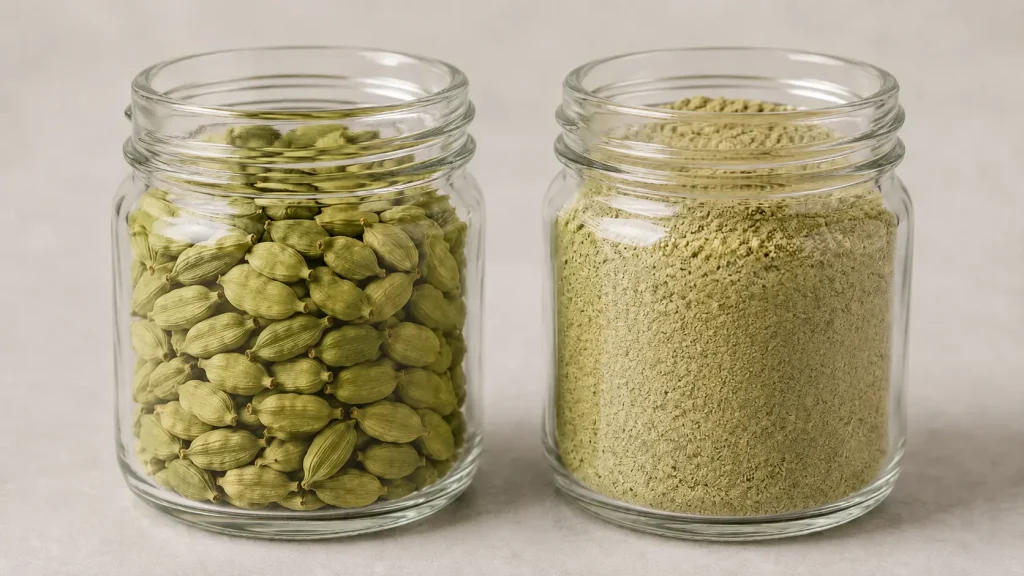
Whole green pods are the least processed option. The outer husk protects the volatile seeds inside, acting as a natural barrier against oxidation. When you crack a fresh pod, the rush of eucalyptus, citrus, and warm resin tells you the essential oils are intact. Cardamom Whole Green pods from Hatton Naturals exemplify this standard, offering plump, uniformly colored pods with tightly closed husks.
Decorticated seeds are whole seeds removed from the husk. They offer convenience for grinding on demand without the step of cracking pods. Organic Cardamom Decorticated is a popular choice among spice blenders who need seeds ready for their grinder but want to delay the final milling until the moment of use.
Ground cardamom powder is the most processed form. It delivers instant convenience for baking, beverage production, and encapsulation. Green Cardamom Powder works well in applications where uniform distribution matters, such as chai spice mixes or confectionery batters. The tradeoff is faster aroma loss once the package is opened.
Whole Pods: When They Offer the Best Value
Whole pods carry a higher per-kilogram price than ground cardamom, but the value equation shifts when you factor in potency and waste. A single pod yields roughly 0.7 to 0.8 grams of seeds, and those seeds retain their essential oil content far longer than pre-ground powder. For a tea blender adding two to three cracked pods per 100-gram batch, the aromatic impact is substantially stronger than an equivalent weight of powder.
Whole pods also give the buyer a visual and tactile quality check that powder cannot. You can assess color (bright green indicates careful drying), size (larger pods typically signal mature plants), and husk integrity (split or broken pods suggest rough handling or age). These physical indicators help you verify quality before you cardamom buy in bulk, reducing the risk of receiving subpar material.
For retail spice brands, whole pods command premium shelf prices. Consumers associate visible pods with authenticity and quality, making them a strong margin driver in curated spice collections. Restaurants and specialty tea houses also prefer whole pods for tableside or pot-side preparation, where the ritual of cracking the pod adds to the customer experience.
Ground Cardamom: When Convenience Wins
Ground cardamom excels in high-throughput production environments. Bakeries running continuous mixers, supplement manufacturers filling capsules, and beverage companies blending syrups all benefit from the consistency and speed that powder provides. There is no cracking, no deseeding, and no in-house grinding step. The material flows directly into the recipe.
The key concern with ground cardamom is freshness. Once milled, the essential oils (primarily 1,8-cineole and alpha-terpinyl acetate) begin to volatilize. A freshly opened bag of high-quality cardamom powder should hit your nose with an intense, almost mentholated warmth. If the aroma is faint or papery, the powder has likely been sitting too long or was ground from older pods. When you cardamom buy in powder form, ask the supplier for the milling date rather than just the expiration date.
Price per kilogram favors powder in most markets, but the lower potency per gram means you may need to use more material to achieve the same flavor intensity as freshly cracked pods. Run a cost-per-serving comparison for your specific recipe before assuming powder is the budget-friendly choice.
Decorticated Seeds: The Middle Path
Decorticated cardamom occupies a practical middle ground. You get the shelf stability and aroma retention of whole seeds without the labor of cracking pods. For operations with a spice grinder on the production floor, decorticated seeds let you mill exactly what you need for each batch, minimizing waste and maximizing freshness.
This form is especially popular among chai concentrate producers and spice-blend formulators who grind multiple spices together. Starting with whole seeds ensures the cardamom component matches the freshness of other freshly ground ingredients like Ceylon cinnamon or whole cloves. The result is a more harmonious blend where no single spice tastes stale relative to the others.
What Buyers Should Know About Cardamom Grading
Cardamom grading varies by origin, but several universal indicators help you evaluate any lot. For whole pods, look for uniform green color, plump shape, and minimal split or broken units. Top grades (often labeled “bold” or “extra bold” in Indian markets) feature pods 8 mm or larger. Smaller pods are not necessarily inferior in flavor, but they yield less seed per unit and may indicate a less mature harvest.
For ground cardamom, particle size and color are your primary indicators. The powder should be pale green to olive, not grey or brown. A brownish hue suggests husk material was included in the grind (diluting seed potency) or that oxidation has set in. Reputable suppliers provide particle-size specifications so you can match the grind to your application, whether that is a fine mesh for baking or a coarser grind for steeping.
Moisture content matters across all forms. Target lots with moisture below 12 percent for pods and below 10 percent for powder. Excess moisture accelerates microbial growth and shortens shelf life. Always review the Certificate of Analysis before you cardamom buy at wholesale volumes.
Sourcing and Quality Indicators
Guatemala and India produce the vast majority of the world’s green cardamom, each with distinct flavor profiles. Guatemalan cardamom tends toward bold, eucalyptus-forward notes with a pronounced cooling finish. Indian cardamom (particularly from the Kerala and Karnataka growing regions) often presents a more complex bouquet with floral, resinous undertones.
Organic certification adds a layer of assurance that the crop was grown without synthetic pesticides or fertilizers. For buyers building clean-label products, certified organic cardamom simplifies ingredient declarations and aligns with consumer expectations. The Wholesale Herbs and Spices catalog at Hatton Naturals includes organic-certified cardamom in all three forms, with COA documentation available through their COA search page.
When sampling, perform a simple crush test on whole pods. Press a pod between your thumb and forefinger. It should yield with a satisfying crack, releasing an immediate burst of aroma. Pods that crumble to dust are over-dried. Pods that feel rubbery carry too much moisture. The ideal pod resists slightly, then snaps cleanly.
Cost Comparison: Pods vs Powder at Scale
To illustrate the value equation, consider a chai blend that calls for cardamom at three percent of the total batch weight. For a 10-kilogram batch, you need 300 grams of cardamom. Using whole pods, about 30 percent of that weight is husk, so you are effectively paying for 210 grams of usable seed material. Using powder, you get 300 grams of usable material, but the aroma intensity per gram may be 20 to 40 percent lower than freshly cracked seeds (depending on powder age).
Factor in the labor cost of cracking and deseeding pods in your facility. For a small operation processing a few kilograms per week, that labor is minimal. For a factory running hundreds of kilograms daily, decorticated seeds or powder may offer genuine savings. Run the numbers for your specific throughput before you cardamom buy your next quarterly supply, because the “best value” answer depends entirely on your production context.
Storage Protocols for Maximum Shelf Life
Whole pods stored in airtight containers away from light and heat maintain peak quality for up to two years. Decorticated seeds last 12 to 18 months under the same conditions. Ground cardamom begins losing potency within three to six months of milling, so purchase powder in quantities you can use within that window.
Avoid refrigeration unless your storage area is prone to high heat. Temperature fluctuations when moving containers in and out of cold storage cause condensation, which introduces moisture. A cool, stable pantry (below 22 degrees Celsius) with low humidity is the ideal environment. Pair your cardamom with complementary spices like ginger root and star anise in a dedicated spice section of your blending pantry for efficient workflow.
Creative Applications Beyond Chai
While chai remains the most recognized use case, cardamom’s versatility extends much further. Scandinavian bakers have used it in sweet breads and pastries for centuries. Middle Eastern coffee culture relies on cardamom as the defining aromatic in traditional brews. In the wellness space, herbalists often recommend cardamom tea as a digestive comfort, traditionally valued for its warming, carminative properties.
Tea blenders are finding success pairing cardamom with unexpected botanicals. A blend of rooibos, cardamom, and vanilla bean powder creates a caffeine-free evening tea with dessert-like appeal. Cardamom combined with rose petals and a hint of black pepper yields a sophisticated floral-spice profile that performs well in premium loose-leaf lines.
Safety and Labeling Considerations
Cardamom is generally recognized as safe (GRAS) for food use. There are no common allergen concerns, though individuals with sensitivities to members of the Zingiberaceae family should exercise caution. On product labels, list cardamom by its common name and, when applicable, its botanical name (Elettaria cardamomum). If your product is certified organic, ensure the cardamom lot documentation matches your certifier’s requirements.
Avoid making health claims such as “cures digestive issues” or “treats nausea.” Instead, use language like “traditionally enjoyed as a digestive comfort” or “valued in Ayurvedic tradition for its warming properties.” This protects your brand from regulatory scrutiny while still communicating the botanical’s heritage.
Frequently Asked Questions
Is whole cardamom more expensive than ground?
Per kilogram, whole pods typically cost more than ground powder. However, the superior aroma retention and longer shelf life of whole pods often make them more economical per serving, because you need less material to achieve the same flavor impact.
How can I tell if cardamom pods are fresh?
Fresh pods are bright green, plump, and release a strong aromatic burst when cracked. Faded, yellowish, or lightweight pods indicate age or poor storage. A snap test (pressing between fingers) should produce a clean crack, not a crumble or a rubbery bend.
What is decorticated cardamom used for?
Decorticated cardamom consists of seeds removed from the husk. It is ideal for operations that grind spices in-house, allowing fresh milling without the step of cracking pods. Chai producers, spice blenders, and encapsulation companies favor this form when they cardamom buy for production efficiency.
How should I store cardamom powder to preserve freshness?
Keep powder in an airtight container in a cool, dark location below 22 degrees Celsius. Use within three to six months of the milling date for peak aroma. Avoid transferring between warm and cold storage, as condensation accelerates degradation.
Can I use cardamom in herbal tea blends?
Absolutely. Cracked whole pods or coarsely ground seeds steep well in hot water. Cardamom pairs naturally with cinnamon, ginger, cloves, and black tea for chai, but it also complements floral ingredients like rose and lavender in caffeine-free blends.
What volume discounts are available for bulk cardamom orders?
Volume pricing varies by supplier and form. Many wholesale suppliers offer tiered discounts starting at five kilograms, with deeper breaks at 25 and 50 kilograms. Contact the supplier directly for current wholesale pricing and scheduled delivery options.
Does organic cardamom taste different from conventional?
The flavor difference between organic and conventional cardamom is generally subtle and depends more on origin, freshness, and processing than on certification status. The primary advantage of organic certification is the assurance of pesticide-free cultivation, which matters for clean-label product lines.
What is the best cardamom origin for tea blending?
Both Guatemalan and Indian origins work well. Guatemalan pods tend to offer a bolder, more eucalyptus-driven profile, while Indian pods bring floral complexity. Sample both origins and choose based on the flavor direction of your specific blend.
Choosing the right cardamom form is a decision that ripples through your product quality, production efficiency, and cost structure. Whether you favor whole pods for their aromatic potency, decorticated seeds for grinding flexibility, or powder for production speed, sourcing from a transparent supplier ensures every batch performs. Explore Cardamom Whole Green, Green Cardamom Powder, and Organic Cardamom Decorticated at Hatton Naturals, where bulk and wholesale options are built for brands that demand consistency.