Rose Hip Tea: How to Brew and Enjoy It
Rose hip tea delivers one of the most vibrant, tart, and vitamin-rich cups in the entire world of herbal teas. Rose hips are the small, round fruits that form on rose plants after the flowers have bloomed and dropped their petals. Botanically, they are the seed pods of plants in the genus Rosa, most commonly Rosa canina (dog rose). In fact, rose hips are one of the most concentrated natural sources of vitamin C found in any plant — significantly higher than oranges by weight.
Furthermore, rose hip tea has a long history of use in Scandinavian, Eastern European, and Middle Eastern culinary and herbal traditions. It is enjoyed both as a warming winter drink and a refreshing iced tea in summer. This guide covers everything you need to brew, blend, and enjoy it at home.
What Does Rose Hip Tea Taste Like?
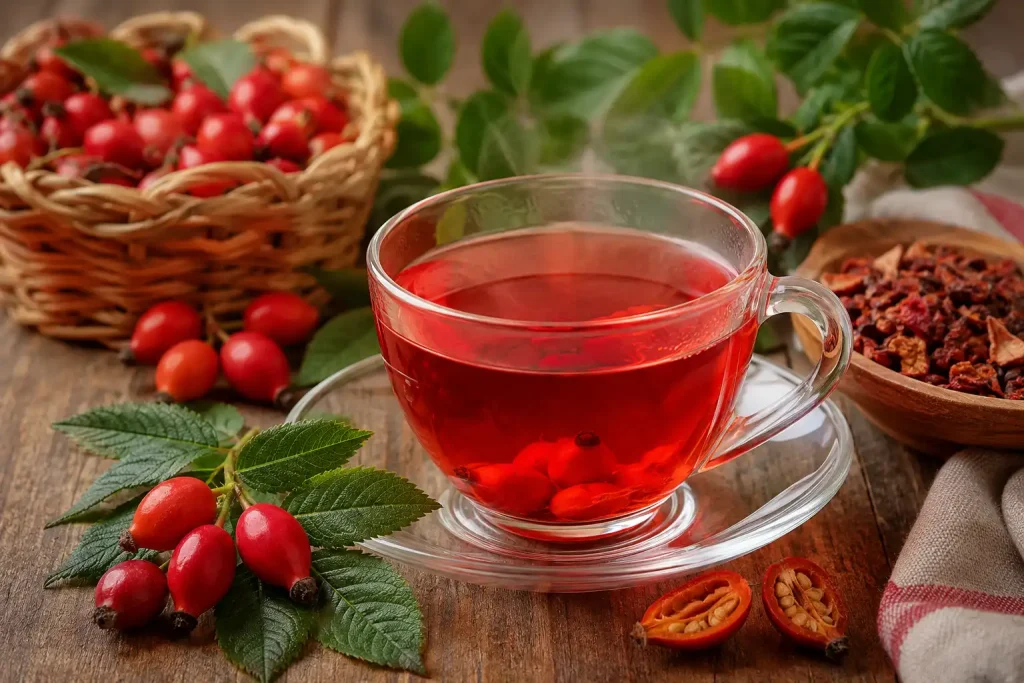
The flavor of rose hip tea is tart, fruity, and slightly tangy — similar to cranberry or hibiscus with a softer edge. There is also a gentle sweetness when brewed properly, especially if you add a small amount of honey. The color is a deep reddish-orange, making it one of the most visually striking herbal teas you can brew.
Cut and sifted rose hips brew faster and release more surface area into the water, resulting in a more intense, tangy cup. Organic cut and sifted rose hips are the most practical choice for everyday brewing. On the other hand, whole rose hips require a longer steep or a gentle simmer but yield a rounder, more complex flavor with a slightly more subtle tartness.
How to Brew Rose Hip Tea Step by Step
Rose hips are denser than leafy herbs and benefit from slightly higher heat and a longer steep time to extract their full flavor.
- Measure the rose hips. Use 1–2 tablespoons of cut and sifted rose hips (or 2–3 tablespoons of whole rose hips) per 8 oz of water. The fruit is less aromatic than flower-based herbs, so you generally need more per cup.
- Use fully boiling water. Bring filtered water to a full rolling boil at 212°F. Rose hips are dense and require high heat to fully extract their flavor and vitamin C content.
- Steep for 10–15 minutes. Place rose hips in a strainer or infuser and pour boiling water over them. Cover the cup and steep for at least 10 minutes. For a stronger, more concentrated cup, steep up to 20 minutes.
- Strain well. Rose hip seeds contain fine inner hairs that can cause irritation if consumed in quantity. Ensure you use a fine-mesh strainer when pouring. Remove the rose hips completely before drinking.
- Sweeten if desired. Rose hip tea is naturally tart. A teaspoon of honey, agave, or a slice of orange complements the flavor well.
Simmering Method for Whole Rose Hips
For whole rose hips, a gentle simmer on the stovetop is more effective than a simple infusion. Combine 2–3 tablespoons of whole rose hips with 12 oz of water in a small saucepan. Bring to a low simmer over medium heat, then reduce to low and simmer gently for 15–20 minutes. Strain through a fine-mesh sieve and serve. This method produces a richer, more deeply colored cup with a full-bodied flavor.
Additionally, you can make a large batch this way and refrigerate it for up to three days, serving it warm or over ice as needed.
Rose Hip Tea Flavor Pairings and Blends
Rose hip tea is one of the most versatile herbal bases for blending. Its bright, fruity tartness plays well with a wide variety of other herbs:
- Rose hips and hibiscus: The classic combination. Organic hibiscus flowers add an even deeper ruby red color and a more intense tartness. The two complement each other beautifully, creating a cup reminiscent of a fruity herbal punch.
- Rose hips and cinnamon: A warming winter blend. A cinnamon stick or a pinch of ground cinnamon added during simmering rounds out the tartness with a spicy warmth.
- Rose hips and orange peel: Fresh or dried orange peel adds a citrus brightness that elevates the fruity quality of the rose hips.
- Rose hips and elderflower: For a delicate, floral variation with a gentle sweetness.
- Rose hips and ginger: A warming, tangy blend that is especially popular as a cold-weather drink.
Iced Rose Hip Tea
Rose hip tea makes an exceptional iced drink. Brew a double-strength batch by using twice the normal amount of rose hips. Allow it to cool slightly at room temperature, then pour over a large glass of ice. The dilution from the ice brings the concentration back to a pleasant drinking strength. Moreover, adding a slice of fresh lemon and a few fresh mint leaves turns it into a beautiful, café-worthy iced herbal drink.
Buying and Storing Dried Rose Hips
High-quality dried rose hips should be a rich reddish-orange color with a firm texture. Avoid hips that are pale, crumbly, or dusty — these signs indicate age or poor storage. Choose organic rose hips whenever possible, as rose plants are frequently sprayed with pesticides.
Store dried rose hips in a sealed glass jar in a cool, dark location. They keep their flavor and nutritional value well for up to 18 months under good conditions. Cut and sifted rose hips may lose potency slightly faster than whole ones due to the increased surface area exposed to air.
Safety and Usage Notes
Rose hip tea is generally safe for most adults. However, due to its high vitamin C content, consuming very large quantities may cause digestive discomfort in sensitive individuals. Always strain tea through a fine-mesh sieve, as the fine seed hairs inside whole rose hips can cause irritation if consumed in quantity. Pregnant or nursing individuals and those on blood-thinning medications should consult a healthcare provider before regular consumption. This content is provided for educational purposes only and does not constitute medical advice.
Frequently Asked Questions
How much vitamin C is in rose hip tea?
The vitamin C content in a brewed cup of rose hip tea varies depending on the freshness of the hips and the brew method. Vitamin C degrades with heat, so some is lost during brewing. Nevertheless, rose hip tea remains a meaningful dietary source of this nutrient. For maximum retention, use water that is hot but not at a hard rolling boil, and avoid very long steep times.
Can I use fresh rose hips to make tea?
Yes. Fresh rose hips can be used, but they require preparation. Split them open, remove the seeds and inner hairs, and then use the flesh for tea or simmer them as you would dried hips. Most people find dried rose hips much more convenient while still delivering excellent flavor and nutrition.
Does rose hip tea taste like roses?
Not strongly. Rose hip tea tastes primarily tart and fruity — more like cranberry or hibiscus than like the floral scent of rose petals. If you want a more distinctly floral rose flavor, consider adding dried rose petals to the blend alongside your rose hips.
Is rose hip tea good cold?
Rose hip tea is excellent cold. Its bright tartness is very refreshing over ice. Many people prefer it as a cold drink in summer, either plain or blended with hibiscus, lemon, and honey for a fruity herbal lemonade-style drink.
Explore our selection of organic rose hips and hibiscus flowers to start building your favorite rose hip tea blend today.