Stinging Nettle Tea: A Nutrient-Rich Herbal Brew
Stinging nettle tea is one of the most nutritionally dense herbal infusions you can brew. The plant, known botanically as Urtica dioica, grows throughout North America, Europe, and Asia. Despite its reputation for the uncomfortable sting it delivers when touched fresh, once dried or cooked, nettle becomes completely safe and remarkably pleasant to consume. In fact, herbalists and foragers have relied on it as a food and medicine for centuries.
Furthermore, nettle is one of the few herbs that provides a measurable concentration of minerals in a simple water infusion. This makes stinging nettle tea especially popular among those who prefer food-based approaches to nutrition.
What Makes Stinging Nettle Tea Nutritionally Notable?
Nettle leaf contains an impressive array of minerals and plant compounds. It is naturally rich in iron, calcium, magnesium, potassium, and silica. Additionally, it provides significant amounts of vitamins A, C, and K. Protein content is also relatively high compared to most leafy greens, though the amount in a single cup of tea is modest.
In folk herbalism, stinging nettle has been traditionally used as a springtime tonic. Herbalists traditionally recommend it for seasonal support, urinary health, and as a general nutritive herb. The leaf is the part most commonly used for tea, while the root is used separately in herbal preparations targeting other concerns.
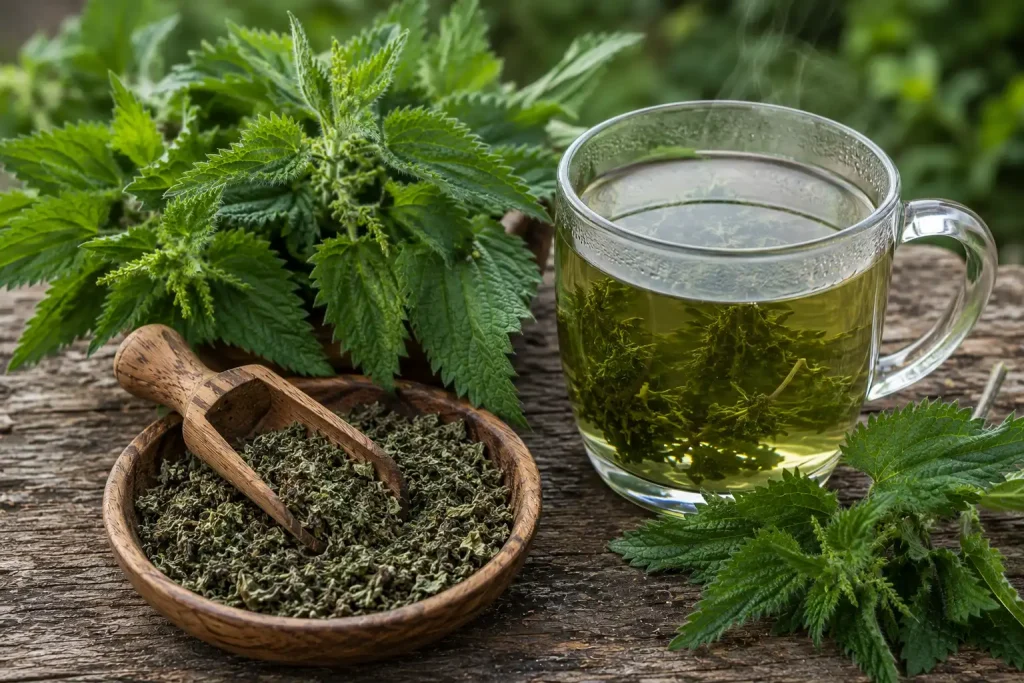
Organic nettle leaf cut and sifted brews quickly and produces a rich, dark green infusion with an earthy, slightly grassy flavor. For a heartier brew, whole nettle leaf takes a bit longer to fully infuse but delivers excellent depth.
What Does Stinging Nettle Tea Taste Like?
The flavor of nettle tea surprises many first-time drinkers. It is earthy and green, with a mild savory quality that sets it apart from floral or fruity herbal teas. Some people describe it as similar to spinach water or a light vegetable broth. It is not bitter in the way that black tea can be, but it does have a distinct, assertive character.
Consequently, stinging nettle tea pairs well with flavors that either complement its earthiness or cut through it. A squeeze of lemon or a spoonful of honey both work well. Blending with peppermint leaf is one of the most popular combinations — the cool, bright mint lifts the earthy nettle and produces a more refreshing, balanced cup.
How to Brew Stinging Nettle Tea
Brewing stinging nettle tea is straightforward. The herb is hardy and tolerates a range of steep times without becoming unpleasantly bitter, making it forgiving for beginners.
- Measure your nettle. Use 1–2 teaspoons of dried nettle leaf per 8 oz of water. For a more concentrated mineral infusion, some herbalists recommend using a full tablespoon in a covered pot for 20–30 minutes.
- Heat your water. Bring filtered water to a full boil at 212°F. Unlike delicate floral herbs, nettle benefits from fully boiling water, which helps extract its mineral content more effectively.
- Steep and cover. Pour boiling water over the nettle in a strainer or infuser. Cover the cup with a small plate to reduce heat loss. Steep for 7–10 minutes for a standard cup, or up to 30 minutes for a nourishing long infusion.
- Strain and serve. Remove the nettle and taste. Add lemon, honey, or a peppermint tea bag as desired.
The Nourishing Infusion Method
Many herbalists favor a method known as a “nourishing infusion” for extracting maximum mineral content from nettle. This method differs from a standard cup of tea in both the amount of herb used and the steeping time.
To make a nourishing infusion, place 1 ounce (about 28 grams) of dried nettle leaf in a 1-quart jar. Pour boiling water to fill the jar completely. Cap the jar tightly and allow it to steep for 4–8 hours, or overnight. The resulting liquid is very dark green and rich — much more concentrated than a standard cup. Strain well before drinking and consume within 24 hours. Store any remainder in the refrigerator.
Moreover, the nourishing infusion method is popular in folk herbalism traditions as a way to draw out fat-soluble vitamins and minerals that a shorter steep does not fully extract.
Blending Stinging Nettle Tea with Other Herbs
Nettle is a versatile herb that blends well with a wide range of companions. Here are some combinations worth trying:
- Nettle and peppermint: The classic combination for daily drinking. Refreshing and well-balanced.
- Nettle and raspberry leaf: A traditional combination in folk herbalism, popular for its nourishing qualities.
- Nettle and oat straw: A calming, mineral-rich blend often used in traditional European herbalism.
- Nettle and lemon balm: The gentle citrus quality of lemon balm softens nettle’s earthy edge and makes for a pleasant, slightly sweet blend.
- Nettle and rose hips: Adding dried rose hips boosts the vitamin C content further and gives the tea a pleasant tart, fruity note.
Buying and Storing Dried Nettle Leaf
When buying dried nettle leaf for tea, look for bright green color — this indicates freshness. Yellowed or brownish nettle has lost much of its nutritional value and flavor. Choose certified organic nettle to avoid leaves that may carry pesticide residues.
Store dried nettle in an airtight container away from heat, light, and moisture. Under good storage conditions, dried nettle remains potent for up to a year. A glass jar in a cool, dark pantry is ideal. Additionally, avoid storing it near strongly aromatic spices, which can transfer their scent over time.
Safety and Usage Notes
Dried nettle leaf used as a tea is generally considered safe for most healthy adults. However, nettle may interact with certain medications, including blood thinners, diuretics, and drugs for blood pressure or diabetes. Additionally, if you have known kidney conditions, consult your healthcare provider before consuming large or daily amounts of nettle tea. This content is educational in nature and does not constitute medical advice. Always speak with a qualified healthcare professional regarding your specific health situation.
Frequently Asked Questions
Does stinging nettle tea sting your mouth?
No. The stinging property of fresh nettle comes from tiny needle-like structures called trichomes on the leaf surface, which break and release formic acid when touched. Drying or boiling the leaves completely neutralizes this mechanism. Stinging nettle tea is smooth and safe to drink with no stinging sensation.
How often can I drink stinging nettle tea?
Most people consume stinging nettle tea once or twice daily without issue. If you are using the nourishing infusion method with large amounts of herb, starting with smaller quantities and gradually increasing is a sensible approach. As with any herb, variety and moderation are wise practices.
Can I use fresh nettle leaves to make tea?
Yes, but handle fresh nettle with gloves. Once you pour boiling water over fresh leaves and steep them, the stinging compounds are neutralized completely. The flavor of fresh nettle tea tends to be brighter and more vegetal compared to the earthier quality of dried leaf.
What is the best way to sweeten stinging nettle tea?
Honey is the most popular choice. Raw wildflower honey complements nettle’s earthy flavor well. Alternatively, a few drops of stevia or a small spoonful of maple syrup work if you prefer a different sweetener. A squeeze of lemon also balances the flavor nicely without added sweetness.
Ready to try it yourself? Pick up organic nettle leaf from our shop and start exploring one of herbalism’s most celebrated nutritive brews.