Alfalfa Herb Nutrition: What It Offers
Alfalfa herb nutrition has captivated herbalists and natural health enthusiasts for generations, earning this deep-rooted legume the nickname “father of all foods” in Arabic tradition — the word alfalfa itself derives from the Arabic al-fisfisa, meaning fresh fodder. Medicago sativa grows on every inhabited continent and sends its roots as deep as thirty feet into the earth, drawing up an exceptionally broad range of minerals and nutrients that surface plants cannot reach.
The Nutritional Profile of Alfalfa
Alfalfa herb nutrition stands out because the plant concentrates an unusually wide variety of minerals, vitamins, and plant compounds. The dried leaf contains notable levels of vitamin K, vitamin C, calcium, magnesium, potassium, and iron. It also provides chlorophyll — the green pigment responsible for alfalfa’s vibrant color — along with flavonoids and phytoestrogens.
The protein content of alfalfa is relatively high for a leafy herb, making it a traditional feed crop for livestock and a food source for humans in some cultures. Additionally, alfalfa provides dietary fiber and a range of amino acids, giving it a more complete nutritional profile than many other common herbs.
Furthermore, alfalfa contains saponins, which are plant compounds that have attracted scientific interest for their potential role in supporting healthy cholesterol balance. Traditional herbalists have long regarded this as one of the more nourishing tonic herbs available.
Alfalfa Herb Nutrition in Traditional Use
Herbalists have used alfalfa in food and medicine for over three thousand years. Traditional Chinese medicine incorporated it to support digestion and urinary function. In Ayurvedic practice, alfalfa was used to address arthritis and water retention. North American folk herbalists traditionally recommended it as a general tonic and nutritive herb.
In more recent herbal tradition, alfalfa is classified as a nutritive — an herb that provides significant nutritional value rather than exerting a strong medicinal action. For this reason, it is commonly used in tonic teas and green powders intended to supplement the diet with plant-based nutrients.
Many herbalists consider alfalfa an excellent complement to nettle leaf, another mineral-rich nutritive herb. Together, they form one of the classic tonic tea combinations in Western herbalism.
How to Use Alfalfa as Tea
Dried alfalfa leaf makes a pleasant, mild herbal tea. Use one to two tablespoons of dried cut and sifted herb per eight ounces of hot water. Steep for ten to fifteen minutes, then strain and enjoy. The resulting infusion is pale green to yellow-green in color with a mild, grassy, slightly sweet flavor.
Alfalfa herb nutrition is most effectively extracted in a long, strong infusion. Because of that, many herbalists prefer to make a nourishing infusion rather than a standard-length tea. To do this, steep four tablespoons of organic alfalfa cut and sifted in a quart of just-boiled water for four to eight hours, then strain and drink throughout the day.
This long-steep method extracts significantly more minerals and chlorophyll than a brief steep, making it a preferred approach for those using alfalfa as a nutritive tonic. Moreover, the resulting infusion stores well in the refrigerator for up to forty-eight hours.
Alfalfa in Herbal Blends and Green Drinks
Beyond tea, alfalfa is widely used in herbal blending and green drink formulas. Its mild flavor means it rarely dominates a blend, instead providing a nutritional backbone while other herbs contribute more pronounced flavors and actions.
Traditional blending partners for alfalfa include nettle, oat straw, red raspberry leaf, and spearmint. These combinations produce nutritive blends that many herbalists recommend for women’s wellness, bone support, and general vitality. In fact, alfalfa-based green teas have been marketed as nutritional supplements in whole foods and natural health stores for decades.
Alfalfa also works well in smoothies and green powders when dried and powdered. However, for whole-herb use, the cut and sifted form provides better surface area for infusion while maintaining the integrity of the herb’s natural compounds.
Growing and Sourcing Quality Alfalfa
Alfalfa grows easily in temperate climates with well-drained soil and full sun. Home growers can harvest young leaves in spring and early summer, when nutritional content is at its peak. Dry harvested leaves quickly to preserve chlorophyll and nutrient content — spread them in a single layer and use low heat if drying in a dehydrator.
When purchasing dried alfalfa, look for vibrant green color as a sign of freshness. Yellowed or brownish herb has lost significant chlorophyll and nutritional value. Organic certification is especially important with alfalfa, as conventionally grown crops often receive heavy pesticide applications.
Similarly, the cut and sifted form is generally preferable to whole leaf for tea use, as it provides more surface area and consistent steeping. Whole leaves are better suited to encapsulation or powder blending applications.
Alfalfa Sprouts vs. Dried Herb
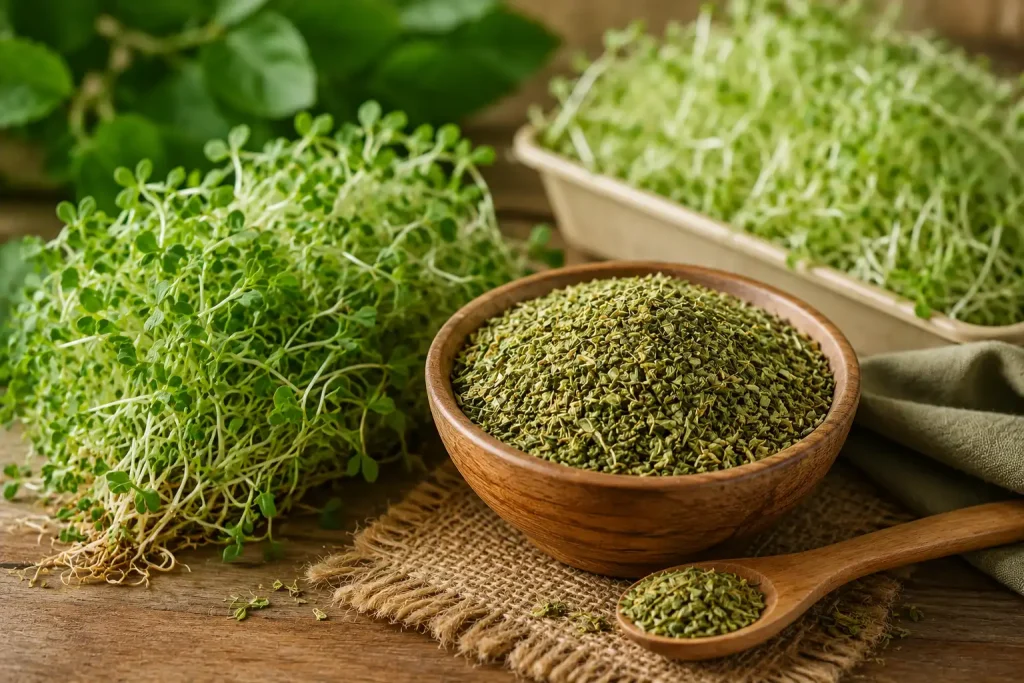
Many people are more familiar with alfalfa sprouts than dried alfalfa herb. Both come from the same plant, but they offer different nutritional profiles and uses. Sprouts are raw, living foods with high enzymatic activity and a fresh, crunchy texture. Dried herb, by contrast, concentrates the plant’s mineral and phytoestrogen content in a more stable, shelf-stable form.
For herbal tea purposes, dried herb is the appropriate form. Sprouts are best consumed fresh as a food rather than brewed. Additionally, dried alfalfa herb is significantly more shelf-stable than sprouts, making it practical for regular use over months rather than days.
Both forms contribute to alfalfa herb nutrition in their own way, and there is no reason to choose one exclusively over the other if you enjoy both.
Safety and Considerations
Alfalfa is generally considered safe for most adults in food and tea quantities. However, individuals with autoimmune conditions — particularly lupus — should avoid large amounts of alfalfa, as its canavanine content may trigger flare-ups. Those taking blood-thinning medications should consult a healthcare provider due to alfalfa’s high vitamin K content. Pregnant and breastfeeding individuals should seek professional guidance before using alfalfa as a therapeutic supplement. This content is educational only and is not a substitute for professional medical advice.
Frequently Asked Questions
What minerals does alfalfa herb provide?
Dried alfalfa leaf is particularly rich in calcium, magnesium, potassium, and iron. It also provides phosphorus, zinc, and trace amounts of several other minerals. The plant’s deep root system is credited with its ability to concentrate minerals that other herbs cannot access.
Does alfalfa tea have caffeine?
No. Alfalfa is completely caffeine-free, making it suitable for all-day drinking and appropriate for individuals who are sensitive to caffeine or avoiding it for health reasons.
How does alfalfa compare to spirulina as a nutritive herb?
Both alfalfa and spirulina are considered nutritive superfoods with broad mineral and phytonutrient profiles. Spirulina has higher protein and B12 content, while alfalfa offers more vitamin K and traditional herbal use history. Many herbalists use both in complementary ways rather than choosing between them.
Can I use alfalfa sprout seeds to grow my own herb?
Yes, but keep in mind that alfalfa grown for dried herb use needs to reach maturity and be harvested as leafy greens, not sprouted. Sprout seeds are untreated and can be grown to full plant size. But certified organic alfalfa seed intended for cultivation is the best choice for producing dried herb.
Whether you are new to herbal teas or deepening an existing practice, alfalfa is one of the most nutritionally interesting herbs you can add to your cup. Explore our organic alfalfa and browse the full Hatton Naturals botanical collection for your next nourishing blend.