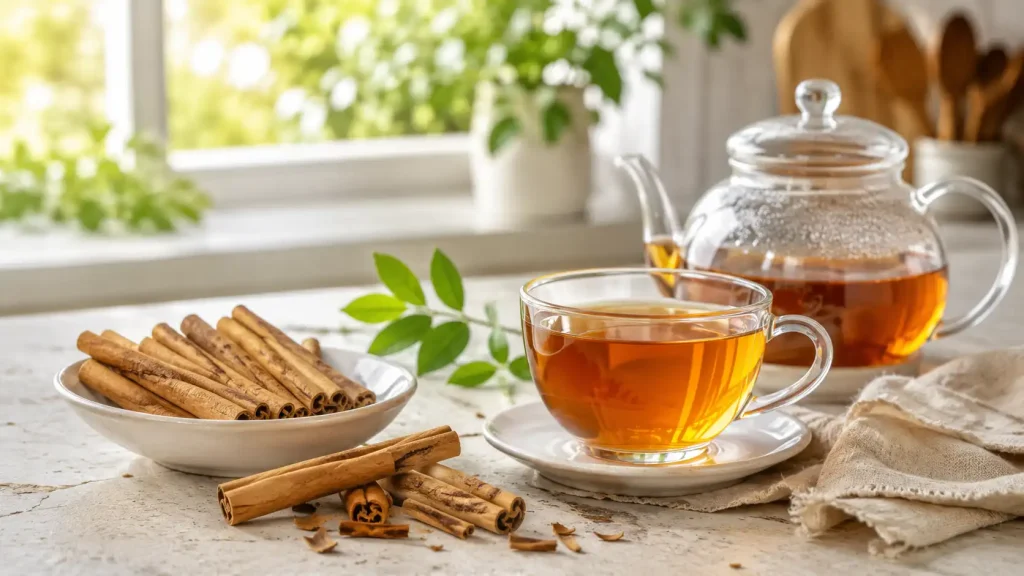
Ceylon Cinnamon Tea: How to Brew and Why It Stands Out
Ceylon cinnamon tea ranks among the most aromatic and flavorful warm drinks you can make at home. This tea comes from the bark of Cinnamomum verum, which most people call “true cinnamon.” It delivers a delicate, naturally sweet taste that separates it from teas made with cassia cinnamon. You can enjoy it hot on a cool morning or iced during the summer. Either way, it makes a versatile addition to your kitchen.
What Is Ceylon Cinnamon?
Ceylon cinnamon originates from Sri Lanka. Farmers there have cultivated it for centuries. The bark is thin and papery. It rolls into multiple delicate layers. This contrasts sharply with the thick, single-roll bark you typically find with cassia varieties.
In terms of flavor, ceylon cinnamon tastes lighter, more complex, and slightly citrusy. Cassia tends to taste bold and spicy.
Another important distinction involves coumarin content. Cassia cinnamon contains significantly higher levels of coumarin, a naturally occurring compound. Ceylon cinnamon carries only trace amounts. For this reason, many tea enthusiasts and professional chefs choose ceylon cinnamon when they use it frequently in recipes and drinks.
If you want to try authentic ceylon cinnamon in your tea, organic true ceylon cinnamon cut and sifted works perfectly for steeping. You can also compare it side by side with cassia cinnamon sticks to taste the difference yourself.
How to Brew Ceylon Cinnamon Tea
Making a cup of true cinnamon tea at home takes just a few minutes. Follow this simple recipe for a satisfying cup every time:
- Measure 1 teaspoon of ceylon cinnamon cut and sifted per cup of water.
- Bring fresh, filtered water to a rolling boil.
- Pour the hot water over the cinnamon in a mug or teapot.
- Cover and steep for 10 minutes. A longer steep draws out more flavor.
- Strain and serve. Add honey or a squeeze of lemon if desired.
For a stronger brew, increase the steeping time to 12 to 15 minutes. The tea will develop a richer, deeper color and a more pronounced warm aroma. Because ceylon cinnamon stays naturally mild, it rarely turns bitter, even with extended steeping.
Ceylon Cinnamon Tea Flavor Pairings
One of the best things about this tea is how well it pairs with other ingredients. Ginger makes a classic companion. Adding a few pieces of organic ginger cut and sifted to your brew creates a warming, spicy cup. It works especially well in cold weather.
For something more mellow, try pairing ceylon cinnamon with whole chamomile flowers. The floral sweetness of chamomile balances the warm spice of cinnamon beautifully. A drizzle of raw honey rounds out the flavor.
Other popular additions include cardamom pods, whole cloves, and vanilla bean. These combinations shine in chai-style blends where ceylon cinnamon serves as the aromatic base.
Hot vs. Iced Versions
Hot cinnamon tea remains the traditional choice. However, an iced version refreshes just as well. To make iced ceylon cinnamon tea, brew a concentrated batch using double the amount of cinnamon. Let it cool to room temperature, then pour over ice. Add a sprig of fresh mint or a thin slice of orange for a finishing touch.
Iced cinnamon tea also works as a base for more creative drinks. Mix it with cold apple cider for a fall-inspired beverage. You can also blend it with coconut milk for a creamy, dairy-free treat.
Buying Tips for Bulk Cinnamon
When shopping for ceylon cinnamon, look for a few key indicators of quality. First, check the label. It should specifically say “Ceylon” or “Cinnamomum verum.” If the label just says “cinnamon” without specifying the type, it almost certainly contains cassia.
Visually, ceylon cinnamon bark appears tan to light brown with thin, flaky layers. Cassia bark looks darker, thicker, and harder to break. In powdered form, ceylon cinnamon shows a lighter shade of brown compared to cassia.
Buying in bulk saves money if you drink cinnamon tea regularly. Loose-cut cinnamon stores well in an airtight container away from direct sunlight. It retains its flavor for up to a year. Purchasing larger quantities also means you always have enough on hand for spontaneous brewing.
Frequently Asked Questions About Ceylon Cinnamon Tea
What is the difference between Ceylon cinnamon and cassia cinnamon?
Ceylon cinnamon (Cinnamomum verum) is lighter, sweeter, and more complex in flavor. Cassia cinnamon is bolder, spicier, and contains more coumarin. Ceylon cinnamon bark is thin and multi-layered, while cassia bark is thick and single-rolled.
How do you know if cinnamon is real Ceylon?
Check the label for “Ceylon” or “Cinnamomum verum.” Visually, Ceylon cinnamon is tan to light brown with thin, flaky layers. If the label just says “cinnamon” without a type, it is almost certainly cassia.
Can you make iced Ceylon cinnamon tea?
Yes. Brew a double-strength batch using twice the normal amount of cinnamon. Let it cool to room temperature, then pour over ice. Add fresh mint or an orange slice for extra flavor.
Shop Now
Ready to brew your own cup? Start with organic true ceylon cinnamon cut and sifted from Hatton Naturals. We source it directly from Sri Lanka. It works perfectly for tea, cooking, and DIY spice blends.