Tea With Raspberry Leaf Brewing Guide
A good cup of tea with raspberry leaf is not loud or sharply perfumed. It is gentle, green-brown, softly rounded, and a little earthy, with the kind of quiet body that makes it useful in daily tea making. Herbalists have long appreciated raspberry leaf for its humble character. Tea makers tend to value it for something just as important: it blends well, carries mint beautifully, and takes sweet or cooling accents without losing its own leafy backbone. If your first cup seemed flat, rough, or vaguely hay-like, the issue is usually not the herb itself. It is more often the ratio, water temperature, or steeping style.
When brewed with care, raspberry leaf gives a smooth, settled infusion with a lightly woodsy finish and a clean herbal depth that works especially well beside mint. That is why so many practical tea blends pair it with brighter leaves or petals rather than trying to force it into the starring role alone. The goal is not to make it louder. The goal is to make it rounder, clearer, and more pleasant from first sip to last. Once you understand how the cut size behaves in hot water, tea with raspberry leaf becomes one of the easiest herbal cups to adjust for daily drinking, iced service, or small-batch blending.
Why tea with raspberry leaf deserves a slow, balanced brew
Raspberry leaf is often misunderstood because people expect it to behave like a highly aromatic mint or a floral herb. It does not. It behaves more like a steady blending leaf. In old-fashioned herb craft, leaves like this were valued for texture in the cup as much as aroma. They add body, structure, and a kind of quiet fullness that gives a blend substance.
That is why tea with raspberry leaf tends to improve when you treat it as a leaf infusion rather than a delicate flower. It likes enough leaf matter to feel present, but not so much that the brew turns dry or coarse. It also benefits from a covered steep, which helps hold the softer green aroma in the cup instead of letting it drift away with the steam.
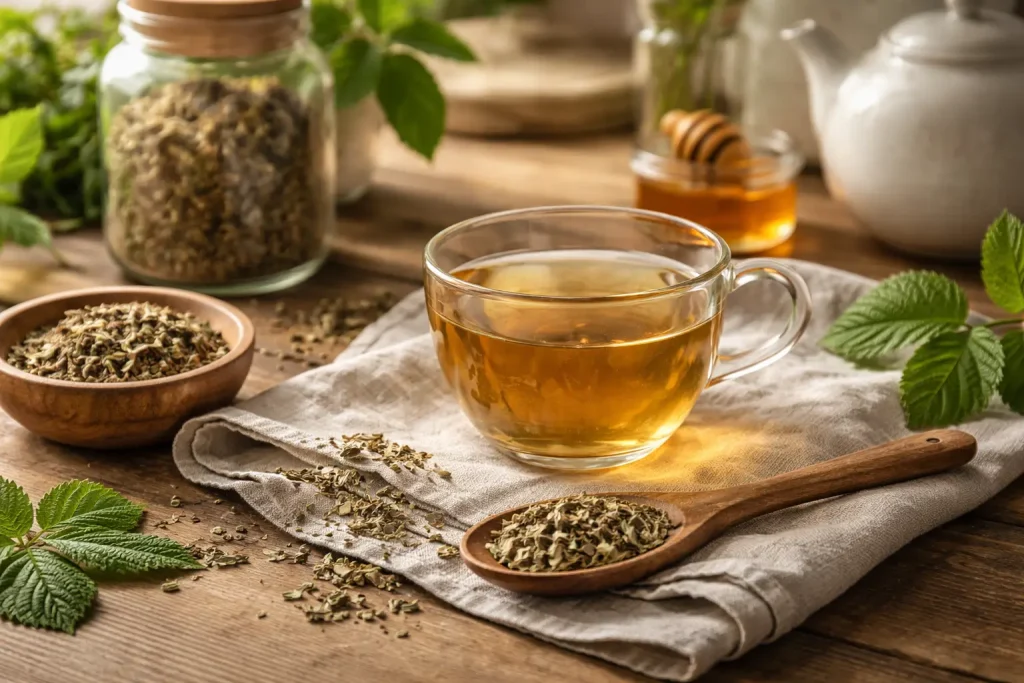
The cut and sifted form is especially practical for home tea makers. It extracts faster than whole leaves, packs consistently by weight, and works well for mug brewing, teapots, or batching. Its flavor profile sits in a useful range: grassy, faintly woody, softly tannic, and easy to lift with cooling herbs. That makes it a dependable base when you want a smooth herbal drink rather than a dramatic one.
Ratios for a balanced cup
The easiest way to improve tea with raspberry leaf is to measure it with a little precision. Too little leaf gives a thin, dull cup. Too much can push the infusion toward dryness. Start with a moderate hand and adjust in small steps.
For one 8-ounce cup (about 240 ml), use:
2 to 3 grams raspberry leaf cut and sifted
About 2 to 2 1/2 teaspoons, depending on cut density
For a stronger 12-ounce mug (about 355 ml), use:
3 to 4 grams
About 1 tablespoon
For a small teapot serving 2 cups (16 ounces or about 475 ml), use:
5 to 6 grams
About 4 to 5 teaspoons
If you want a softer, brighter profile, blend the base with mint:
3 grams raspberry leaf
0.5 to 1 gram spearmint
About 2 1/2 teaspoons raspberry leaf plus 1/2 to 1 teaspoon mint
This ratio is a reliable starting point for daily brewing. Try Raspberry Leaf C/S when you want a practical herbal base that infuses evenly in mugs and teapots. For a cooler finish, add Organic Spearmint to sharpen the cup without making it harsh.
If you are building a blend for regular use, keep raspberry leaf as 70 to 85 percent of the formula and let more aromatic herbs do the lifting. That way the cup stays smooth and drinkable instead of turning perfumey or busy.
Best water, temperature, and steep times
Because raspberry leaf is a leaf material with some body, it does best with fully heated water, but not with a punishing boil poured aggressively over the herb. A calmer approach makes a noticeable difference.
Best water temperature:
200 to 205°F (93 to 96°C)
Steeping time:
6 to 8 minutes for a balanced cup
8 to 10 minutes for a fuller, stronger infusion
4 to 5 minutes if using more aromatic companion herbs and you want a lighter profile
Cover the vessel while steeping. That small step helps preserve the gentle top notes and keeps the cup from smelling dull. If your water is very hard, the infusion may taste flatter and slightly chalky. Filtered water usually gives a cleaner herbal finish.
In the middle of the brew window, tea with raspberry leaf should smell soft, leafy, and warm, not aggressively green. If the aroma feels weak, increase leaf weight before increasing steep time too much. Oversteeping often pulls more dryness than flavor.
For a sweeter, rounder cup, let the tea rest for a minute after straining. This brief settling time allows the leafy notes to knit together. Freshly strained infusions can sometimes seem sharper than they actually are.
Building flavor with herbal pairings
Raspberry leaf becomes much more interesting when you think like a blender. The base is steady, so the best pairings are those that either brighten the top of the cup or soften the finish.
Spearmint is one of the cleanest partners. It gives lift, freshness, and a sweet-green aroma that suits the quiet structure of raspberry leaf. In practice, tea with raspberry leaf often tastes more complete with a little spearmint than it does on its own, especially for people who want an easy everyday herbal cup.
Chamomile can soften the middle of the infusion and give it a more rounded, apple-like warmth. Try adding chamomile flowers when you want the blend to feel more mellow and comfortingly fragrant.
Calendula adds color and a subtle garden note without dominating the cup. A pinch goes a long way. Stir in calendula petals when the blend needs a brighter visual touch and a light floral edge.
Licorice root contributes body and a natural rounded sweetness. It should be used lightly so it supports rather than takes over. Add licorice root cut and sifted if you want a fuller finish in a mint-forward blend.
Lemongrass brings a clean, citrus-like high note without the sharper peel character that can overshadow leafy herbs. Use lemongrass for a brighter, more sparkling top note in iced or summer-style infusions.
Peppermint creates a stronger cooling effect than spearmint and can make the blend feel more vivid. Reach for peppermint leaf when you want extra freshness and a clearer aromatic lift.
Tulsi gives a more resinous, spicy-green note that some tea makers enjoy in deeper blends. Try tulsi leaf when you want a more complex herbal profile with a slightly more structured aroma.
Hot, iced, and batch-brew methods
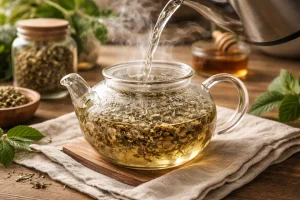 Once you understand the base formula, you can adapt it to different serving styles without much trouble.
Everyday hot mug
Use 3 grams raspberry leaf and 0.5 gram spearmint for 10 to 12 ounces of water. Cover and steep 7 minutes. Strain well. This is the simplest daily method and the one most likely to convert people who thought raspberry leaf tasted too plain.
Iced infusion
For iced service, brew stronger because dilution changes the cup. Use 8 grams raspberry leaf and 2 grams spearmint for 500 ml hot water. Steep 8 minutes, strain, then pour over plenty of ice. If you want more brightness, include a little lemongrass. Tea with raspberry leaf works especially well iced when the mint is kept clean and moderate rather than excessive.
Small batch for tea makers
For 1 liter:
12 to 14 grams raspberry leaf
2 to 3 grams spearmint
Optional 1 gram calendula or chamomile
Use water around 200°F to 205°F. Steep 7 to 8 minutes covered. Strain through a fine mesh filter or paper-lined strainer if you want a clearer final liquor. Let cool before bottling.
Sparkling herbal tea base
If you are making a lightly sparkling version, keep the infusion clean and not overly strong. A dense, over-extracted base can ferment unpredictably and throw sediment. For this style, reduce steep time slightly and strain very well. This is where tea with raspberry leaf benefits from restraint. It should support the drink, not weigh it down.
Troubleshooting
Even careful brewers run into small issues. Most can be fixed with one simple adjustment.
Flat flavor
Use more herb before extending the steep too far. Increase raspberry leaf by 1 gram per cup, or add a small amount of spearmint. Flat cups often come from underdosing, stale leaf, or uncovered steeping.
Too tart
Raspberry leaf itself is not especially tart, so this usually comes from a companion herb or an iced preparation that was brewed too strong. Reduce sharper accents and shorten the steep slightly. If needed, add a touch of chamomile or licorice root to round the edges.
Over-carbonation
This only applies if you are turning the infusion into a sparkling drink. Bottle only when the liquid is fully strained and properly cooled. Use less sugar or sweetener, and refrigerate as soon as the desired fizz develops. Overly concentrated tea can also speed things up.
Sediment
Cut and sifted herbs naturally shed small particles. Use a finer strainer, let the infusion settle before pouring, or filter twice for batch production. Tea with raspberry leaf can look cloudy if the cut is very fine, but that is usually a process issue, not a quality failure.
Aroma loss
Cover the brew. Store herbs away from light and heat. If the dry leaf no longer smells softly green and fresh, the infusion will taste tired no matter how well you brew it.
Storage + Quality
Good herbal tea starts long before the kettle. Raspberry leaf is modest in aroma, so poor storage shows up quickly in the cup. Keep it airtight, away from humidity, heat, and direct light. A dark cupboard and a well-sealed jar or pouch are usually enough for home use.
Color matters. Fresh raspberry leaf cut and sifted should look green to olive-green with some natural variation, not gray-brown and lifeless. The scent should be mild but still present, somewhere between dried garden leaf and soft hay. If it smells dusty, flat, or faintly sour, quality has likely slipped.
Humidity is one of the fastest ways to ruin leafy herbs. Even good material can lose character if stored near steam, dishwashers, or frequently opened windows in damp weather. For tea makers doing small production runs, label jars with purchase date and rotate stock so the oldest material is used first.
If you want a blend ingredient that stays useful across seasons, keep Raspberry Leaf C/S on hand as a reliable base leaf. For freshness in storage and in the cup, [Organic Spearmint] is a smart companion herb to keep nearby.
Safety
Raspberry leaf has a long history in traditional herbal practice, and herbalists often use it in simple home infusions. Still, a tea article should stay practical and careful. This is a beverage guide, not medical advice.
Use culinary amounts and buy from reputable herb suppliers. If you are pregnant, nursing, managing a medical condition, or taking medication, it is sensible to check with a qualified healthcare professional before making regular use of concentrated herbal preparations. That is especially true when using larger quantities or more complex blends.
Avoid making disease claims around herbal tea. It is better and more accurate to talk about flavor, tradition, craft, and the sensory qualities of the cup. You can say an herb is traditionally used, that herbalists often include it in blends, or that it may support a calming tea ritual. You do not need exaggerated claims to make a good herbal cup worth brewing.
Final thoughts
The secret to tea with raspberry leaf is not force. It is proportion. Give it enough leaf to build body, enough heat to open the cup, and enough support from mint or softer herbs to make the flavor feel complete. Once you stop expecting a dramatic perfume and start treating it as a graceful blending leaf, it becomes far more rewarding. Brewed well, tea with raspberry leaf is smooth, practical, quietly aromatic, and easy to return to day after day.
FAQ
Can tea with raspberry leaf be brewed on its own?
Yes. It makes a mild, leafy, smooth infusion on its own, though many people prefer it with a little mint or chamomile for more aroma.
What does raspberry leaf tea taste like?
It is usually soft, green, slightly earthy, and gently drying, with a fuller body than many delicate flower infusions.
How much raspberry leaf should I use per cup?
Start with 2 to 3 grams, or about 2 to 2 1/2 teaspoons, per 8 ounces of water.
Is spearmint a good match for raspberry leaf?
Yes. Spearmint adds lift and sweetness to the aroma without overwhelming the base leaf.
Why does my infusion taste dull?
The most common reasons are too little herb, stale material, uncovered steeping, or water that is too cool.
Can I make it iced?
Yes. Brew it a bit stronger, strain well, and pour over ice. Mint and lemongrass work especially well in iced versions.
How long should I steep it?
Usually 6 to 8 minutes for a balanced cup. Go a little longer only if you want more body.
How do I store dried raspberry leaf?
Keep it in an airtight container away from humidity, heat, and direct light. Use it while the color and scent still feel fresh.