Burdock Root Benefit: Tradition and Daily Herbal Use
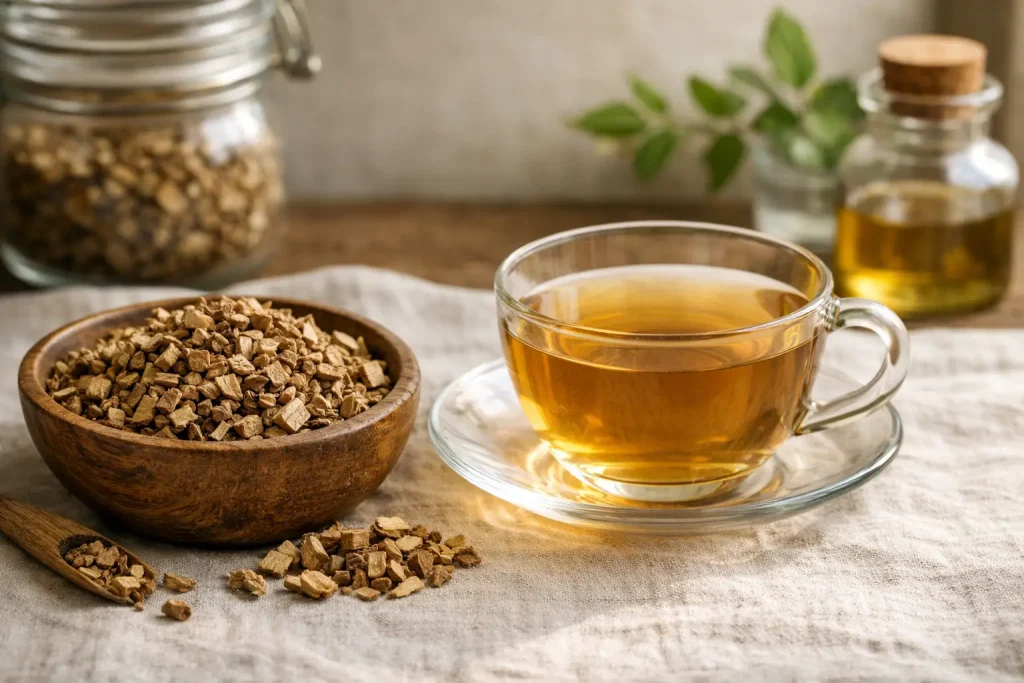
The idea of burdock root benefit begins with something very simple: a humble root, earthy and gently sweet, becoming useful through patience, heat, and good blending. In old herbal practice, burdock was rarely treated as flashy. It was valued because it was steady. Tea makers still appreciate it for the same reason. Its flavor is grounded, woody, faintly mineral, and rounded by a soft sweetness that comes forward with longer extraction. That makes it an excellent base note in everyday herbal work, especially when you want a cup that feels rooted rather than perfumed.
For practical production, burdock root cut and sifted is especially friendly. It can be steeped for a lighter infusion, simmered for a fuller decoction, or folded into tea blends that need body and depth. It also pairs well with greener, brighter botanicals that need a little ballast in the cup. Think nettle, mint, fennel, tulsi, or lemongrass. Used well, burdock does not dominate. It supports. It broadens the middle of the palate and leaves a lasting, clean finish that tea drinkers often come back to when they want something calm, plain, and satisfying.
Burdock Root Benefit in the Herbal Tradition
Herbalists have long reached for roots when they want weight, structure, and continuity in a formula. Leaves can feel lively. Flowers can feel delicate. Roots tend to anchor the blend. That is one reason burdock has held such a durable place in traditional herbal practice. When tea makers speak about tradition in a practical way, they usually mean a plant that performs consistently in the pot, in the cup, and on the shelf. Burdock does all three.
A classic burdock root benefit is its versatility across preparation styles. A short steep gives a light, woody cup with a dry finish. A gentle simmer draws out more sweetness and body. In layered blends, burdock behaves like a quiet foundation, especially for formulations meant to feel everyday rather than ceremonial.
This is where production-minded tea makers often take notice. Burdock can help a formula taste complete without relying on strong spice or sourness. It is particularly useful in blends meant for routine drinking, because the flavor is generous without being loud. Try burdock root cut and sifted when you want a rooted base for daily herbal teas, long infusions, or gentle decoctions.
What Burdock Root Tastes Like in the Cup
Burdock root does not taste green, floral, or sharply spicy. It tastes earthy, toasted, faintly sweet, and a little nutty when extracted well. Some cups also show a dry wood tone or a mild mineral character, especially when the root is simmered rather than simply infused. That flavor profile makes burdock highly adaptable in tea making.
When people search for burdock root benefit, they are often looking beyond tradition and into the lived experience of drinking it. Flavor matters. Mouthfeel matters. So does how a root behaves beside other plants. Burdock’s real appeal is that it rounds a blend without making it muddy when the ratio is right.
For a greener, more field-like profile, try nettle leaf cut and sifted beside burdock. Nettle lifts the blend and brings a fresh, leafy note that keeps the root from feeling too heavy. For a brighter finish, try lemongrass cut and sifted in a small amount. If you want more warmth and movement in the cup, try ginger root cut and sifted with burdock for a firmer, spicier edge.
How Tea Makers Use Burdock in Everyday Formulas
Burdock works well in house blends because it gives a cup shape. Think of it as a supporting root that can carry leafy herbs, soften sharper ingredients, and make a formula feel brewed rather than merely steeped. It is especially helpful in blends designed for morning rotation, afternoon grounding, or simple after-meal sipping.
A reliable burdock root benefit in formulation is balance. Strong aromatics can fade or dominate depending on timing and temperature, but burdock tends to hold a blend together across different brewing habits. That matters if customers are not measuring perfectly at home.
For a daily herbal infusion, tea makers often start with burdock plus one leafy herb and one aromatic accent. Nettle is one of the cleanest companions. Mint adds lift. Fennel adds round sweetness. Tulsi adds a dry, gently spiced top note.
Try peppermint leaf cut and sifted when you want a cooler finish over burdock’s deeper base. Try fennel seeds if your blend needs soft sweetness without becoming sugary. Try tulsi leaf cut and sifted for a more resinous, aromatic profile that still feels balanced in an everyday cup.
Working Ratios for Infusions, Decoctions, and Concentrates
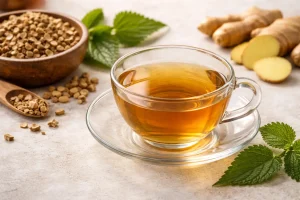 If you are building a practical tea formula, start with extraction first and poetry second. Burdock can handle longer contact with water, so it rewards clear ratios.
For a simple single-herb cup:
6 grams burdock root cut and sifted
about 2 1/2 teaspoons
300 ml hot water
simmer 12 to 15 minutes, then cover and rest 5 minutes
For a balanced burdock and nettle blend:
4 grams burdock root cut and sifted
about 1 3/4 teaspoons
2 grams nettle leaf cut and sifted
about 2 teaspoons
350 ml water
simmer the burdock 10 minutes, turn off heat, add nettle, cover 7 minutes, strain
For a tea concentrate for batch service:
40 grams burdock root
about 16 teaspoons
15 grams nettle leaf
about 15 teaspoons
2 liters water
simmer burdock 20 minutes, add nettle off heat, steep 10 minutes, strain hot
This kind of practical measuring shows another burdock root benefit. The root remains expressive in both small and large batches. It can be brewed gently for a soft daily cup or pushed longer for concentrates that will be diluted over ice or used as a base in sparkling botanical drinks.
If you want extra softness in the finish, try licorice root cut and sifted in very small amounts. If you want a brighter kitchen-herbal profile, try lemongrass cut and sifted as a top note in the final steep rather than the simmer.
Pairing Burdock with Nettle and Other Useful Botanicals
The pairing of burdock and nettle works because each one corrects the other. Burdock brings depth, while nettle brings lift. Burdock feels rooted and rounded. Nettle feels green, direct, and clear. Together, they create a cup that is satisfying without becoming too woody or too grassy.
That pairing also expresses a strong burdock root benefit for tea makers: flexibility across seasons. In cooler months, the blend can be simmered longer for a denser cup. In warmer months, it can be brewed as a concentrate and poured over ice with a squeeze of citrus-like herbs such as lemongrass.
Other smart companions include mint for refreshment, fennel for sweetness, and ginger for a warm, active edge. Tulsi adds fragrance and complexity without overwhelming burdock’s earthy center.
Try nettle leaf cut and sifted for a classic rooted-green duo. Try ginger root cut and sifted when you want more heat and aromatic movement. Try fennel seeds for a rounder profile in family-style herbal blends. Try tulsi leaf cut and sifted when you want the cup to feel a little more lifted and fragrant.
Troubleshooting Burdock-Based Herbal Drinks
Even a simple root can misbehave if the method is sloppy. This is where production detail matters.
Flat flavor
Usually caused by under-extraction or too little root. Burdock often needs more time than leaves or petals. If the cup tastes thin, simmer instead of steeping. A useful burdock root benefit is that the flavor deepens well with gentle time rather than harsh heat.
Too tart
Burdock itself is not tart. Tartness usually comes from added sour botanicals, fruit acids, or overuse in sparkling drinks. Reduce acidic ingredients and let burdock carry more of the base.
Over-carbonation
If you use burdock tea in sparkling botanical sodas or secondary fermentation projects, bottled pressure can rise fast when sugar remains available. Chill early, burp carefully if needed, and keep test bottles under observation.
Sediment
Some fine particles are normal with cut roots, especially after long simmering. Use a finer filter or double strain. Let the liquid settle before bottling concentrates.
Aroma loss
Roots hold flavor well, but top notes do not. If using mint, lemongrass, or tulsi, add those later in the process or post-simmer under a covered steep.
Storage + Quality
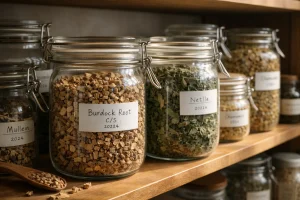 Good roots ask for good storage. Burdock should be kept airtight, away from humidity, light, and strong kitchen odors. Moisture softens the texture, dulls the aroma, and can flatten the cup long before the product is visibly compromised.
A practical burdock root benefit is shelf stability when handled well. Cut and sifted root stores better than many delicate leaves and flowers, but that does not mean neglect is harmless. The best lots keep a mild, earthy scent with a faint sweetness. Color should look natural, dry, and even, not gray, damp, or tired.
When checking quality, trust both the eye and the nose. Fresh burdock should smell grounded and clean. If the aroma feels dusty or stale, expect a weaker cup. If the color looks unevenly faded, you may also see diminished flavor.
For blending rooms and small production setups, label containers with lot date, opening date, and target use. Reserve your fresher, more aromatic ingredients for the later steep and let burdock handle the deeper brewed base.
Safety
Burdock belongs in the category of practical, traditional herbal ingredients, but sensible use still matters. This article discusses culinary and traditional herbal use only. It is not medical advice, and it does not claim to diagnose, treat, cure, or prevent disease.
When people ask about burdock root benefit, the safest answer is that herbalists often value it for its traditional place in everyday formulas, its pleasant earthy profile, and its ability to support balanced blends. That is enough. There is no need to exaggerate.
Use clean materials, accurate labeling, and sensible batch records. If making products for sale, follow your local food, beverage, and labeling rules. If someone is pregnant, nursing, managing a medical condition, or taking medication, they should speak with a qualified professional before using concentrated herbal products regularly.
A Root Worth Keeping in Rotation
The lasting burdock root benefit is not fashion. It is usefulness. Burdock offers tea makers a grounded flavor, dependable extraction, and a natural role as a base note in blends meant for regular drinking. It takes well to simmering, behaves kindly in larger batches, and pairs beautifully with nettle, mint, fennel, tulsi, ginger, and lemongrass.
For people building an herbal pantry, burdock earns its place because it gives more than one kind of value. It brings tradition, taste, flexibility, and a quiet sense of completeness in the cup. Used with care, it helps simple formulas feel intentional and full.
FAQ
What is the main burdock root benefit in tea?
The main burdock root benefit in tea is its grounded, gently sweet, earthy character and its usefulness as a steady base for everyday herbal blends.
Is burdock root better steeped or simmered?
It usually shows more body and sweetness when simmered gently, though a long covered steep can work for lighter cups.
What does burdock pair well with?
Nettle, peppermint, fennel, tulsi, ginger, lemongrass, and small amounts of licorice all pair well with burdock.
How much burdock root should I use per cup?
A good starting point is 6 grams, or about 2 1/2 teaspoons, per 300 ml water.
Can I use burdock in iced herbal drinks?
Yes. Brew it as a stronger concentrate, then dilute over ice for a fuller flavor.
Why does my burdock tea taste weak?
It likely needs more root, more time, or a simmer instead of a simple infusion.
How should I store burdock root cut and sifted?
Keep it airtight, dry, away from light, and protected from humidity and strong odors.
Can burdock be used in sparkling herbal beverages?
Yes, but watch sweetness, sediment, and bottle pressure if carbonation is involved.