Plantain Leaves Benefits in Tea and Herbal Use
When people search for plantain leaves benefits, they are often looking for something simple, grounded, and useful. Plantain is one of those herbs that feels humble at first glance, yet it has held a steady place in traditional herbal practice for generations. Herbalists have long appreciated its quiet versatility, especially as a leaf that blends easily, steeps gently, and brings a green, softly earthy character to everyday tea work. Unlike louder botanicals that dominate a cup with perfume or sharpness, plantain tends to settle in and support the blend without demanding attention. That is part of its charm. For tea makers and herb lovers, learning about plantain leaves benefits opens the door to a botanical that is approachable, practical, and easy to combine with other familiar herbs in the apothecary kitchen.
In traditional use, plantain leaf has been valued for its soothing herbal character and its adaptability across many preparations. It can be steeped on its own, blended with leafy companions, or worked into broader tea formulas that favor balance over intensity. It also suits the kind of slow, thoughtful herbal practice that many people want today: less spectacle, more substance. Whether you are building a mild daily infusion, exploring classic herb pairings, or simply getting to know foundational leaves better, plantain deserves attention. Its flavor, texture, and blend behavior make it useful not only from a traditional perspective, but also from a practical one.
What plantain leaf is and why herbalists keep coming back to it
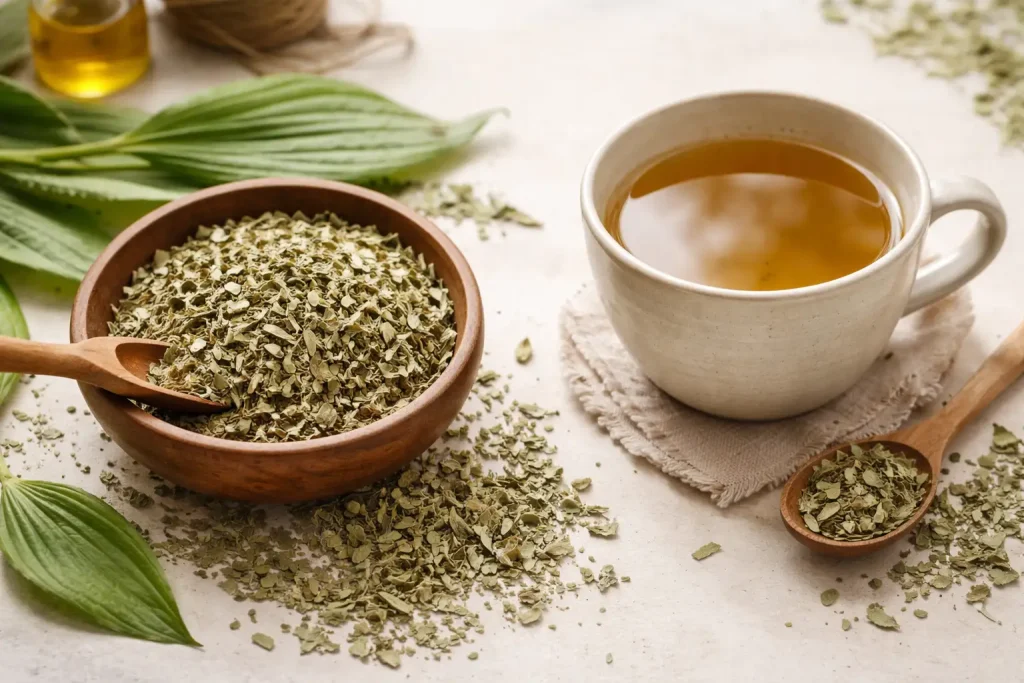
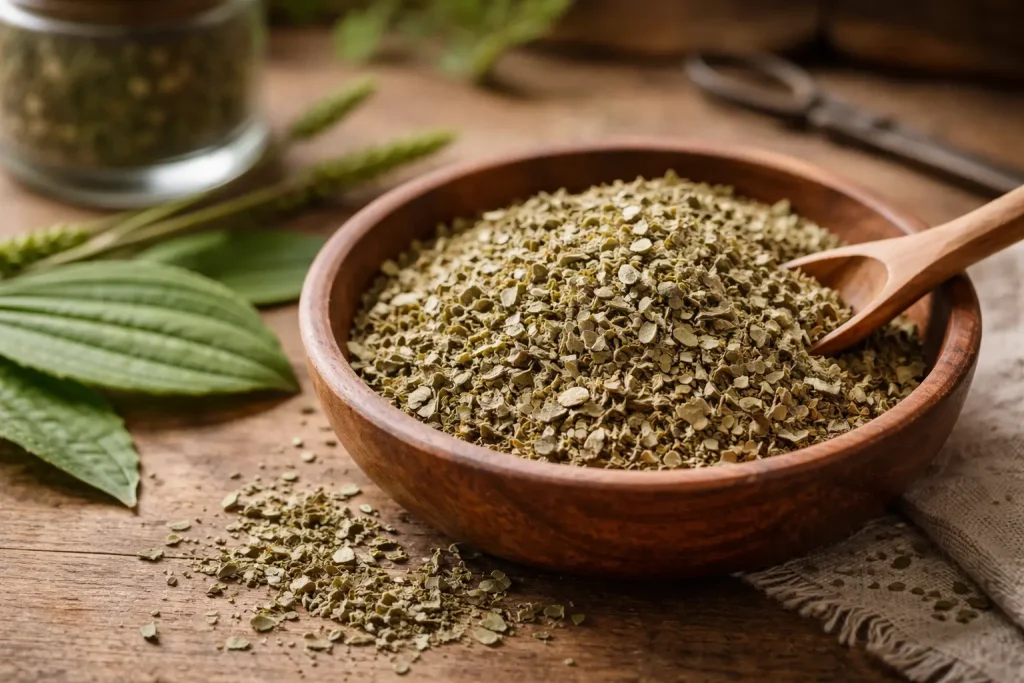
Plantain leaf generally refers to the leaf of Plantago species used in traditional herbal practice, most commonly broadleaf or narrowleaf plantain. It is not related to the starchy cooking plantain fruit. In the herbal world, the leaf is what matters here: dried, cut and sifted, easy to measure, and easy to prepare. Its aroma is mild and green, with an earthy freshness that does not overwhelm the senses. That softness is one reason it appears so often in gentle daily blends.
Part of the lasting interest in plantain leaves benefits comes from how easy the herb is to work with. It does not require complicated handling. It infuses well with standard hot water methods, plays nicely with roots and flowers, and can serve as a base note in many tea formulas. Herbalists often value leaves like this because they allow other ingredients to shine while still contributing body and herbal depth.
For anyone building a practical tea shelf, plantain is a smart ingredient because it is flexible. It can lean simple with one or two companions, or become part of a broader botanical recipe with more structure and aromatic range. Try adding plantain leaf c/s when you want a mild green herbal base that feels balanced and easy to drink.
Plantain leaves benefits in traditional herbal practice
A good way to understand plantain leaves benefits is to look at how the herb has traditionally been used. Older herbal traditions often favored common, accessible plants that could be prepared without fuss. Plantain fit that pattern well. It was treated as a dependable herb for everyday herbal use, especially in preparations meant to feel gentle, steady, and uncomplicated.
In tea practice, herbalists often use plantain when they want a blend to feel grounded rather than dramatic. Its flavor is not especially sweet, tart, or floral. Instead, it brings a leafy steadiness that helps round out a cup. This makes it especially useful in formulas that also include more aromatic herbs, since it can support the overall structure without making the blend taste busy.
Another reason interest in plantain leaves benefits persists is that the herb suits repeated use in mild preparations. Many herbal tea drinkers want ingredients that feel calm and traditional rather than trendy. Plantain answers that need well. It is the kind of herb that invites routine use, not because it is flashy, but because it is dependable. Try blending nettle leaf c/s with plantain for a greener, fuller-bodied daily cup that still feels clean and approachable.
Flavor, aroma, and cup character in tea blends
From a tea maker’s perspective, flavor behavior matters just as much as tradition. Plantain leaf brings a mild vegetal profile with earthy, hay-like undertones and a soft finish. It is not bitter when handled well, though overly long steeping or poor-quality storage can make it feel dull or slightly rough around the edges. Good plantain should smell fresh, grassy, and dry, not musty or flat.
When you are building a blend, plantain works best as part of a layered cup. It can anchor floral notes, soften sharper herbs, and add volume to leaner formulas. It also pairs especially well with other gentle leaves and roots. If you want more roundness, combine it with nettle. If you want a brighter aromatic lift, pair it with milder flowers or citrusy herbs that do not overpower it.
A useful approach is to think of plantain as a middle note with supporting structure. It is not the sharp top note and not the deepest base note. It lives in the center, holding the blend together. That is one of the more practical plantain leaves benefits for tea formulation: it helps create harmony without requiring much adjustment. Try a soft floral edge with calendula petals if you want the cup to feel lighter and more visually inviting.
How to prepare plantain leaf tea with exact ratios
One of the easiest ways to explore plantain leaves benefits is through a single-herb infusion first. That gives you a clear sense of the herb before you start blending. Because the leaf is mild, moderate ratios usually work best.
Basic single-herb infusion
 For one 10 to 12 oz cup:
- 2 grams dried plantain leaf c/s
- About 2 teaspoons, loosely measured
- 300 ml hot water
- Water temperature: 205°F to 212°F (96°C to 100°C)
- Steep time: 8 to 10 minutes, covered
This yields a mild to medium cup. For a fuller result, raise the herb to 3 grams (about 3 teaspoons) and extend the steep to 12 minutes.
Small teapot ratio
For 500 ml:
- 4 to 5 grams dried plantain leaf
- 4 to 5 teaspoons
- Steep covered for 10 to 12 minutes
Daily blend ratio with nettle
For 500 ml:
- 3 grams plantain leaf c/s (about 3 teaspoons)
- 3 grams nettle leaf c/s (about 3 teaspoons)
- 500 ml hot water
- Steep 10 minutes
This kind of side-by-side ratio is useful because it keeps the cup leafy and balanced. Try adding burdock root c/s in a small amount for extra body and a deeper earthy note in longer-steeped blends.
Blending ideas for a practical herbal tea shelf
If you want to move beyond a simple infusion, plantain shines in blends designed for daily drinking. It is especially effective with herbs that bring either mineral-like greenness, floral lift, or gentle root depth. A good formula does not need to be complicated. Often three ingredients are enough.
Blend idea 1: Green daily tea
- 2 parts plantain leaf
- 2 parts nettle leaf
- 1 part calendula petals
This produces a soft green cup with a clean profile and a light floral finish.
Blend idea 2: Earthy leaf-and-root tea
- 2 parts plantain leaf
- 1 part burdock root
- 1 part marshmallow root
This formula feels rounder and more grounded, especially with a slightly longer steep.
Blend idea 3: Bright herbal kitchen blend
- 2 parts plantain leaf
- 1 part lemon balm
- 1 part calendula petals
This version is better for people who want more aroma and less earthy depth.
The value of plantain leaves benefits becomes even clearer in blends like these, because the herb helps unify diverse ingredients. It gives structure without crowding the cup. Try adding marshmallow root c/s when you want a softer texture and a fuller mouthfeel in a gentle household blend.
Plantain in larger batch tea making
For small-batch tea makers, plantain is convenient because it scales well. The cut and sifted form mixes evenly with other dried herbs and usually does not need extra breaking or sifting before blending. That matters in production, especially when consistency from scoop to scoop is important.
For a small 100 gram batch, a practical formula might look like this:
- 40 grams plantain leaf c/s
- 30 grams nettle leaf c/s
- 15 grams calendula petals
- 15 grams marshmallow root c/s
Toss gently in a wide bowl rather than stirring aggressively, which can break more delicate plant material. Store the finished blend in a clean airtight container away from light and humidity.
If you are packing by volume for temporary kitchen use, remember that fluffy leaves and dense roots settle differently. Weight is more reliable than teaspoons in batch work. Plantain is forgiving, but uneven measuring can still change the flavor profile from one jar to the next. Try building everyday inventory around lemon balm leaf if you want a brighter companion herb that keeps blends approachable for a wider audience.
Troubleshooting common problems in herbal tea blends
Even a mild herb can disappoint if the handling is off. Here are common issues that come up when working with plantain and companion herbs.
Flat flavor
A flat cup usually points to old material, too little herb, or an uncovered steep. Keep the vessel covered to preserve aroma. Increase the herb by 0.5 to 1 gram before increasing steep time too much.
Too tart
Plantain itself is not especially tart. If the blend tastes sharp, another ingredient is likely dominating. Reduce bright flowers or citrusy herbs and let plantain carry more of the body.
Over-carbonation
This issue belongs more to fermented herbal beverages than standard tea, but it still matters for makers experimenting with infused secondary fermentation. If using herbal tea as a flavoring base in bottled drinks, use fully strained liquid and watch sugar levels carefully. Plantain is mild, so it is rarely the cause, but added sweeteners and active fermentation can create pressure fast.
Sediment
Fine cut herbs and broken leaves can produce sediment. Strain through a finer mesh or let the tea settle briefly before pouring. In batch blends, avoid crushing the herbs during mixing.
Aroma loss
If the tea smells weak before it even hits the water, storage may be the problem. Air, light, and humidity drain character from mild leaves quickly. This is one reason plantain leaves benefits are best appreciated when the herb is fresh and properly stored. Try lifting aroma with linden flowers in a blend that needs a softer floral top note without becoming perfumey.
Storage + Quality
Because plantain is mild, quality cues are important. A strong herb can hide mediocre handling for a while. A subtle herb cannot. Good plantain leaf should show a natural green to olive color, sometimes with muted variation depending on cut and season. It should smell dry, fresh, and leafy. If it looks browned out, dusty, or smells stale or musty, the cup will likely feel lifeless.
Store dried plantain in an airtight container away from direct light, moisture, and heat. A pantry shelf is better than an open counter near the stove. Humidity is especially damaging for leafy herbs. Even if mold is not visible, repeated moisture exposure dulls the aroma and shortens useful shelf life.
For blends, label the jar with both the ingredients and the blend date. This helps you compare freshness over time. As a general rule, leafy blends are at their best when used steadily rather than forgotten in the back of the shelf. Try keeping plantain leaf c/s in a dedicated airtight jar if you reach for it often in daily tea work.
Safety
Plantain has a long history in traditional herbal use, but it is still important to keep language and expectations grounded. This article discusses plantain leaves benefits in the context of traditional herbal practice, tea making, and sensory use. It does not replace medical advice, diagnosis, or treatment.
Herbalists often use plantain as part of everyday wellness routines, but that does not mean every herb is right for every person. If someone is pregnant, nursing, managing a health condition, or taking medication, it is wise to check with a qualified healthcare professional before making major changes to an herbal routine.
From a compliance standpoint, it is better to describe plantain as traditionally used, mild, versatile, and supportive in tea blends rather than making disease-related claims. That kind of wording is both more accurate and more respectful of the herb’s traditional role.
Why plantain still matters in a modern herbal pantry
There is something refreshing about an herb that does not need a dramatic story to earn its place. Plantain remains relevant because it is useful. It steeps well, blends easily, stores simply, and supports a style of herbal tea making that favors steadiness over novelty. For people building a practical apothecary, those qualities matter more than marketing language.
Modern herb buyers often want ingredients that feel traditional, adaptable, and sensible in daily use. Plantain answers that need with quiet confidence. It can be the backbone of a daily leafy tea, the supporting note in a broader botanical blend, or the first herb someone tries when they want to move beyond strongly flavored flowers and spices.
That is one of the real plantain leaves benefits in today’s herbal world: it reminds us that useful herbs do not have to be loud. They just have to do their work well. Try rounding out your tea shelf with plantain leaf c/s and nettle leaf c/s if you want a clean, traditional starting point for gentle daily blends.
FAQ
What are plantain leaves benefits in herbal tea?
Plantain leaves benefits in tea are mostly about traditional use, mild flavor, and blending versatility. Herbalists often value the leaf for its gentle, earthy character and its ability to support everyday tea formulas.
How does plantain leaf taste?
It tastes mild, green, and softly earthy. The cup is usually smooth rather than floral or tart, especially when steeped for about 8 to 10 minutes.
Can plantain leaf be blended with nettle?
Yes. Plantain and nettle are a classic-feeling pairing for people who enjoy green, leafy herbal cups with more body and depth.
How much plantain leaf should I use per cup?
A good starting point is 2 grams, or about 2 teaspoons, per 300 ml of hot water. For a stronger cup, use 3 grams.
Is plantain the same as the cooking plantain fruit?
No. In herbal tea, plantain refers to Plantago leaf, not the starchy fruit often cooked in savory dishes.
What herbs pair well with plantain leaf?
Good companions include nettle, calendula, marshmallow root, burdock root, lemon balm, and linden flowers, depending on the flavor direction you want.
How should I store dried plantain leaf?
Keep it in an airtight container away from humidity, heat, and direct light. Fresh aroma and good color are important quality signs.
Are plantain leaves benefits based on modern medical claims?
No. Plantain leaves benefits are best discussed through traditional herbal use and practical tea making, not disease claims or medical promises.