Damiana Leaf Uses: Traditional Herb
Damiana leaf uses have been recognized across centuries of traditional herbalism throughout Mexico, Central America, and the Caribbean. This aromatic shrub, known botanically as Turnera diffusa, produces small yellow flowers and fragrant leaves that herbalists have long incorporated into teas, tonics, and herbal blends. Today, damiana remains one of the more intriguing botanicals available to those exploring wild-harvested herbs.
What Is Damiana?
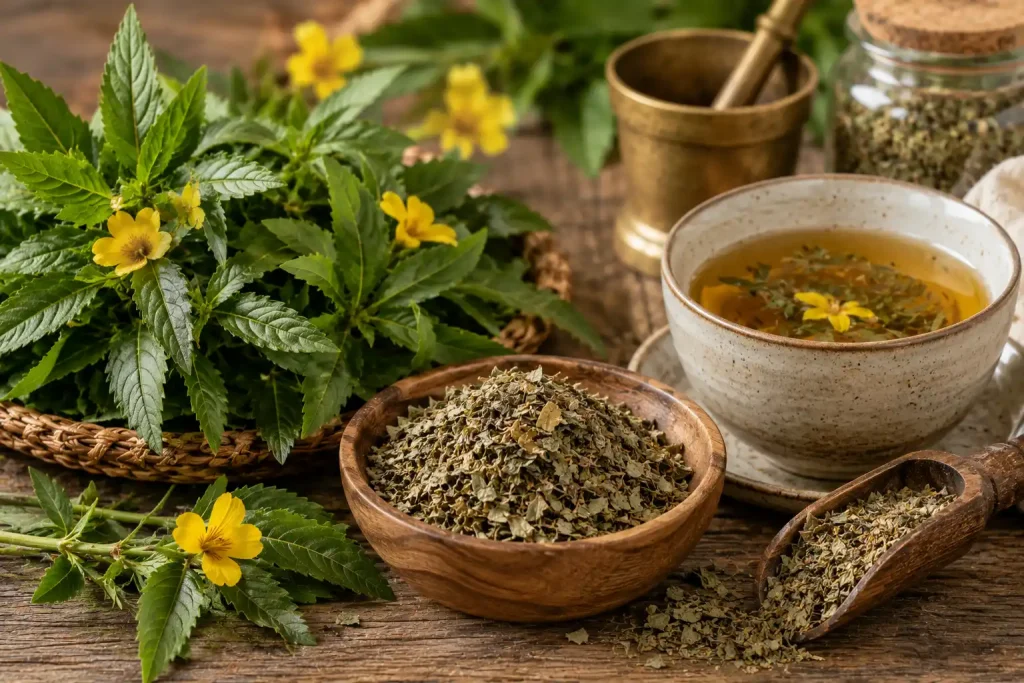
Damiana is a small, flowering shrub native to subtropical climates in Mexico, Central and South America, and parts of the Caribbean. It thrives in dry, rocky soils and produces narrow, serrated leaves with a distinctive aromatic scent. In folk herbalism, the leaves and stems are the most commonly used parts of the plant.
The herb has a long history of use among indigenous peoples of the Americas, particularly in Mexico. Furthermore, Spanish missionaries documented its use as far back as the 17th century. Today, damiana is available as a dried loose leaf, making it accessible for home brewing and herbal blending.
The Aroma and Flavor Profile of Damiana
Damiana leaf has a complex, somewhat earthy aroma with hints of chamomile, fig, and a mild bitterness. When brewed as a tea, the flavor is herbaceous and slightly astringent, with a subtle sweetness in the finish. Moreover, the aroma intensifies when the leaves are steeped in hot water, making it a pleasant sensory experience.
Because of its mildly bitter edge, damiana is often blended with sweeter herbs like lemon balm or chamomile. Lemon balm leaf pairs especially well, softening damiana’s bite while adding a gentle citrus note. This combination is popular among herbalists who enjoy crafting custom blends.
Damiana Leaf Uses in Traditional Herbalism
Traditional damiana leaf uses center on its role as an aromatic nervine in folk herbalism. Herbalists in Mexico and the Caribbean have traditionally used it as a calming tea, particularly in the evening. In folk herbalism, it was considered a tonic herb — meaning it was used regularly to support overall balance rather than for a single acute purpose.
Additionally, damiana has appeared in traditional Mexican herbal medicine as a digestive bitter. The herb’s slightly bitter compounds were thought to stimulate digestive secretions. Consequently, it was often consumed before or after meals in small amounts.
In more modern Western herbalism, practitioners value damiana for its role in herbal relaxation blends. It is frequently included in formulations alongside other calming botanicals. For this reason, it remains a staple in the inventory of many herbal apothecaries.
How to Brew Damiana Leaf Tea
Brewing damiana tea is straightforward. Use approximately one to two teaspoons of dried damiana leaf per eight ounces of near-boiling water — around 200°F is ideal. Steep for five to ten minutes, then strain. The longer the steep, the stronger and more bitter the brew.
However, many herbalists recommend starting with a shorter steep time to assess your tolerance for the flavor. You can always steep longer in future batches. Similarly, blending damiana with naturally sweet herbs helps balance the profile significantly.
You can source wild-harvested damiana leaves in cut and sifted form, which is ideal for both loose-leaf brewing and blending. Wild-harvested damiana retains more of its natural aromatic oils compared to conventionally dried alternatives.
Pairing Damiana with Other Herbs
One of the pleasures of working with damiana is discovering how well it pairs with other botanicals. Its earthy, slightly bitter profile makes it a useful anchor in more complex blends. Moreover, its aromatic qualities complement both floral and citrus herbs naturally.
Lemon balm is one of the most popular companions for damiana. Together, they create a tea that is both calming and lightly uplifting in aroma. Additionally, herbalists sometimes add a small amount of passionflower or chamomile to round out the blend further.
For those who enjoy warming spice notes, a pinch of cinnamon or ginger can complement damiana’s earthiness nicely. As a result, the tea becomes more complex without losing damiana’s characteristic signature.
Sourcing and Quality Considerations
When sourcing damiana, quality matters significantly. Wild-harvested damiana tends to have a stronger aroma and more pronounced flavor than cultivated varieties, because the plant produces more of its aromatic compounds under natural growing conditions. Therefore, opting for certified wild-harvested damiana is worth the consideration.
Look for damiana that has a noticeable aroma when the package is opened. Fresh, quality damiana should smell herbaceous and slightly spicy — not dusty or flat. In fact, a lack of aroma is one of the clearest signs that the herb has aged past its prime.
Cut and sifted preparations are the most versatile, suitable for tea infusions, herbal blending, and capsule filling. Whole leaf damiana is also available but requires a grinder before use in most applications.
Safety and Precautions
Damiana is generally considered safe for most adults when consumed in moderate amounts as a tea. However, individuals who are pregnant or breastfeeding should avoid damiana, as its safety in these populations has not been established. Similarly, those taking prescription medications — particularly those affecting blood sugar or mood — should consult a healthcare provider before regular use. Damiana contains small amounts of compounds that may interact with certain drug classes. As with any herbal tea, it is wise to start with small amounts to assess individual tolerance. This content is for informational purposes only and does not constitute medical advice.
Frequently Asked Questions
What does damiana leaf taste like?
Damiana leaf tea has an earthy, herbaceous flavor with a mild bitterness and a faint sweetness in the finish. Its aroma is aromatic and slightly spicy, reminiscent of chamomile with more depth. Many people blend it with sweeter herbs like lemon balm to balance the bitterness.
How much damiana should I use per cup?
A standard serving is one to two teaspoons of dried damiana leaf per eight ounces of water. Steeping for five to seven minutes produces a moderate-strength brew. Adjust the amount and steep time to your taste preference, starting on the lighter side.
Is wild-harvested damiana different from cultivated?
Yes. Wild-harvested damiana typically has a more pronounced aroma and richer flavor profile than cultivated varieties. This is because plants growing in natural conditions tend to concentrate more aromatic compounds in their leaves. For the best sensory experience, wild-harvested is generally preferred by herbalists.
Can damiana be blended with other teas?
Absolutely. Damiana blends well with calming herbs like lemon balm, chamomile, and passionflower. It also pairs with citrus peel and warming spices. Its earthy, slightly bitter flavor acts as a useful grounding note in more complex blends.
Exploring damiana is a rewarding introduction to wild-harvested botanical herbalism. Whether you are brewing it solo or blending it with complementary herbs, damiana brings a distinctive character to any herbal practice. Visit our wild-harvested damiana leaves page to start exploring this traditional herb today.