Organic Rosemary Uses: Kitchen and Beyond
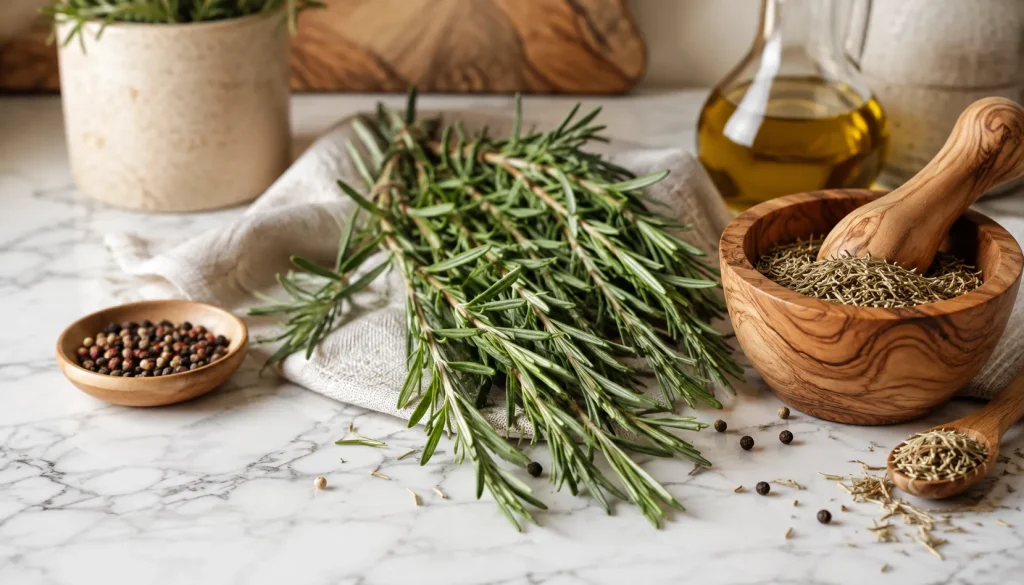
Organic rosemary uses extend far beyond the classic roast chicken or focaccia bread. This fragrant, needle-leafed herb from the Mediterranean is one of the most versatile plants in both the kitchen and the home. Rosemary’s sharp, resinous aroma comes from a rich concentration of essential oils — primarily 1,8-cineole, camphor, and alpha-pinene — that make it equally at home in a roasting pan, a teapot, a bath soak, or a DIY cleaning spray.
This guide covers the full range of organic rosemary uses, from classic culinary applications to herbal tea, infused oils, and simple DIY projects that bring this herb’s fragrance and character into your daily routine.
A Brief History of Rosemary
Rosemary (Salvia rosmarinus, formerly Rosmarinus officinalis) is native to the Mediterranean coast, where it grows wild on rocky hillsides and sea cliffs. The name comes from the Latin ros maris, meaning “dew of the sea” — a nod to the plant’s ability to thrive on coastal mist without much rain.
The herb has been cultivated and used for at least two thousand years. Ancient Greeks and Romans used rosemary in religious ceremonies, as a memory aid, and in cooking. Medieval Europeans planted it near graves as a symbol of remembrance and burned it as incense to purify the air. Rosemary’s association with memory is so ancient that Shakespeare referenced it in Hamlet: “There’s rosemary, that’s for remembrance.”
Today rosemary is one of the most widely grown culinary herbs in the world. It thrives in gardens from California to southern France, and it is available dried year-round in any format — whole leaves, cut and sifted, or powder.
Organic Rosemary Uses in Cooking
Cooking is where organic rosemary uses are most familiar. The herb has a powerful, resinous flavor that can stand up to high-heat roasting, long braises, and bold seasonings. A little goes a long way — one or two sprigs or a teaspoon of dried rosemary can flavor an entire roasting pan of vegetables or a whole leg of lamb.
Rosemary is classic with potatoes. Toss cubed potatoes with olive oil, minced garlic, and a tablespoon of dried rosemary before roasting at high heat until golden. The herb crisps slightly in the oven and infuses the potatoes with its aromatic oils. This simple preparation is a staple side dish across the Mediterranean world.
With meats, rosemary shines alongside lamb, pork, and chicken. Create a simple herb rub by combining dried rosemary with garlic powder, black pepper, and olive oil. Press it into the meat an hour before cooking to allow the flavors to penetrate. Rosemary holds up well at high oven temperatures, maintaining its character throughout a long roast.
Rosemary-infused olive oil is a simple condiment worth keeping on hand. Combine organic rosemary with good olive oil in a small saucepan. Heat gently until the oil begins to bubble lightly around the herb, then remove from heat and let it steep for thirty minutes. Strain and store in a sealed bottle for up to two weeks. Use it on bread, grilled vegetables, pasta, and salad dressings.
Rosemary Tea: A Fragrant Herbal Brew
Among organic rosemary uses that surprise people, tea is perhaps the most underappreciated. Rosemary makes a bright, clear, intensely aromatic tea that tastes like a Mediterranean forest distilled into a cup. The flavor is sharp and resinous with a pleasant warmth and a clean, lingering finish.
To brew rosemary tea, use one teaspoon of dried rosemary per eight ounces of hot water — just below a boil at about 200°F. Steep for five to eight minutes and strain. The longer you steep, the more intense the flavor becomes. For a lighter cup, use half a teaspoon and steep for only four minutes.
Rosemary tea pairs exceptionally well with lemon. A squeeze of fresh lemon juice softens the resinous quality of the herb and brightens the overall flavor. Honey also complements rosemary beautifully — its sweetness balances the herb’s assertive character.
For a more complex herbal tea blend, combine rosemary with thyme and sage. These three Mediterranean herbs share similar aromatic compounds and complement each other naturally. Organic thyme leaves whole and sage leaf whole are both available at Hatton Naturals for building your own blend.
Rosemary in Bread and Baking
Rosemary’s affinity for bread is well established. Italian focaccia dotted with rosemary and sea salt is one of the great simple breads in the world. The herb’s oils release into the olive oil that coats the dough, and its needles crisp slightly in the hot oven, creating textural contrast alongside the soft, airy bread.
Savory rosemary crackers are another easy baking application. Mix dried rosemary with flour, olive oil, salt, and water to make a simple cracker dough. Roll thin and bake at high heat until golden and crisp. These crackers pair naturally with cheese, charcuterie, and hummus.
Rosemary also works in sweet baking — a less expected but rewarding use. Rosemary shortbread, lemon-rosemary pound cake, and rosemary-infused honey cake all leverage the herb’s resinous complexity against the sweetness of butter and sugar. The combination sounds unusual but tastes sophisticated and balanced.
Rosemary in Infused Oils, Vinegars, and Salts
Making flavored pantry staples is one of the most practical organic rosemary uses for people who cook frequently. Rosemary herbed salt is one of the easiest projects imaginable. Combine coarse sea salt with dried rosemary and a little lemon zest in a food processor. Pulse briefly to combine. The result is a fragrant finishing salt that elevates everything from roasted vegetables to grilled fish.
Rosemary vinegar is made by steeping fresh or dried rosemary in white wine vinegar for two weeks. The vinegar absorbs the herb’s oils and takes on a complex, aromatic character that works beautifully in salad dressings and marinades. Use the same method with apple cider vinegar for a slightly sweeter result.
Rosemary sugar is a clever baking ingredient. Blend fine sugar with a small amount of dried rosemary and let it sit in a sealed jar for a few days. The sugar absorbs the herb’s aromatic oils and becomes a fragrant addition to cookies, whipped cream, and cocktails.
Rosemary Beyond the Kitchen
Organic rosemary uses extend naturally into personal care and the home. The herb’s essential oils have a long history in folk traditions as a scalp and hair tonic. Rosemary-infused oil — made by steeping dried rosemary in a carrier oil like jojoba or olive oil for several weeks — is used in traditional preparations for scalp massage. These are folk applications supported by long tradition rather than clinical evidence.
In aromatherapy, rosemary essential oil is prized for its invigorating, clarifying scent. A few drops in a diffuser creates an environment that many people associate with alertness and focus. The camphor and 1,8-cineole in rosemary give it a clear, slightly medicinal quality that blends well with citrus, eucalyptus, and peppermint.
A simple rosemary room spray can be made by steeping dried rosemary in witch hazel, then diluting with water and a few drops of lemon essential oil. This makes a light, natural-smelling spray suitable for freshening fabrics and linens.
Buying and Storing Organic Rosemary
Look for dried rosemary with a deep green color and a strong, immediately apparent resinous aroma. The needles should hold their shape — not crumble to dust when you handle them. Dusty, brown, or faded rosemary has likely lost most of its essential oil content.
Store dried rosemary in an airtight container away from heat, light, and moisture. A glass jar in a pantry cupboard is ideal. Whole dried rosemary needles stay fragrant and flavorful for up to two years. Ground rosemary loses potency more quickly — use it within twelve months for the best flavor.
Buy in bulk if you cook with rosemary regularly. The herb’s low cost per ounce in bulk format makes it economical to keep a generous supply on hand for both cooking and tea brewing throughout the year.
Note: This post covers culinary and household uses of rosemary. It is not intended as medical advice. Consult a healthcare provider for personalized health guidance. Rosemary essential oil is not the same as culinary dried rosemary and should be used with appropriate care.
Frequently Asked Questions About Organic Rosemary Uses
Can I use dried rosemary instead of fresh in recipes?
Yes. The general substitution ratio is one teaspoon of dried rosemary for every one tablespoon of fresh. Dried rosemary has a more concentrated flavor because the water has been removed. Crush or chop the dried needles slightly before using them in recipes where you want the flavor to distribute evenly — whole dried needles can be tough and pokey in finished dishes.
What does rosemary pair with in cooking?
Rosemary pairs naturally with garlic, lemon, olive oil, black pepper, thyme, and sage. In proteins, it complements lamb, pork, chicken, and salmon particularly well. In vegetables, it works with potatoes, root vegetables, tomatoes, and eggplant. And in sweet applications, it pairs with lemon, honey, and citrus zest.
How long does rosemary tea last in the refrigerator?
Brewed rosemary tea stays fresh in the refrigerator for two to three days in a sealed container. The flavor holds well when cold. You can brew a larger batch and keep it chilled for use over several days. Iced rosemary tea with lemon is a refreshing summer drink worth making in advance.
Is organic rosemary the same as regular dried rosemary?
Organic rosemary is grown without synthetic pesticides or herbicides, which matters for a dried herb you use frequently. Since rosemary is often used in large quantities — and since it concentrates whatever compounds are present in the growing environment — choosing organically certified rosemary is a straightforward way to ensure a cleaner product. The flavor profile is the same, but the sourcing standards differ.
Ready to stock up? Shop organic rosemary, organic thyme, and sage leaf at Hatton Naturals — bulk dried herbs with the quality and freshness your kitchen deserves.