Nutmeg Powder in Cooking: Tips and Pairings
Nutmeg powder cooking is something most people do without fully appreciating the depth this spice adds. Nutmeg is one of the world’s great cooking spices — warm, slightly sweet, woody, and faintly peppery, with a complexity that elevates both sweet desserts and savory sauces. Yet most home cooks either underuse it or reach for it only at the holidays. This guide covers everything you need to know about using nutmeg powder effectively, including quantities, pairings, and the best applications across a wide range of cooking traditions.
What Is Nutmeg and Where Does It Come From?
Nutmeg is the seed kernel of Myristica fragrans, a tropical tree native to the Banda Islands in Indonesia — the original Spice Islands that drove European colonial ambitions for centuries. The tree produces a fleshy fruit similar to a peach. Inside is a large seed covered in a bright red, lacy membrane called mace — a separate spice with a closely related but more delicate flavor.
Nutmeg was once so valuable that it rivaled gold in price. Wars were fought over the islands where it grew, and the Dutch East India Company held a monopoly on production for much of the seventeenth century. Today nutmeg is grown widely across Indonesia, India, Grenada, and Sri Lanka, and it is freely available worldwide.
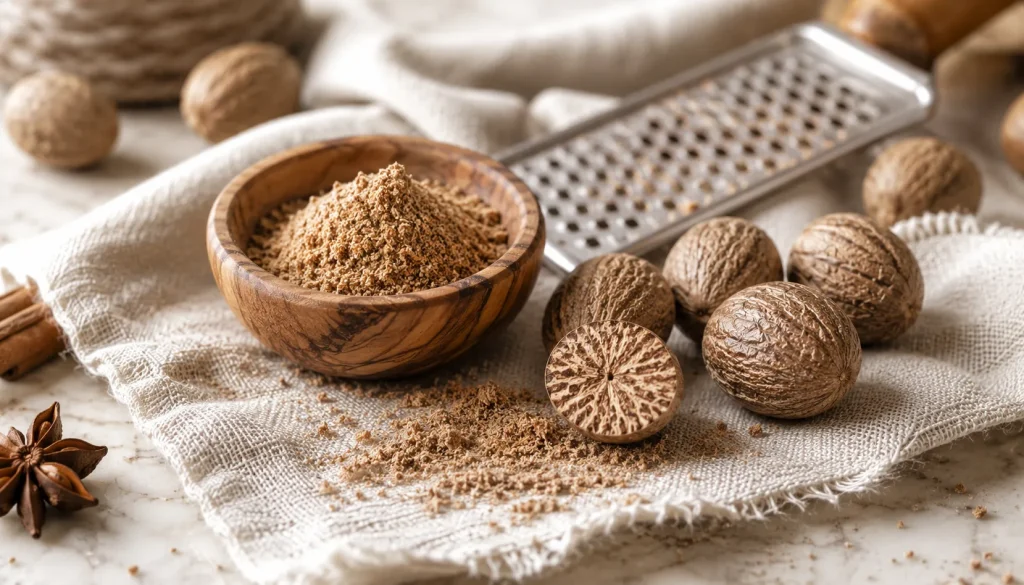
Both whole nutmeg and ground powder are used in cooking. Whole nutmeg is grated fresh using a microplane or small nutmeg grater. Ground powder offers convenience for everyday use, though it loses potency more quickly than whole nutmeg. For regular nutmeg powder cooking, buy from a supplier with high turnover to ensure freshness.
How Much Nutmeg to Use
Nutmeg is a spice where less is consistently more. The flavor is powerful — just an eighth to a quarter teaspoon is enough for most recipes serving four to six people. Too much nutmeg produces a medicinal, almost soapy aftertaste that ruins a dish.
When a recipe calls for “a pinch” of nutmeg, take it literally. A pinch — about one-sixteenth of a teaspoon — can be enough to add warmth and depth without announcing its presence. The goal with nutmeg in most savory recipes is to make people say the food tastes wonderful without knowing exactly why.
In baked goods, quantities are slightly higher because the spice must stand up to the sweetness of sugar and the richness of fat. Banana bread, spiced muffins, and pumpkin pie typically call for a quarter to half teaspoon of nutmeg in a recipe that serves eight to ten people.
You can find fresh nutmeg powder at Hatton Naturals, sourced and packaged for peak flavor.
Nutmeg in Savory Cooking
Nutmeg powder cooking shows its greatest versatility in savory applications. Italian cuisine uses it extensively in béchamel sauce, spinach-and-ricotta fillings for pasta, and meatballs. A small amount of nutmeg in béchamel transforms the sauce from something ordinary into something noticeably more complex. The spice binds together the flavors of butter, flour, and milk in a way that is hard to replicate with anything else.
French cuisine also relies on nutmeg in cream sauces, potato gratins, and quiches. A classic gratin dauphinois calls for nutmeg, garlic, and cream layered with thinly sliced potatoes. The nutmeg’s warmth enhances the richness of the cream without competing with the other flavors.
In Middle Eastern and North African cooking, nutmeg appears in spice blends like ras el hanout and baharat. These complex blends pair nutmeg with cumin, coriander, cinnamon, cloves, and black pepper. The result is a layered warmth that defines dishes like lamb tagine, kofta, and rice pilafs.
For whole-spice infusion rather than powder, nutmeg cut and sifted works well when you want to steep the spice in a liquid and remove it before serving.
Nutmeg in Sweet Cooking and Baking
In the sweet kitchen, nutmeg is irreplaceable in certain classic recipes. Eggnog without nutmeg is flat and incomplete. Pumpkin pie spice always includes nutmeg alongside cinnamon and ginger. Rice pudding, bread pudding, and custard tarts all benefit from a pinch of the spice.
Nutmeg pairs especially well with dairy. Warm milk with nutmeg and honey is a centuries-old nighttime preparation. Cream-based desserts — crème brûlée, pot de crème, panna cotta — take on a subtle warmth from nutmeg that complements the richness of the cream.
In spiced cookies and cakes, nutmeg works as part of an ensemble. Combine it with cinnamon, ginger, and allspice for classic warm spice blends. The ratio matters — nutmeg should be present but subordinate, adding depth rather than leading flavor. A typical spice cookie blend might include two parts cinnamon to one part ginger and half a part each of nutmeg and cloves.
Nutmeg Pairings: What Works Best
Nutmeg powder cooking works best when the spice is paired with complementary flavors. Dairy — milk, cream, butter, cheese — is nutmeg’s most natural partner. The fat in dairy softens nutmeg’s edge and allows its woody, aromatic qualities to develop fully.
Other warm spices — cinnamon, cloves, mace, allspice, cardamom — complement nutmeg naturally because they share aromatic compounds called terpenes. These spices enhance rather than compete with each other, creating the characteristic warmth of holiday and autumn cooking.
Vegetables with natural sweetness pair well with nutmeg. Butternut squash, sweet potato, parsnip, and carrot all benefit from a pinch of nutmeg in their preparation. The spice draws out the sweetness of these vegetables and adds an earthy, warm backdrop.
Mace — the spice made from the covering of the nutmeg seed — is nutmeg’s closest relative and most compatible pairing. The flavors are nearly identical, but mace is slightly more delicate and floral. Combining both in a dish creates a more nuanced nutmeg note than either alone. Find mace powder at Hatton Naturals for your spice collection.
Whole Nutmeg vs. Nutmeg Powder
Whole nutmeg retains its volatile oils — the fragrant compounds responsible for its flavor — much longer than ground powder. When you grate whole nutmeg fresh, you get an explosion of aroma that pre-ground powder cannot fully match. Many serious cooks keep a few whole nutmegs on hand and grate them as needed.
Whole nutmeg stays fresh for three to four years when stored properly. Grating it fresh takes only seconds with a dedicated nutmeg grater or fine microplane. The result is noticeably more fragrant and flavorful than pre-ground powder.
Nutmeg powder is the more convenient option for daily cooking. If you buy powder, choose products with a recent packaging date and store them in a sealed container away from heat and light. Use ground nutmeg within six to twelve months for peak flavor.
Storage and Freshness Tips
Store nutmeg powder in an airtight container in a cool, dark cabinet. Heat and light accelerate the loss of volatile oils, which are responsible for the spice’s distinctive aroma and flavor. Avoid storing spices near the stove or on a sunny countertop.
To check freshness, open the container and smell the nutmeg. Fresh, potent nutmeg powder has an immediate, assertive aroma — warm, woody, and slightly sweet. Stale powder smells muted or dusty. If the aroma is weak, the powder has lost its potency and should be replaced.
Whole nutmeg stores best. Keep whole nuts in a sealed jar and they will stay fragrant for years. Grate only what you need for each recipe to maximize the benefit of the whole-spice format.
Note: Nutmeg should be used in culinary quantities only. Very large amounts of nutmeg — well beyond typical cooking doses — can cause adverse effects. This post covers standard cooking uses only and is not intended as medical advice.
Frequently Asked Questions About Nutmeg Powder Cooking
Can I substitute mace for nutmeg in a recipe?
Yes, mace and nutmeg are closely related and can be substituted in equal amounts. Mace has a slightly more delicate, floral flavor, while nutmeg is earthier and more intense. In most recipes, the substitution is seamless. Some bakers prefer mace in light-colored cakes because it does not darken the batter as much as nutmeg.
Why does nutmeg go in béchamel sauce?
Nutmeg in béchamel is a traditional Italian and French technique. The spice adds warmth and depth that unifies the simple combination of butter, flour, and milk. It enhances the savory character of the sauce without making it taste “spiced.” The quantity used is very small — typically just a pinch — but the effect on the final sauce is noticeable.
How long does nutmeg powder stay fresh?
Ground nutmeg powder retains peak flavor for six to twelve months when stored in a sealed container away from heat and light. The volatile oils that carry the flavor gradually evaporate after grinding. Whole nutmeg stays potent for three to four years under the same conditions. Always smell before using — fresh nutmeg should have a strong, immediate aroma.
What is the difference between nutmeg cut and sifted versus whole versus powder?
Whole nutmeg is the complete dried seed — the most shelf-stable form, grated fresh as needed. Cut and sifted nutmeg is chopped into irregular pieces, ideal for steeping in liquids. Nutmeg powder is finely ground for direct use in recipes without any preparation. Each form has different uses: whole for maximum freshness, cut and sifted for infusions, and powder for everyday cooking convenience.
Ready to elevate your cooking? Shop nutmeg powder, whole nutmeg, nutmeg cut and sifted, and mace powder at Hatton Naturals — bulk spices for serious home cooks and professional kitchens alike.