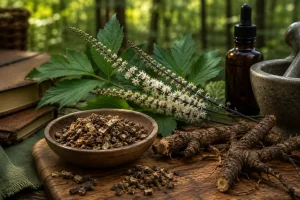
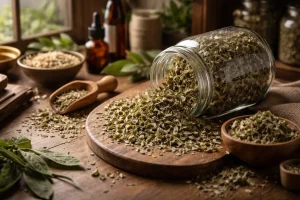
Marshmallow Root Weight Loss: What Herbalists Mean
People searching for marshmallow root weight loss are often not looking for a harsh diet herb at all. More often, they are trying to understand how a soothing, mild, demulcent root fits into a daily herbal tea routine that feels lighter, cleaner, and easier to keep. Marshmallow root has a soft texture in the cup, a round mouthfeel, and a quiet character that herbalists have long appreciated in traditional preparations. It is not the kind of herb people usually reach for because it tastes aggressive or dramatic. They reach for it because it can help make a blend feel more balanced, more drinkable, and more comforting.
That matters for tea makers too. A practical herbal routine is often less about chasing a single ingredient and more about building a cup someone actually wants to return to day after day. Marshmallow root can bring body, dandelion leaf can bring brightness, and a few thoughtful supporting herbs can turn a vague wellness idea into a grounded, enjoyable infusion. For people curious about lighter-feeling daily teas, the real question is usually not whether one herb does everything. It is how to prepare a blend that tastes clean, stores well, and supports consistent use.
What People Usually Mean When They Search This Topic
In most cases, the phrase marshmallow root weight loss reflects interest in herbal teas that feel gentle rather than stimulating. People often mean one of three things.
First, they may be looking for a tea that feels light and satisfying without being sharp, bitter, or punishing. Marshmallow root helps here because it softens a formula. It gives a blend a rounded texture that can make leafy or mineral-tasting herbs easier to drink.
Second, they may be thinking in terms of daily habits. Herbalists often observe that sustainable routines come from pleasant preparations. A person who enjoys the cup is more likely to brew it again tomorrow. That is one reason marshmallow root works well beside leafier herbs such as dandelion leaf.
Third, some people are using the word “weight loss” loosely to describe a general interest in lighter living, cleaner habits, less sugary beverages, and more intentional tea drinking. That is a more realistic way to frame it. Herbs belong inside broader choices like replacing sweet drinks, choosing balanced meals, and making a tea ritual worth keeping.
For tea makers, this means the best blend is rarely the most extreme one. It is the one with good texture, clean aroma, and steady drinkability.
Marshmallow Root Weight Loss in an Herbalist Context
From an herbalist perspective, marshmallow root weight loss is best understood as a conversation about formulation, not hype. Marshmallow root is traditionally used for its soothing, moistening nature. It is earthy, pale, and mild, with a silky quality when prepared carefully. Dandelion leaf, by contrast, is greener, leaner, and more brisk on the palate. Together, they create a useful tension in the cup: softness from the root, lift from the leaf.
This is a strong pairing for tea makers who want a blend that feels grounded but not muddy. Marshmallow root alone can read as flat if overused. Dandelion leaf alone can feel too grassy for some palates. Combined, they often meet in the middle.
This is also where supporting ingredients become valuable. A tiny amount of mint can sharpen the finish. Calendula can brighten the visual character of the dry blend. Burdock root can deepen the earthy side for a more root-forward cup. Chamomile can mellow the edges if the formula needs more softness.
Try using Marshmallow Root C/S as the base when you want body and a smoother mouthfeel.
Layer in Dandelion Leaf C/S when you want a greener, cleaner finish in the infusion.
Why Texture Matters More Than Hype
A good tea blend succeeds in the mouth before it succeeds in the mind. That is especially true in discussions around marshmallow root weight loss, because people are often responding to how a tea feels as much as what they believe it does.
Marshmallow root contributes body. When steeped hot, it can make a blend feel rounded. When infused cool or at room temperature, its mucilaginous character becomes even more noticeable, adding a soft, almost cushiony quality. This is helpful if you are formulating a tea that should feel satisfying without sugar, creamers, or strong flavoring.
For production-minded herbalists, texture is part of perceived value. A tea that feels thin may seem weak even if the ingredient quality is high. A tea with a little body feels more substantial. That can help support a daily tea habit, especially in blends designed for morning reset or afternoon replacement of snacky, sweet drinks.
Try adding Peppermint Leaf if the blend needs a cleaner lift on the finish.
Bring in Calendula Petals for a brighter, more handcrafted look in the dry mix.
Basic Blend Ratios for a Daily Tea
If you are building a simple daily infusion, start with a ratio that respects marshmallow root’s softness without letting it dominate the cup. For many tea makers, the following is a practical starting point.
Balanced daily blend
8 grams marshmallow root c/s (about 4 teaspoons)
4 grams dandelion leaf c/s (about 4 teaspoons loosely filled)
1 gram peppermint leaf (about 1 teaspoon)
1 gram calendula petals (about 2 teaspoons lightly fluffed)
This yields roughly 14 grams of dry blend, enough for 3 to 4 mugs depending on strength.
For one large mug:
4 grams total blend (about 2 heaping teaspoons)
300 ml hot water
Steep 10 to 12 minutes, covered
For a softer, fuller cup:
Increase marshmallow root by 1 gram per mug
Lower steep temperature slightly to around 90 to 93°C (194 to 199°F)
For a brighter, greener cup:
Keep water just off the boil
Increase dandelion leaf by 0.5 gram
Add a pinch of mint
This kind of ratio works well because marshmallow root weight loss blends usually benefit from balance, not force. The texture should be noticeable, but the finish should still feel fresh.
Try blending Peppermint Leaf into the formula for a brisker profile that keeps the cup lively.
Use Calendula Petals when you want visual color without pushing the flavor too far.
Best Flavor Pairings for a Lighter-Feeling Cup
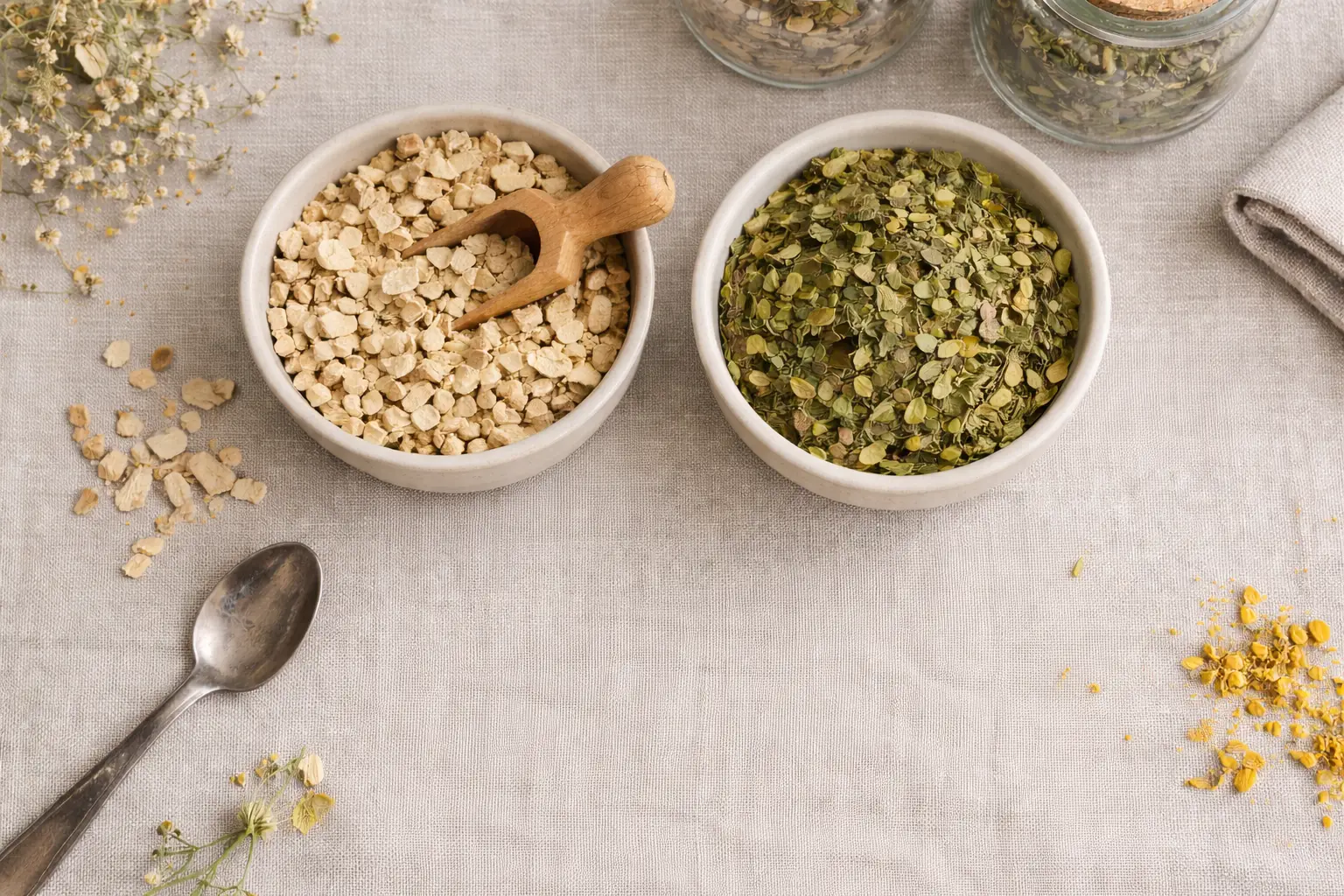 Taste decides whether a blend becomes a habit. In practical tea work, “lighter-feeling” usually means the cup finishes cleanly and does not linger as dull, swampy, or overly sweet. That is why marshmallow root weight loss blends are best built with contrast.
Dandelion leaf is the obvious first partner because it trims the softness of marshmallow root with green bitterness. Peppermint adds a cooling edge that helps the finish feel more defined. Chamomile can make the blend more rounded and floral, especially for evening use. Burdock root pulls the cup in a more earthy direction and works well for tea drinkers who enjoy root-heavy formulas. Ginger root can bring a quiet warmth, though only in small amounts if you want marshmallow root to remain central.
For a clean daytime profile:
Marshmallow root
Dandelion leaf
Peppermint
Calendula
For a rounder evening profile:
Marshmallow root
Chamomile
Dandelion leaf
A touch of burdock root
For a more rooted apothecary style:
Marshmallow root
Burdock root
Dandelion leaf
A small amount of ginger root
Try Chamomile Tea Whole Flowers when you want to soften the blend for an evening cup.
Use Burdock Root C/S for a deeper, earthier profile in root-forward formulations.
Add Ginger Root C/S in small amounts if you want gentle warmth and a more active aroma.
Hot Infusion, Cold Infusion, and Hybrid Prep
One of the most useful ways to approach marshmallow root weight loss tea is to stop thinking in only one method. Marshmallow root behaves differently depending on extraction style.
A hot infusion gives a more familiar herbal tea experience. The aroma is warmer, the dandelion leaf speaks more clearly, and the overall cup feels immediate and comforting. This is the easiest method for most customers.
A cool infusion or overnight soak highlights marshmallow root’s softer texture. The mouthfeel becomes fuller and more slippery, while bitterness stays lower. This is often the most elegant way to showcase the root itself.
A hybrid method works especially well for tea makers:
Soak marshmallow root in cool water for 4 to 8 hours.
Strain.
Separately infuse dandelion leaf and any aromatic herbs hot for 8 to 10 minutes.
Combine the two liquids.
This method preserves the root’s texture while keeping leafy and aromatic herbs vivid. It also gives you more control in small-batch development.
Troubleshooting
Even a simple blend can go off balance. In tea work, troubleshooting saves ingredients and improves repeatability.
Flat flavor
Too much marshmallow root can mute the cup. Lower the root slightly and raise dandelion leaf or peppermint. A pinch of ginger can also sharpen the profile.
Too tart
This usually comes from an overenthusiastic supporting herb, not from marshmallow root itself. Remove any bright, sharp additions and rely on mint or calendula instead.
Over-carbonation
If you experiment with a sparkling herbal infusion or a lightly fermented herbal beverage, bottle pressure can rise quickly. Chill early, burp carefully if appropriate for your process, and reduce sugar inputs in future batches.
Sediment
Marshmallow root c/s can shed fine particles. Sift the dry material before blending, strain through a finer filter, or allow the cup to settle for a minute before pouring.
Aroma loss
If the blend smells dull in the jar, aromatic herbs may be old or the formula may need more top-note support. Refresh with a small amount of peppermint or chamomile and check storage conditions.
In practical terms, marshmallow root weight loss tea works best when the blend feels alive, not just worthy.
Storage + Quality
Good herbs deserve good handling. Marshmallow root should be stored airtight, away from heat, light, and humidity. Because it is a pale root with a subtle scent, quality cues can be missed if you do not look closely.
Fresh marshmallow root c/s should appear cream to light tan, with a clean, dry aroma. It should not smell dusty, sour, or stale. Dandelion leaf should remain visibly green rather than gray-olive. Calendula should still show warm color. Peppermint should smell immediate and cooling when rubbed between the fingers.
For blended tea:
Store in airtight glass or a well-sealed pouch
Keep away from steam-heavy kitchens
Label with blend date
Reassess aroma monthly for small artisan batches
For tea makers selling or gifting blends, smaller packaging helps preserve freshness. A beautiful blend loses value quickly if the scent has already faded before the customer opens it.
Safety
When discussing marshmallow root weight loss, it is important to stay grounded. Herbs are not shortcuts, and tea is not a substitute for medical care. Herbalists often use marshmallow root as part of traditional wellness routines because it is gentle and versatile, not because it makes dramatic promises.
Use compliant language. Say that marshmallow root is traditionally used in soothing herbal preparations. Say that dandelion leaf may support a clean-tasting daily tea ritual. Say that a balanced blend can help people replace heavier beverages with something more intentional and refreshing.
People with specific health questions, medication concerns, or dietary restrictions should check with a qualified professional before making major changes to their routine. Keep the focus on preparation quality, ingredient freshness, and realistic expectations.
A Practical Closing Thought
The most useful way to think about marshmallow root weight loss is not as a miracle phrase, but as a sign of what people are really searching for: a tea that feels supportive, lighter, pleasant, and easy to keep in rotation. Marshmallow root shines when it is part of a well-built blend. Its value is in texture, balance, and the quiet comfort it brings to herbs that might otherwise feel too sharp or austere.
For tea makers, that is good news. It means the work is not about exaggeration. It is about craft. Start with a strong base of marshmallow root and dandelion leaf, refine the finish with mint or chamomile, and store the blend with care. A cup that feels clean, rounded, and satisfying will always outlast a cup built only around claims.
FAQ
Can marshmallow root be used alone as tea?
Yes, but it is usually softer and flatter on its own. Many herbalists prefer pairing it with leafy or aromatic herbs for a more balanced cup.
What do people usually mean by marshmallow root weight loss?
Most people mean a gentle herbal tea routine that feels lighter, cleaner, and easier to drink regularly rather than an extreme single-herb approach.
Is hot tea or cold infusion better for marshmallow root?
Both work. Hot tea is more familiar and aromatic, while cold infusion highlights the root’s fuller texture.
What herbs pair well with marshmallow root?
Dandelion leaf, peppermint, chamomile, calendula, burdock root, and small amounts of ginger are all useful depending on the style of blend.
How much marshmallow root should I use per mug?
A good starting point is about 2 to 3 grams of marshmallow root within a 4 gram total blend for a 300 ml mug.
Why does my marshmallow root tea taste muddy?
The ratio may be too root-heavy, or the herbs may be old. Increase leafy or aromatic ingredients and check freshness.
Can I make this blend in advance?
Yes. Blend small batches, store them airtight, and monitor color and aroma so the tea stays lively.
Does this tea replace a healthy routine?
No. It works best as part of broader habits such as better beverage choices, consistent meals, and a practical daily rhythm.