Ginger for Muscle Recovery: What Athletes Should Know
isGinger for muscle recovery has moved from folk remedy to a serious ginger for muscle recovery ingredient in the sports supplement industry. Zingiber officinale, one of the world’s most widely used spices, contains bioactive compounds called gingerols and shogaols that have attracted research attention in the context of exercise-induced muscle soreness.
Research on Ginger for Muscle Recovery
Several studies have investigated ginger supplementation in relation to exercise performance and recovery. Research has looked at both raw ginger and heat-treated ginger (which converts gingerols to shogaols), with varying results depending on the form, dosage, and timing of consumption.
The body of research, while growing, is still developing. Results are mixed and depend on study design, population, exercise protocol, and ginger preparation used. Supplement brands should review the primary research literature and avoid overstating findings. Accurate, evidence-based marketing builds long-term brand credibility.
Ginger Forms for Supplement Manufacturing
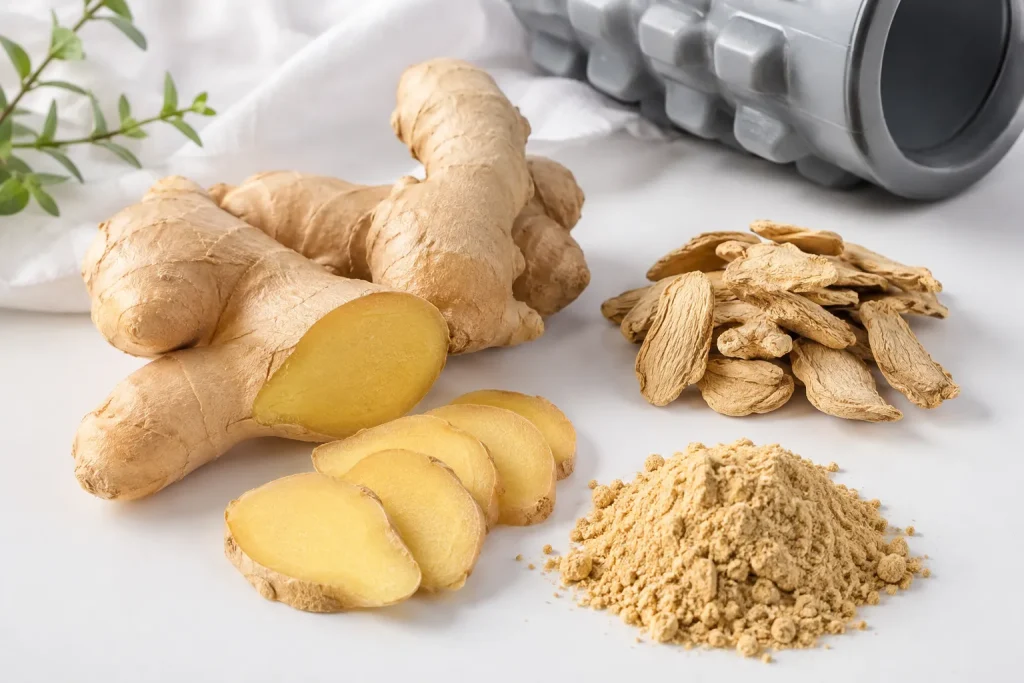
This is one of the most versatile botanical ingredients in terms of available forms:
- Ginger powder: Ground from dried ginger rhizomes, suitable for capsules, tablets, and powder blends. Organic ginger powder provides a whole-food ingredient for clean-label formulations.
- Ginger cut and sifted: Dried pieces for tea and infusion products. Organic ginger root C/S is used in functional beverage and tea blend manufacturing.
- Ginger extract: Concentrated to specific gingerol content (commonly 5% to 20% gingerols). This is the preferred form for targeted supplement products.
- Essential oil with ginger: Used primarily in topical products and aromatherapy applications rather than oral supplements.
Ginger for Muscle Recovery: Product Formulation
Ginger appears in several categories of recovery-oriented supplements:
- Post-workout recovery blends: Combined with turmeric, tart cherry, and bromelain for comprehensive recovery support.
- Joint support formulas: Paired with glucosamine, chondroitin, and boswellia for active consumers concerned about joint comfort.
- Functional beverages: Ginger shots, recovery teas, and drink mixes that combine convenience with the familiarity of ginger as a food ingredient.
- Topical products: Ginger-infused muscle rubs and balms, though these fall outside the oral supplement category.
In addition, the functional beverage format is particularly promising for ginger-based recovery products. Consumers already associate ginger with beverages (ginger tea, ginger ale, ginger shots), which makes the product concept intuitive and reduces the need for consumer education.
Taste and Formulation Challenges
However, unlike many botanical ingredients that present taste challenges, ginger’s flavor profile is actually an advantage. Consumers generally enjoy ginger’s warm, spicy taste, and it is one of the few supplement ingredients that can improve the flavor of a product rather than requiring masking.
In powder-format supplements, ginger adds a pleasant warmth that pairs well with citrus, honey, and turmeric flavor systems. For capsule products, the pungency of ginger can cause mild throat warming or mild digestive sensation if the capsule dissolves too quickly, so enteric-coated or delayed-release capsules may be preferred for sensitive consumers.
Sourcing Quality Ginger
Ginger is produced commercially in many countries, with China, India, Nigeria, and Thailand being the largest producers. Quality varies based on variety, growing conditions, harvesting maturity, and drying methods.
Specifically, for supplement-grade ginger, key quality parameters include gingerol content, moisture level (should be below 12%), ash content, and absence of sulfite residues (some ginger is treated with sulfur dioxide during drying, which clean-label products cannot accept).
Organic ginger has gained significant market share in the supplement space. Find out which botanical best fits your recovery product with our botanical ingredient quiz. The organic premium for ginger is relatively modest compared to some other botanicals, making it an easy choice for brands committed to organic formulations.
How much ginger is typically included in recovery supplements?
Research studies have used ginger dosages ranging from 1 to 4 grams of raw ginger equivalent per day. For concentrated extracts standardized to gingerols, lower amounts (250 mg to 500 mg) achieve similar levels of active compounds. Recovery supplement brands typically formulate within these ranges, with the specific amount depending on whether they use whole root powder or standardized extract.
Is fresh ginger more effective than dried ginger for supplements?
Fresh and dried ginger have different chemical profiles. Fresh ginger is higher in gingerols, while the drying process converts some gingerols to shogaols. Both compound classes have been studied, and dried ginger is the standard form for supplements due to practical considerations like shelf stability, standardization, and ease of manufacturing. Fresh ginger is not feasible for commercial supplement production.
Can ginger supplements interact with medications?
Most people tolerate ginger well, but it may interact with certain medications, particularly blood-thinning drugs. Supplement brands should include appropriate warnings on their labels advising consumers to consult with a healthcare provider before use, especially if they are taking medications. This disclaimer is a standard practice in the dietary supplement industry and helps protect both consumers and the brand.