Organic Chamomile Flowers Wholesale: Whole vs Cut and Sifted
Choosing between whole and cut and sifted chamomile is one of the most important sourcing decisions a buyer can make. When you purchase organic chamomile flowers wholesale bulk, understanding the physical differences, flavor profiles, and application suitability of each format helps you serve your customers better and reduce waste. Chamomile remains one of the top five best-selling herbal teas worldwide, and demand for certified organic product continues to climb year over year. Whether you are formulating a premium loose leaf blend, filling tea sachets, or supplying a cosmetics manufacturer, the cut you select determines extraction rate, visual appeal, shelf stability, and overall cost efficiency. This guide walks you through every factor that matters so you can place your next order with complete confidence.
Botanical Profile of Chamomile
The chamomile used in commerce belongs primarily to two species. German chamomile, Matricaria chamomilla, is the variety most commonly traded for tea and herbal products. Roman chamomile, Chamaemelum nobile, is rarer and often reserved for essential oil production. German chamomile produces small daisy-like flowers with white petals surrounding a yellow, dome-shaped receptacle. The plant thrives in temperate climates and is cultivated extensively in Egypt, India, and parts of Eastern Europe. Organic certification requires that growers avoid synthetic pesticides and fertilizers throughout the entire crop cycle. The flower heads are harvested at peak bloom when essential oil content is highest. Proper drying preserves the volatile compounds, including bisabolol and chamazulene, that give chamomile its characteristic aroma.
Whole Chamomile Flowers: Characteristics and Best Uses
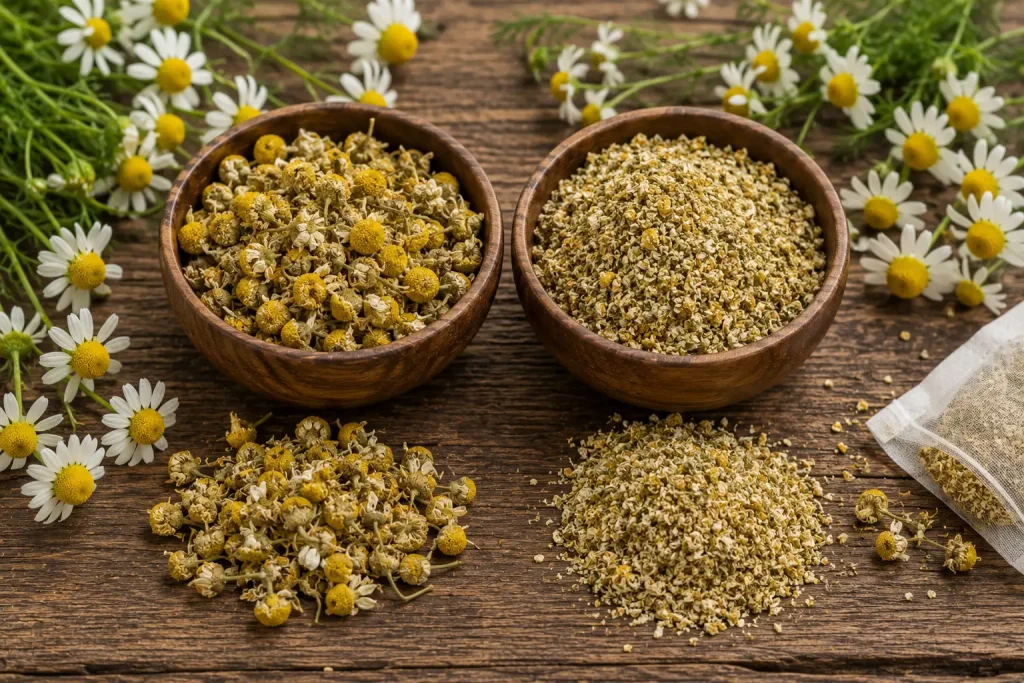
Whole chamomile flowers retain their complete flower head structure after drying. The petals remain attached to the receptacle, and minimal breakage occurs during processing. This format is prized for its visual appeal, making it ideal for premium loose leaf tea blends where presentation matters. Whole flowers steep more slowly than cut material, producing a lighter, more delicate infusion over longer brew times. Buyers sourcing organic chamomile flowers wholesale bulk in the whole format typically serve specialty tea shops, wellness brands, and gift box companies. The intact flowers also work beautifully in bath and body products, potpourri, and decorative herbal sachets. At Hatton Naturals, our Chamomile Flowers Whole are carefully handled to preserve their natural shape and aromatic intensity.
Cut and Sifted Chamomile: Characteristics and Best Uses
Cut and sifted chamomile has been mechanically processed to break the flower heads into uniform, smaller pieces. The fragments are then sifted to remove dust and achieve a consistent particle size. This format brews faster and more evenly, making it the preferred choice for tea bag filling, single-serve sachets, and large-scale food manufacturing. The increased surface area allows water to extract flavor and beneficial compounds more efficiently. Our Chamomile Flowers Cut and Sifted product meets the standards expected by commercial tea packers who need reliable fill weights and consistent cup quality. Cut and sifted material also stores more compactly, reducing shipping volume per pound.
Side-by-Side Comparison for Buyers
When evaluating whole versus cut and sifted chamomile, several criteria matter. Brew time for whole flowers typically runs four to six minutes, while cut and sifted extracts fully in two to four minutes. Aroma intensity at the package level tends to be stronger in cut material due to greater surface area exposure, though whole flowers preserve their scent longer in storage. Visual appeal clearly favors whole flowers, which photograph well for retail packaging. Fill density is higher for cut and sifted, meaning you fit more product per shipping container. Shelf life is comparable when both are stored properly in sealed, light-protected containers. The price per pound for cut and sifted is usually lower because the processing tolerates more variation in raw material. Understanding these tradeoffs helps you match format to application.
What Buyers Should Know
Before placing a large organic chamomile flowers wholesale bulk order, verify several key details. First, confirm the USDA organic certification status and request a copy of the current organic certificate. Second, ask about the country of origin, as Egyptian chamomile is often considered the gold standard for flavor. Third, review the Certificate of Analysis for the specific lot you intend to purchase. The COA should include microbial testing, moisture content, and confirmation of organic status. Fourth, request a sample before committing to bulk volume. Finally, discuss minimum order quantities and lead times. Seasonal availability can affect pricing, with fresh crop arrivals typically offering the best value. Hatton Naturals provides full documentation for all Bulk Organic Herbs and welcomes sample requests.
Sourcing and Quality Indicators
Quality indicators for organic chamomile flowers wholesale bulk product include color, aroma, moisture level, and foreign matter content. Premium whole chamomile should display bright white petals with golden yellow centers. Dull, brownish coloration suggests over-drying or aged inventory. The aroma should be sweet, apple-like, and unmistakably chamomile. Moisture content should fall between eight and 12 percent. Foreign matter should not exceed two percent by weight. Reputable suppliers conduct third-party lab testing and share results openly. Ask about storage conditions at the warehouse level. Chamomile stored in climate-controlled facilities retains its quality far longer than product kept in unregulated environments.
Building Blends with Complementary Herbs
Chamomile serves as an excellent base for herbal tea blends. Its mild, floral character pairs well with a wide range of botanicals. For a classic calming blend, combine chamomile with Lavender Flower Whole and Lemon Balm Leaf. A refreshing digestive blend might pair chamomile with Peppermint Leaf Whole and Ginger Root. For floral visual appeal, add Elderflowers or Blue Cornflower petals. Each complementary herb brings its own character while allowing chamomile to anchor the blend. When developing commercial blends, test multiple ratios at small scale before committing to production volumes.
Packaging, Storage, and Pricing Factors
Proper packaging protects your organic chamomile flowers wholesale bulk investment from degradation. Store chamomile in food-grade, resealable containers that block light and limit air exchange. Kraft paper bags with poly liners are standard for wholesale shipments. Once opened, transfer product to airtight containers and keep it in a cool, dry environment away from strongly scented herbs. Under proper conditions, dried chamomile maintains peak quality for 12 to 18 months. On pricing, crop year and harvest conditions play a significant role. Order volume typically unlocks better pricing, with meaningful breaks starting around 25 pounds. Consolidating your chamomile order with other herbs, such as Peppermint Cut and Sifted or Hibiscus Flowers, can help you reach volume thresholds. Hatton Naturals offers transparent pricing through our Wholesale Herbal Tea program.
Safety Considerations
Chamomile is generally recognized as safe for most adults when consumed as a tea or used in topical products. However, individuals with known allergies to plants in the Asteraceae family, which includes ragweed, daisies, and chrysanthemums, should exercise caution. Allergic reactions, though uncommon, can range from mild skin irritation to more serious responses. Pregnant or nursing individuals should consult a healthcare provider before using chamomile in therapeutic quantities. Chamomile may interact with blood-thinning medications and certain sedatives. As a wholesale buyer, include appropriate allergen and safety information on your product labels. This content is provided for educational purposes and does not constitute medical advice.
Frequently Asked Questions
What is the difference between whole and cut and sifted chamomile?
Whole chamomile retains the complete, intact flower head, while cut and sifted chamomile has been mechanically processed into smaller, uniform pieces. Whole flowers offer better visual appeal for loose leaf teas, and cut and sifted brews faster and fills tea bags more efficiently.
How much organic chamomile flowers wholesale bulk should I order initially?
Start with a trial order of five to 10 pounds to finalize your blend recipe and test packaging. Once confirmed, scale to 25 or 50 pounds for initial production runs before committing to larger volumes.
What certifications should I look for when buying wholesale chamomile?
At minimum, verify USDA organic certification from an accredited certifying body. Depending on your market, you may also need kosher, non-GMO project verified, or fair trade certifications.
How should I store bulk chamomile to maintain freshness?
Store chamomile in airtight, light-blocking containers in a cool, dry space. Keep it away from strong-smelling herbs. Properly stored chamomile maintains quality for 12 to 18 months.
Can I mix whole and cut chamomile in the same blend?
While possible, mixing formats can create inconsistent brewing results. The cut pieces extract faster than whole heads, leading to uneven flavor. Most professional blenders choose one format per product.
What is the typical lead time for wholesale chamomile orders?
Standard orders ship within three to five business days. Custom orders or very large volumes may require seven to 14 business days depending on current inventory and seasonal demand.
Does chamomile pair well with caffeinated teas?
Yes, chamomile blends beautifully with light green teas and white teas. It adds a floral, calming element that softens astringency. It is less commonly paired with bold black teas.
What is the minimum order quantity for wholesale pricing?
Minimum order quantities vary by supplier. Hatton Naturals offers competitive pricing on orders starting at smaller quantities, with additional discounts at higher volume tiers. Visit our Bulk Organic Herbs page for details.
Conclusion
Selecting the right format of organic chamomile flowers wholesale bulk chamomile comes down to matching the product to your specific application. Whole flowers deliver visual elegance, while cut and sifted offers practical efficiency. Evaluate your needs, request samples, verify certifications, and build relationships with transparent suppliers. Your customers will taste the difference.